
Morning routines grind to a halt when you have to dig past winter coats to locate work trousers. Most closets do not fail because they lack overall square footage. They fail because the vertical gap between the top shelf and the ceiling remains completely unused while garments crush together on a single bowed wooden dowel.
Before spending thousands on custom built-in cabinetry, test practical structural adjustments using what you currently own. These twelve closet organization hacks maximize tight hanging clearances, stabilize floppy shelf stacks, and keep your daily essentials within immediate reach.
1. Add a Suspended Lower Rod to Double Short Hanging Space
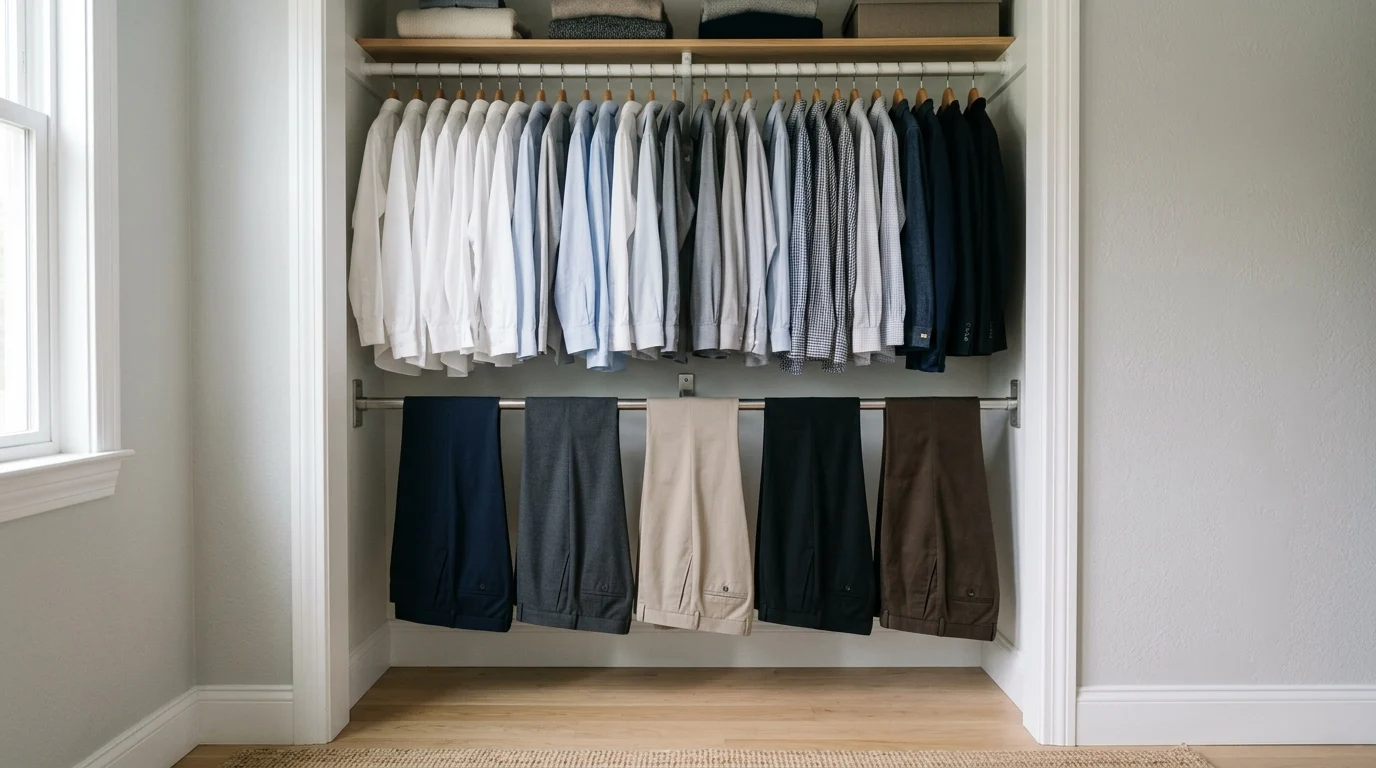
Single-rod layouts waste roughly forty inches of open air directly underneath shirts and blouses. Hook an adjustable hanging rod doubler over your main rod using heavy steel chains or rigid metal drop-bars. Position the second tier twenty-eight inches below the upper bar to give button-downs just enough clearance to drape without brushing lower garments.
This drop setup works for skirts, folded slacks, and cropped jackets. Skip it if your wardrobe consists entirely of floor-length maxi dresses or tailored trench coats that require an uninterrupted five-foot drop. In 2026, a basic steel extension bar costs between $14 and $22 at hardware suppliers.
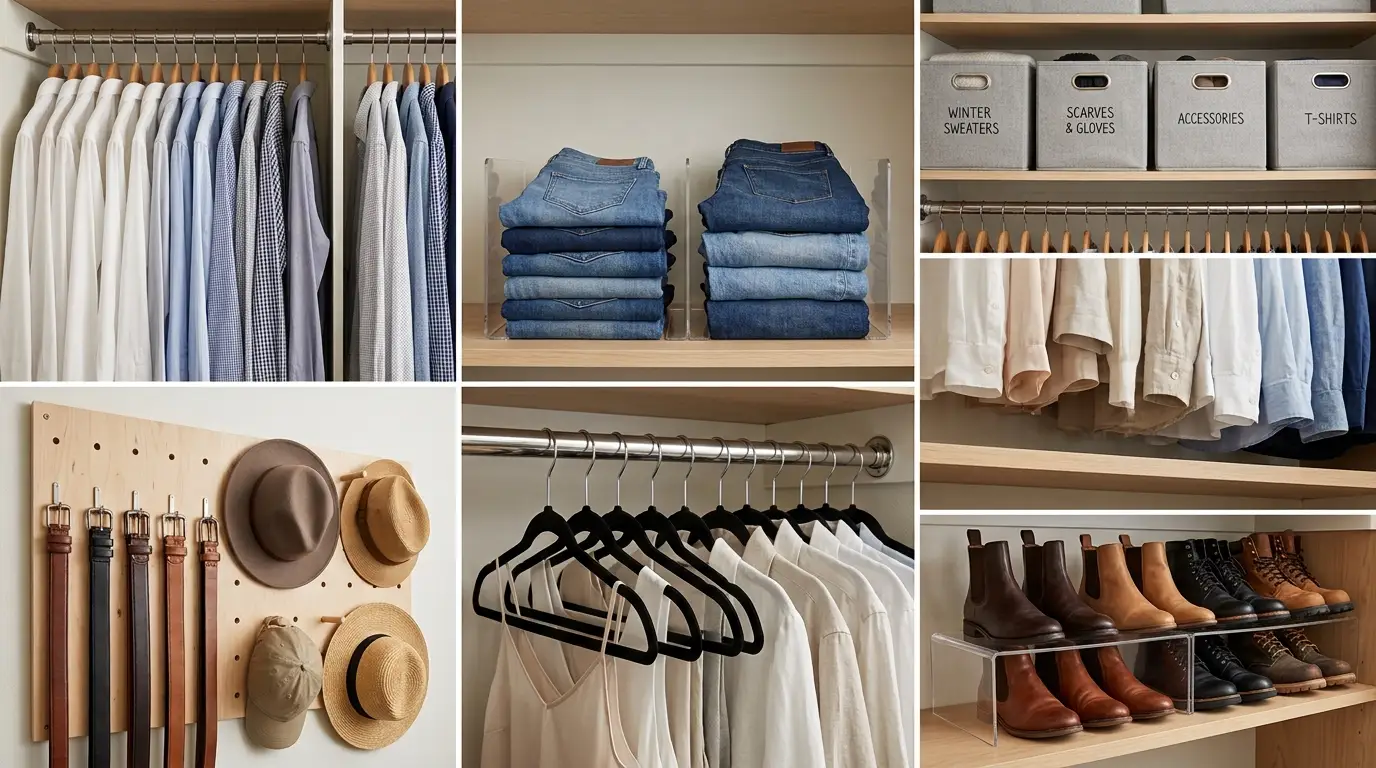
2. Install Clear Acrylic Shelf Dividers for Knits and Denims
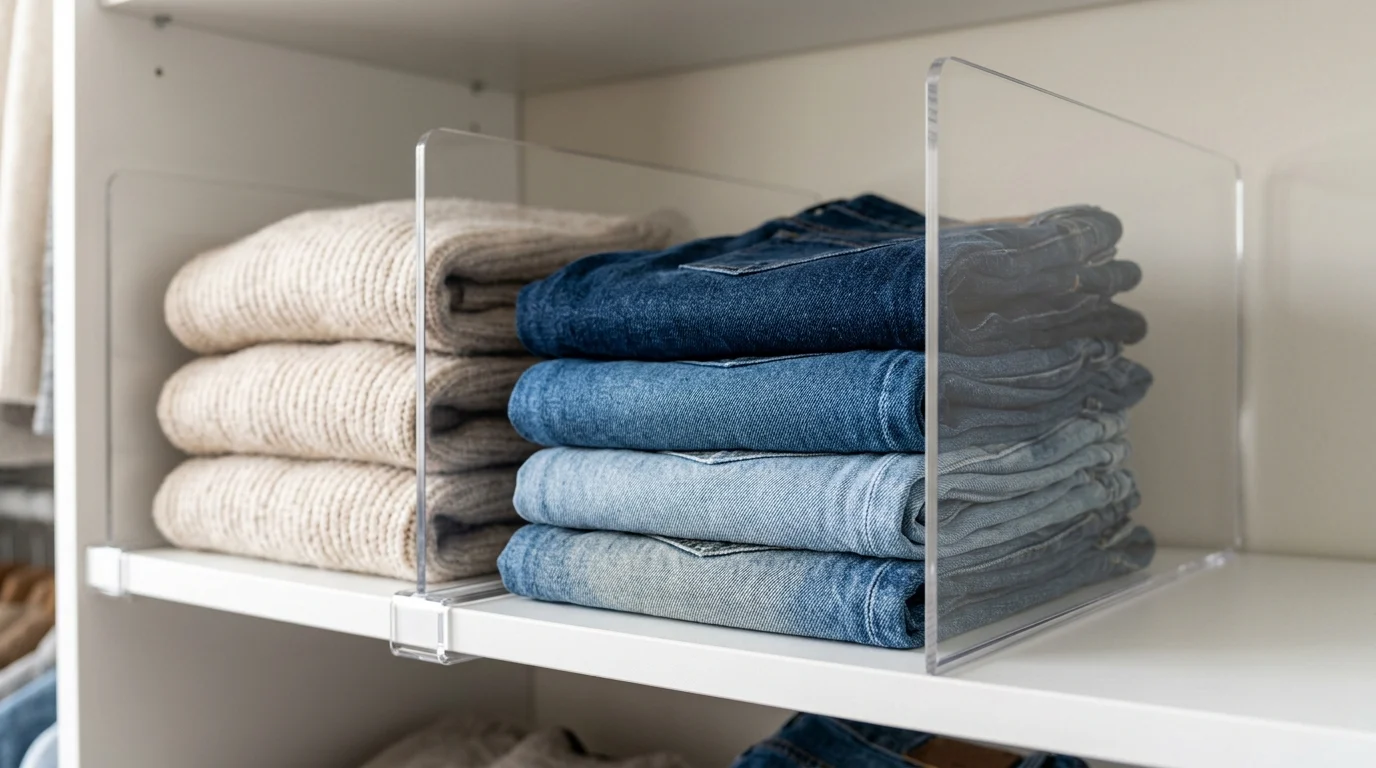
Standard wire or smooth laminate shelves allow stacks of heavy jeans and wool sweaters to topple sideways into messy heaps within two days. Slide clear acrylic dividers onto your existing twelve-inch shelf boards every ten to twelve inches. The vertical barrier forces each stack to remain upright, stopping folded garments from leaning into adjacent piles.
Ensure the divider clamp matches your shelf thickness exactly. Most standard units fit shelves between three-quarters of an inch and one inch thick. Forcing an undersized acrylic bracket onto a heavy wooden plank snaps the plastic base instantly. This layout suits heavy winter knitwear best.
3. Label Canvas Bins for Off-Season Linens and Extra Quilts
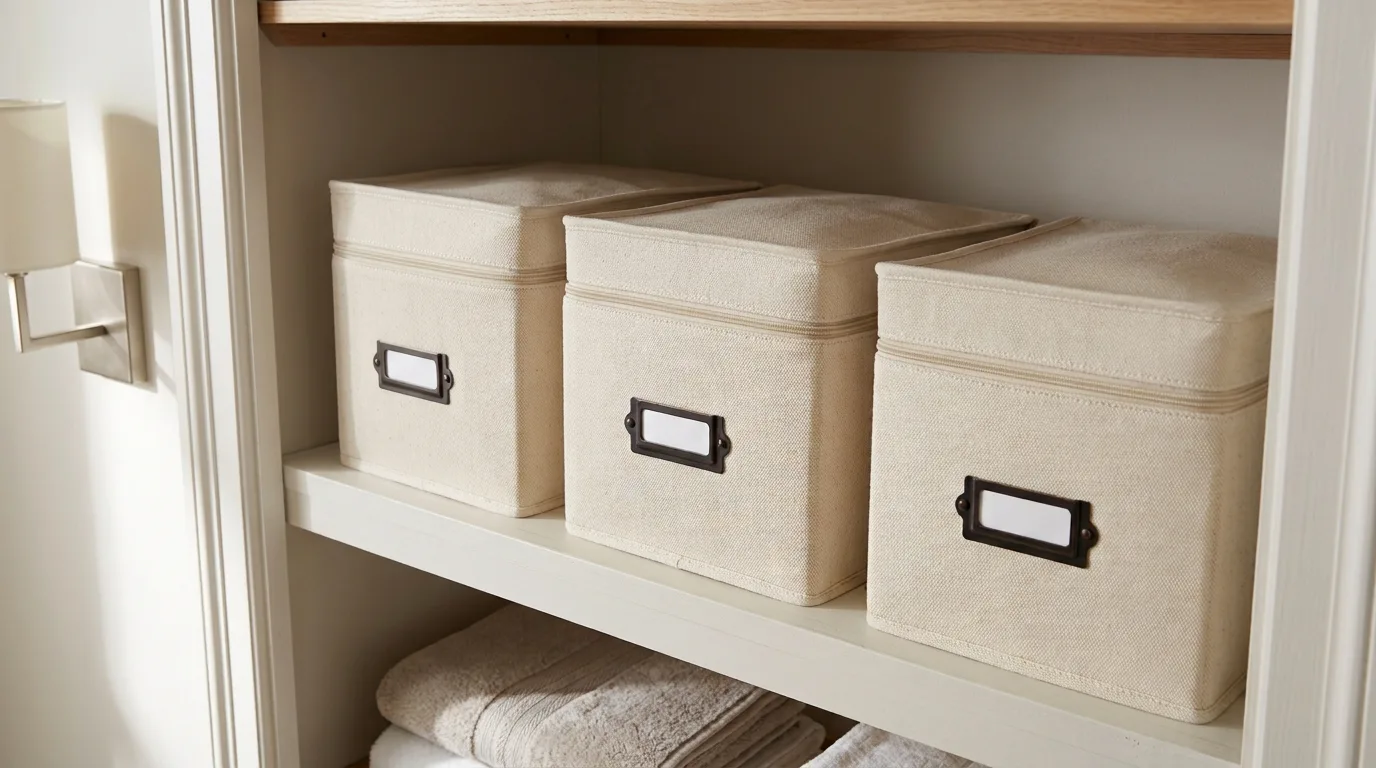
Loose comforters and spare pillowcases shoved onto high shelves attract dust and slowly slide off the ledge. Pack these bulky fabrics into zippered fabric bins equipped with clear label windows. Our practical linen closet organization hacks rely on folding matching sheet sets directly inside one of their own pillowcases before sliding them into the bins.
This pillowcase containment trick keeps the fitted sheet, flat sheet, and remaining case bundled together as one self-contained brick. Reserve high overhead bins for items accessed fewer than four times a year. Pulling heavy twelve-pound storage bins down from eight feet high creates a strain hazard for anyone with shoulder mobility limits.
4. Mount Flat Pegboards for Necklaces, Belts, and Caps
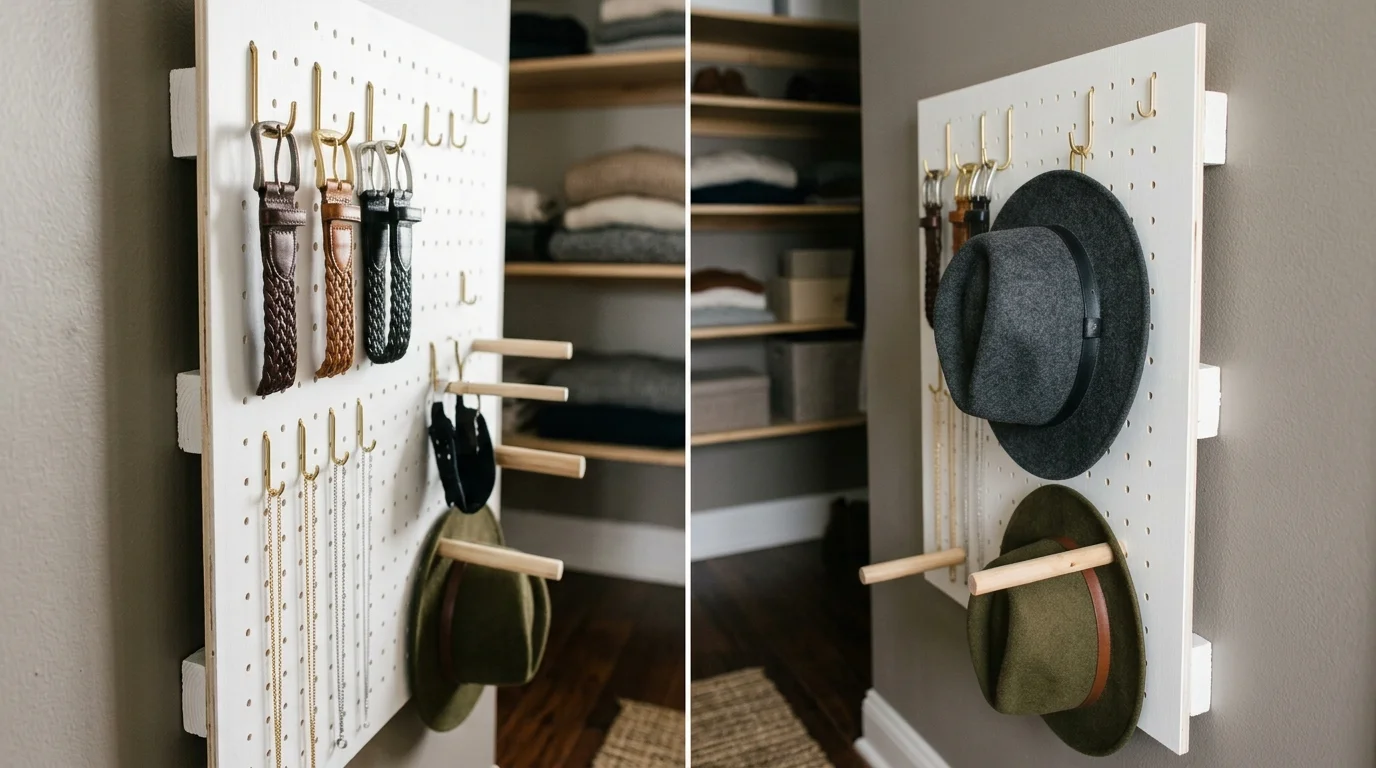
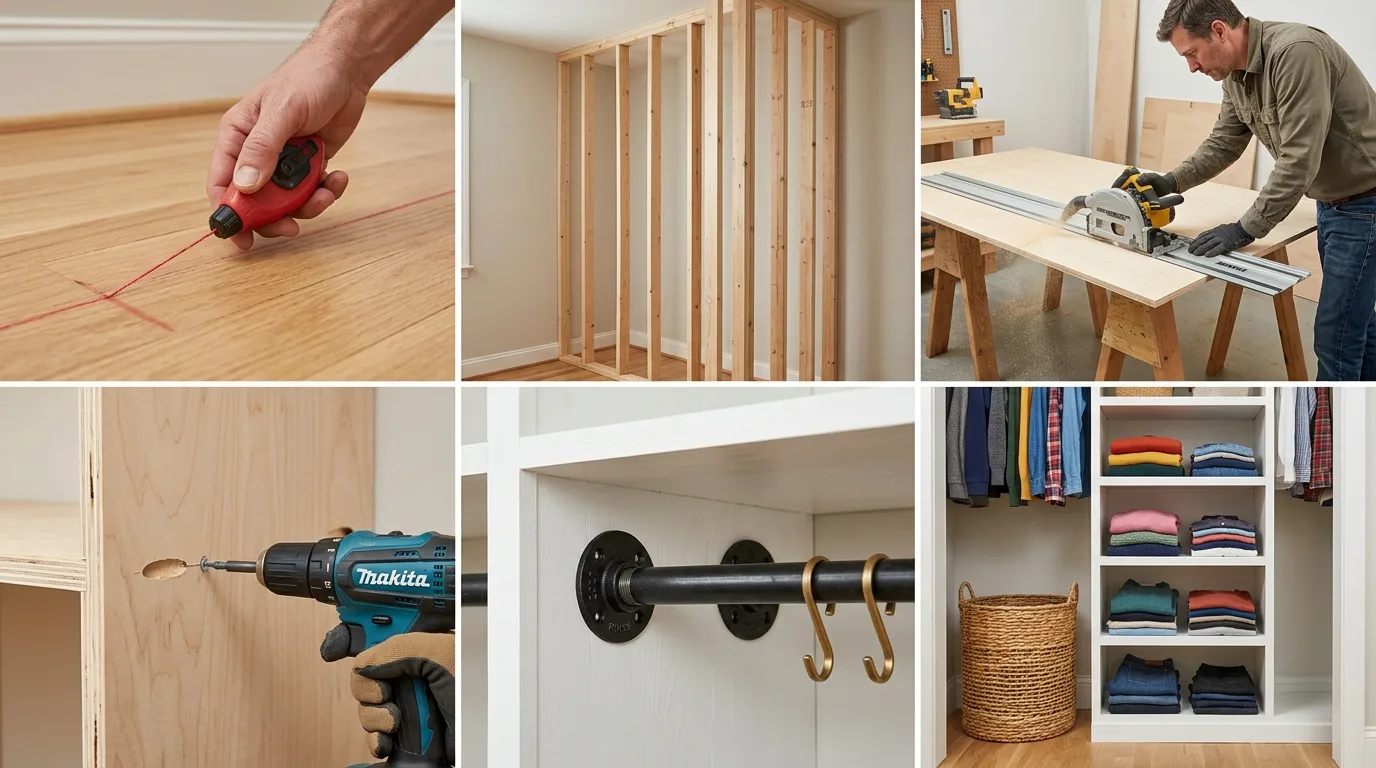
Dead wall space behind dangling hangers or along the narrow inner returns of a closet door often sits bare. Screw a twenty-four-inch by thirty-six-inch sheet of painted wooden pegboard directly into wall studs using spacer blocks behind each corner. Add simple metal J-hooks across the grid to hold leather belts by their buckles, structured hats, and delicate chains.
Pegboards stop tangles completely because each accessory hangs entirely isolated from its neighbor. Skip this addition if your closet interior width measures under twenty-four inches across. Dangling items will snag continuously against your daily shirts every time you slide a hanger sideways.
5. Use Vertical Tiered S-Hooks to Compress Trouser Racks
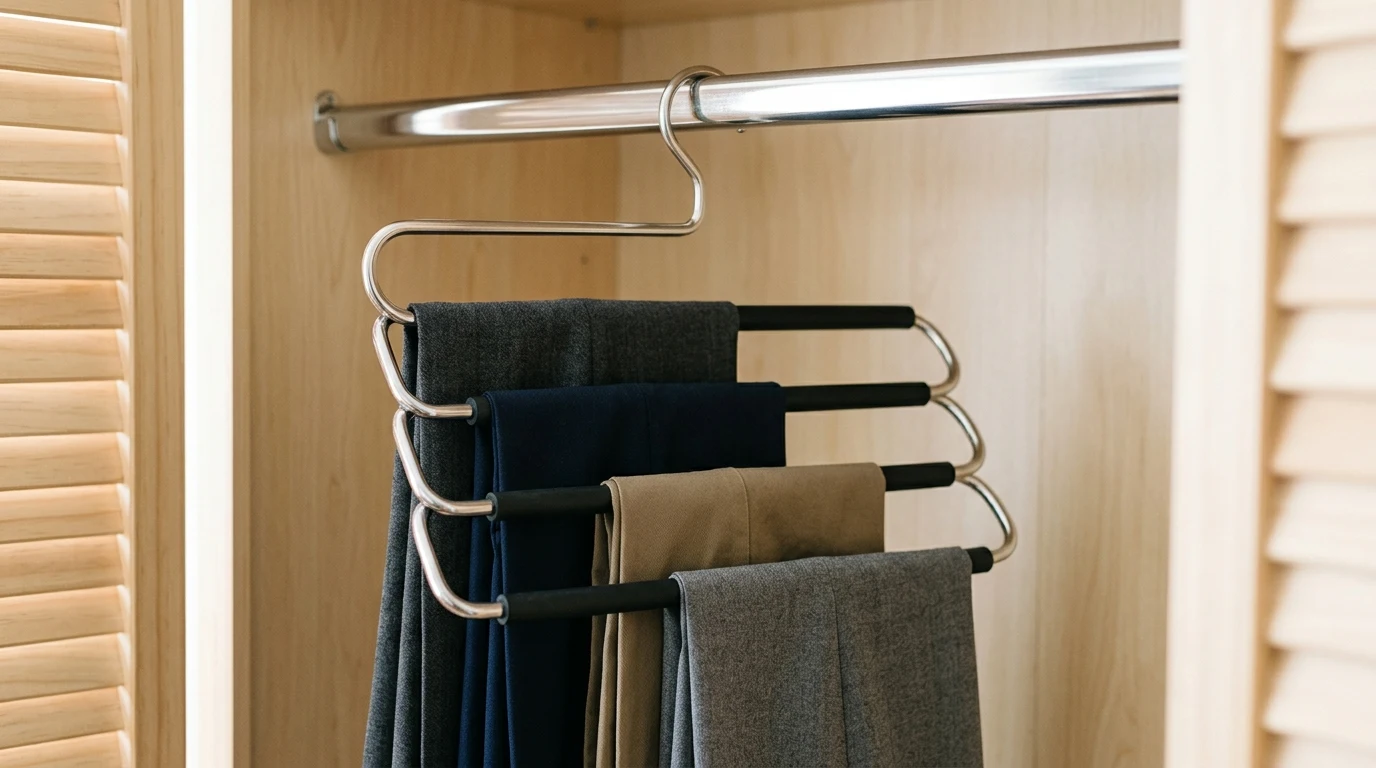
Ten pairs of denim pants spread across ten standard wooden hangers occupy twelve linear inches of prime hanging rail. Swap standard coat hangers for tiered stainless steel swing-arm bars. These sturdy frames let you stack five pairs of denim vertically in the horizontal space of a single hanger.
Look for metal frames with non-slip silicone sleeve coatings across each rung. Smooth chrome rungs allow silky dress trousers to slide off onto the dusty floor the second you brush against them. This compression technique suits dense wardrobes packed into narrow reach-in closets.
6. Build Low Shoe Risers Out of Solid Poplar Offcuts
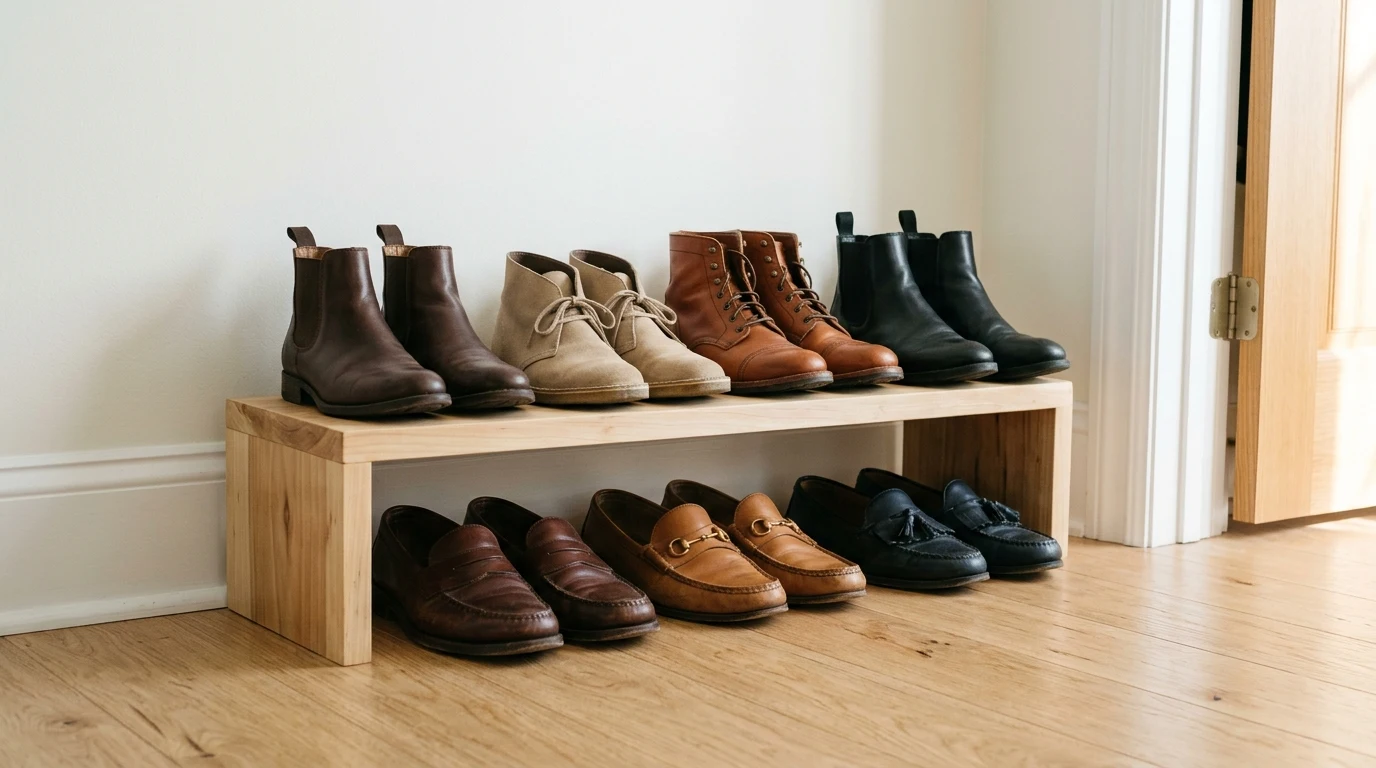
Footwear scattered across the closet floor turns into an untidy pile where matching pairs routinely vanish. Build simple two-level shoe rails using one-by-six poplar boards raised four inches on wooden scrap blocks. Slide everyday flats underneath the wooden bridge and park ankle boots directly along the top deck.
This simple elevation doubles floor shoe capacity from four pairs to eight pairs per linear foot. Avoid using soft foam adhesives to anchor floor risers. Footwear pushes risers back against baseboards, meaning unanchored boards eventually tip forward and dump shoes outward onto your bedroom floor.
7. Line Narrow Cupboard Shelves with Shallow Front-Pull Baskets
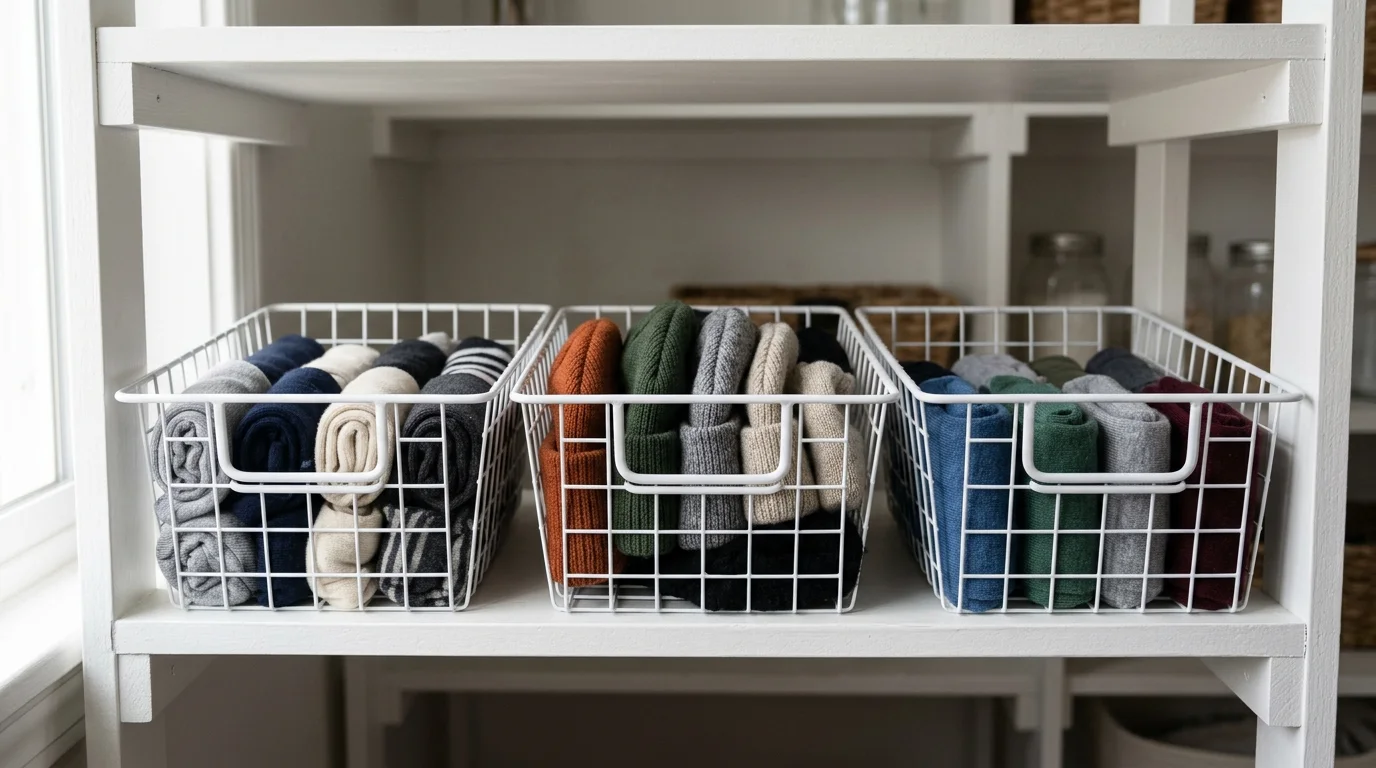
Deep, boxy closet organization ikea cubes and deep shelves often turn into storage graveyards where small items vanish at the back. Slide shallow wire baskets equipped with integrated front pull handles onto these recessed ledges. Baskets act like makeshift drawers, pulling outward into the light so you can inspect tank tops or socks without disrupting the front items.
If you run out of shallow metal bins, try closet organization hacks dollar tree runs for inexpensive plastic mesh tubs that measure four inches high. Skip high-sided solid storage crates here. High opaque walls force you to stand on tiptoes to peer inside, defeating the convenience of an accessible shelf.
8. Hang Over-Door Clear Pockets for Undergarments and Rolls
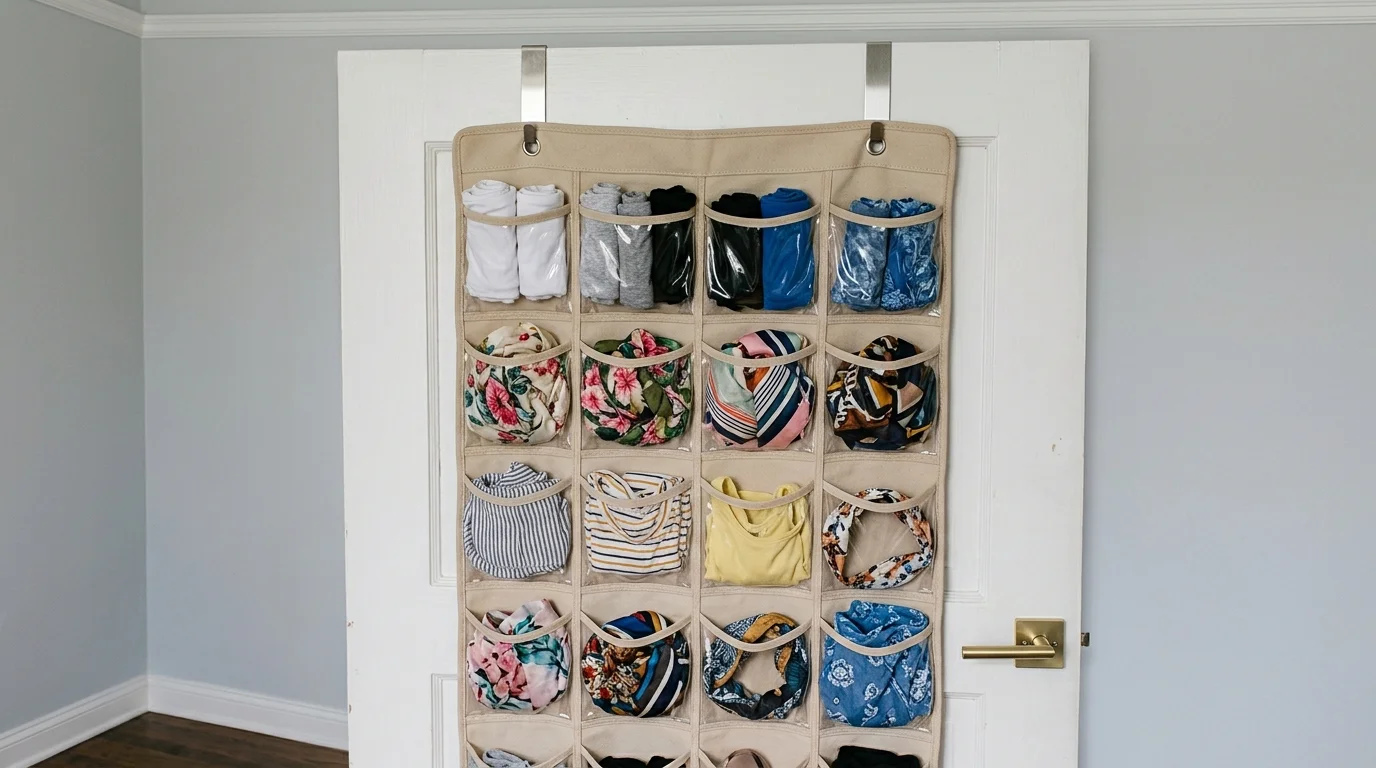
Hollow-core interior closet doors offer twenty square feet of unused vertical area. Hang a heavy-duty fabric shoe caddy equipped with clear vinyl pockets over the top rail using flat metal door brackets. Roll lightweight underwear, rolled camisoles, swimsuits, and spare winter gloves into individual transparent pouches.
Vinyl pockets give instant visual inventory during early morning routines. Avoid loading heavy items like hair dryers, metal curling irons, or dense winter boots into these hanging pouches. Concentrated weight pulls the door frame out of square over time, causing your door latch to stick against the jamb.
9. Standardize Hanger Profiles to Velvet or Slim Wood
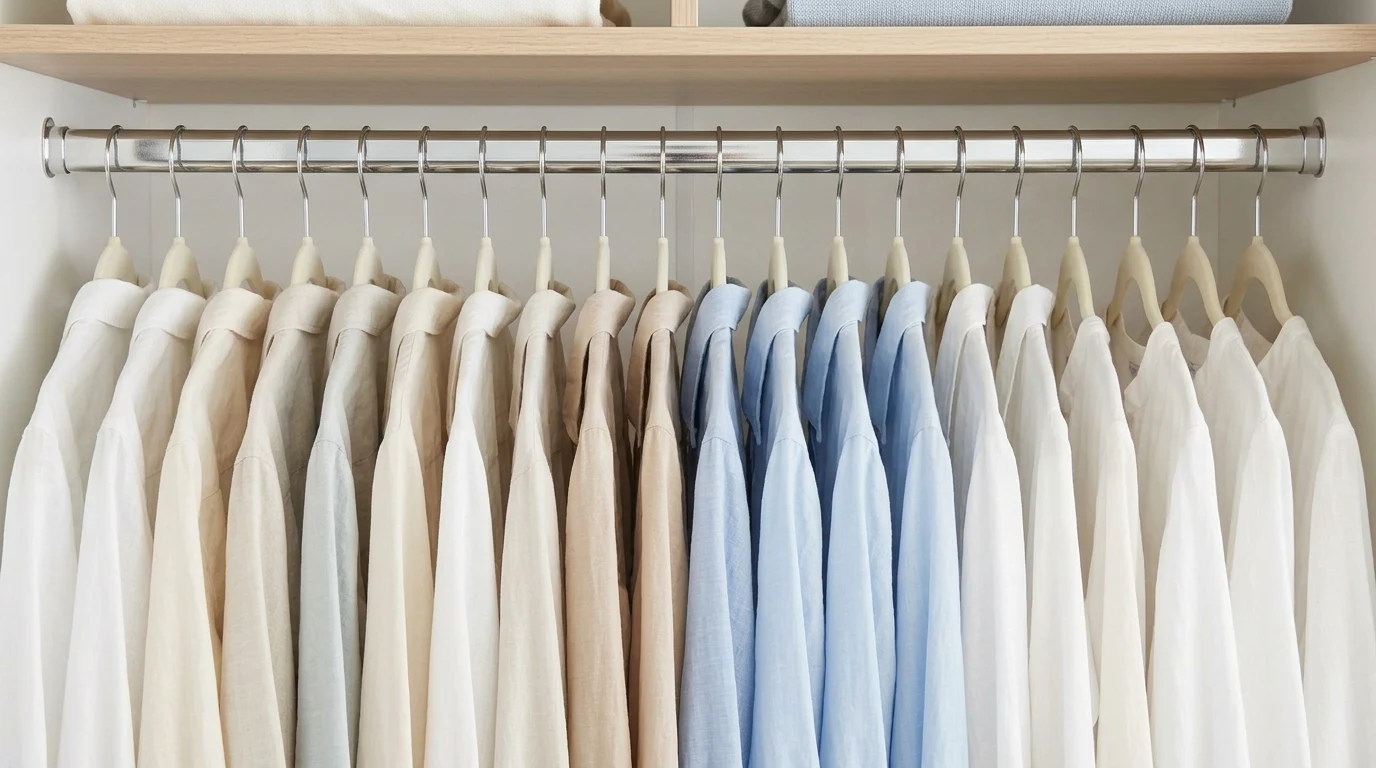
Mixing plastic tubular hangers, wire dry-cleaning loops, and bulky wooden coat frames creates jagged heights along your hanging rod. This uneven spacing wastes up to thirty percent of your rod length because adjacent garments snag at odd shoulder angles. Replace the entire collection with identical slim velvet-flocked hangers.
The low-profile design allows garments to sit flush beside one another at an identical height. Velvet provides enough tactile resistance to hold wide-neck silk tops and slippery modal shirts without shoulder clips. Avoid using black velvet hangers on wet or damp laundry because dark dye can bleed into pale linen fabrics.
Quick Measurement Rules Before Buying Hardware
Never buy storage organizers based on estimated room dimensions. Pull a steel tape measure and record three exact numbers: depth from back wall to front door frame, vertical height from floor to current rod, and interior width between side walls.
Standard hangers require twenty-two to twenty-four inches of interior depth to swing freely without pressing against the drywall. If your reach-in closet measures under twenty inches deep, standard hangers force garments to hang at an angle. For shallow wardrobes, swap horizontal rods for forward-facing pull-out valet rails.
10. Group Garments by Clothing Type and Fabric Weight
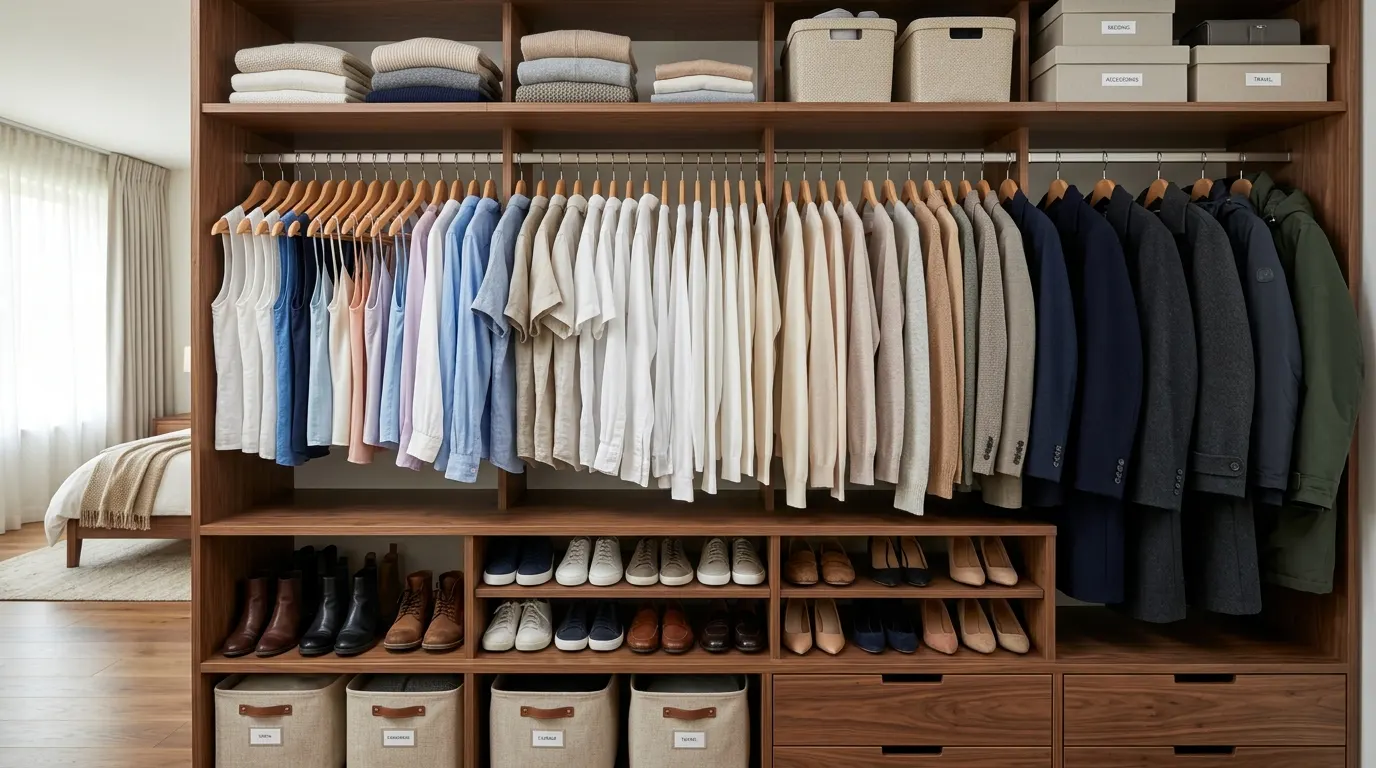
Arranging clothes purely by rainbow colors looks attractive online, but it complicates building practical work outfits. Sort your wardrobe first by silhouette: sleeveless tops, short-sleeve shirts, long-sleeve button-downs, trousers, and outer layers. Within each category, hang pieces from lightest weave to heaviest fabric.
This logical order exposes clothing gaps immediately. You will notice right away if you own twelve black merino knits but lack basic base layers. It also prevents delicate silk shirts from snagging against heavy metal zippers found on winter jackets.
11. Repurpose Tension Rods as Vertical Handbag Dividers
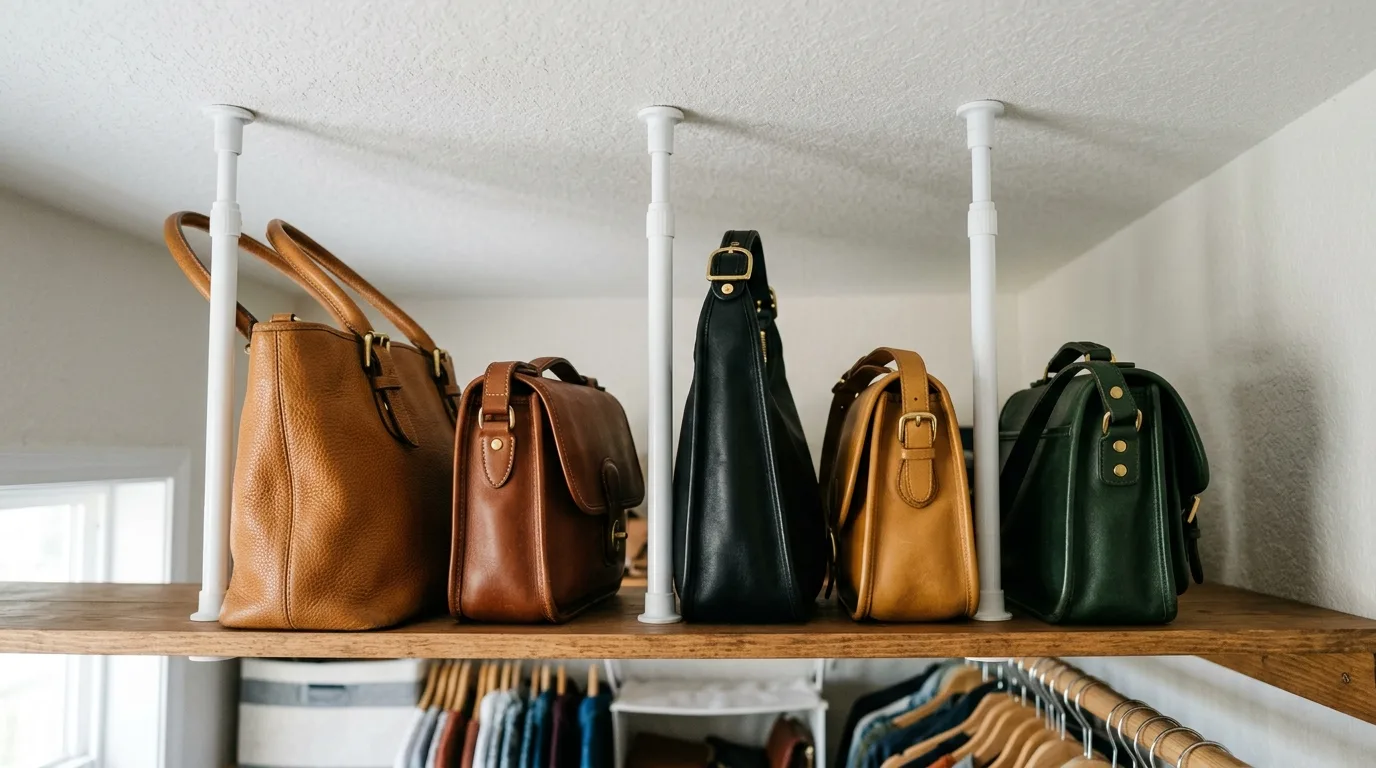
Purses and structured leather totes often collapse into shapeless puddles when shoved onto open upper shelves. Wedge three spring-loaded shower tension rods vertically between your upper shelf board and the closet ceiling. Space the rods four to six inches apart to create rigid upright bookend slots.
Slip structured leather handbags vertically into each divided cubby. Purses maintain their shape without their shoulder straps tangling together. Skip this setup if you have drop-ceiling tiles or hollow drywall headers with no solid stud backing, as spring pressure can crack brittle ceiling panels.
12. Use Heavy Adhesive Wall Hooks for Tomorrow’s Outfit
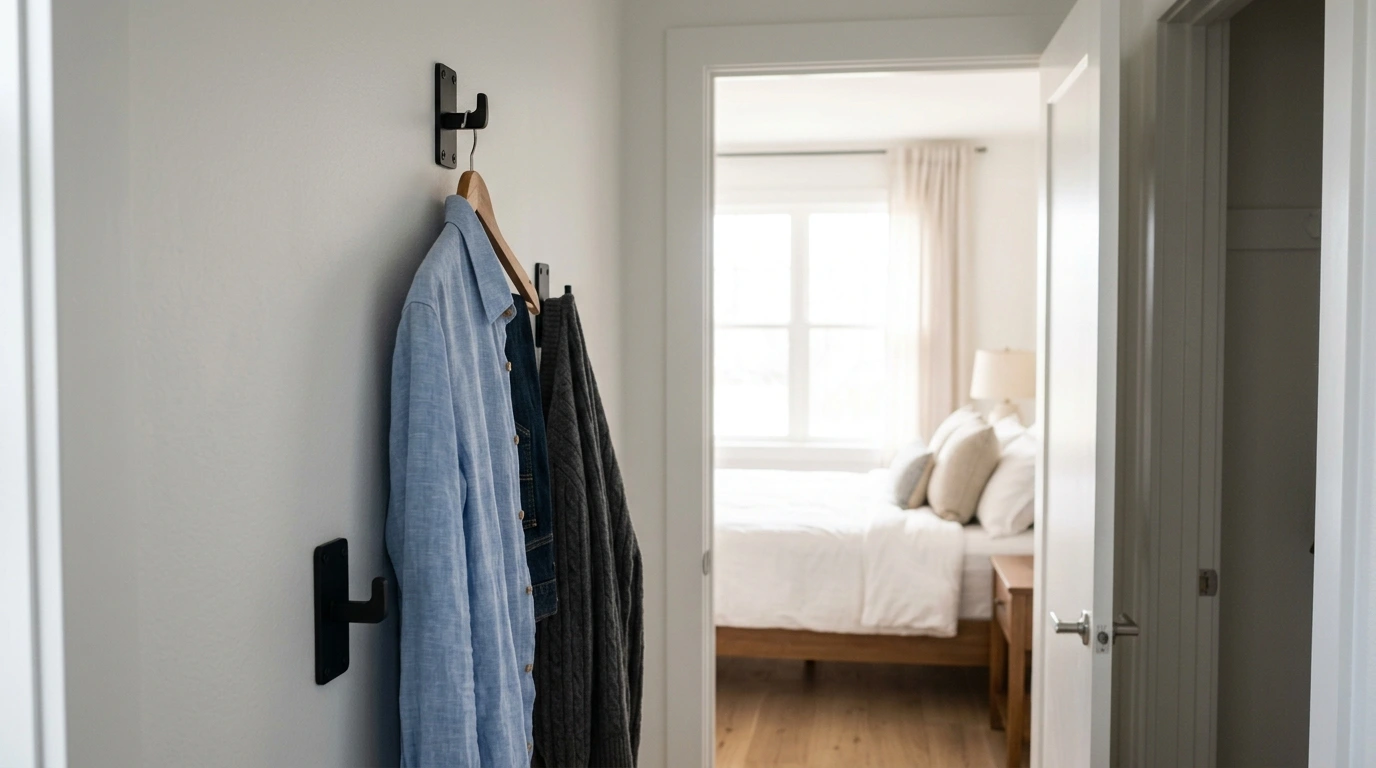
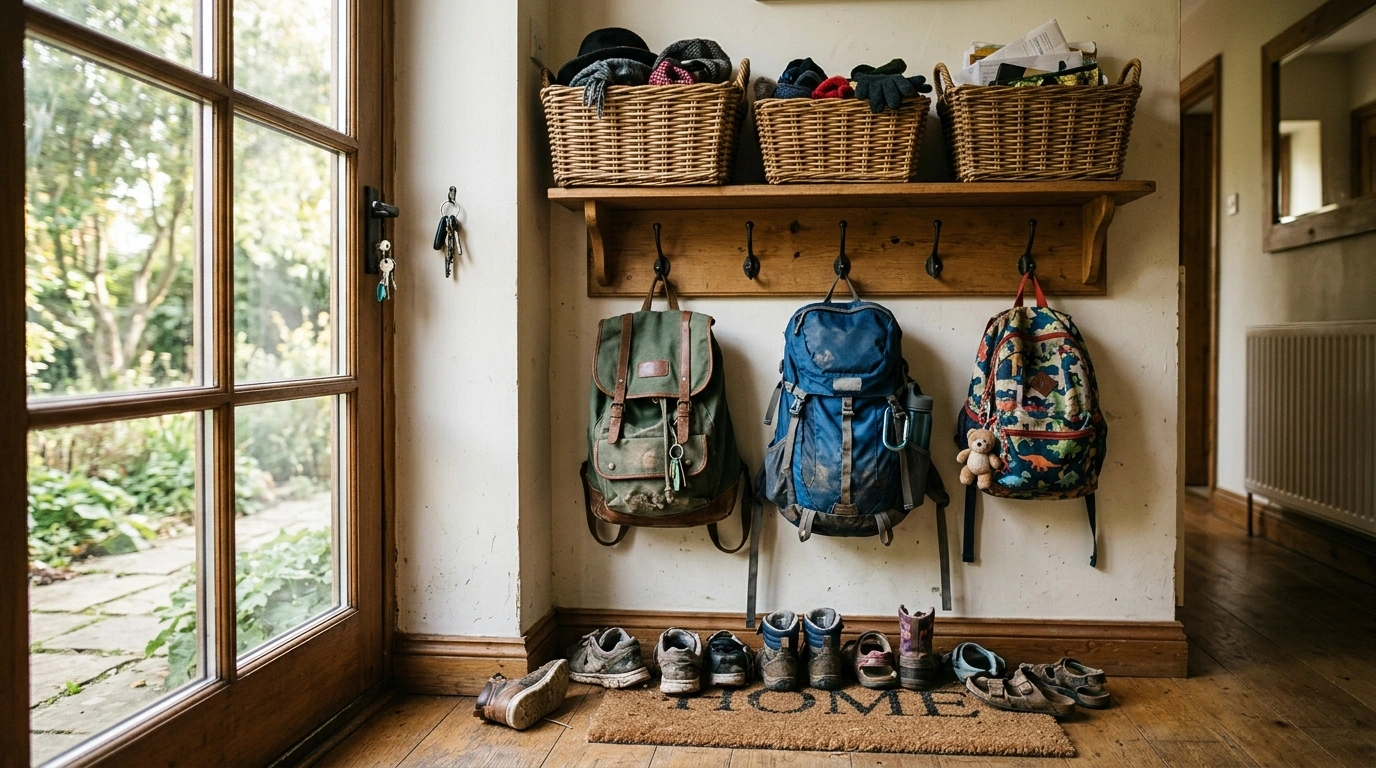
Scattering halfway-worn clothes across bedroom accent chairs ruins an otherwise tidy room. Mount two heavy metal utility hooks on the bare side return wall inside your closet door frame. Use the first hook to hang tomorrow’s complete outfit, including bra and trousers, so mornings stay effortless.
Use the second hook for jeans or wool cardigans that have been worn once but do not require immediate washing. Keeping once-worn items separated from clean garments prevents clean hanging rods from smelling stale while clearing clutter off bedroom furniture.
Frequently Asked Questions
Which organizer works best for very small reach-in wardrobes?
A heavy-duty suspended lower hanging rod provides the biggest storage return. Doubling your short-hanging rail doubles capacity instantly without requiring wall anchors or losing shelf depth.
What is the most durable divider material for open wire shelving?
Rigid plastic clip-on brackets made specifically for wire racks outperform standard flat-base acrylic units. Flat-bottom dividers tilt and slide between wire gaps, whereas clipped wire shelf dividers lock securely across front and rear parallel rails.
How much clearance is needed between stacked closet shelves?
Leave twelve inches of vertical height between shelves for folded denims and heavy knits. Stacking clothes higher than ten inches causes towers to lean and wrinkle the bottom garments.
Can tension rods hold heavy winter coats without collapsing?
No. Spring-loaded tension poles rely entirely on rubber friction and slip when subjected to weight over fifteen pounds. Heavy wool coats and leather parkas require solid steel brackets screwed directly into wooden wall studs.
How do you prevent musty odors inside closed closet spaces?
Place a refillable calcium chloride moisture absorber cup on the back floor, and avoid cramming hangers tightly against the back drywall. Leaving two inches of rear air circulation prevents humidity pockets from forming.
Start with a Single Rod Adjustment
Begin by installing a suspended lower hanging rod or switching your mismatched hangers to slim velvet profiles. That single structural shift immediately opens several inches of usable rail space and clears your floor of clutter. Once your hanging tier stays orderly, add shelf dividers and vertical hooks to lock in a functional morning routine.