
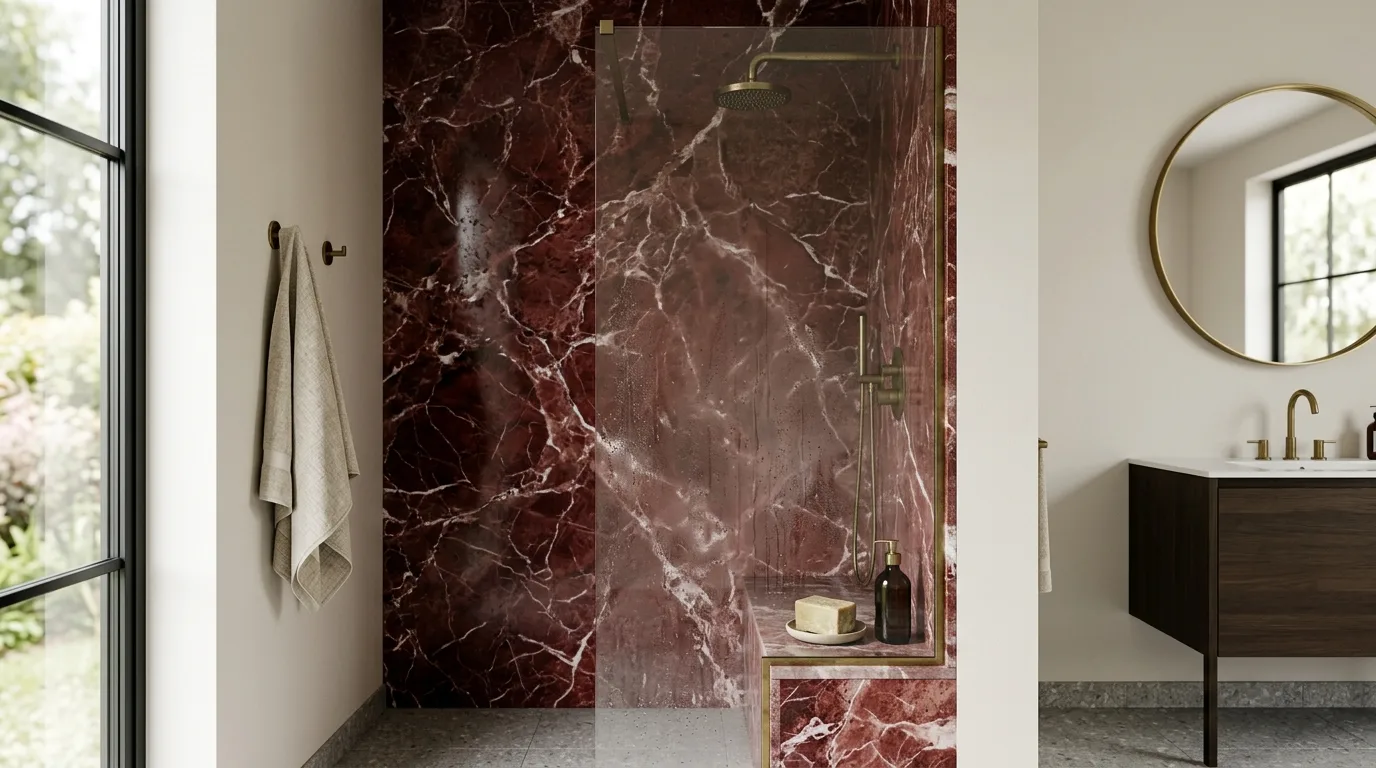
White tile. White grout. A mirror you stopped noticing years ago. The room functions and it says nothing.
So people go looking for stone with some heat in it. That is usually where a red marble bathroom enters the plan, and it is also where a lot of projects go sideways, because red does not sit quietly the way beige does.
It does not suit every house either. If your bathroom doubles as the laundry with a machine parked against one wall, half the stone you pay for disappears behind an appliance.
Thirteen decisions follow. Where to put the stone, how large the pieces should be, what to pair it with, and the parts nobody warns you about until the invoice arrives.
Why Red Stone Keeps Showing Up in Bathrooms Now
Natural stone spent decades stuck on countertops. That has shifted. More people now run it up shower walls and across floors so the whole room is finished in one material rather than a slab of stone floating above painted drywall.
Red is where the change shows most. The luxury white marble bathroom has been photographed to death, and a red marble bathroom gives you the same stone quality with a completely different temperature.
The mistake at this stage is treating red as a colour to match. People buy red paint or red towels to go alongside it and the two reds never agree, because stone shifts through three or four shades depending on the angle you stand at.
It also falls apart beside cream tile you intend to keep. Next to red, cream stops reading as a colour and starts reading as dirt.
1. Start With the Right Red Marble Tiles
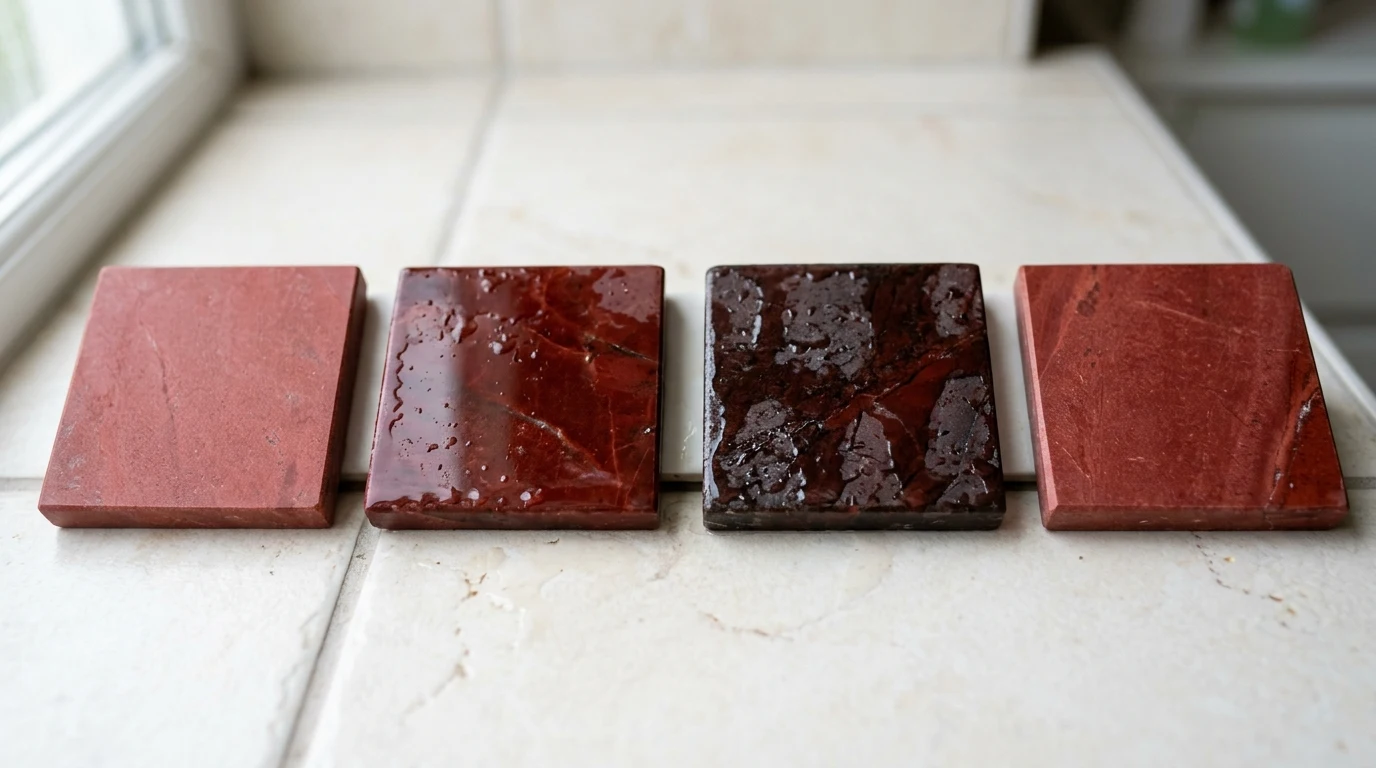
Rosso Marquina is the name that comes up most for deep red stone with white veining running through it. Red marble tiles in that stone are commonly sold polished in a 3 by 6 inch format, which matches standard subway sizing, so it drops into an existing layout without anyone redrawing the wall.
Order samples before you order a pallet. Red varies far more between blocks than pale stone does, and the piece in the listing photo is rarely the piece that turns up on the truck.
Lay three samples out in the actual room. Look at them dry, then splash water over them, because water darkens the stone and that is how a shower will read every single day.
The beginner mistake is buying an entire order off one thumbnail.
2. Size the Slabs Before Anything Else
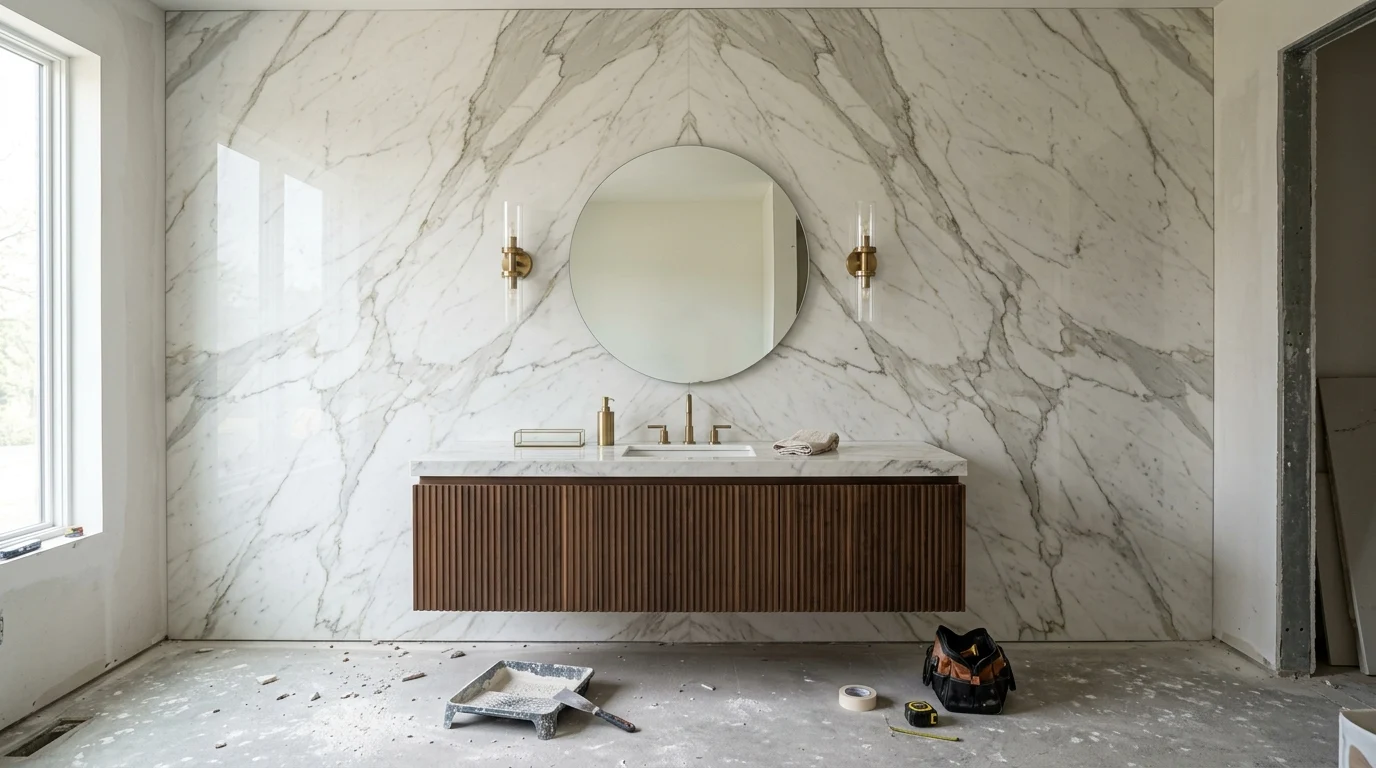
Grout lines break up veining. That is the whole argument for going large.
Big slabs or oversized porcelain panels with veining that runs continuously across the surface will always look more considered than the same wall built from mosaic pieces, because the pattern reads as one movement instead of forty interruptions.
Measure the route, not just the wall. An uncut slab has to get through the front door, around the turn at the bottom of the stairs and into a room with a doorway that was framed for a person, not a stone panel. Second floor bathrooms fail this test constantly.
Porcelain panels solve that. They are lighter, they cut on site, and the veining is printed to run across the entire sheet.
3. Give Your Red Marble Bathroom One Hero Surface
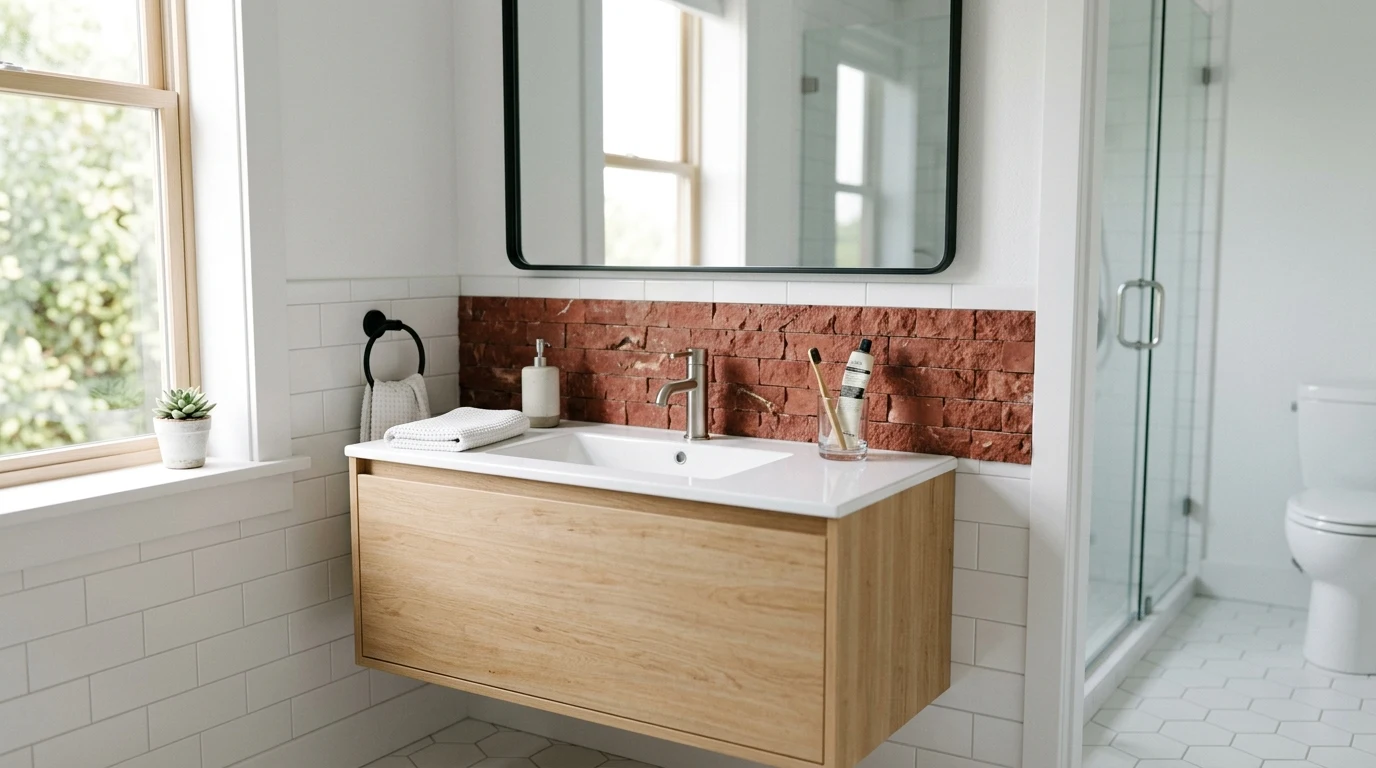
Pick one surface. Not four.
The strongest version of this look concentrates the stone on a single plane, usually the vanity backsplash, one shower wall, or the countertop. Everything else stays neutral, and the veining ends up functioning as the artwork in a room that normally has none.
Run the same stone across all four walls and the room closes in on you. There is no rest for your eye anywhere.
Here is how to decide. Stand in the doorway. Whatever surface you look at first is the hero. In most layouts that is the wall behind the vanity or the end wall of the shower.
Concentrating the stone also cuts the material bill, which is the other reason it wins.
4. Marble for Bathroom Walls Without Gutting the Room
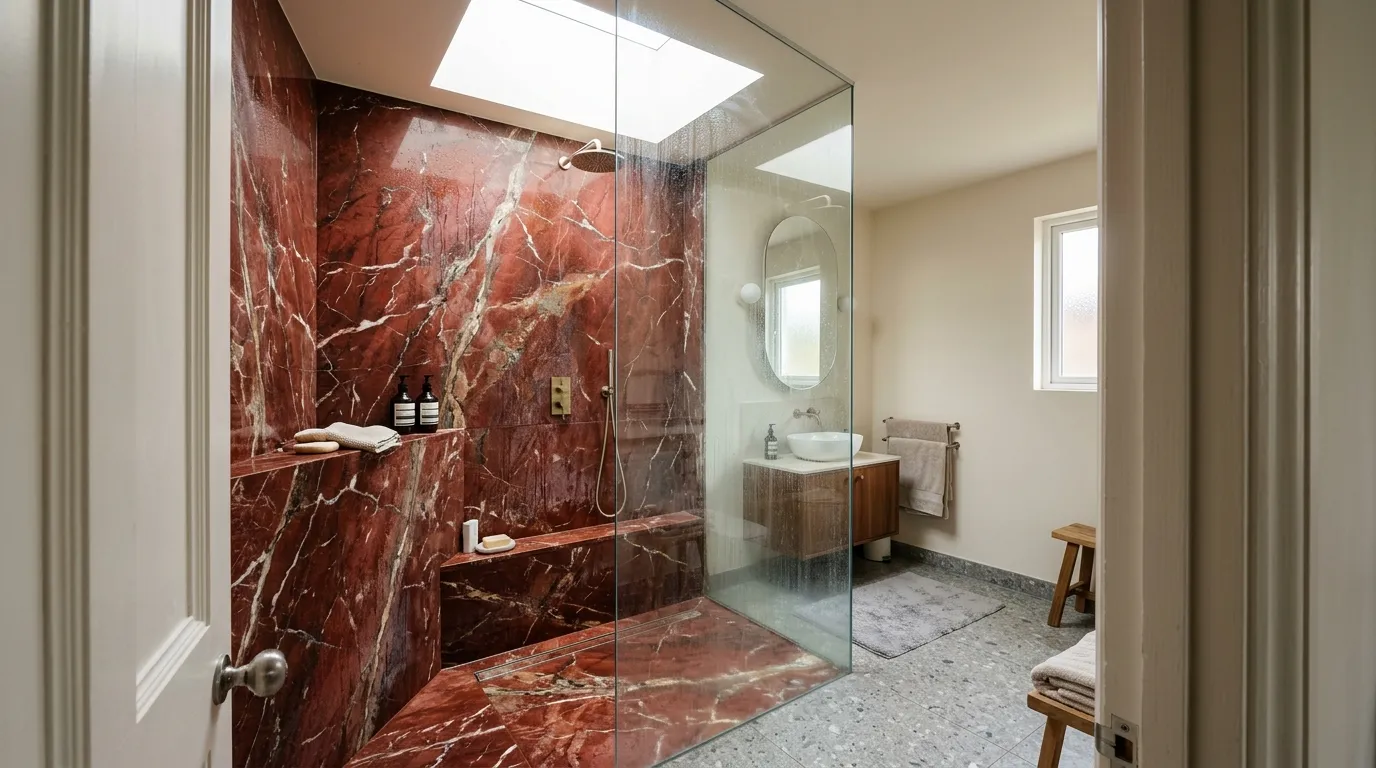
Doing marble for bathroom walls does not mean stripping the room to studs.
The phased route is to clad the shower enclosure only. You get the stone at eye level in the spot where people actually look, and the rest of the room stays painted. Three walls of a standard enclosure use a fraction of the square footage a whole room does, and stone is the line item that moves a bathroom budget more than any other.
Phase two comes later. Countertop, then backsplash, then floor if you still want it.
One thing cannot be phased though. The waterproof membrane behind the stone has to be right the first time, because no future phase can fix a wall that was tanked badly underneath.
5. Rethink the Marble Floor in Bathroom Layouts
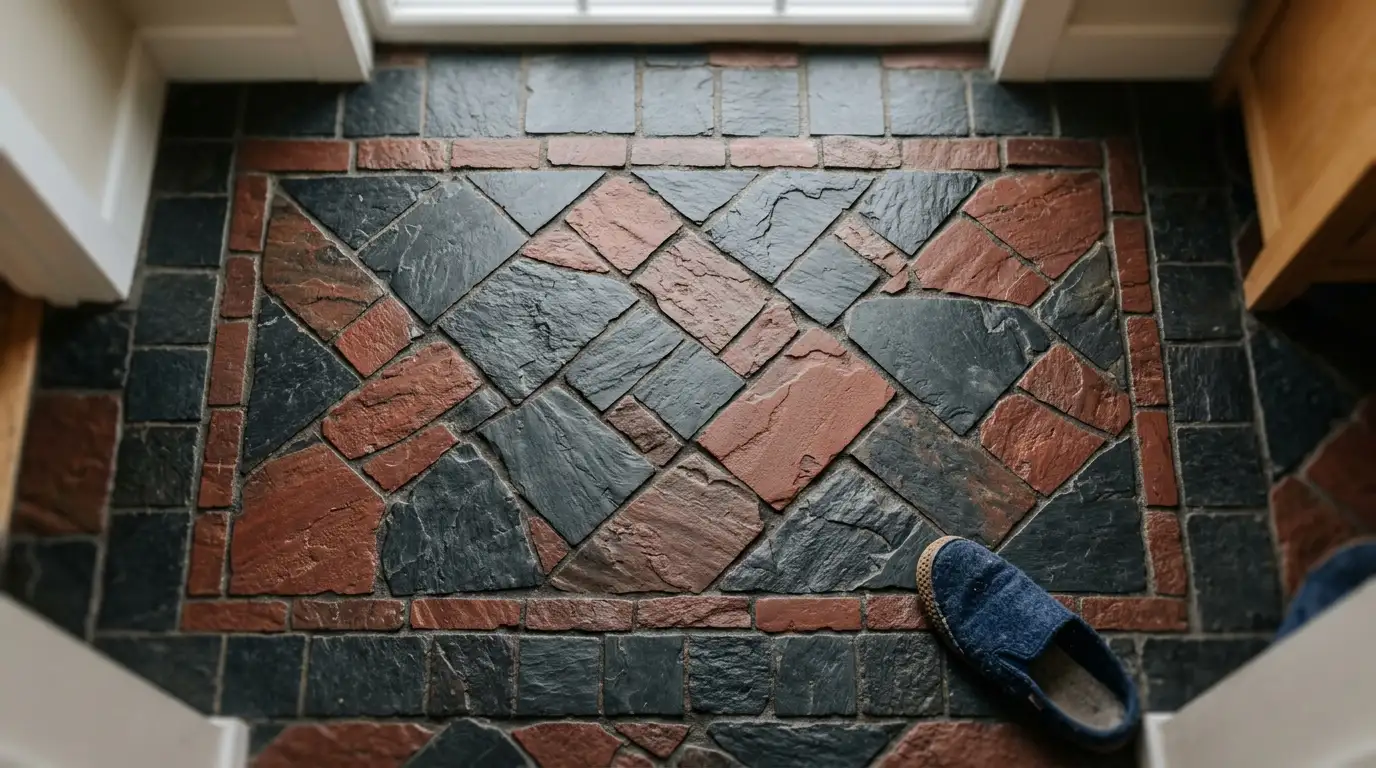
A patterned marble floor in bathroom plans does a job most people hand to the walls. It anchors the room from the ground up, generates the visual interest, and leaves the vertical surfaces free to stay quiet.
Two routes work. Put the red on the floor in a pattern and keep the walls bare, or flip it and use a black marble floor bathroom base underneath red walls so the darkest element sits where dirt lands anyway.
Pattern choices matter more than colour here. A running bond looks calmer. A checker or a border inset looks deliberate and period correct.
Dry lay the first square metre before anyone mixes adhesive. Veined stone needs sorting by hand so two loud pieces do not end up touching.
6. Colour Partners That Keep Red and Black Marble Calm
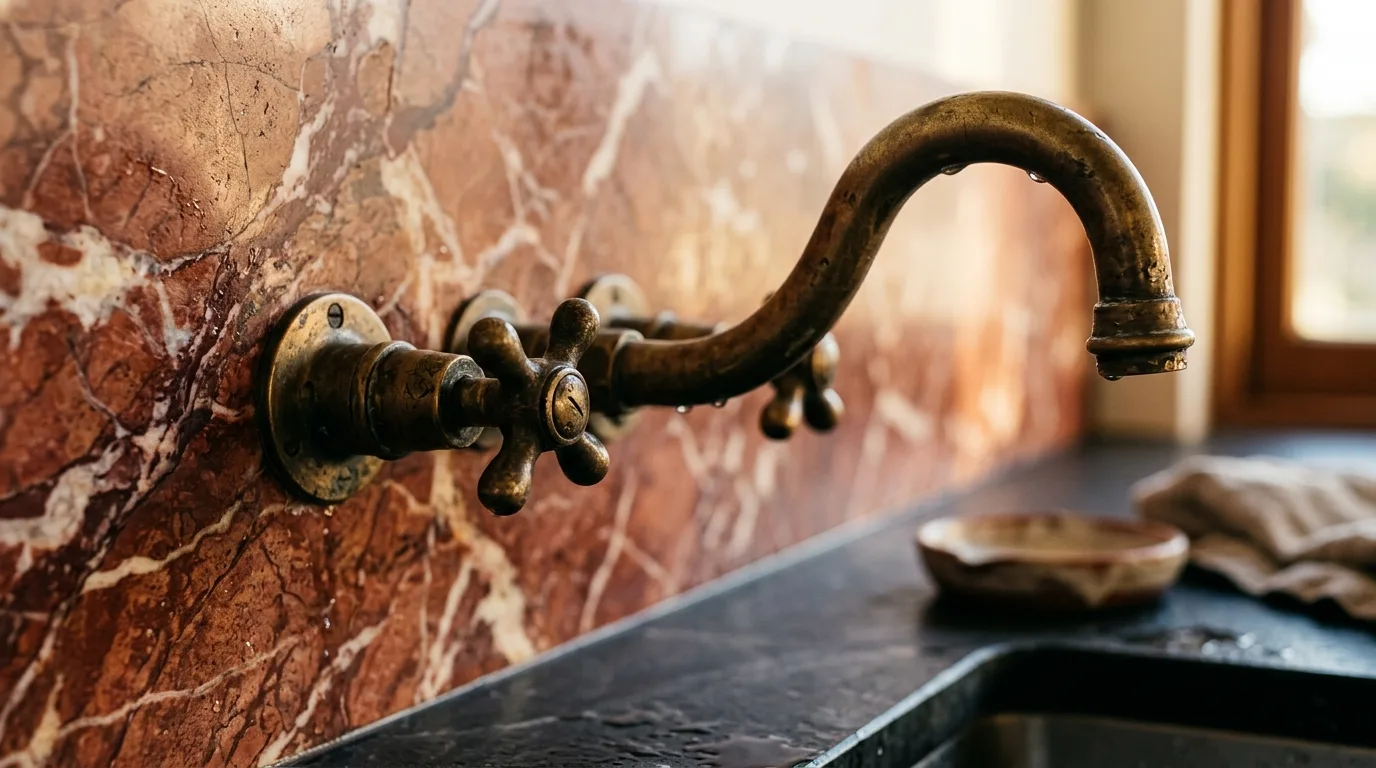
Red and black marble together is the highest contrast pairing in this whole list, and it needs a hard limit on everything else. Stone, one metal, one wood tone. That is the cap.
Brass warms the red. Matte black hardware sharpens it. Chrome tends to go flat against red stone and reads as builder grade.
Blue and red marble in the same room is trickier, because both want to lead. If you try it, one has to be reduced to a single accent, like a niche or a threshold strip.
And if the red starts to feel like too much heat, blue marble bathroom ideas deliver the same drama at a cooler temperature.
The commonest error is stacking too many strong colours and materials at once. Red plus patterned wallpaper plus a coloured vanity plus gold everything is not a scheme, it is a pile up.
7. Mixing Red With Other Marble Tile Bathroom Ideas
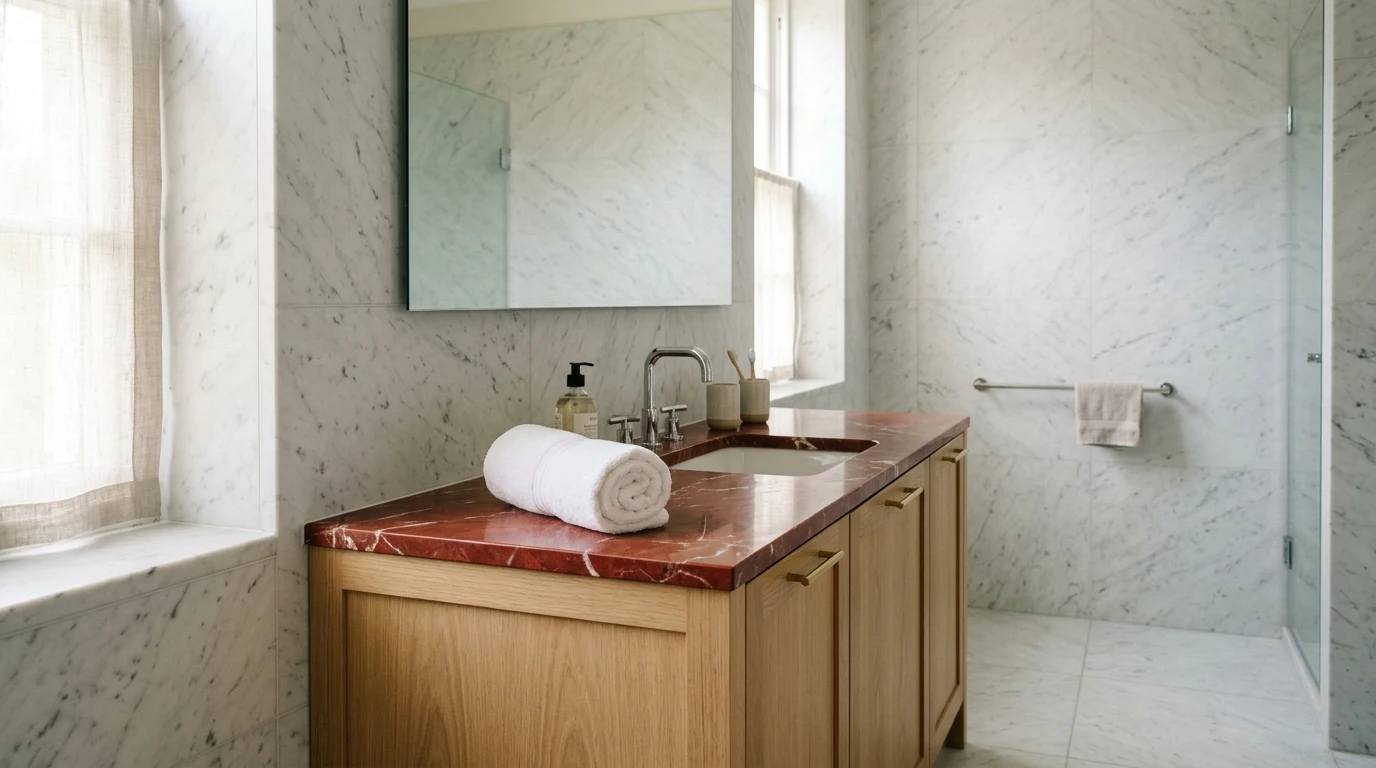
Most marble tile bathroom ideas assume one stone per room. Two can work if you decide upfront which one is the background.
Borrow the structure from white marble bathroom ideas and let pale stone carry the floor and the shower surround, then bring red in on the vanity top only. The white does the heavy lifting and the red becomes the thing people comment on.
A black and white marble bathroom floor also takes a red counter well, because the floor is already reading as pattern rather than colour.
A blue marble tile bathroom niche is the quieter version of the same trick. A niche is a boxed recess you can tile in an afternoon without disturbing the wall around it, so it is also the cheapest way to test a second stone before committing.
Where the two stones meet is what people notice. Butt them tight with a matching mitred edge rather than a metal trim strip, because trim reads as a fix rather than a decision.
8. Grout Joints and Slip Safety in the Shower
Stone belongs in a shower, but only under conditions.
Use stone tile or solid slabs, keep grout joints tight, and choose a surface with real slip resistance on the shower floor itself. Polished stone underfoot with soap running over it is genuinely dangerous, which is why floor pieces are usually honed, textured or dropped down to a smaller format where grout adds grip.
A bathroom with marble tiles in the wet zone also needs sealing before first use, not after.
Match the grout to the mid tone of the stone rather than to the veining. White grout against red marble draws a grid over your slab and undoes the reason you bought it.
Ventilation is the other half of this. A working extractor fan protects the seal.
9. Counters and a Red Marble Sink
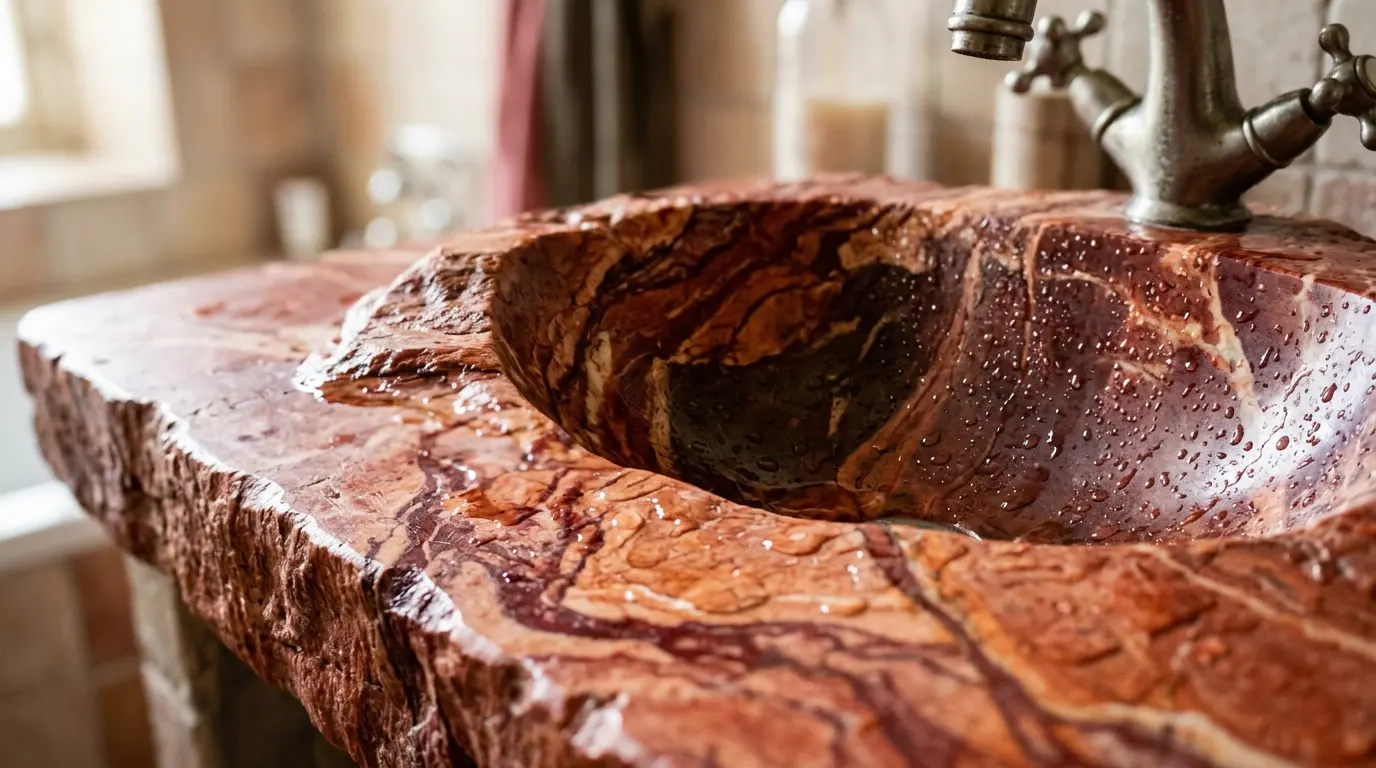
A red marble sink cut from the same block as the counter is the most quietly expensive looking move in this whole post, because the veining continues down into the basin instead of stopping at a seam.
If that is out of range, compare the alternatives honestly. Granite gives you a natural surface and usually costs more. Quartz is friendlier on budget but tends to look manufactured up close, especially in strong colours.
Integrated basins hide the joint. Vessel bowls sit on top and show more of the counter.
One warning that applies to any marble counter. Toothpaste, acidic cleaners and the contents of a makeup bag will etch the surface over time, so keep a tray under the bottles.
10. Shower Bases and Fixtures That Do Not Fight the Stone
The base is where people lose the plot. They hunt for red to match, fail, and end up with a mismatched puddle at the bottom of a good wall.
Two options work. Use a white base and let it read as a deliberate break, or match the base to a dark porcelain tile so the floor recedes and the wall keeps the attention.
Keep fixture shapes restrained. Straight arms, unfussy levers, one finish throughout including the drain cover and door hinges.
Glass matters too. Low iron glass on the screen has no green tint, so the red behind it stays red instead of shifting brown.
11. Cold Feet and Radiant Heat
Stone floors hold no heat. Not chilly in a charming way. It is the kind of chill that wakes you up properly in February.
Without radiant heat underneath, a stone floor sits colder than the rest of the room right through winter. This is the single most common regret in a red marble bathroom that was planned in summer.
Electric underfloor mats go in during the same job as the tile, sit under the adhesive bed, and run off a thermostat you set to come on before you wake up. Retrofitting later means lifting everything you just paid to lay.
If the budget cannot stretch, plan for a heavy bath mat and put the stone on the walls instead of the floor. That is a real answer, not a compromise.
12. Lighting and Surface Finish
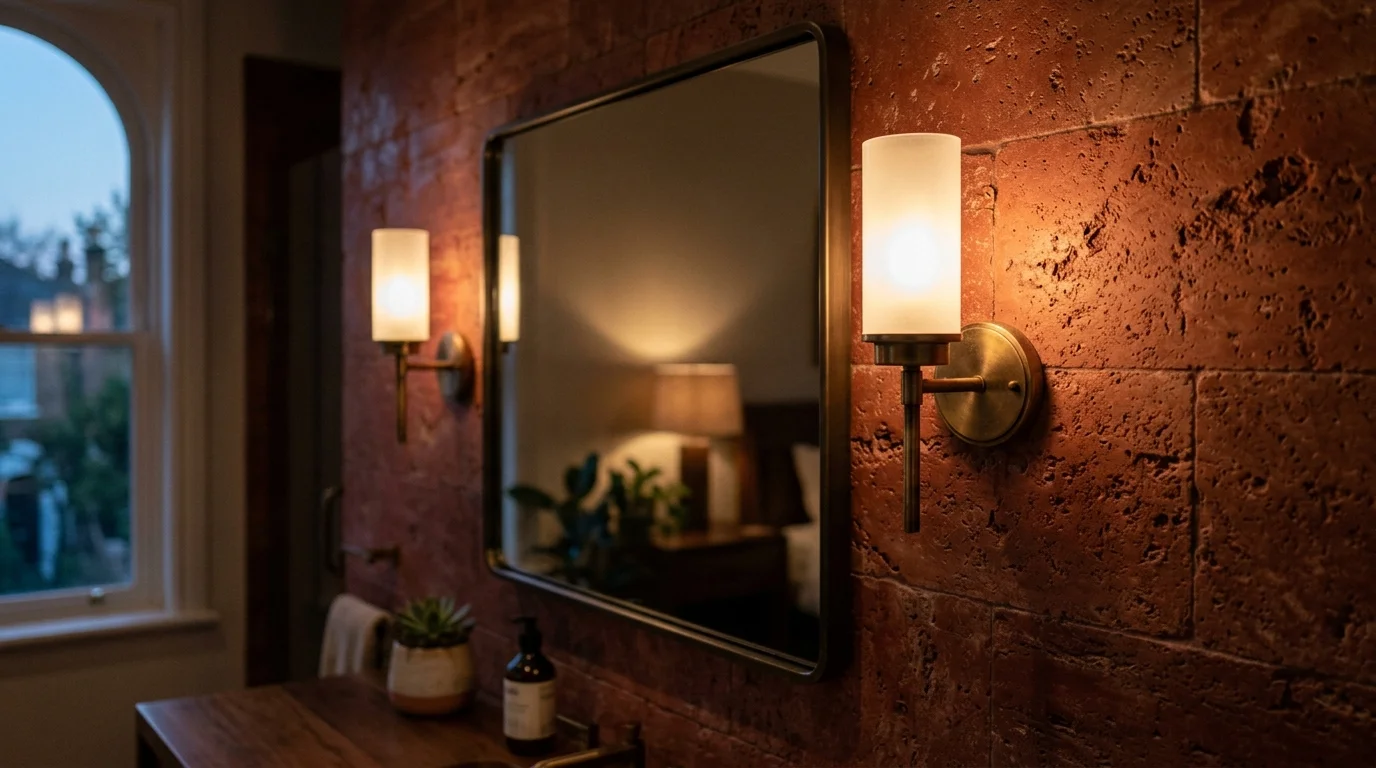
Polished stone acts like a mirror. In a room with one window it doubles whatever daylight arrives, which is why polished belongs on the wall facing the light rather than the wall beside it.
Honed reads matt, hides water spots, and is far more forgiving on anything horizontal.
Bulb colour temperature changes the stone more than most people expect. Cool bulbs push red toward brown. Warmer bulbs push it toward pink. Swap the bulb in your existing fixture first and live with it for a few evenings, because the fitting you already own is what the stone has to survive.
Position beats brightness. Two sconces mounted beside the mirror at face height light a person properly and rake across the stone at an angle, which is what makes veining visible. A single ceiling downlight does the opposite and flattens everything into one dull sheet.
13. Storage and Mirrors for Modern Marble Bathroom Ideas
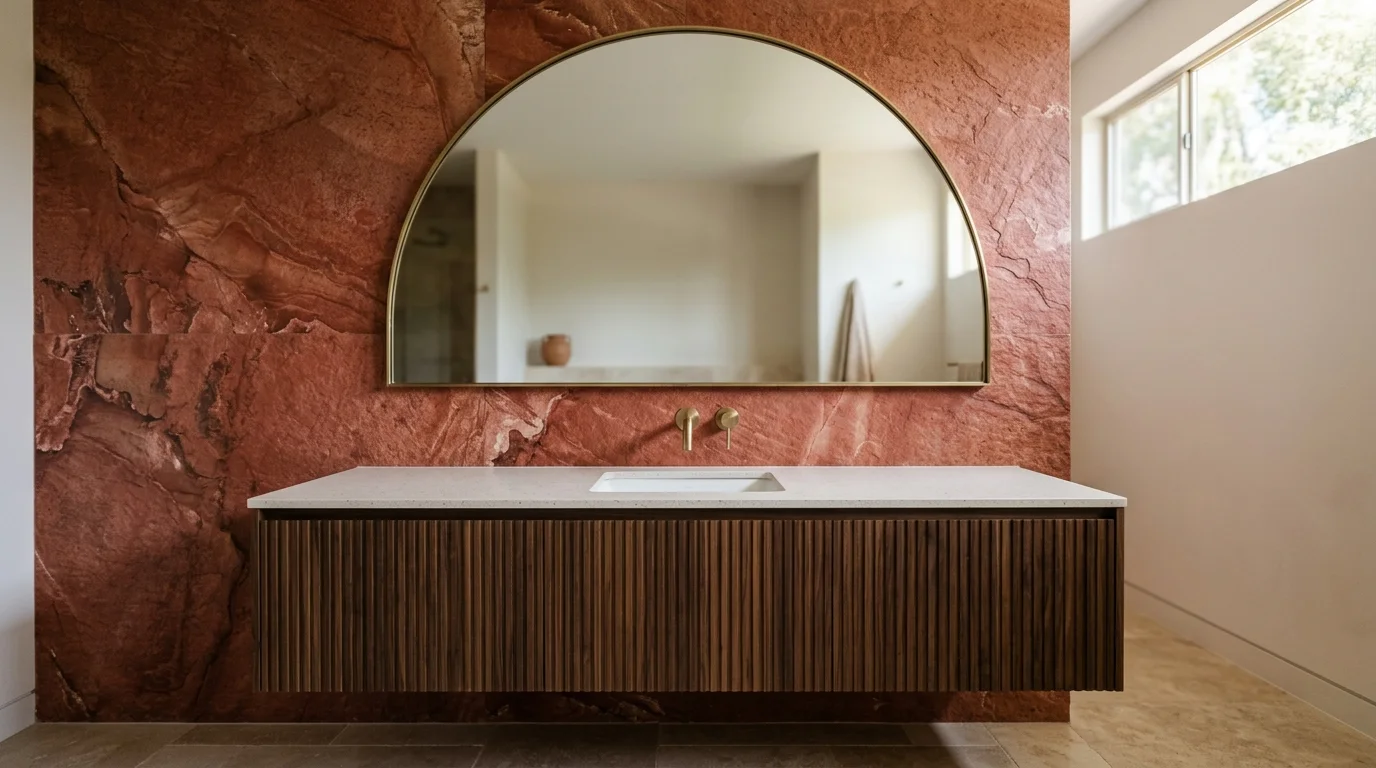
Most modern marble bathroom ideas share one habit. The counters are empty.
Straight lines, concealed storage and uncluttered surfaces let the veining act as the artwork rather than compete with fourteen bottles and a toothbrush cup. Build a drawer for daily clutter. Sink a niche into the shower wall so nothing hangs off the glass.
Handleless fronts help, because hardware on a vanity directly below a stone backsplash creates a second row of visual noise at exactly the wrong height.
Mirror shape is the other lever. A curved or arched silhouette above the vanity softens the grid of the tile behind it and pulls the eye toward the stone rather than the frame.
Skip open stone shelving. It collects water and stains.
Cleaning Red Marble Once It Is In
Clean it with a pH neutral stone cleaner and nothing else. Bathroom sprays, bleach based products and anything acidic will dull the polish, and once red marble goes cloudy it needs professional refinishing rather than a scrub.
Test the surface every few months by dripping water onto the counter. If it beads, the protection is holding. If the stone darkens under the drop, reapply.
Keep a squeegee in the shower. Hard water leaves mineral marks on dark stone far faster than it does on ceramic, and pulling it down the walls afterwards takes seconds.
The mistake is reaching for a general bathroom spray on autopilot. Most of them are acidic, and the damage only shows months later once the shine has gone patchy.
Timing the Job and Living With the Result
A whole bathroom renovation runs into several weeks with trades booked around each other, and the room is out of use for most of it. A contained upgrade like a stone vanity top or a backsplash strip is genuinely a weekend job.
Order the stone before you book anybody. Slabs are cut and finished to order, and schedules collapse when a tiler turns up to a delivery that has not landed.
Then the honest part. This is not a room that suits everyone. Every water spot shows on polished red, and the next owner of your house may not share your taste in stone. If a sale is coming, keep the stone in pieces you can lift out.
Frequently Asked Questions
Does red marble work in a powder room?
It works better there than anywhere else in the house. No shower means no slip requirements, no steam and no sealing anxiety, so you can use polished stone on every surface and let it be theatrical. Powder rooms are also a space people pass through rather than linger in, so intensity works in your favour there.
Can red marble go over existing tile?
Sometimes, and only if the existing surface is solid, flat and fully bonded. Tap across the old tile and listen for hollow spots. Any drummy areas have to come off. Height is the catch, because a second layer raises the floor and your door may no longer clear it.
How do I get the look on a rental budget?
Buy the stone in furniture rather than fixtures. A red marble side table, a stone tray, a freestanding basin stand, all of it leaves with you. Porcelain printed to look like stone is the other route, and it costs less per square metre than quarried stone because it comes off a production line rather than out of the ground.
What should I skip entirely?
Stone shelves, stone soap dishes and stone bath surrounds that trap standing water. They stain, they etch, and they are the first things that make a good bathroom look tired.
Do I need a stone specialist or can a regular tiler do it?
For porcelain panels a good tiler is fine. For real stone slabs it is a different trade, because slabs need mitred corners, book matched joints and cutting done wet on site. Ask to see finished stone work before hiring, not just tiled bathrooms. A tiler who has only ever laid ceramic will treat a slab like a big tile and the corners will show it.
Making the Call on Red
A red marble bathroom is a commitment rather than a finish. It rewards restraint on placement and punishes anyone who buys the whole room in one stone.
Pick your hero surface. Get the slab size right. Cap the palette at stone plus one metal plus one wood. Sort out the heating before the tile goes down.
One decision people hand to the fabricator by accident is veining direction. Mark the top edge of the slab yourself before it is cut, because a wall where the veins run sideways looks like a mistake and cannot be undone once the piece is fixed.
And if the room has no daylight and no budget for proper lighting, choose a different stone. Red without light reads brown, and brown was not the plan.
Related reads: Flattering Ways on How to Braid Your Own Hair Step by Step, Red Clay Strays Concert Outfit Ideas That Last the Whole Set and How to Build a Closet in a Room with Framing and Built-In Shelves.