
How do I maximize small closet space when my shelves overflow and winter coats take up every inch of hanging rod? Walk into any compact bedroom and the lack of proper storage becomes immediately obvious before the door even shuts fully.
Standard builder shelves waste vertical volume by leaving huge gaps above stacked sweaters and beneath short shirts. Fixing this requires targeted adjustments to shelf placement and vertical zoning rather than buying more plastic bins that just collect dust.
Assuming a single hanging rod is enough for all clothing lengths
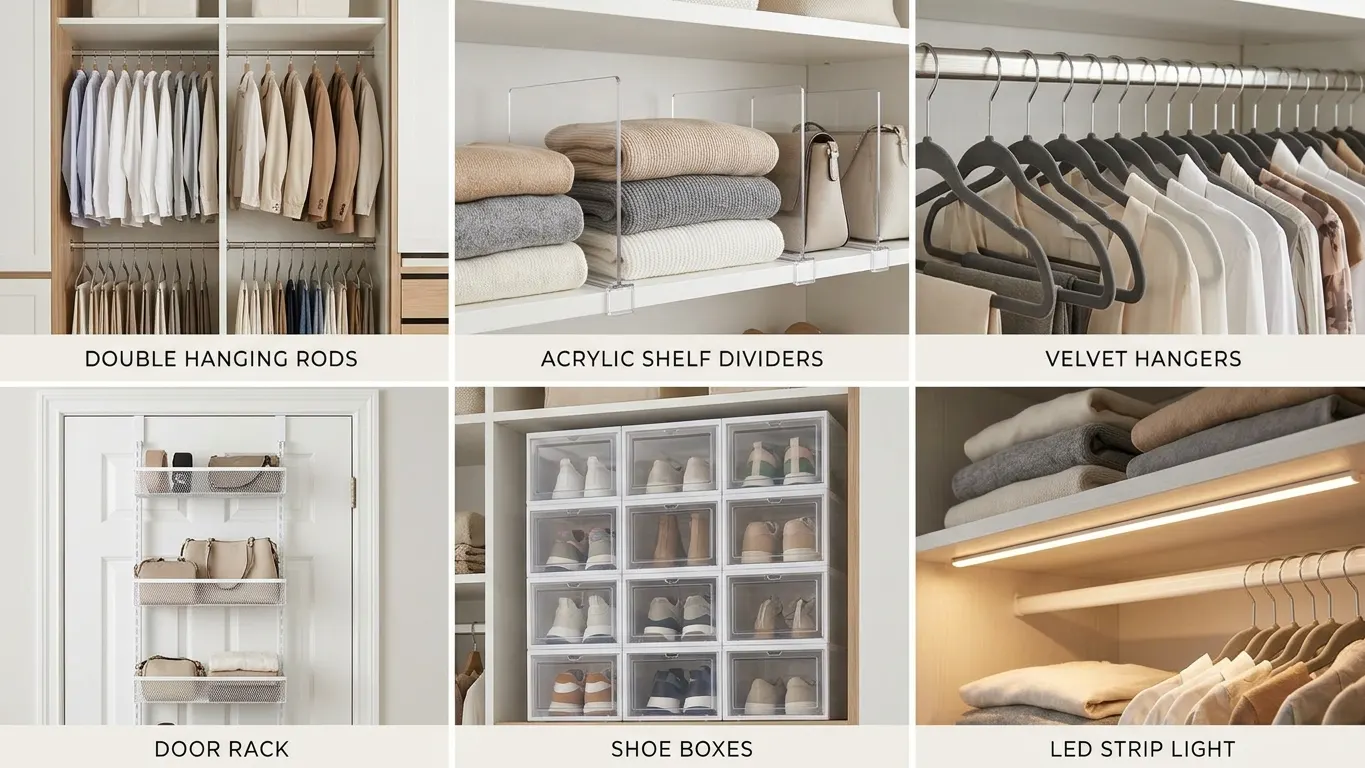
Most builders install one high rod that leaves nearly three feet of dead air underneath blouses and trousers. This layout wastes more than half the available height in a standard layout. Split that vertical drop into two separate tiers by mounting a lower bar forty inches beneath the upper one. Short garments like shirts and skirts hang easily on both levels without dragging on the floor below. This double hanging method immediately doubles usable rod capacity for anyone dealing with tight bedroom dimensions.
Believing wire shelves cannot hold heavy winter garments
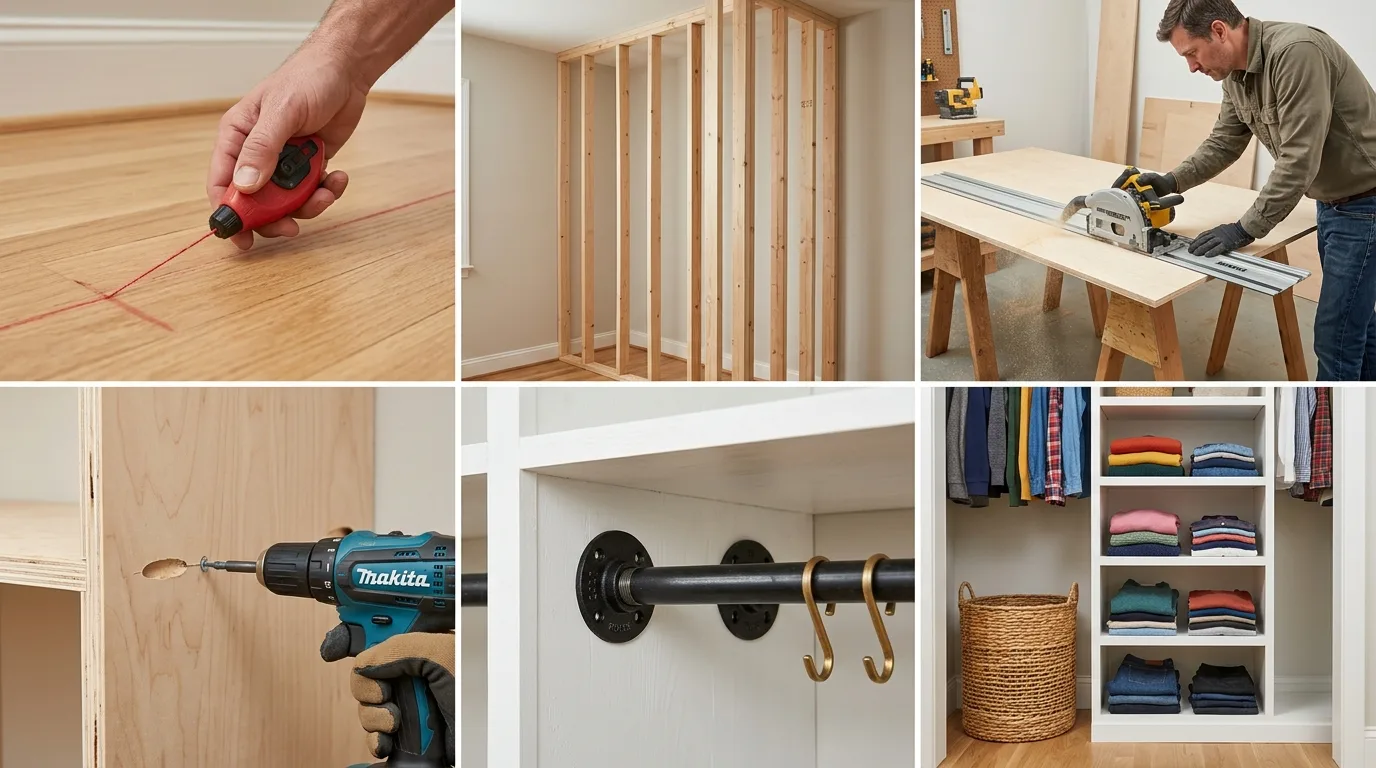
Ventilated wire shelving often sags under heavy wool coats if it lacks proper wall studs and support clips. People overload these weak metal grids until they pull away from drywall entirely. Swap out flimsy builder wire for solid wood laminate shelving anchored directly into studs every sixteen inches. A sturdy three quarter inch wooden shelf handles heavy winter coats and stacked denim without flexing or threatening to collapse during the changing seasons.
Stacking folded sweaters too high on deep upper shelves
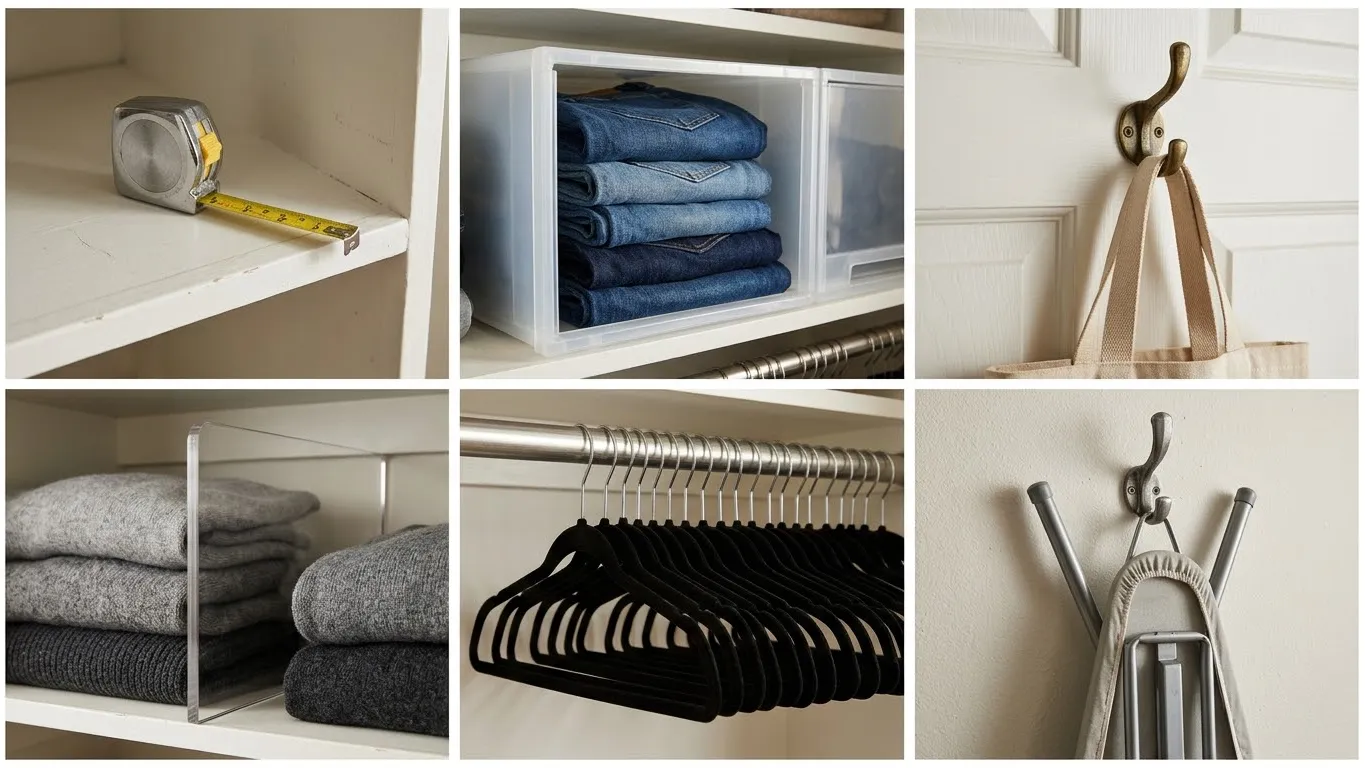
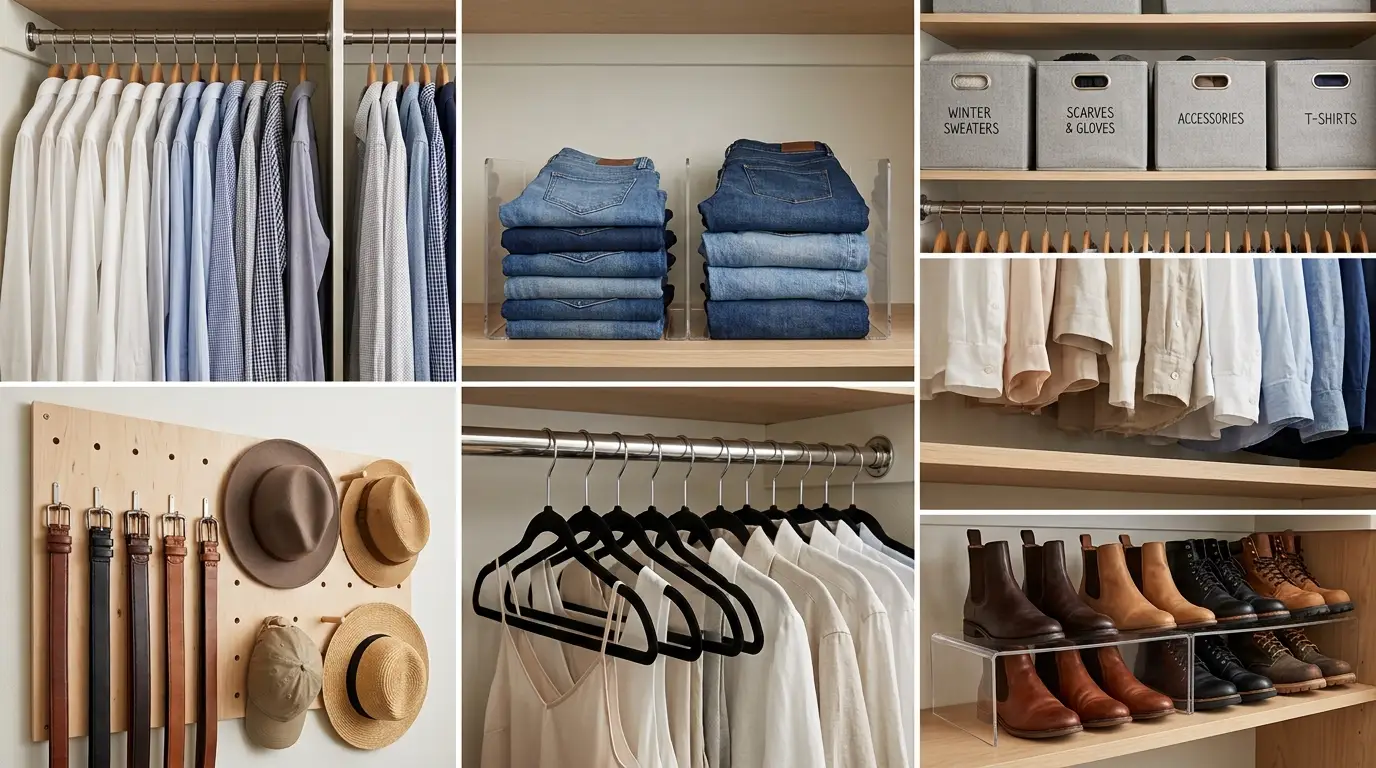
High stacks of knitwear inevitably tumble into chaotic heaps whenever someone pulls a single item from the middle. This bad habit turns top shelves into messy piles within days of tidying up. Install vertical shelf dividers made of clear acrylic spaced ten inches apart across those wide upper boards. Each divider forces sweaters to stay upright and separate so reaching for a favorite pullover never ruins adjacent stacks.
Leaving the back wall completely empty behind hanging clothes
The wall space directly behind hanging garments usually gets ignored because shirts and jackets block direct access. Leaving this zone bare wastes prime real estate that could hold flat accessories or thin organizers. Mount shallow pegboards or modular grid panels on that back drywall before hanging clothes back up. Hang lightweight belts and silk scarves flat against the wall where they take zero extra depth from the main walkway.
Using bulky wooden hangers that steal precious rod width
Thick wooden coat hangers consume inches of valuable rod length that could hold several extra garments. Packing twenty heavy wooden hangers onto a single rail eats up a significant portion of available width. Switch to slim velvet coated hangers that measure a fraction of an inch thick. These narrow profile hangers grip slippery fabrics securely while freeing up enough linear space to fit five or six additional items on the exact same rod.
Forgetting that floor space beneath short items remains vacant
The dark floor area under short shirts and skirts becomes a catch all for loose shoes and random clutter. Leaving this zone unorganized invites messy piles that make retrieving items frustrating. Place a rolling low profile metal shoe rack right beneath the lower hanging rod. This custom fit tier holds twelve pairs of footwear neatly off the floor while keeping everything visible at a glance.
Storing seasonal boots and shoes in heavy cardboard boxes
Cardboard shoeboxes trap moisture and hide footwear from view forcing owners to pull down every single lid to find one pair. Stacking heavy boxes also crushes the bottom containers and makes retrieval difficult. Transfer footwear into clear plastic drop front boxes that interlock securely into vertical towers. These durable containers allow quick visual identification and protect leather surfaces from dust without collapsing under stacked weight.
Ignoring the vertical surface on the inside of the door
The back of a closet door represents wasted surface area that sits idle all day long. Failing to use this zone means missing out on easy storage for flat items. Hang an over the door canvas pocket organizer using heavy duty metal brackets secured over the top edge. Fill the clear pockets with small accessories like sunglasses and rolled socks to keep everyday essentials within arm reach.
Hanging long dresses and heavy coats side by side
Placing bulky outerwear right next to delicate silk dresses creates a cramped bottleneck that wrinkles fabrics instantly. This crowded arrangement makes sliding garments back and forth a frustrating chore. Dedicate one specific corner for full length items like trench coats and maxis while grouping shorter shirts together on the opposite side. This zoning strategy prevents fabric friction and keeps silhouettes crisp and ready to wear.
Placing all accessories in one giant catch all bin
Deep plastic bins swallow up belts and jewelry until everything turns into a tangled knot at the bottom. Digging through a dark container wastes precious morning minutes and damages delicate straps. Insert compartmentalized acrylic drawer trays inside shallow shelving units to sort smaller items individually. Every belt gets its own dedicated slot so accessories stay untangled and visible.
Buying matching storage containers before measuring shelf depth
Purchasing decorative baskets before checking exact shelf dimensions often leaves homeowners with bins that hang over edges or leave huge gaps. Measuring tape must guide every shopping trip to avoid wasted spending. Measure the exact width, depth, and height of every interior cavity before browsing for bins online or in stores. Custom fitted storage containers maximize every millimeter of shelf space without blocking sliding doors or folding panels.
Relying on overhead lighting that leaves lower corners in shadow
Single center ceiling bulbs cast deep shadows onto lower shelves and dark floor corners where items hide out of sight. Working in dim light makes organizing feel impossible and discourages maintenance. Install battery operated motion sensor LED light bars underneath upper shelves to illuminate dark recesses instantly. Bright neutral lighting reveals hidden clutter and makes choosing outfits much simpler during early morning hours.
Treating purse storage like a shelf stacking exercise
Handbags placed in loose stacks lose their structural shape and get scratched against hardware from adjacent bags. Hanging multiple straps over a single small hook stretches handles beyond repair. Install individual purse hooks along a side wall panel or use clear acrylic purse dividers on a dedicated shelf. Each bag stands upright on its own base so leather stays uncreased and ready for daily use.
Frequently asked questions about closet organization
How do I organize a very narrow reach in wardrobe without sliding doors? Remove traditional swinging doors entirely and replace them with a ceiling mounted tension curtain rod holding heavy linen panels to maintain clean sightlines while gaining full access to both ends.
What is the best way to handle off season clothing items in tight spaces? Vacuum seal bulky winter duvets and heavy sweaters in durable plastic compression bags before sliding them onto high upper ledges where daily access is not required.
How do I stop wire shelving from bending under heavy storage loads? Screw a wooden support cleat directly into the wall studs beneath the front edge of the wire grid to transfer weight securely onto framing timbers.
Can I add drawers to a standard open wardrobe without a custom build? Place modular fabric drawer inserts directly onto existing wooden shelves to create hidden compartments for socks and undergarments without permanent carpentry work.
Avoiding the most costly organization mistake
Buying expensive custom shelving kits before fully editing out unworn clothing remains the most financially damaging mistake in closet design. Homeowners spend hundreds of dollars on fancy modular systems only to realize their actual wardrobe volume requires entirely different hanging ratios. Clear out every single unused garment first by sorting items into donation piles before purchasing any organizational hardware. Skipping this initial sorting phase guarantees that new storage bins will simply hold unwanted clutter rather than functional everyday essentials.