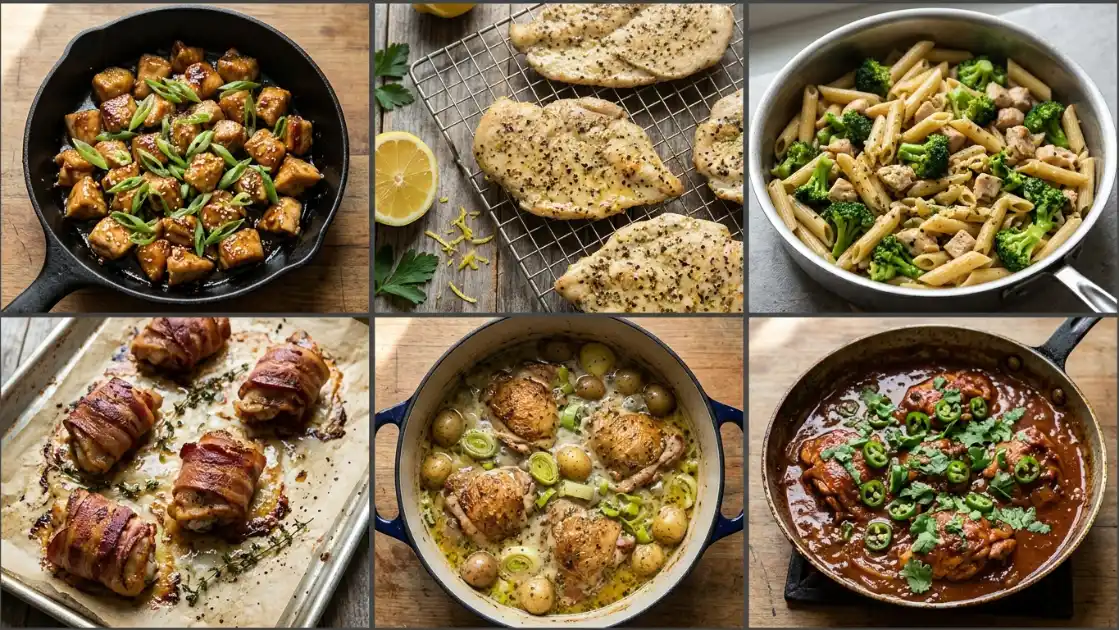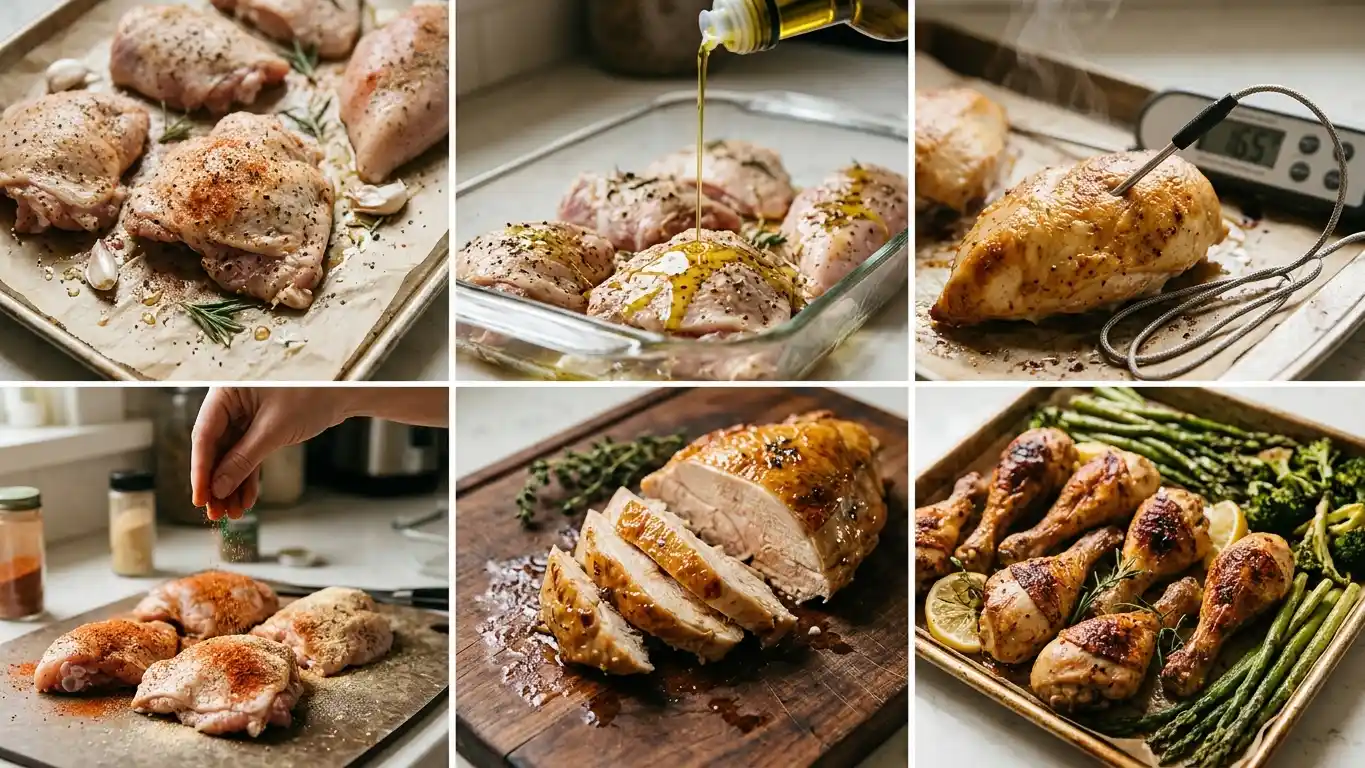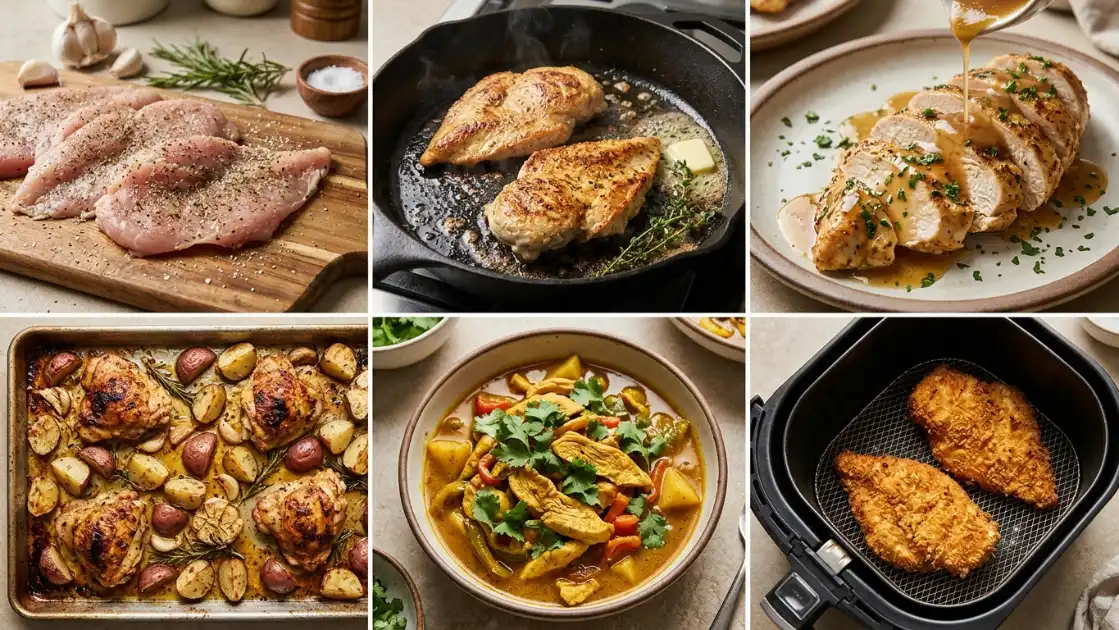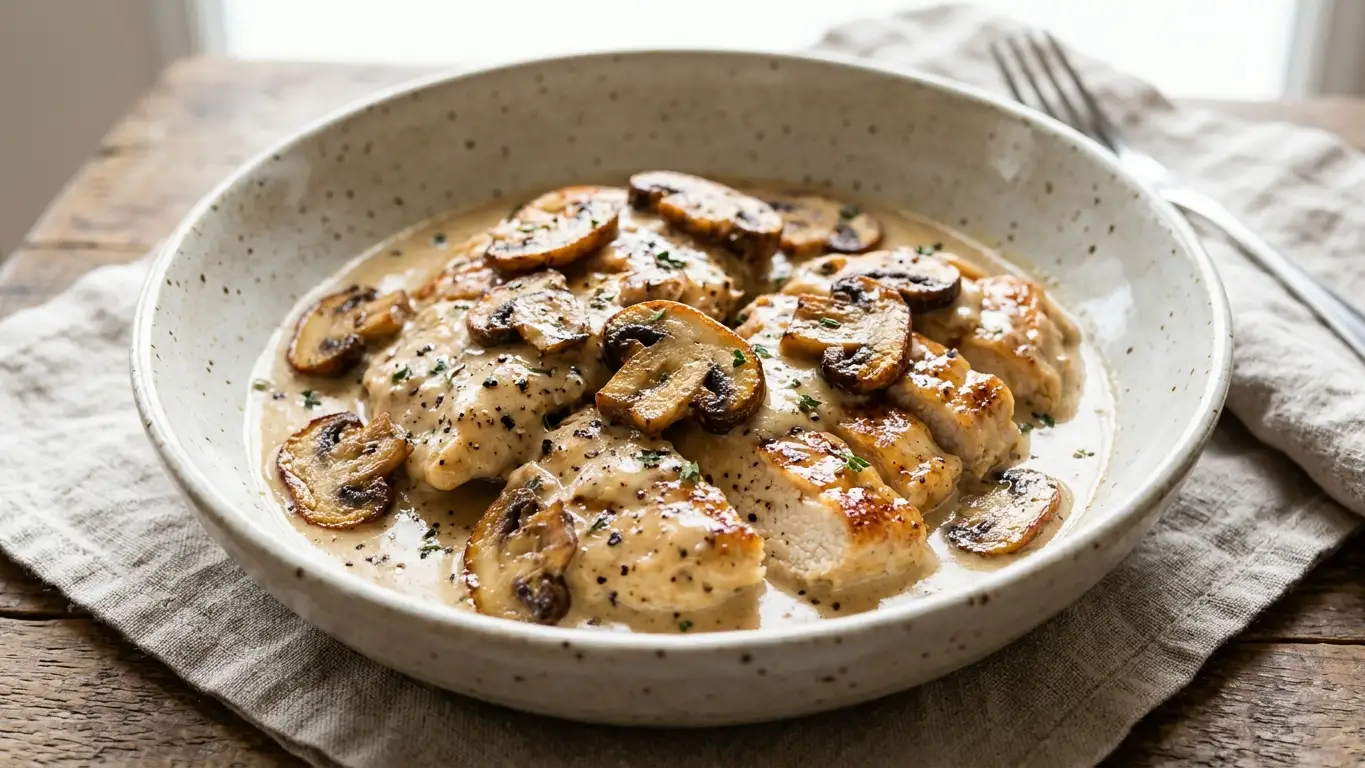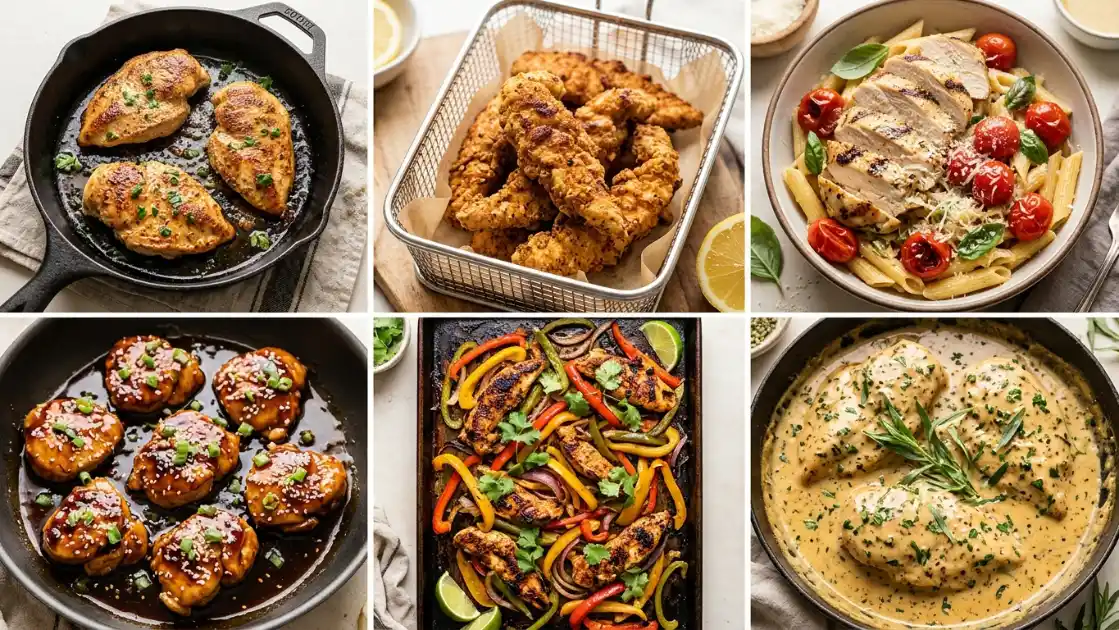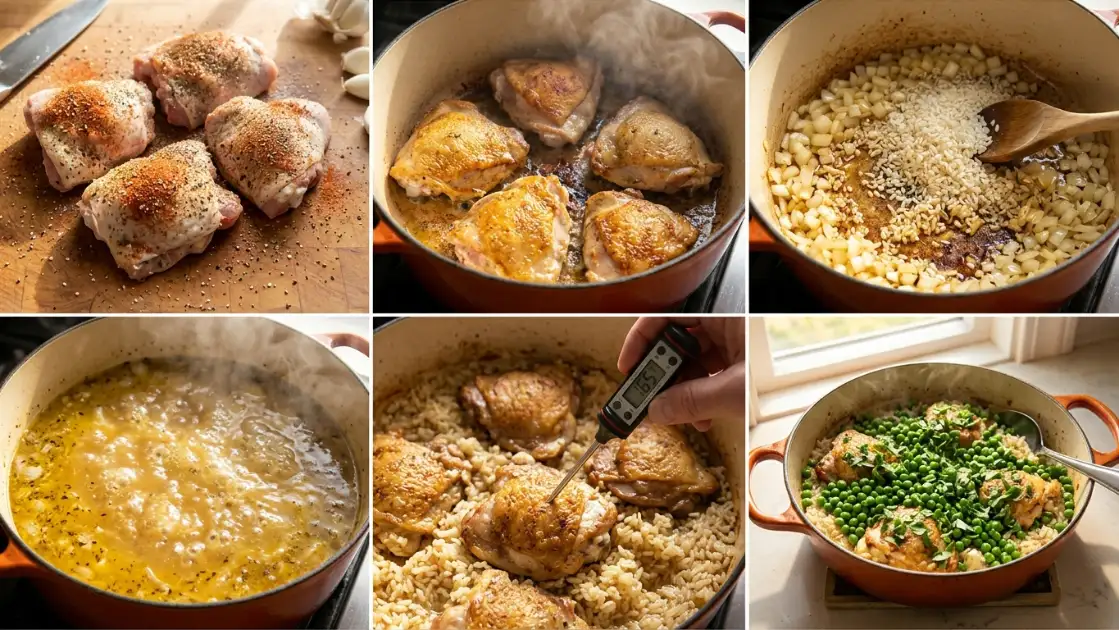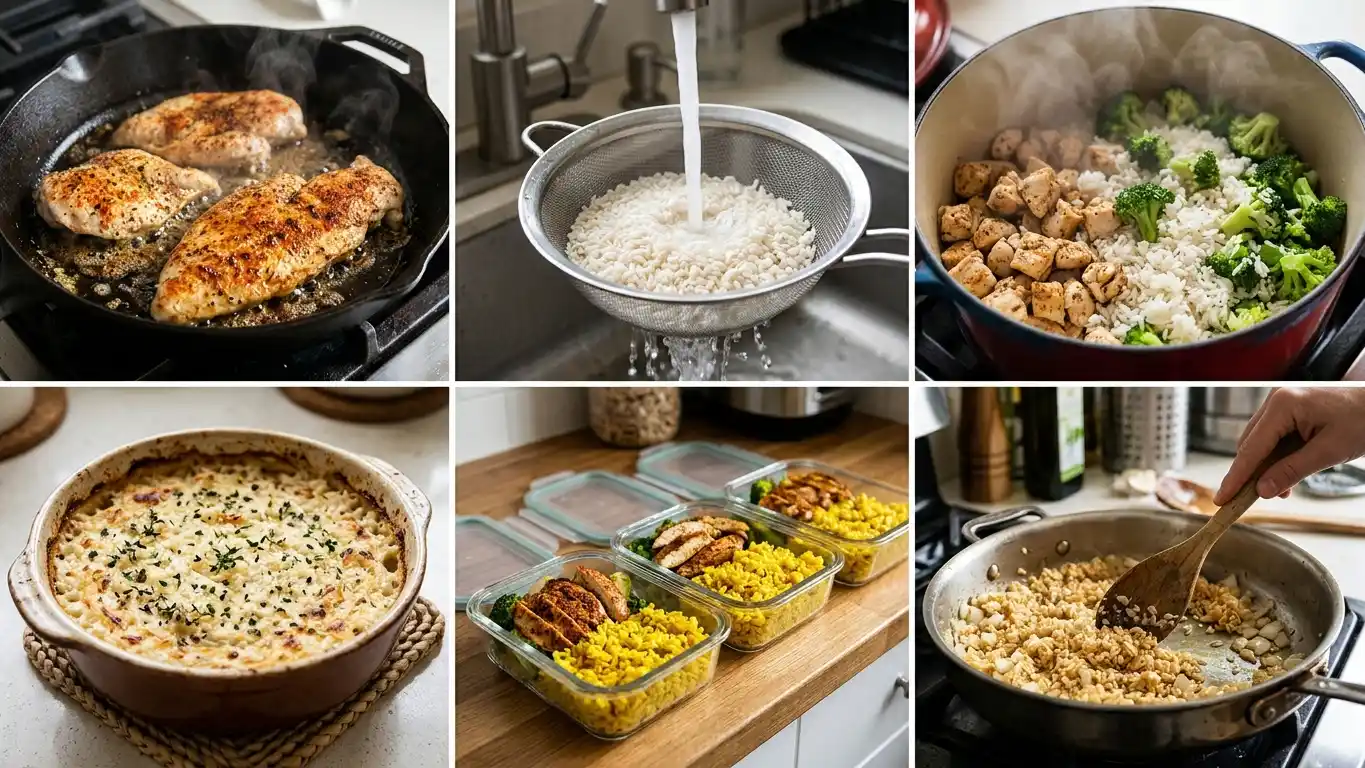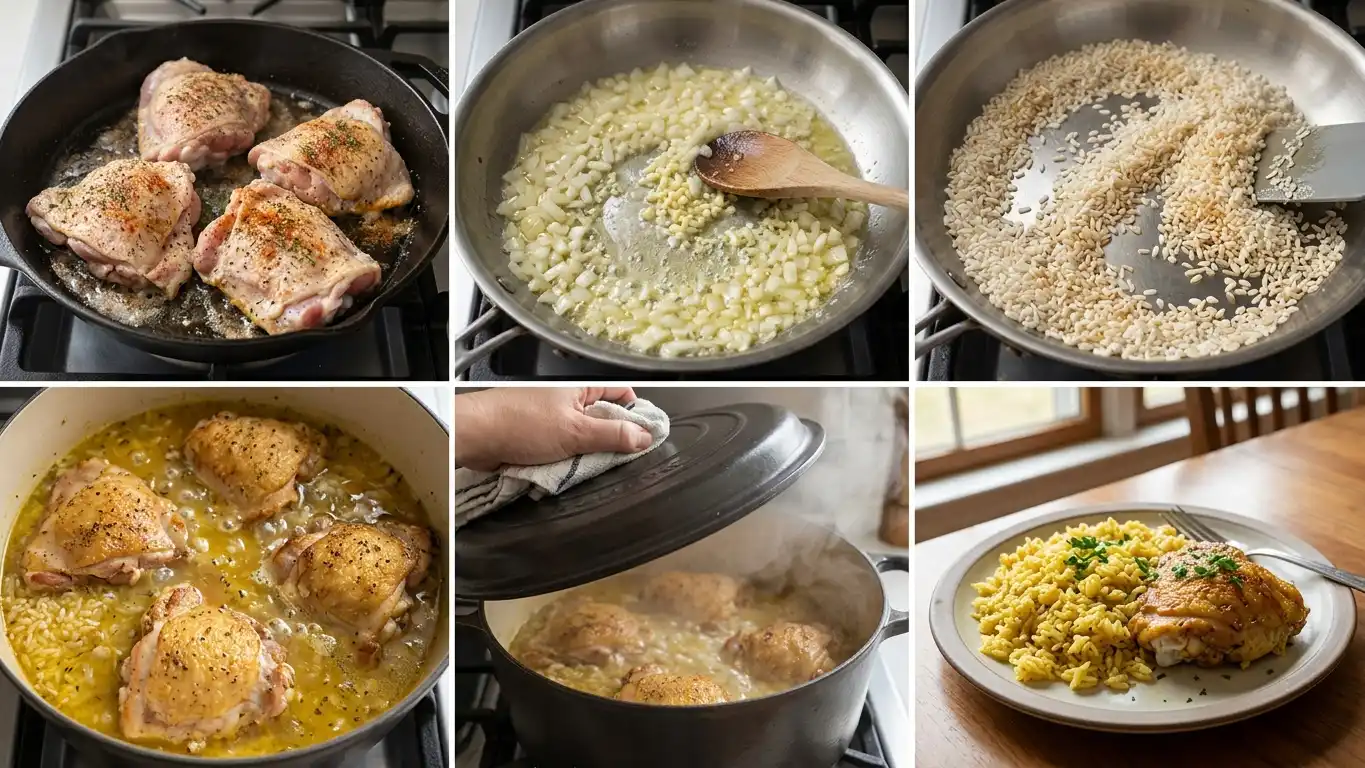

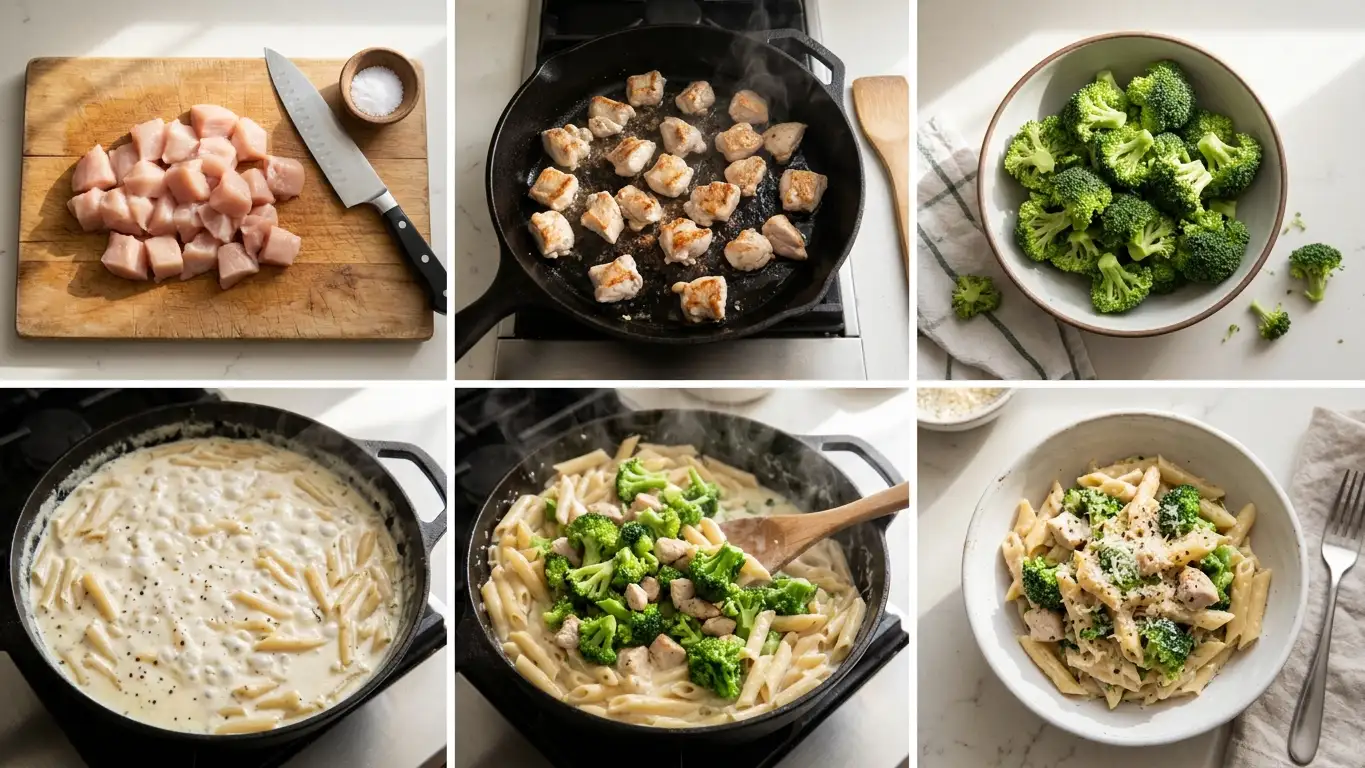
Getting dinner ready in under half an hour demands practical technique rather than complicated kitchen gadgets. When you make chicken broccoli pasta recipes at home, the real secret sits in how you handle moisture and heat so the meat browns instead of steams while the vegetables keep their bright bite. Cooking pasta directly in seasoned broth builds body into the sauce without relying on heavy thickeners, letting you get dinner to the table with minimal cleanup.
Prep time: 10 minutes
Cook time: 20 minutes
Total time: 30 minutes
Servings: 4
Ingredients:
- 1 pound boneless skinless chicken breasts, sliced into 1/2-inch strips
- 3 cups fresh broccoli florets, trimmed into bite-sized pieces
- 8 ounces penne rigate or rigatoni
- 3 tablespoons unsalted butter, divided
- 1 tablespoon olive oil
- 4 cloves fresh garlic, finely minced
- 1/2 cup yellow onion, diced fine
- 2 cups low-sodium chicken broth
- 1 cup whole milk or heavy whipping cream
- 1/4 cup all-purpose flour
- 3/4 cup freshly grated Parmesan cheese
- 1/2 teaspoon kosher salt
- 1/4 teaspoon freshly ground black pepper
- 1/4 teaspoon red pepper flakes
How to Make Chicken Broccoli Pasta with Even Heat

Cast iron or heavy stainless steel conducts heat evenly across the entire base of your cookware. Choose a 12-inch wide pan with tall sides that easily holds four quarts of liquid and solid ingredients. A cramped pan traps evaporating water immediately, lowering the surface temperature and turning your poultry pale and rubbery instead of giving it a rich golden crust.
Set your burner to medium-high heat and let the dry metal warm up for three full minutes before adding fats. Pour in one tablespoon of olive oil alongside one tablespoon of butter. The vegetable oil raises the smoke point so the milk solids in the butter do not burn during searing. Once the butter bubbles subside, your cooking surface is ready for the meat.
Prep the Chicken Strips for Fast Browning

Pat the raw chicken breasts thoroughly dry with paper towels to strip moisture from the surface. Cut the poultry across the grain into uniform half-inch thick strips so every piece cooks at an identical rate. Season the meat directly with half of the kosher salt and freshly cracked black pepper just before it touches the hot oil.
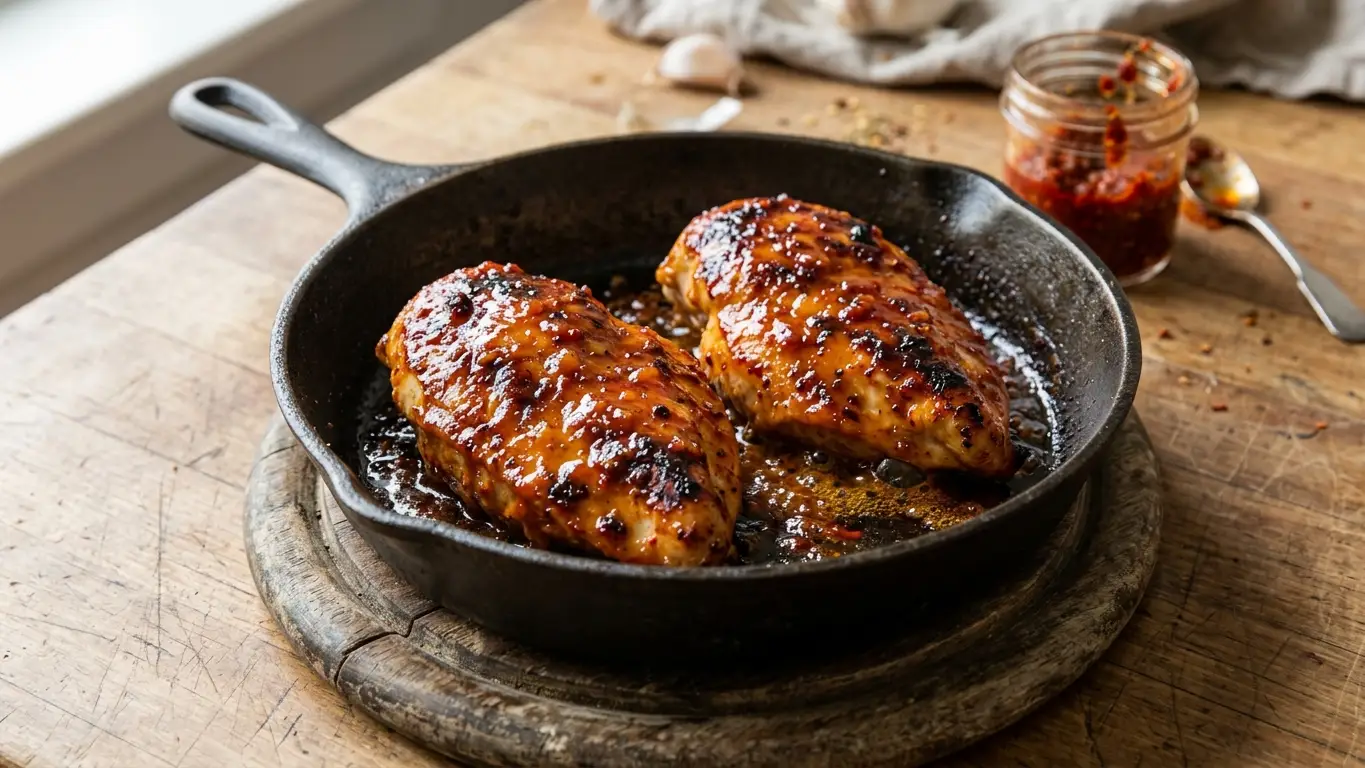
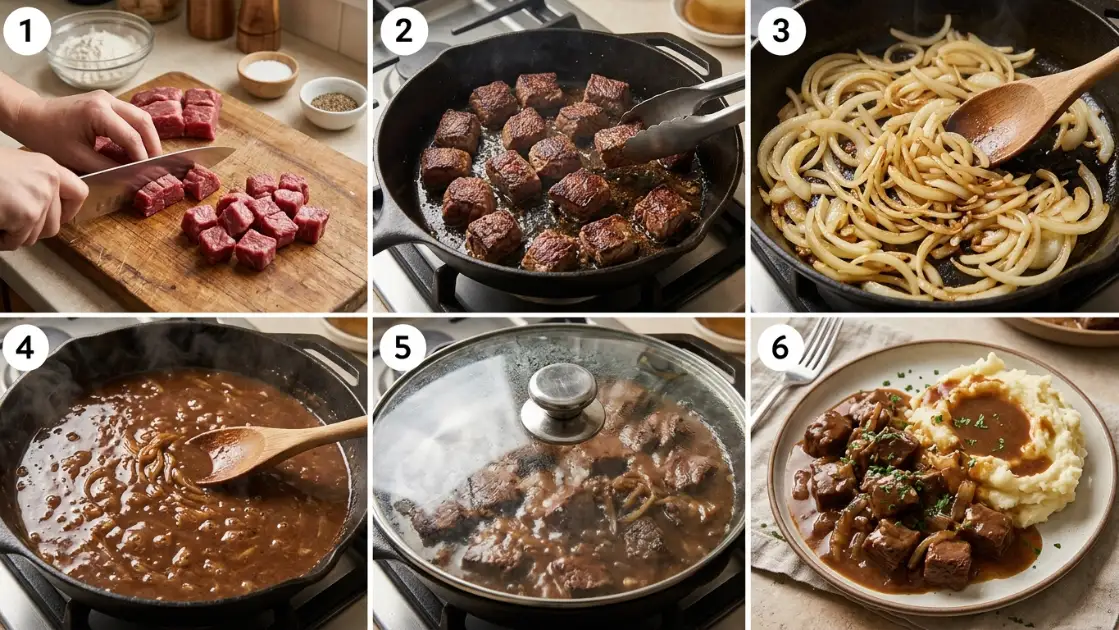
Drop the strips into the hot pan in a single layer with distinct space between each piece. Let the chicken cook undisturbed for four minutes to allow the natural proteins to caramelize against the bottom metal. Flip each piece once and cook for another three minutes until the internal temperature registers 165 degrees Fahrenheit on an instant read thermometer. Transfer the cooked poultry to a clean rimmed plate to catch any resting juices.
Sauté the Aromatics Until Fragrant
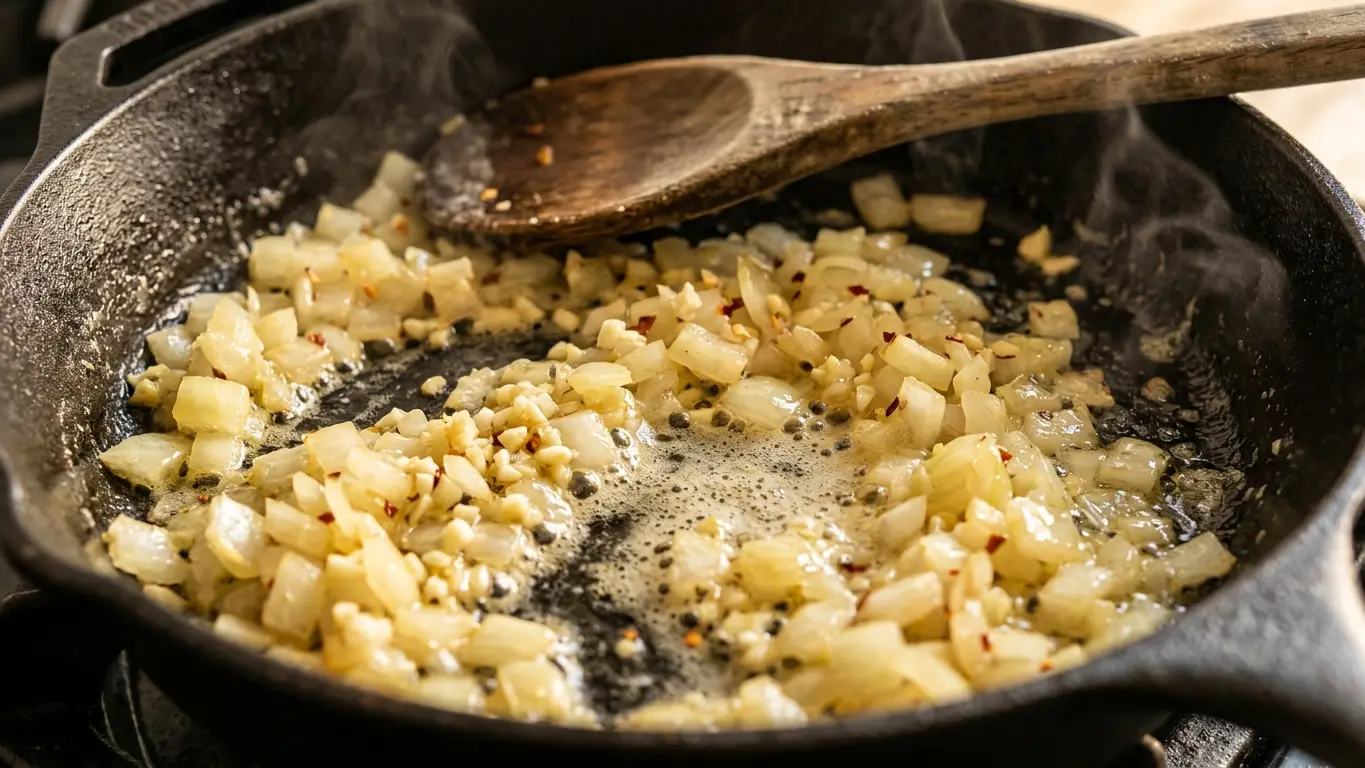
Lower the stove heat to medium immediately to keep residual pan heat from scorching your aromatics. Add another tablespoon of butter directly to the remaining rendered cooking fat in the pan. Toss in the finely chopped yellow onion and cook for three minutes until the pieces turn translucent and soft.
Stir in four cloves of minced fresh garlic and let it cook for exactly thirty seconds. Garlic turns bitter and sharp if it browns, so keep the pieces moving constantly across the pan base with a wooden spatula. Sprinkle a pinch of crushed red pepper flakes across the butter to release their heat directly into the fat. As soon as the raw garlic aroma softens into a sweet fragrance, you are ready for the flour.
Whisk the Roux Base for a Silky Sauce

Dust one quarter cup of unbleached all-purpose flour evenly across the softened onions and melted butter. Whisk the flour continuously into the hot fat for two minutes over medium heat. This cooking window neutralizes the chalky flavor of raw starch while preserving enough thickening power to bind the dairy later.
The flour and fat paste will bubble gently and take on a pale straw color in the pan. Avoid letting the mixture turn brown, because dark roux loses its ability to hold liquids in suspension. Whisk constantly around the perimeter of the skillet to ensure no flour clings to the corners and burns. Once the mixture smells faintly nutty and looks slightly frothy, begin adding your liquids.
Pour in the Liquids and Deglaze the Pan

Gradually pour two cups of low-sodium chicken broth into the roux while whisking vigorously with your other hand. Pouring slowly prevents clumps from forming as the starch granules absorb the liquid. Use your flat wooden spoon to firmly scrape the caramelized brown bits left from the chicken off the bottom of the pan.
Those browned remnants dissolve straight into the simmering broth, building savory depth into the sauce base. Stream in one cup of whole milk while maintaining a steady whisking motion. Bring the entire skillet to a gentle simmer, where small bubbles break near the outer rim. Let the liquid cook for five minutes, stirring frequently until the sauce coats the back of a spoon.
Add the Dry Pasta Directly to the Broth
Dump eight ounces of dry penne pasta straight into the simmering skillet. Stir well to make sure every single noodle is submerged beneath the seasoned liquid. Starch washing off the dry noodles during cooking thickens the sauce naturally, eliminating the need for heavy commercial stabilizers.
Cover the skillet tightly with an oven-safe lid to trap the steam and maintain a steady internal temperature. Set a timer for seven minutes and drop the burner flame to medium-low so the liquid stays at a controlled bubble without boiling over. Stir the pasta once at the four-minute mark to prevent pieces from sticking to the pan floor. The pasta should feel firm and slightly undercooked in the center when the timer ends.
Steam the Fresh Broccoli Florets on Top
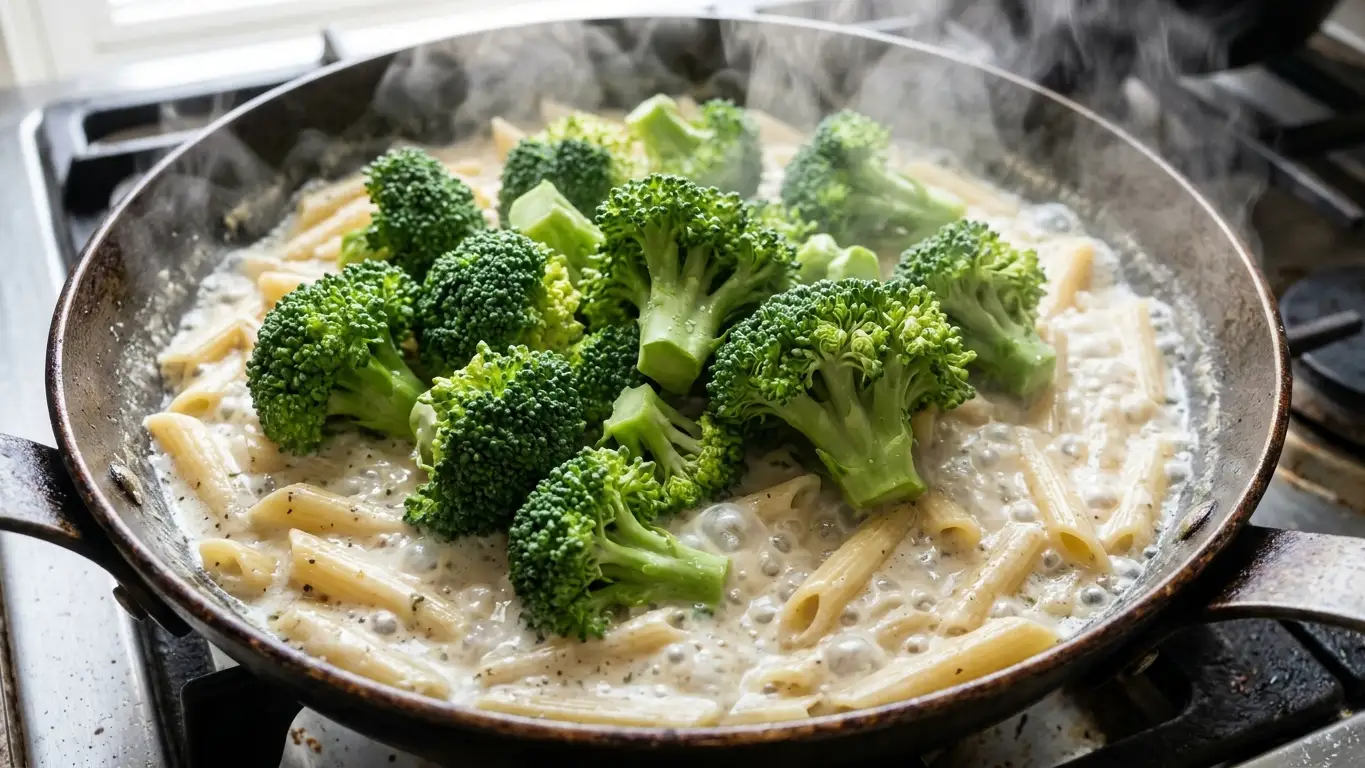
Cut three cups of fresh broccoli heads into compact bite-sized florets, trimming away the woody outer skin of the thick stems. Remove the skillet lid and immediately scatter the raw vegetable pieces directly over the simmering noodles. Do not mix the broccoli into the bottom of the pan yet.
Replace the lid firmly and allow the trapped steam to cook the florets for four minutes. Steaming the vegetables on top of the pasta keeps them tender-crisp and preserves their vibrant green hue without boiling away their structural integrity. When a small pairing knife slides into a stem with slight resistance, the broccoli is ready. If you use frozen florets instead, thaw them completely and squeeze out excess water in a towel before adding them for only two minutes.
Fold the Ingredients Together with Cheese
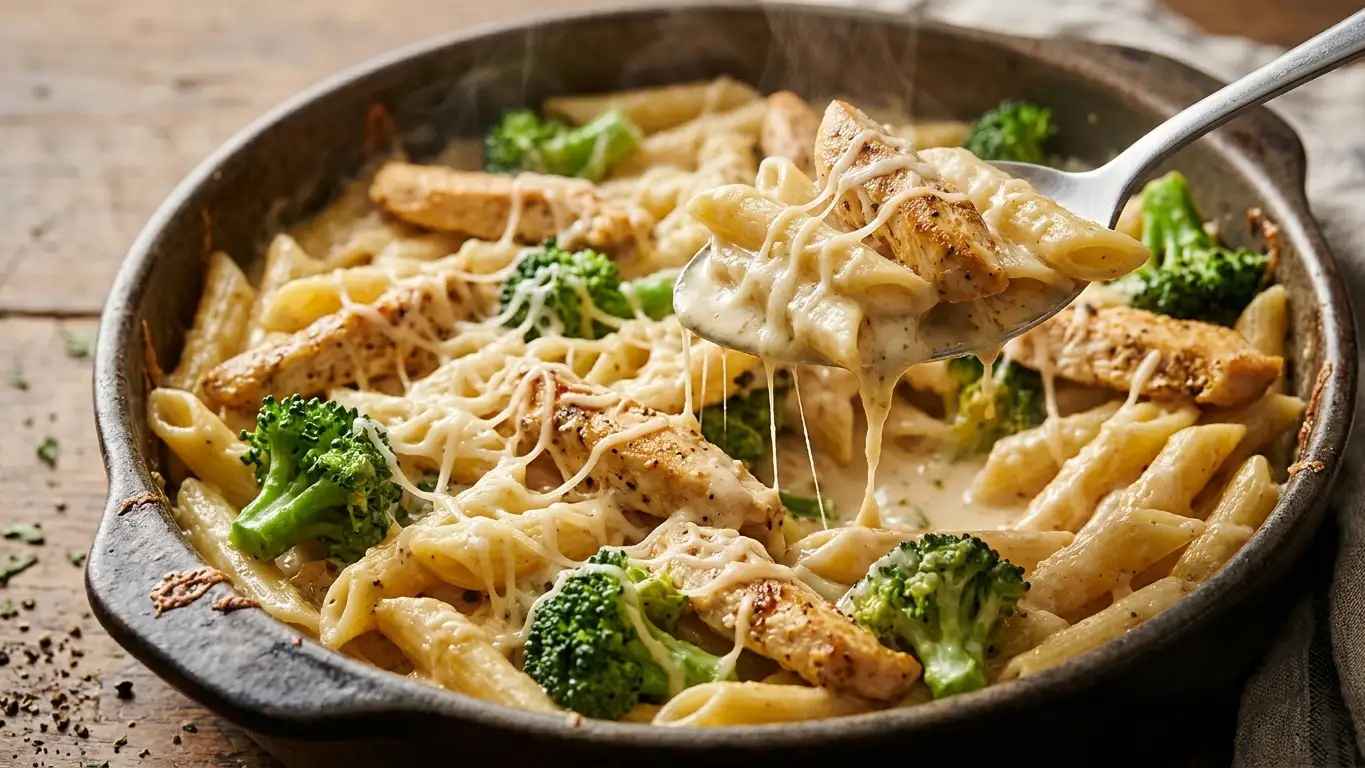
Pull the skillet completely off the hot burner to prevent the dairy fats from separating. Tip the rested chicken strips and all accumulated plate juices back into the pan. Stir the contents gently from the bottom upward, distributing the meat, pasta, and bright vegetables evenly throughout the warm sauce base.
Scatter three quarters of a cup of freshly grated Parmesan cheese over the warm mixture in three small batches. Stir each addition until melted before adding the next handful. Residual heat melts the cheese smoothly into the sauce without turning stringy or grainy. If you prefer recipes using chicken broccoli and pasta with a smoky layer, fold in four strips of crisp crumbled thick-cut bacon right alongside the cheese.
What Goes Wrong and How to Rescue It
A broken, greasy sauce happens when the skillet stays over high heat after the cheese is added, causing dairy proteins to seize and push out clear oils. If this separation occurs, immediately remove the pan from heat, splash in two tablespoons of boiling water or hot chicken stock, and whisk vigorously until the emulsion returns. A watery sauce means the pasta released excess steam or the lid did not seal properly during cooking. Fix this by simmering uncovered for three minutes, letting the natural pasta starch reduce the liquid to a glossy coating.
Mushy broccoli occurs when florets cook longer than five minutes or sit submerged in boiling liquid. If vegetables overcook, pull the pan off the burner immediately, fold in fresh lemon juice to brighten the flavor, and sprinkle toasted breadcrumbs over the top to restore a contrasting crisp texture to every bite.
Easy Variations for Dietary Needs and Quick Skillets
Adapting this dinner for distinct household preferences requires only minor ingredient swaps that do not sacrifice the rich texture. For a lighter dinner, chicken broccoli pasta recipes healthy versions swap whole milk for unsweetened plain almond milk blended with two tablespoons of nutritional yeast to retain a savory note. When cooking for sensitive stomachs, chicken and broccoli pasta recipes dairy free options use extra virgin olive oil instead of butter and rely purely on starchy pasta water to thicken the sauce.
Weeknight schedules sometimes call for shortcut options like knorr cheddar broccoli pasta recipes with chicken where a pre-seasoned packet provides the base liquid. For a southern comfort profile, cheesy ranch chicken and broccoli pasta skillet recipes lady style incorporate two tablespoons of dry buttermilk ranch seasoning directly into the roux before adding sharp cheddar. You can also turn this skillet into a chicken and broccoli pasta bake myriad recipes by transferring the combined mixture into a ceramic baking dish, topping it with shredded mozzarella, and broiling for five minutes until browned and bubbly.
How Long to Cook a Chicken and Broccoli Casserole
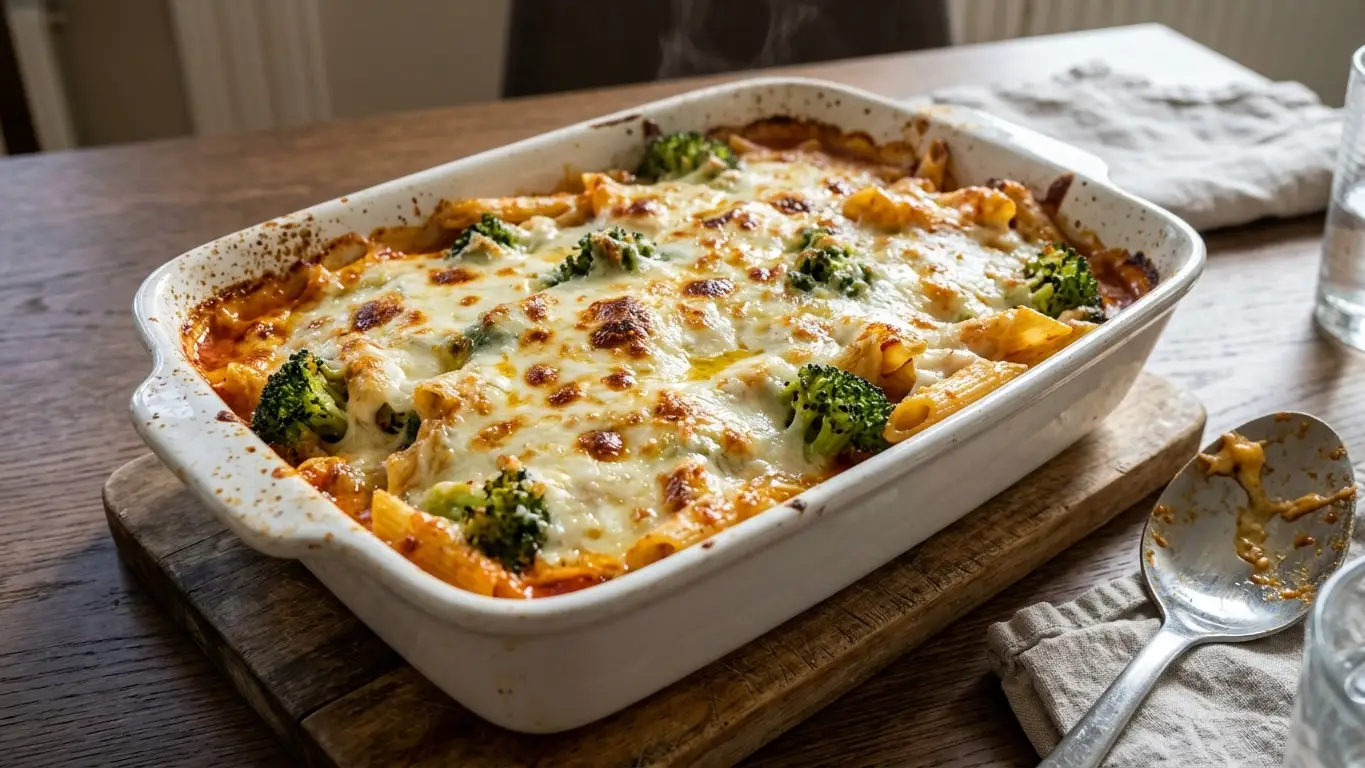
Transforming your skillet dinner into a baked casserole requires precise oven timing to avoid drying out the lean meat. Preheat your oven to 375 degrees Fahrenheit and grease a standard 9 by 13-inch ceramic baking dish with olive oil. Transfer the tossed pasta mixture into the dish, spreading it into a flat, even layer across the corners.
Scatter one cup of shredded Monterey Jack or mozzarella over the top surface. Bake uncovered for 15 to 20 minutes until the edges bubble vigorously and the shredded cheese melts into an even blanket. Switch the oven setting to broil for the final two minutes to toast the cheese into scattered golden spots. Let the casserole rest on a wire rack for five minutes before scooping portions onto plates so the sauce sets firmly around the noodles.
Complete the Meal with Balanced Side Dishes
A rich, dairy-based pasta dinner pairs best with high-acid accompaniments that clean the palate between bites. Toss crisp romaine hearts, thinly sliced Persian cucumbers, and shaved radishes with a sharp red wine vinaigrette made with three parts extra virgin olive oil to one part vinegar. The bright acidity slices through the richness of the Parmesan cream sauce.
Warm slices of crusty sourdough baguette offer a sturdy vehicle for dipping into remaining skillet sauce. For an extra vegetable side, roast halved cherry tomatoes on a sheet pan at 400 degrees Fahrenheit with olive oil and sea salt for twelve minutes until their skins burst. The sweet, acidic tomato juices provide a bright contrast against the savory, garlic-scented chicken and broccoli.
Frequently Asked Questions
How to make garlic chicken broccoli penne pasta with more pungent flavor?
Sauté half of your minced garlic in butter at the start of cooking, then stir the remaining raw minced garlic into the warm sauce during the final two minutes off the heat. The two-stage addition creates both a sweet mellow undertone and a sharp garlic punch.
Is pasta and broccoli healthy for standard weeknight meal planning?
This combination delivers a balanced ratio of lean animal protein, cruciferous vegetable fiber, and complex carbohydrates to keep energy steady. Balancing the dish comes down to portioning equal volumes of vegetables and pasta rather than letting the noodles dominate the plate.
What to serve with chicken broccoli pasta to cut the rich sauce?
Serve raw vegetable salads dressed with citrus vinaigrettes or quick-pickled red onions to balance the heavy cream and cheese. Steamed green beans tossed with lemon zest also provide a snappy, crisp contrast.
Can you freeze chicken broccoli pasta recipes successfully?
Dairy sauces made with whole milk and flour separate into a grainy liquid when frozen and reheated. If you plan to freeze portions, prepare the dish without cheese or dairy, freeze it in airtight containers for up to three months, and stir in fresh cream and Parmesan while warming it on the stove.
Master the Order of Work for Great Chicken Broccoli Pasta Recipes
Cooking this comforting meal reliably comes down to respecting the sequence of steps from start to finish. Sear your seasoned poultry first so the pan collects flavorful browned bits, then gently cook your aromatics without burning the garlic. Whisk the flour into the fat to form a smooth roux before slowly pouring in your cooking liquids. Let the pasta simmer under a tight lid, steam the broccoli on top during the final minutes, and finish by melting your cheese off the heat for a glossy sauce every single time.