
Pulling a bag of frozen shellfish from the freezer at five in the afternoon is the fastest way to get a home cooked meal on the table before six. While easy shrimp dinner recipes often promise five minute miracles, they rarely explain how trapped ice ruins your sear or why ninety seconds too long turns expensive seafood into rubber. Expect to spend around 9 to 14 dollars per pound for frozen wild caught shellfish in 2026, so guessing at pan heat wastes grocery money fast. Following the exact kitchen sequence below lets you prep one base pound of seafood and pivot it into pasta, rice bowls, tacos, or skewers without reading ten separate instruction cards. Shellfish is a major food allergen, so verify guest sensitivities and sanitize all cutting boards and tongs with hot soapy water after handling raw seafood.
Prep Time: 10 minutes
Cook Time: 5 minutes
Total Time: 15 minutes
Servings: 4
What You Need
- 1 pound peeled and deveined raw large shrimp, 21 to 25 count per pound
- 1/2 teaspoon kosher salt
- 1/4 teaspoon freshly ground black pepper
- 2 tablespoons unsalted butter
- 1 tablespoon neutral cooking oil with a high smoke point such as avocado oil
- 4 cloves fresh garlic, minced
- 1/2 cup dry white broth or chicken stock for deglazing
- 1 tablespoon fresh lemon juice
- 2 tablespoons chopped fresh parsley
- 12 inch heavy bottomed stainless steel or cast iron skillet
- 18 by 13 inch aluminum rimmed baking sheet for oven variations
- Instant read digital food thermometer
- 4 paper towels for moisture removal
1. Buy the right count per pound at the seafood counter
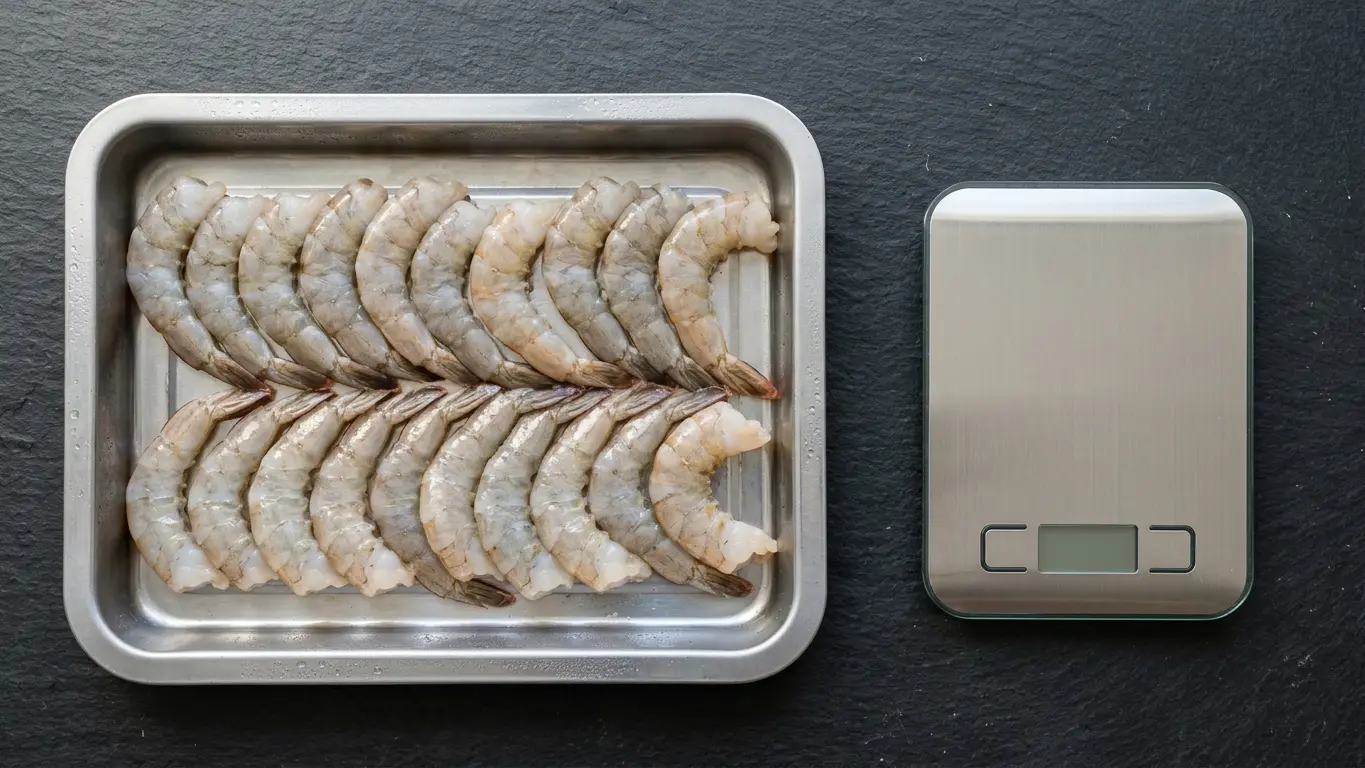
Read the small numbers printed on the corner of the freezer bag before looking at the front label. Terms like large or jumbo have no legal standard in American grocery stores, so one brand sells thirty tiny pieces per pound while another gives you fifteen. Look for the 21 to 25 count stamp, which yields twenty one to twenty five individual pieces per pound and holds up to high skillet heat without shrinking into tough knots.
Skip the glass display case at the supermarket counter. Almost all seafood sitting on crushed ice was previously frozen on the boat and thawed in the store at an unknown hour. Buying a two pound sealed freezer bag for around 18 to 26 dollars in 2026 gives you control over the thaw clock and supports quick and easy shrimp dinner recipes whenever your weeknight schedule falls apart. If a frozen bag contains loose snow or white frost spots on the meat, leave it in the freezer case because the cold chain broke during shipping.
2. Thaw frozen bags in cold water for fifteen minutes

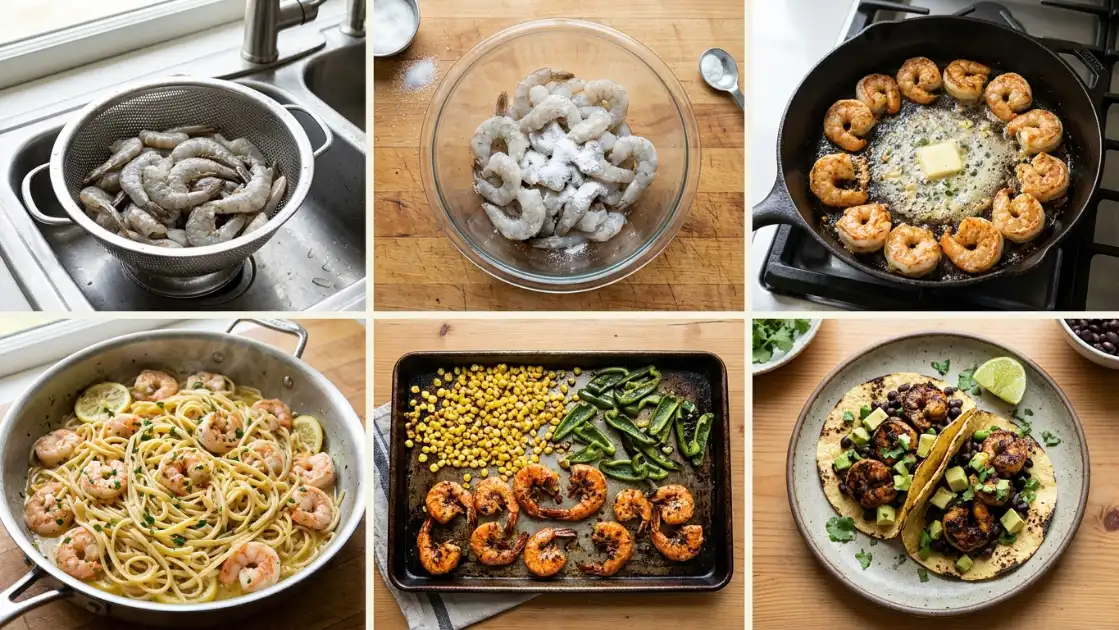
Fill a four quart mixing bowl with cold tap water between 50 and 60 degrees Fahrenheit and submerge your sealed one pound portion directly inside. Weigh the floating pieces down with a heavy ceramic coffee mug so every tail stays below the waterline. Stir the water with your fingers at the seven minute mark to break up ice crystals clinging to the curved bellies, then drain into a colander at fifteen minutes.
Never run warm tap water over raw seafood to speed up dinner prep. Warm water heats the thin tail tips above 70 degrees while the thick collar remains frozen solid, which starts cooking the outer protein and breeds surface bacteria. Microwaving on the defrost setting fails for the exact same reason, leaving grey cooked edges that turn chalky the second they hit oil. When planning ahead on Sunday night, move the sealed bag to a rimmed plate on the bottom refrigerator shelf for eight hours instead.
3. Pat every piece dry and salt the surface right before cooking
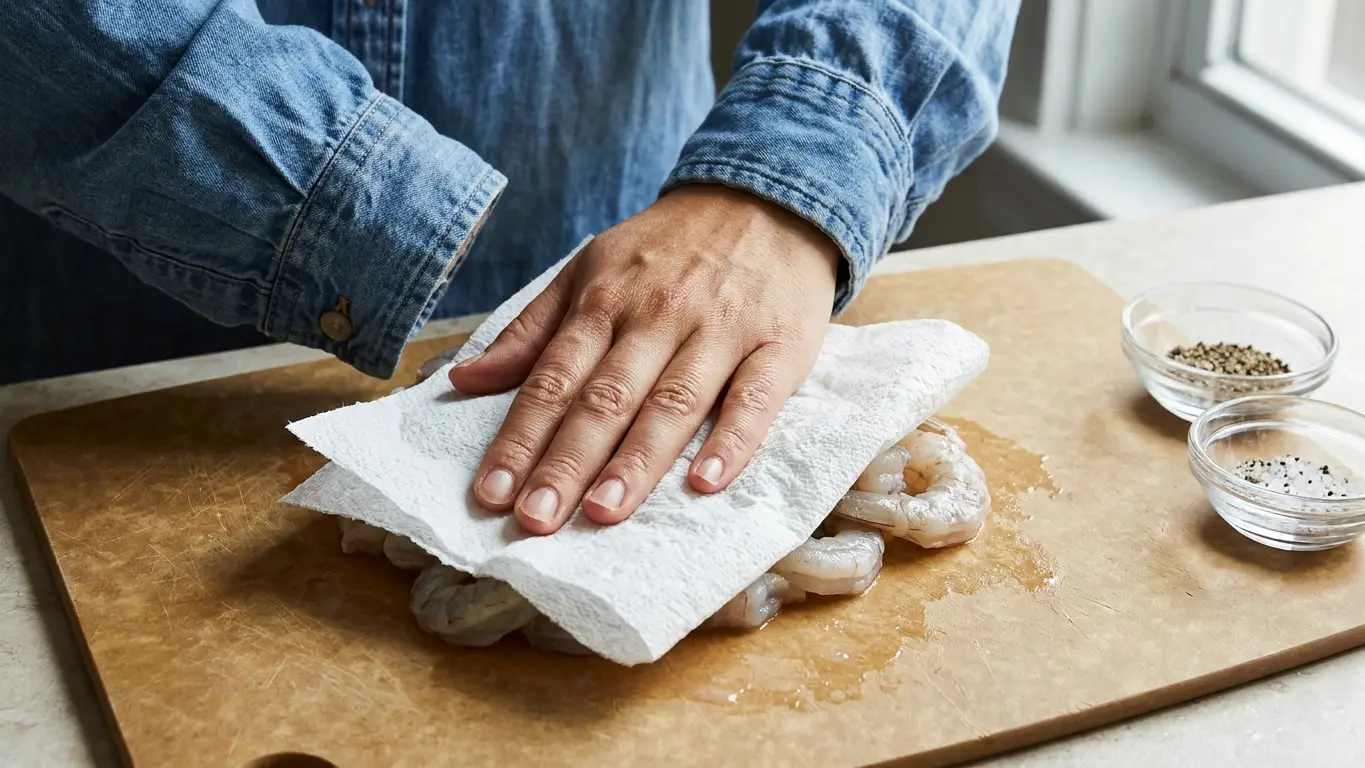
Lay a double layer of paper towels across a plastic cutting board and spread one pound of peeled and deveined raw large shrimp in a single flat layer. Press a second dry paper towel firmly across the top until no wet spots transfer to the paper. Sprinkle 1/2 teaspoon kosher salt and 1/4 teaspoon ground black pepper evenly over the dry meat right before walking to the stove.
Leaving surface water on raw seafood is the single fastest way to ruin dinner. Water trapped under the meat flashes into steam at 212 degrees Fahrenheit, dropping the pan temperature and boiling the protein in grey liquid instead of browning it at 350 degrees. Do not salt the meat thirty minutes early like you would with a beef steak. Salt draws internal moisture back out to the surface after ten minutes, undoing all your paper towel work and creating a wet puddle in the bowl.
4. Preheat a twelve inch skillet before adding fat

Set a twelve inch stainless steel or cast iron skillet over medium high heat for two full minutes before touching the oil bottle. Flick three drops of tap water onto the bare metal to test the temperature. If the water hisses and sits in a flat puddle, wait another forty five seconds until a new drop beads into a rolling ball that dances across the steel. Pour 1 tablespoon of avocado oil into the dry pan and swirl until it shimmers, then drop in 2 tablespoons of unsalted butter right before the food goes in.
Crowding one pound of seafood into an eight inch pan forces the pieces to touch and overlap. Touching tails trap steam between their sides and stew in their own juices instead of taking on a nutty sear. If you only own a narrow ten inch frying pan, divide the raw batch into two half pound cooking rounds and wipe the dark butter solids out with a folded towel between batches.
5. Sear the first side undisturbed for sixty seconds

Lay each seasoned piece into the foaming fat clockwise around the pan perimeter, working toward the center so you know the exact order they touched the heat. Leave a half inch of bare metal visible between neighbors. Once the last tail hits the skillet, take your hand off the tongs and let the batch cook undisturbed for 1 minute. Lifting a piece at twenty seconds tears the delicate outer skin before the protein bonds release from the hot steel.
Watch the side profile of the thickest piece near the handle rather than staring at the top. A raw translucent grey body turns opaque pink from the bottom upward as heat travels through the flesh. When that pink band climbs halfway up the side wall and the bottom edge shows golden brown spots, your sixty second timer is done. Turning the heat up to maximum to rush this step burns the milk solids in the butter into bitter black specks before the meat warms through.
6. Flip and reduce your pan liquid for two minutes

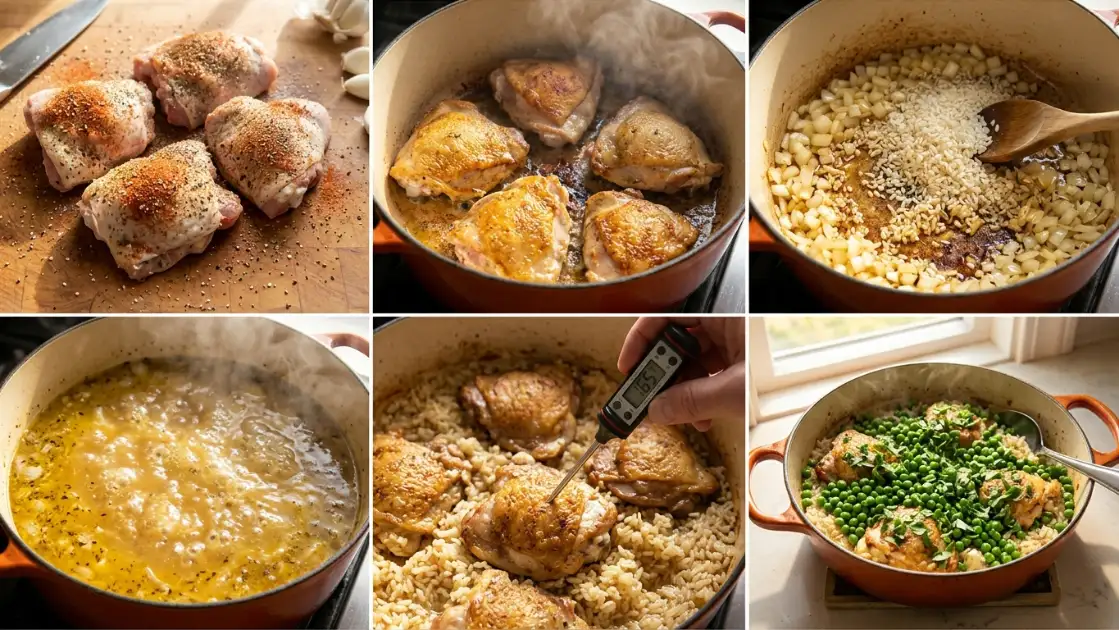
Turn each piece over in the exact clockwise circle you used to load the pan, then scatter 4 cloves of minced garlic into the open gaps between the tails. Pour 1/2 cup of dry white broth and 1 tablespoon of lemon juice down the side of the skillet after thirty seconds so the garlic blooms without scorching. Cook until the shrimp are just opaque and the liquid has reduced by half, about 2 minutes.
Check the bend of the tail and take an internal reading with a digital thermometer. A tight O shape where the tail touches the head means the meat passed 160 degrees and has already turned rubbery. Pull the pan off the burner the second the bodies curl into a loose C shape and the thermometer reads 145 degrees Fahrenheit in the thickest middle section. This five minute skillet method for seafood in garlic butter sauce works over pasta or toasted bread without needing heavy thickeners.
7. Build easy Shrimp Dinner Recipes Around What You Already Own

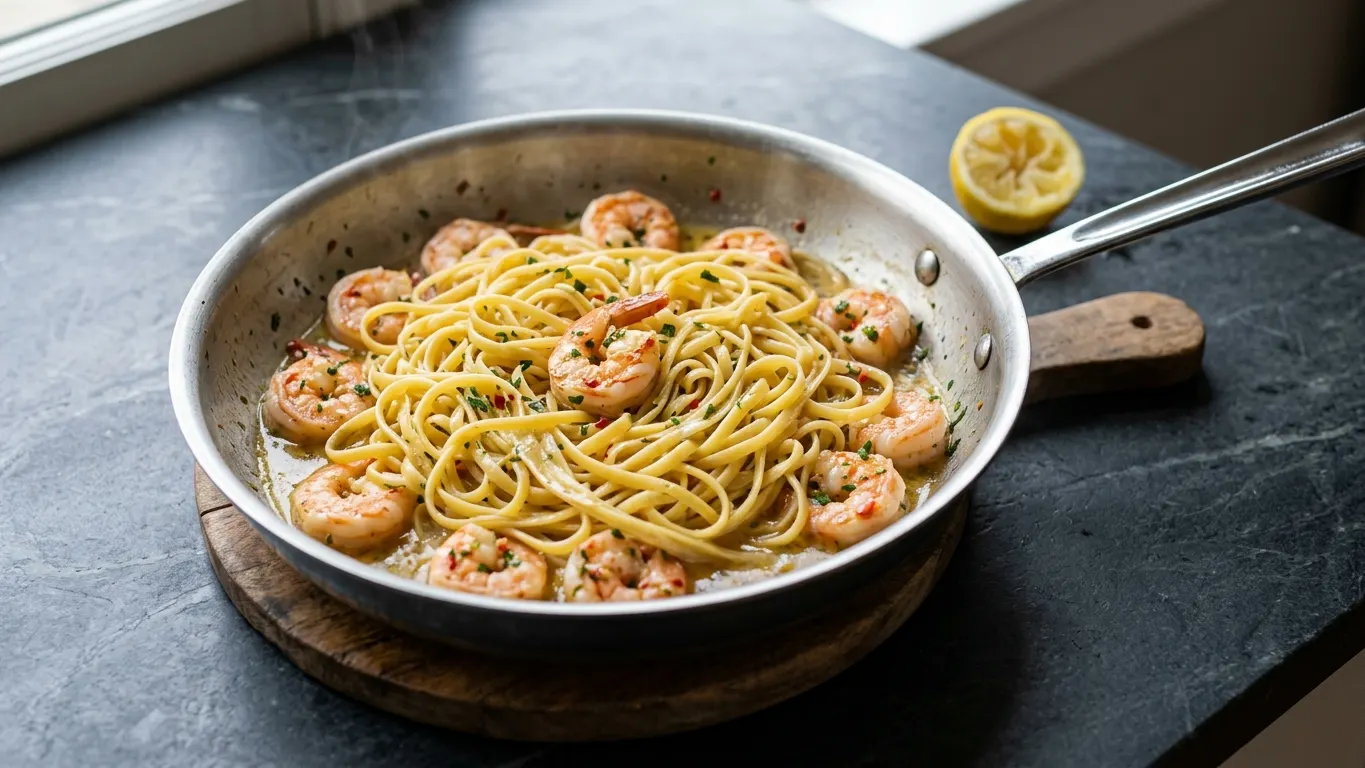
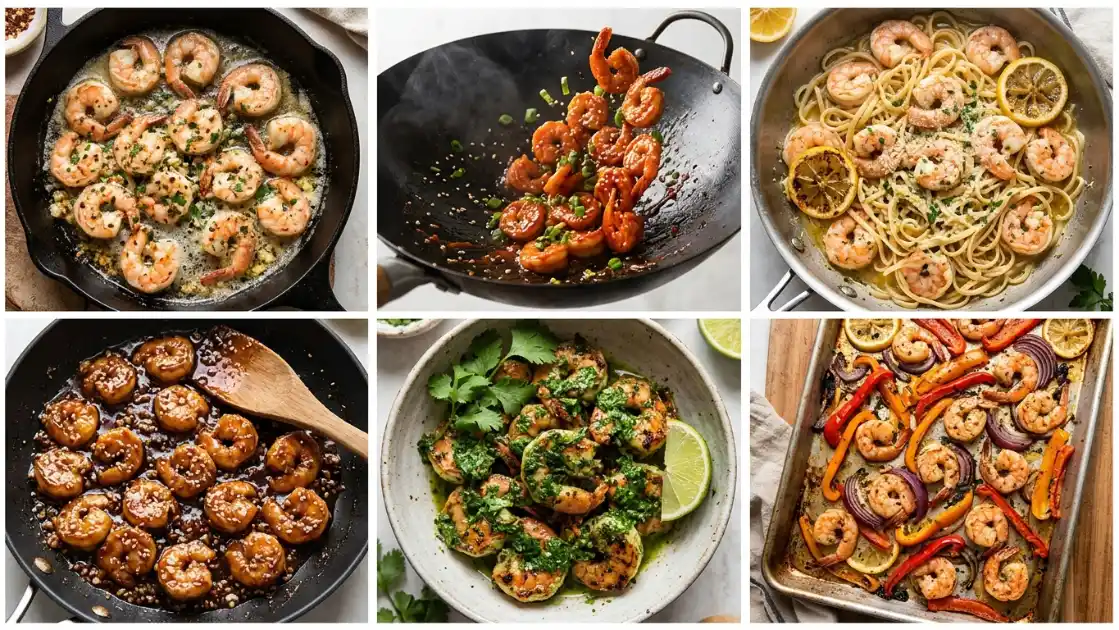
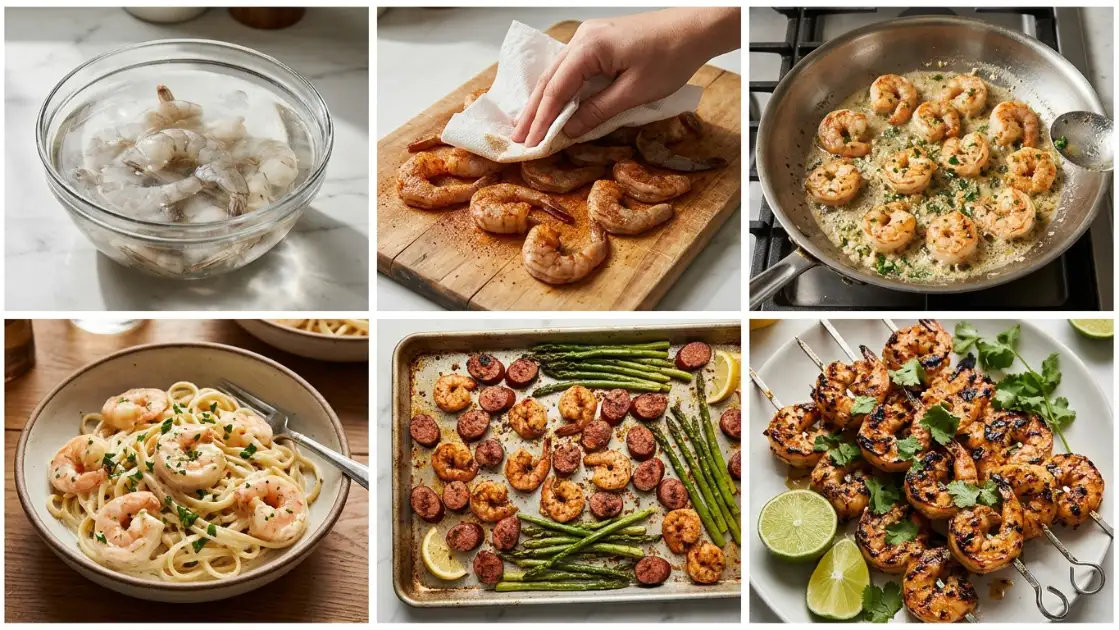
Once that base five minute sear is mastered, you can build easy shrimp dinner recipes out of whatever starch or vegetable sits in your pantry at six o’clock. Toss the hot garlic butter batch directly into eight ounces of cooked linguine with a splash of starchy pasta water and 1/3 cup of grated Parmesan to create easy creamy shrimp pasta dinner recipes without opening a carton of heavy cream. Skipping heavy cream keeps the sauce from splitting when reheated for lunch the next day.
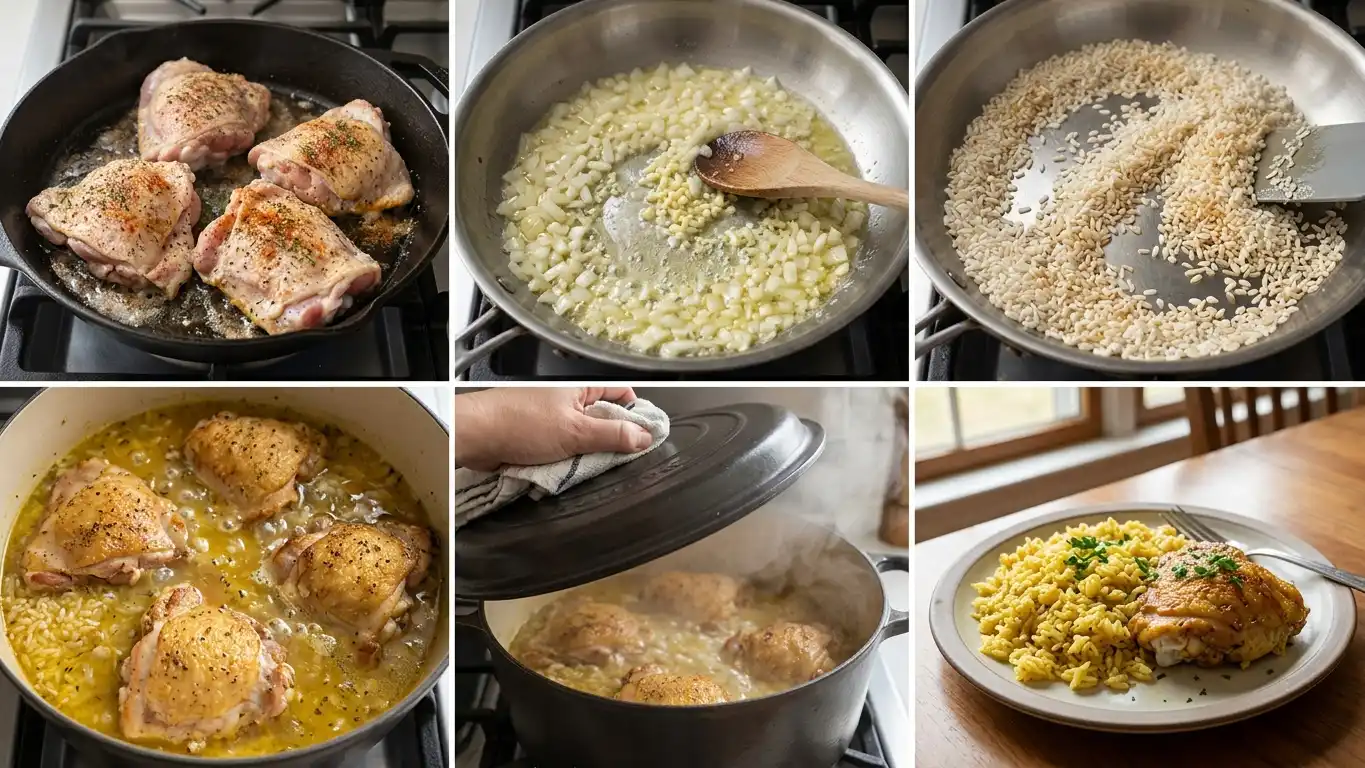
For households avoiding wheat, spoon that same skillet pan sauce over instant white corn grits or steamed jasmine rice for easy gluten free shrimp dinner recipes that require zero specialty flours. When feeding four people on a tight budget, stretch a single one pound bag by tossing the seared pieces with a bag of charred frozen corn, diced poblano peppers, black beans, and avocado slices inside warm corn tortillas for twenty minute shrimp tacos. Stretching the protein with black beans and corn cuts the per person cost in half while keeping everyone full.
8. Toss vegetables and protein in a wok for a fast stir fry

Switch from a flat skillet to a fourteen inch carbon steel wok when making easy shrimp stir fry dinner recipes so high wall heat cooks crisp vegetables without overcooking the seafood. Sear your dry seasoned shellfish in 1 tablespoon of peanut oil over high heat for ninety seconds total, then scoop them onto a clean plate while still slightly translucent in the center. Never leave the seafood in the pan while cooking raw broccoli or bell peppers, or the meat will boil for eight minutes in vegetable water and shrink to the size of peas.
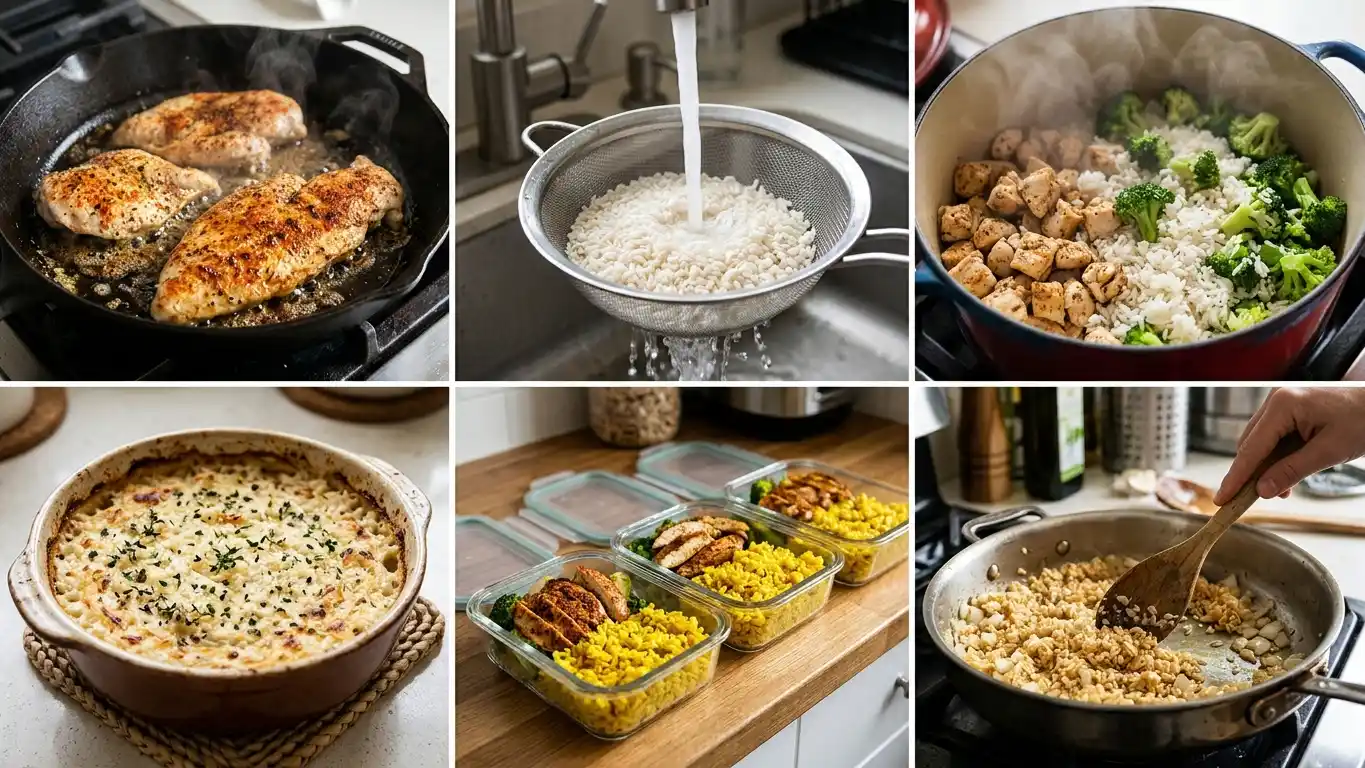
Toss three cups of broccoli florets and sliced red bell peppers into the empty hot wok with 2 tablespoons of water and cover with a lid for three minutes. Whisk 2 tablespoons of soy sauce, 1 tablespoon of honey, 1 teaspoon of grated ginger, and 1 teaspoon of cornstarch in a cup, pour it over the crisp tender vegetables, and slide the resting shellfish back in for the final forty five seconds until the glaze turns glossy. Serve this healthy honey garlic combination over brown rice or shredded cabbage for easy healthy shrimp dinner recipes that take twenty minutes from start to finish.
9. Roast sheet pan meals at four hundred degrees for family nights

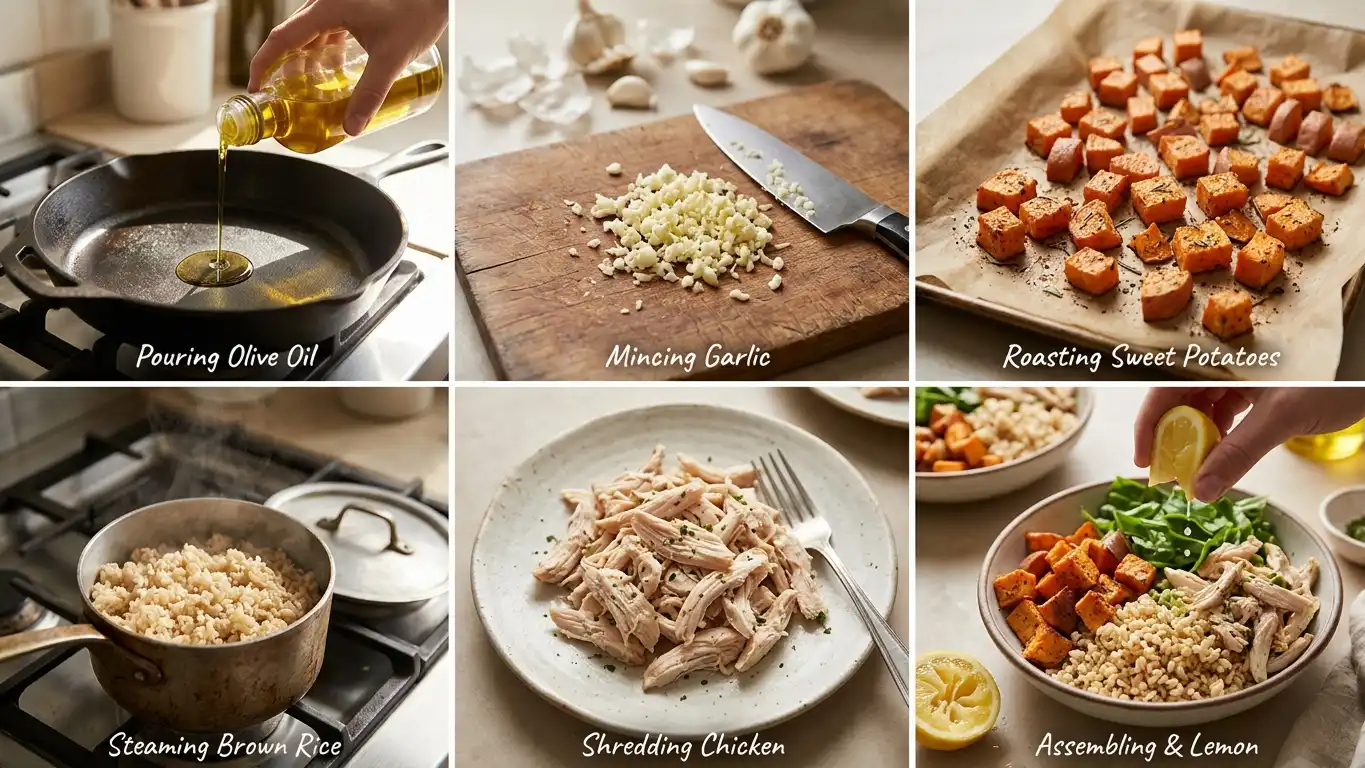
Preheat your oven to 400 degrees Fahrenheit and place an empty 18 by 13 inch aluminum sheet pan on the middle rack for ten minutes while you chop vegetables. Roasting slow cooking vegetables alongside fast cooking shellfish on a cold tray is a trap that leaves you with raw potatoes and tough seafood. Toss two cups of diced sweet potatoes or asparagus spears with 1 tablespoon of olive oil, spread them on the preheated metal tray, and roast alone for twelve minutes first.
Pull the hot tray onto the stove, push the vegetables to the outer edges, and lay your seasoned raw pieces across the hot center metal alongside sliced precooked andouille sausage. Return the tray to the 400 degree oven for six minutes until the tails curl into a loose C shape. Using one foil lined tray for easy sheet pan shrimp dinner recipes saves twenty minutes of sink scrubbing, making this the smartest route for easy shrimp dinner recipes for family nights when homework and bath routines pile up.
10. Thread skewers for outdoor grilling when the kitchen is too hot

Keep the oven off completely on eighty five degree summer evenings by taking the prep outdoors for easy grilled shrimp skewers dinner recipes. If you use wooden bamboo skewers, soak them in a baking dish of tap water for thirty minutes before threading, or the exposed wood tips will catch fire over 450 degree grill grates and drop your dinner into the coals. Better yet, use flat quarter inch stainless steel skewers, which stop the curved bodies from spinning upside down when you flip them over the flame.
Thread five pieces onto each skewer by piercing once through the thick neck collar and once through the tail base so they lie flat like a ladder. Brush lightly with olive oil, season with 2 teaspoons of Cajun spice rub, and grill over direct medium high heat for two minutes per side with the lid open. Slide the smoky char grilled batch over chopped romaine lettuce, diced cucumbers, and fresh herbs for a main course salad, or wrap them in Bibb lettuce leaves with lime wedges when aiming for easy low calorie shrimp dinner recipes under 300 calories per plate.
11. Repurpose leftover cooked pieces without turning them to rubber

Never put leftover cooked shellfish into a microwave or drop them into simmering soup from the start. Reheating already cooked protein past 145 degrees squeezes out the remaining moisture and turns the snappy texture into dry sawdust within forty five seconds. When you have half a pound left from the night before, slice the cold pieces in half lengthwise and toss them with diced celery, capers, lemon juice, and 1 tablespoon of olive oil for a chilled citrus salad that needs zero stove heat.
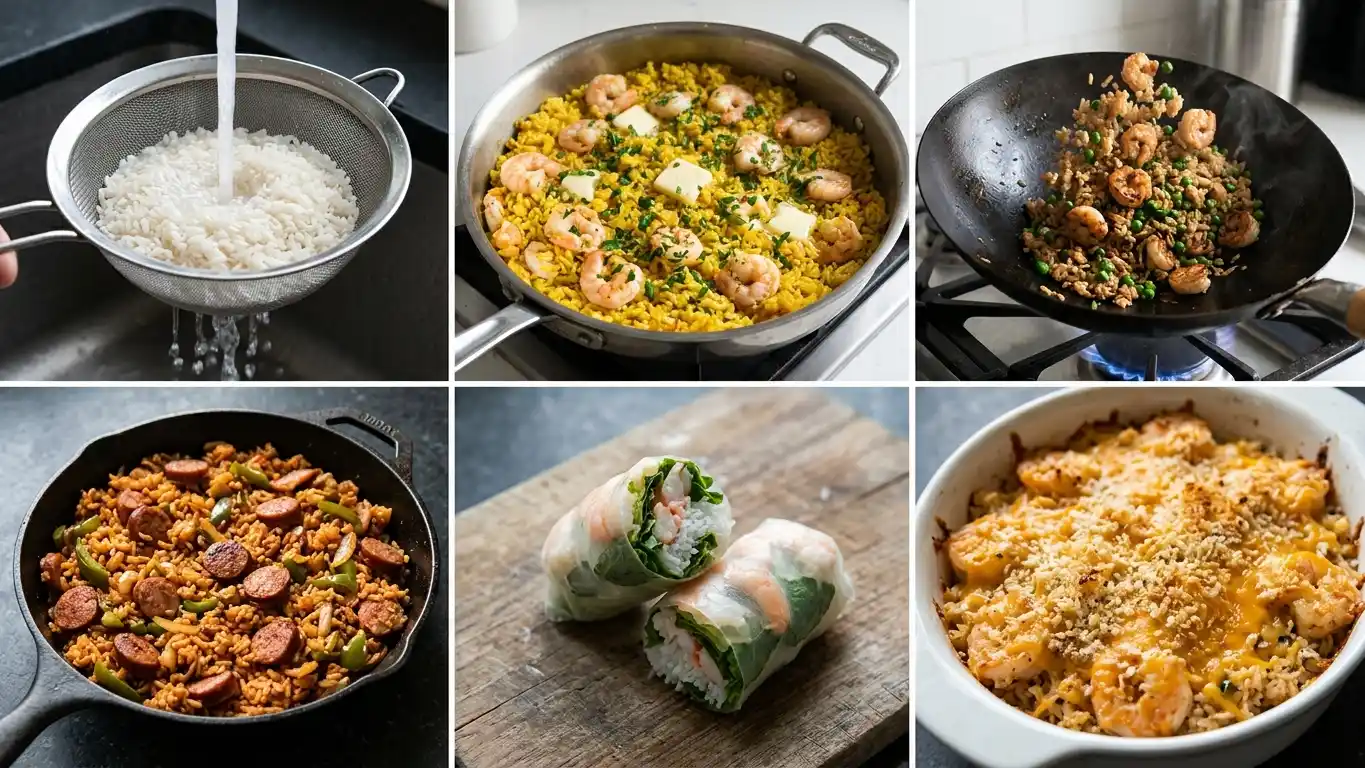
If your household wants a hot meal on night two, make easy shrimp dinner recipes with rice by frying three cups of day old cold jasmine rice in a hot skillet with 2 tablespoons of oil, beaten eggs, diced pineapple, and green onions for four minutes. Turn the burner completely off, dump the cold chopped shellfish onto the steaming rice, and clamp a lid over the pan for ninety seconds. Residual heat from the grains warms the meat through gently without cooking it a second time, beating takeout fried rice at a fraction of the price.
12. Rescue a watery pan or overcooked batch before serving
When you look down at your skillet and see the seafood swimming in a grey puddle of water instead of browning, do not wait for the liquid to boil away on its own. Waiting ten minutes for a full cup of water to evaporate will boil the meat into tough little pebbles. Grab a pair of tongs, transfer every single piece out of the pan onto a warm plate immediately, and crank the burner under the wet skillet to high for two minutes until the liquid reduces into a thick glaze. Turn the heat off, swirl in 1 tablespoon of cold butter to emulsify the pan juices, and toss the resting pieces back in for ten seconds to coat.
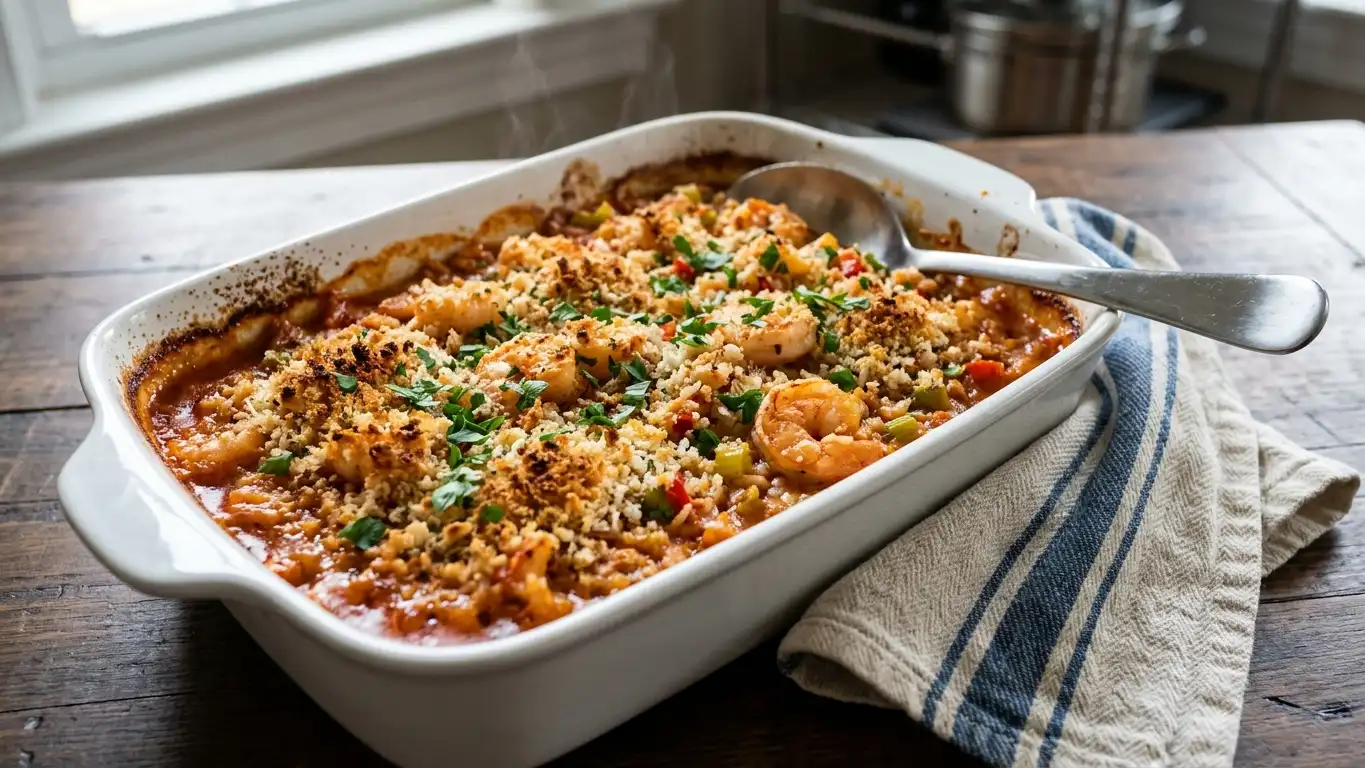
If you got distracted by a phone call and overcooked the batch into tight O rings past 165 degrees, abandon plans to serve them whole over pasta. Move the tough pieces to a cutting board, chop them into quarter inch dice, and fold them into a quick corn chowder base or a cheesy Cajun rice casserole topped with toasted breadcrumbs. Chopping breaks up the tightened muscle fibers mechanically, while a creamy sauce masks the dryness so dinner is never wasted.
Frequently asked questions
Why do some raw shrimp smell like ammonia when I open the bag?
An ammonia or bleach odor means bacterial enzymes have started breaking down nitrogen compounds in the flesh, which happens when seafood sits above 40 degrees Fahrenheit for too long during transport. Do not try to rinse the smell off with lemon juice or vinegar because the spoilage is inside the meat, so throw the batch out or return it to the grocery store for a refund.
Should I leave the tail shells on or pull them off before cooking?
Leave the last tail segment attached when grilling skewers or serving whole pieces on a platter because the shell holds moisture in the thin tip and gives guests a natural handle. Pinch and pull the tail shell off before cooking whenever the batch is going into a creamy pasta sauce, stir fry, or taco tortilla so nobody has to stick their fingers into hot sauce at the dinner table.
Does the dark vein down the back have to come out?
That dark thread along the outer curve is the digestive tract filled with grit and sand. Eating it will not make you sick once cooked to 145 degrees, but it leaves a gritty crunch between your teeth on larger sizes, so slit the back a quarter inch deep with a paring knife and lift it out under cold tap water before drying the meat.
Can I cook frozen shrimp straight in the air fryer without thawing?
Yes, preheat the air fryer basket to 400 degrees Fahrenheit for three minutes, toss one pound of frozen raw pieces with 1 tablespoon of oil so the seasoning sticks, and cook in a single layer for eight minutes while shaking the basket halfway through. The dry circulating air evaporates the surface ice during the first three minutes and roasts the meat during the final five without making it soggy.
Your twenty minute weeknight cooking order
Getting easy shrimp dinner recipes right on a Tuesday night comes down to respecting the clock in the exact order the kitchen work happens. Start by thawing a 21 to 25 count bag in cold tap water for fifteen minutes while your rice steams or your pasta water comes to a boil. Press every drop of moisture out with paper towels, season at the last second, and preheat a twelve inch skillet until water beads on the metal. Sear for sixty seconds on the first side, flip into garlic and broth for two minutes until the tails curve into a loose C at 145 degrees, and pull the pan off the heat before setting the table.