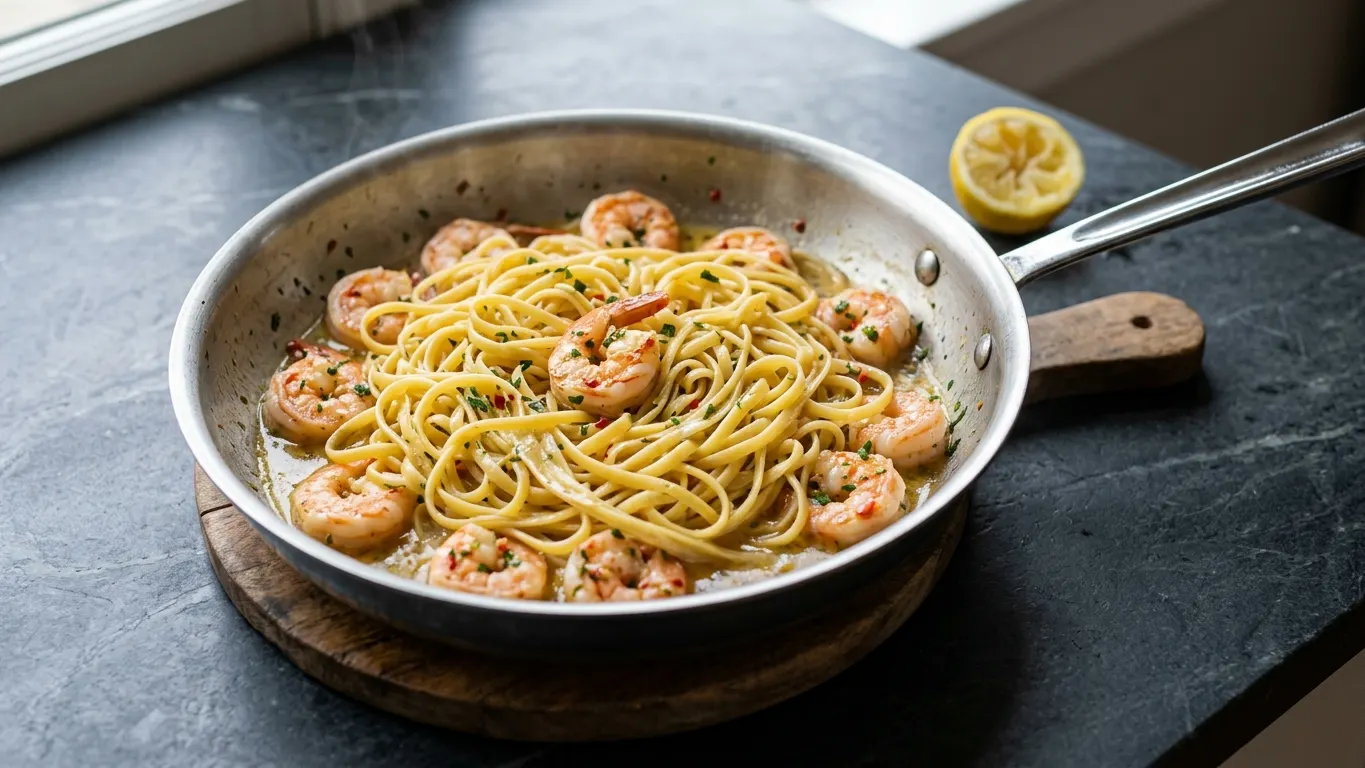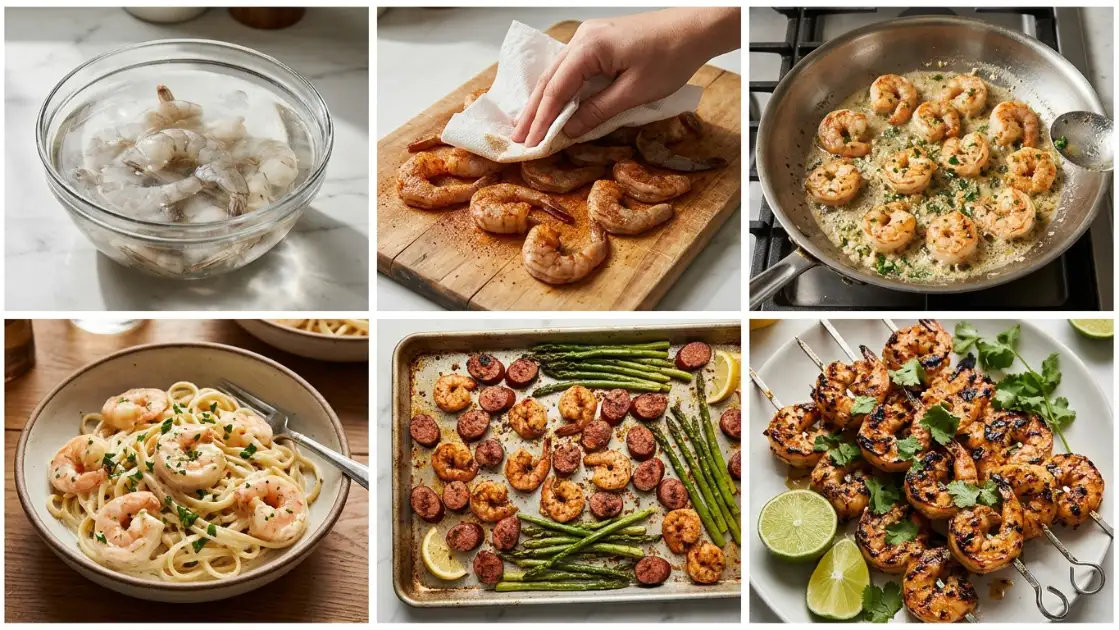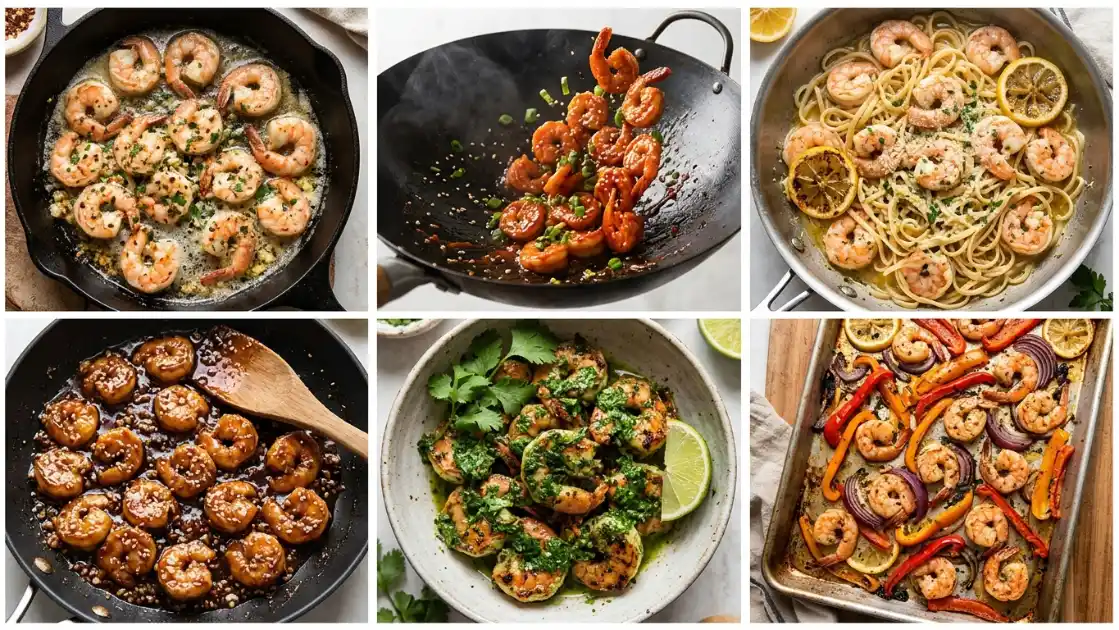

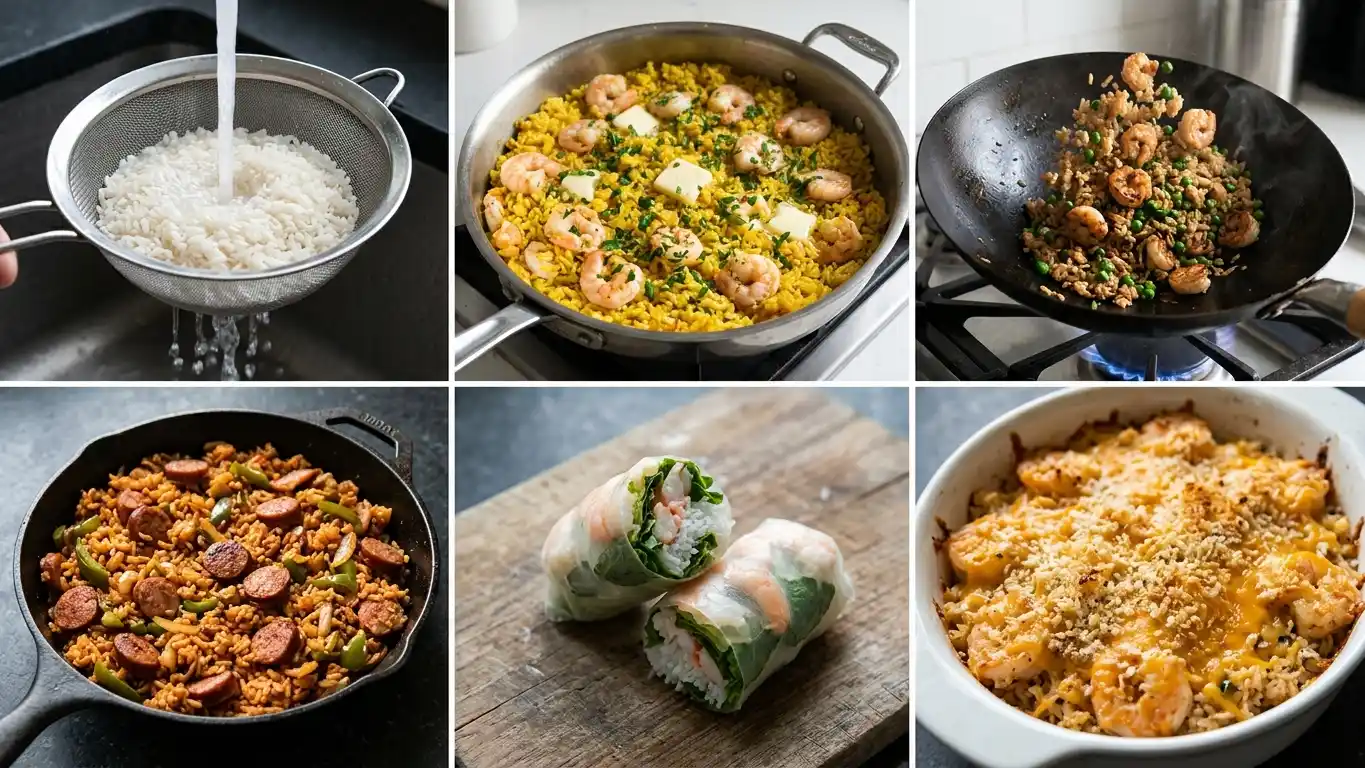
Staggering your heat is the only way to cook shrimp and rice in a single pan because raw grains need 16 minutes to hydrate while shellfish turns tough after 180 seconds. Drop the peeled tails right on top of the simmering starch at the 13 minute mark so both ingredients cross the finish line together. Shellfish contains tropomyosin proteins that trigger severe allergic reactions, so always confirm guest allergies before cooking and wash cutting boards with hot soapy water to prevent cross contamination.
Prep Time: 10 minutes
Cook Time: 18 minutes
Total Time: 28 minutes
Servings: 4
Pan Size: 12 inch heavy bottomed stainless steel or enameled cast iron skillet with a tight fitting lid
Ingredients:
- 1 lb medium raw shrimp peeled and deveined
- 1.5 cups long grain white jasmine rice
- 2.5 cups low sodium chicken broth
- 5 Tbsp unsalted butter cut into half tablespoon pieces and divided
- 0.5 cup finely chopped yellow onion
- 2 cloves fresh garlic minced
- 2 tsp grated lemon zest from 1 medium lemon
- 1 Tbsp freshly squeezed lemon juice
- 0.33 cup finely shredded parmesan cheese
- 2 Tbsp chopped fresh parsley
- 0.5 tsp kosher salt
- 0.25 tsp freshly ground black pepper
Selecting and Prepping Your Raw Ingredients

Picking the Right Grain Length and Starch Ratio
Long grain jasmine varieties contain roughly 18 percent amylose, which keeps individual kernels separate when simmered in savory broth. Short grain sushi or arborio styles release heavy amylopectin into the cooking liquid and turn a weeknight skillet meal into a sticky paste before the liquid evaporates. Expect to spend around 4 to 6 dollars for a two pound bag of imported Thai jasmine kernels at a standard supermarket in 2026. If you only have quick cooking brown rice in the pantry, you will need to adjust the cook time downward by four minutes and increase the dry grain quantity by a quarter cup because parboiled bran absorbs moisture at a completely different rate.
Sizing Shellfish for Staggered Cooking
Buy medium count shellfish labeled 41 to 50 pieces per pound so the meat cooks through in the exact three minute window left at the end of the grain cycle. Jumbo 16 to 20 count tails take nearly six minutes to turn opaque in steam, which leaves the starch sitting on the burner long enough to scorch against the bottom metal. Retail freezer cases sell one pound bags of peeled medium Gulf tails for 9 to 13 dollars in 2026. Skip pre cooked pink rings entirely because reheating already denatured protein turns the texture into bouncy pencil erasers.
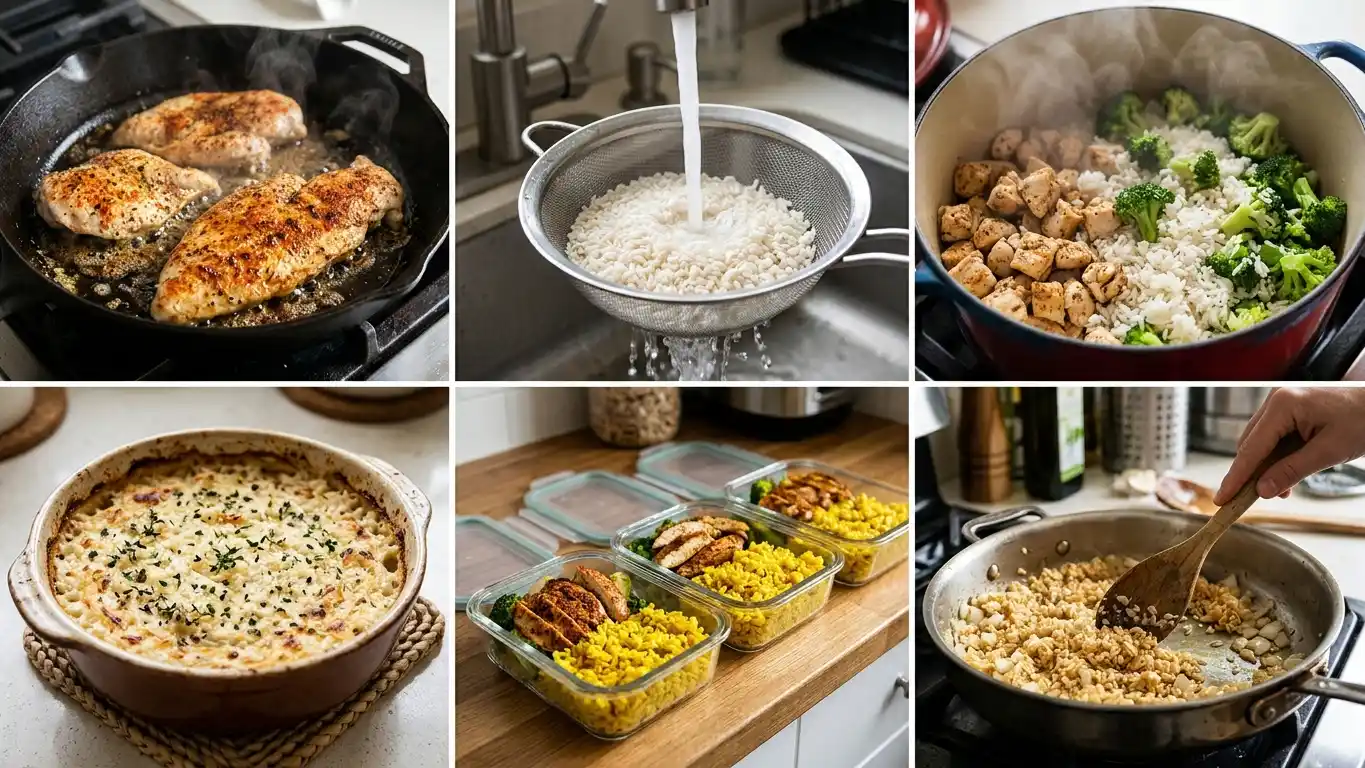
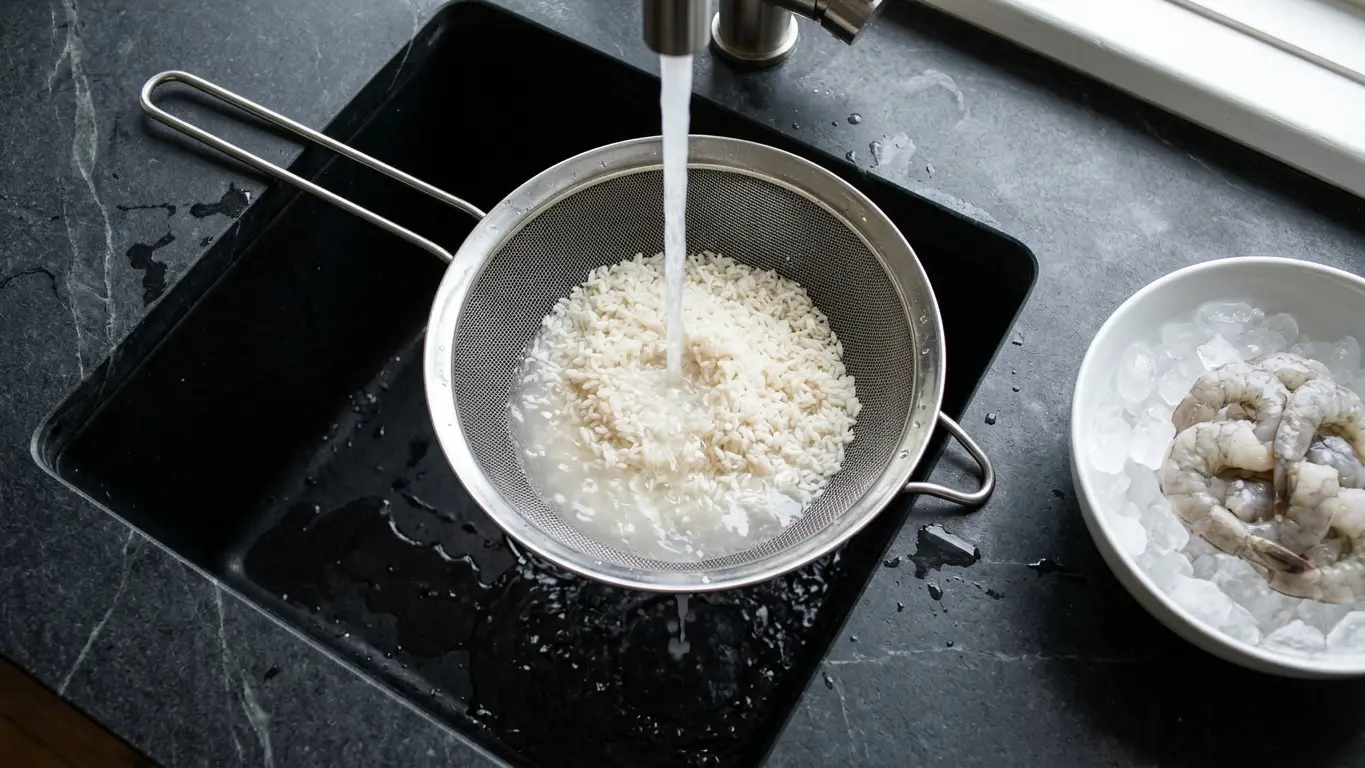
Rinsing the dry kernels in a fine mesh sieve under cold running tap water for 60 seconds until the runoff turns nearly clear washes away loose surface flour that otherwise boils into glue.
Managing Heat and Pan Geometry for Shrimp and Rice
Why a Twelve Inch Skillet Beats a Deep Saucepan
Wide surface area lets steam pass evenly around every single piece of seafood without stacking the tails on top of one another. A narrow four quart saucepan forces you to pile a full pound of meat two layers deep, leaving the top layer raw and translucent while the bottom layer overcooks against the hot starch. Use a 12 inch pan with two inch straight metal walls and a heavy aluminum or cast iron core so the outer edges simmer at the exact same speed as the center ring. Glass lids help you watch the liquid level drop without lifting the cover and venting the trapped heat.
Controlling the Thirteen Minute Simmer Window
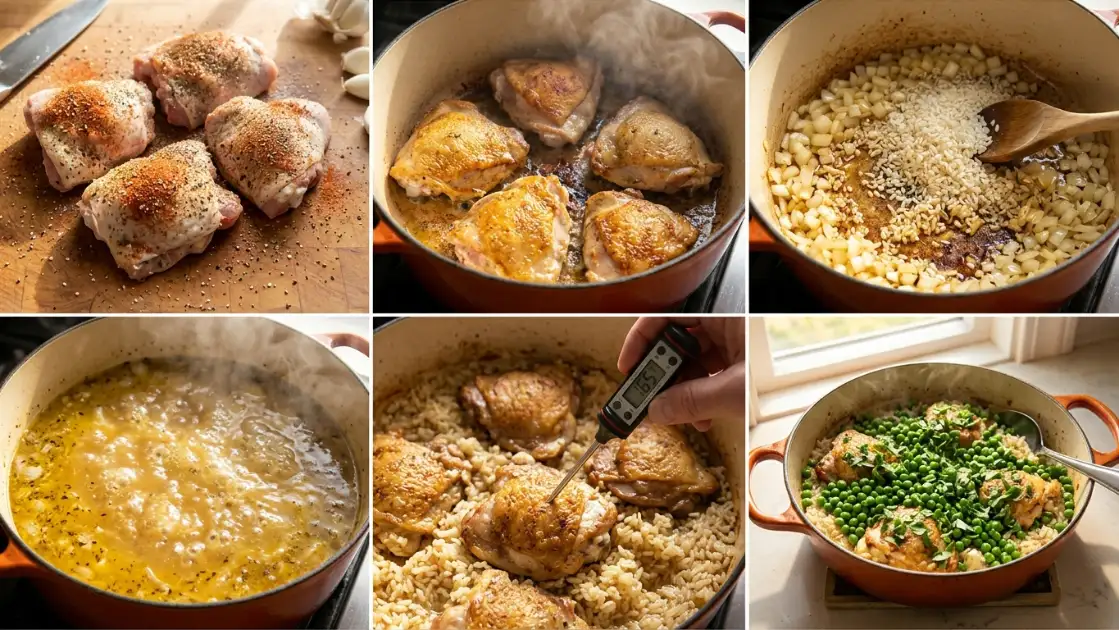
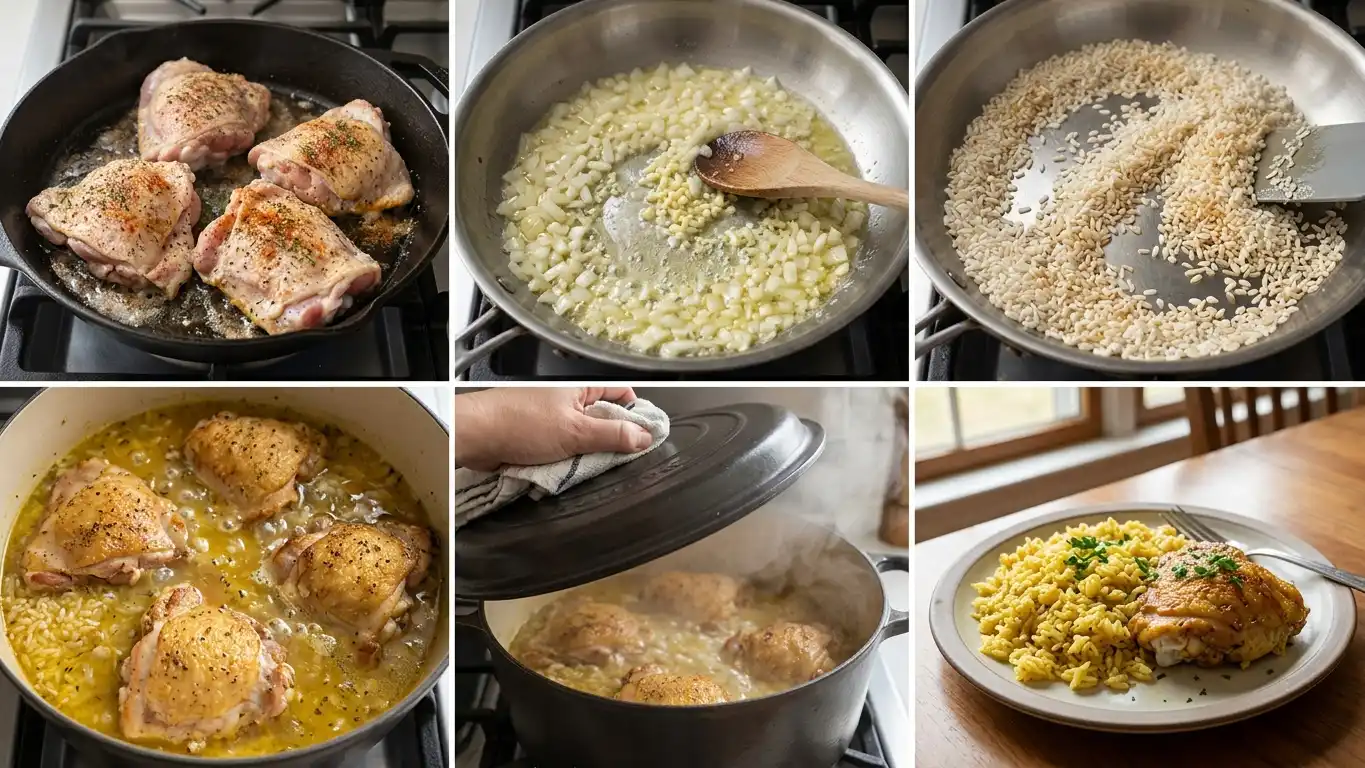
Melt one tablespoon of your divided butter over medium heat, add the chopped yellow onion, and stir for four minutes until the edges turn translucent. Pour in the rinsed grains, minced garlic, salt, pepper, and chicken broth, then bring the liquid to a full rolling boil before dropping the burner to a low simmer and clamping the lid on tight. Let the pot simmer undisturbed for 13 minutes while you peel and devein the raw shellfish at the counter to make the most of the prep time.
Lifting the lid before the 13 minute timer rings releases the steam pressure required to hydrate the top layer of kernels and guarantees crunch in the finished dish.
Finishing the One Pan Base Method
Layering Butter and Citrus for Steam Cooking
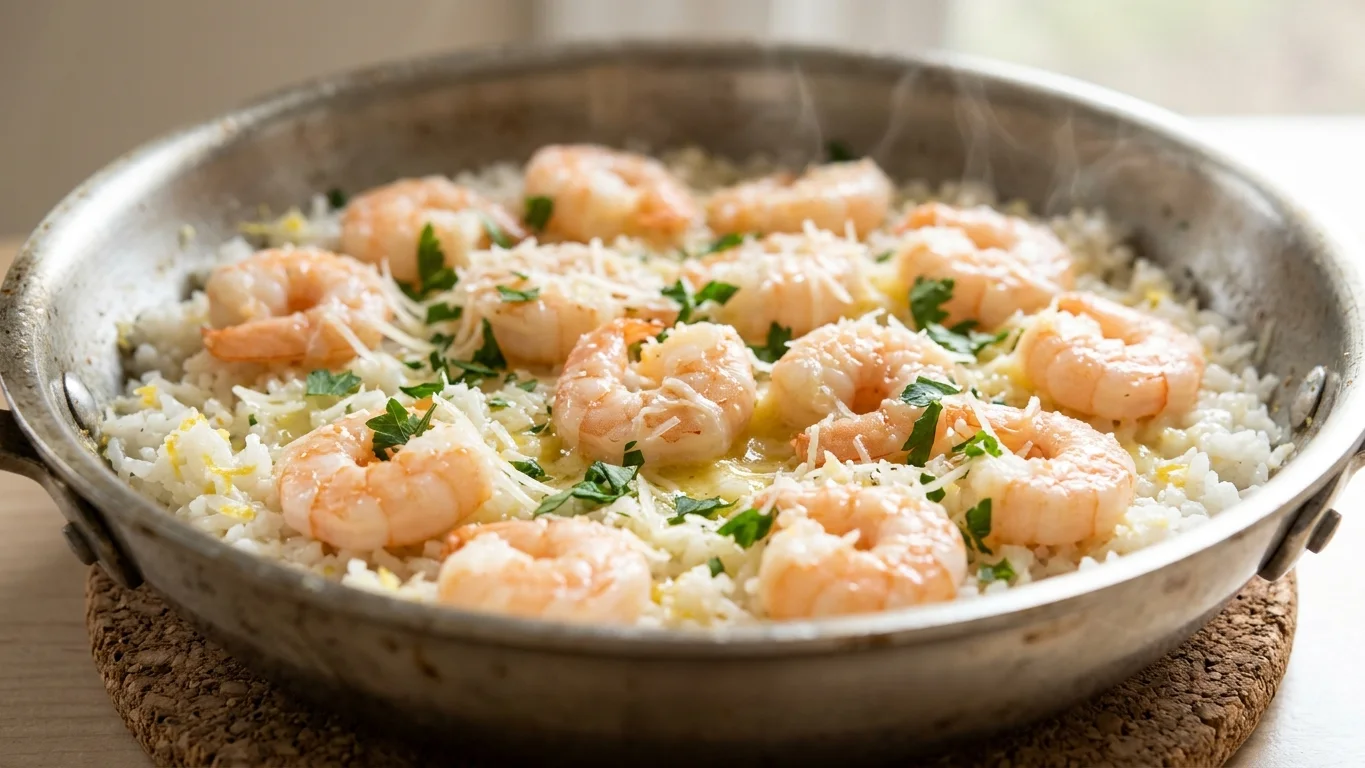
Once the 13 minute timer sounds, take the lid off and arrange the raw tails across the top of the hot grains in a single flat layer without stirring them down into the starch. Drizzle the fresh lemon juice over the shellfish and dot the surface evenly with the remaining four tablespoons of cut butter pieces. Put the cover back on immediately and cook for 2 to 3 minutes longer over low heat until the tails are about halfway cooked and pink along their bottom edges.
Visual Doneness Cues and Internal Temperatures
Slide the skillet completely off the hot burner and keep the lid closed for another two minutes so residual steam finishes cooking the seafood gently. Shellfish reaches food safe doneness at an internal temperature of 145 degrees Fahrenheit on an instant read digital probe. If you do not own a thermometer, look at the gap behind the head where the vein was removed and check that the flesh has turned completely opaque white with a loose C shaped curve. Tight O shaped curls mean the muscle fibers stayed over the heat too long and squeezed out their natural moisture. Stir in the lemon zest, shredded parmesan, and fresh parsley right before you serve.
Get the finished food out of the hot metal pan within five minutes or the carryover heat from the cast iron will keep shrinking the tails.
Wok Technique for High Heat Fried Grains
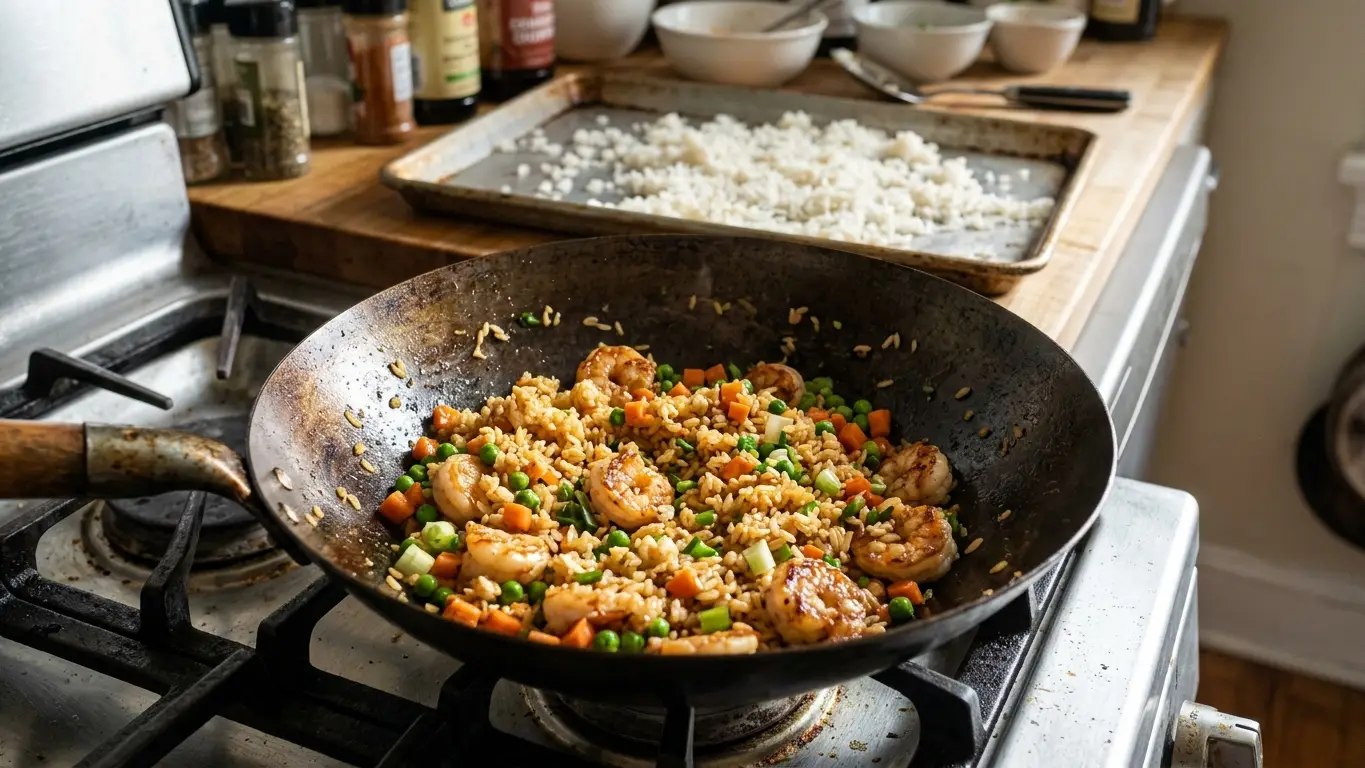
Drying Day Old Kernels on a Sheet Pan
Freshly steamed starch holds too much surface moisture to blister in a hot wok and steams into mush the second it touches oil. Spread cooked grains in a single flat layer across a rimmed aluminum baking sheet and leave them uncovered on a refrigerator shelf for 12 to 24 hours before making a shrimp and fried rice recipe. Cold refrigerator air pulls excess water out of the exterior starch shell so each kernel absorbs soy sauce and toasted sesame oil without clumping together. If you forget to cook a batch the night before, spread freshly made kernels under a ceiling fan for 30 minutes to flash dry the outer coat.
Searing Proteins Before Aromatics
Heat two tablespoons of neutral peanut or avocado oil in a carbon steel wok until a wisp of white smoke rises from the metal. Sear the seasoned dry tails for 45 seconds per side, scoop them out onto a clean plate, and only then drop your diced carrots, peas, and green onions into the hot fat. Keeping the seafood out of the pan while you toss the cold grains over high heat prevents the delicate meat from stewing in vegetable water.
Dump the cooked shellfish back into the wok during the final 20 seconds of tossing just to coat the exteriors in hot oil.
Building a Cajun Skillet with Smoked Sausage
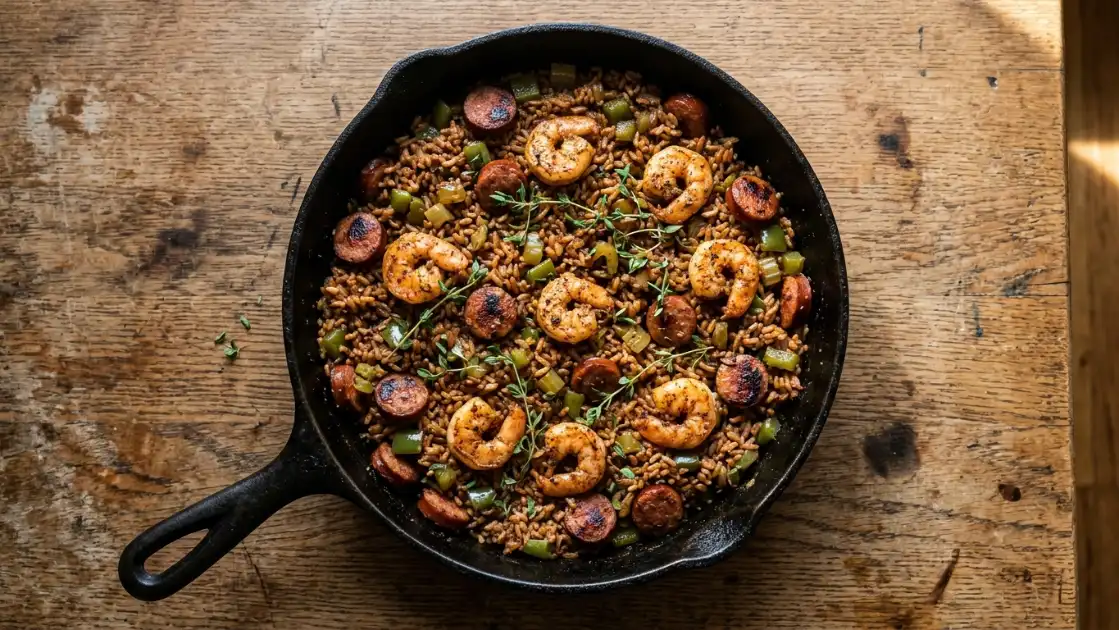
Rendering Andouille Fat as the Cooking Medium
Start a cajun shrimp and rice skillet by slicing half a pound of smoked pork andouille into quarter inch coins and placing them into a cold dry pan. Turn the burner to medium and let the sausage render for six minutes until brown fond sticks to the steel and two tablespoons of spiced orange pork fat pool in the pan. Scoop out the crisp meat and sauté diced celery, green bell pepper, and yellow onion right in those rendered drippings instead of using plain butter.
Balancing Spices Without Burning Paprika
Wait until the chopped trinity vegetables soften completely before stirring in smoked paprika, cayenne, dried thyme, and garlic powder. Dry ground chilies and paprika contain natural sugars that scorch and turn bitter in less than 30 seconds if dropped directly onto bare hot metal. Toast the spices in the wet vegetable mixture for 40 seconds until fragrant, then pour in the broth to deglaze the pan for a shrimp and rice one pan meal that builds deep smoky color from the bottom up.
Hold back half of your Cajun seasoning blend to dust directly onto the raw shellfish right before steaming so the spice hits the tongue first.
Baking an Oven Casserole for Make Ahead Meals
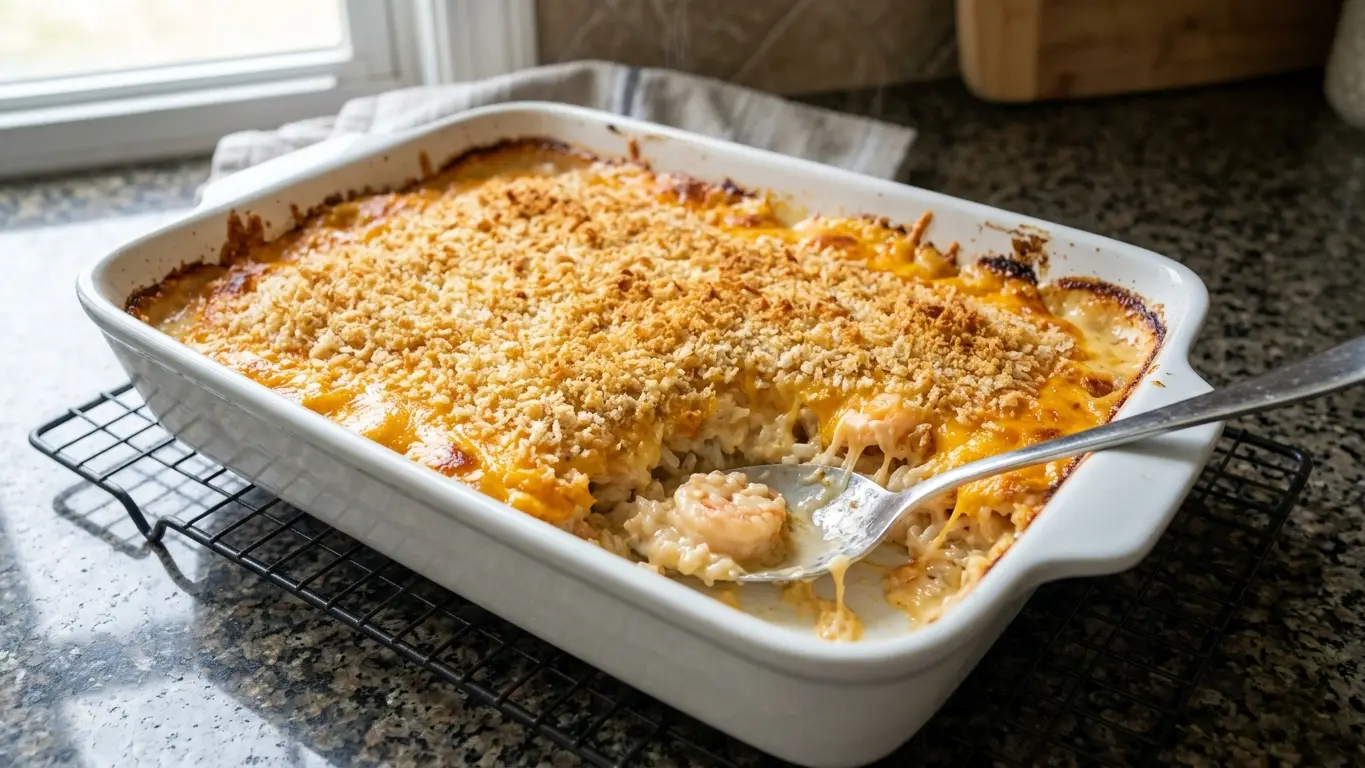
Parboiling Grains to Prevent Dry Corners
Oven heat circulates dry air around the edges of a ceramic 9 by 13 inch baking dish and desiccates raw starch before the center liquid boils. When assembling an easy shrimp and rice casserole, boil the grains in salted broth on the stove for exactly eight minutes until the outsides soften but the core still feels chalky between your teeth. Fold the parboiled starch into a room temperature sauce of sour cream, sharp cheddar, sautéed onions, and garlic so the kernels finish hydrating inside the dairy fat at 375 degrees Fahrenheit.
Protecting Crustaceans Under a Crumb Topping
Tuck the raw peeled shellfish completely underneath the wet grain and cheese mixture rather than leaving them exposed on top of the baking dish. Direct radiant heat from an oven element dries out uncovered seafood skin in four minutes flat. Melt three tablespoons of butter into one cup of panko breadcrumbs and scatter the mixture across the surface to act as an insulating heat shield during the 15 minute bake.
Pull the ceramic dish out of the oven as soon as the cheese bubbles along the glass walls because the dense center continues cooking for ten minutes on the cooling rack.
Rolling Fresh Spring Rolls and Simmering Noodle Bowls
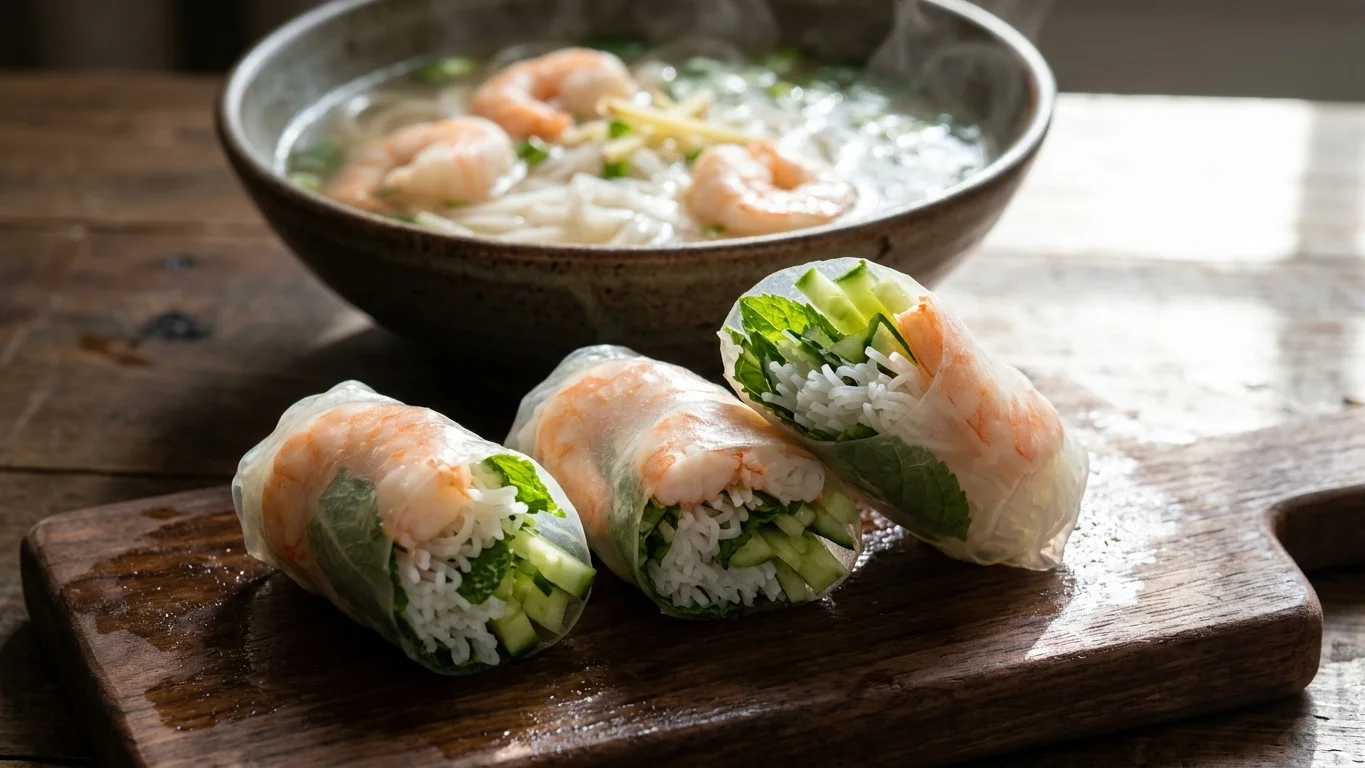
Hydrating Wrappers in Lukewarm Water
Making shrimp and rice paper rolls fails whenever cooks soak the brittle tapioca rounds in hot water for too long. Dip each dry sheet into a shallow pie plate filled with 80 degree tap water for exactly three seconds, then pull it out while it still feels firm like thin plastic. Lay the wet disk flat on a damp wooden cutting board where it will absorb the surface moisture over the next 20 seconds and turn pliable enough to wrap around poached halved tails, vermicelli, mint leaves, and julienned cucumber without tearing.
Clarifying Broth for Light Rice Noodle Soup
Simmer the peeled shells and tail tips in four cups of water with sliced ginger and crushed scallions for 15 minutes to build the base for a fast shrimp and rice noodle soup. Strain the fortified shell stock through a fine sieve into a clean pot, bring it to a gentle simmer, and slide in dried flat rice sticks for four minutes before adding the raw meat for the final two minutes. Never boil dried rice noodles directly in the serving broth if you plan to store leftovers because the shed starch turns the clear soup cloudy and gelatinous overnight.
Rinse the boiled noodles in warm water in a separate colander first if you want the bowl to stay crystal clear in the fridge.
Tossing High Heat Stir Fries and Tex Mex Queso Skillets
Slurry Ratios for Glossy Stir Fry Coating
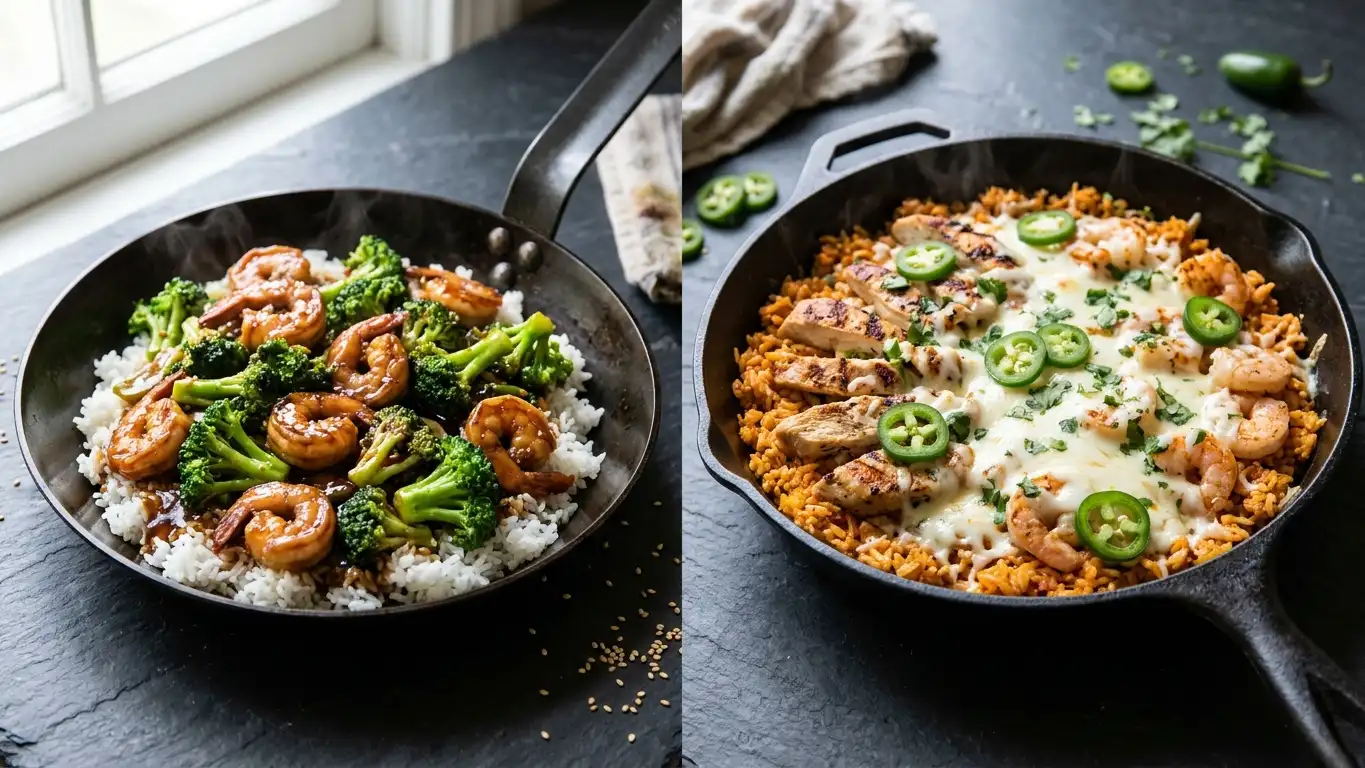
A proper shrimp and rice stir fry needs a cornstarch slurry so the savory sauce clings to the protein instead of pooling at the bottom of the plate. Whisk one teaspoon of cornstarch into a quarter cup of cold chicken stock, two tablespoons of oyster sauce, and one teaspoon of soy sauce until no white lumps remain. Pour the cold mixture into the hot skillet during the final 30 seconds of cooking so the starch gelatinizes instantly at 203 degrees Fahrenheit and turns clear and glossy over steamed grains.
Layering Chicken and Melted Queso
Combining poultry and shellfish in a single pan requires cooking the dense bird meat completely before the seafood ever leaves the cutting board. Slice boneless chicken thighs into half inch strips, sear them in vegetable oil with taco seasoning for seven minutes until they hit 165 degrees Fahrenheit, and serve them over hot Mexican seasoned kernels with pan seared tails and melted white American cheese for restaurant style chicken shrimp rice and queso at home. In 2026, a block of real white American melting cheese from the deli counter costs around 7 dollars per pound and melts smoothly without separating into greasy oil like pre bagged shredded cheddar.
Stir two tablespoons of pickled jalapeno brine into the melted cheese pot to keep the queso pourable as it cools on the table.
Adapting Flavors for Kids and Global Palates
Swapping Citrus and Beans for Latin Profiles
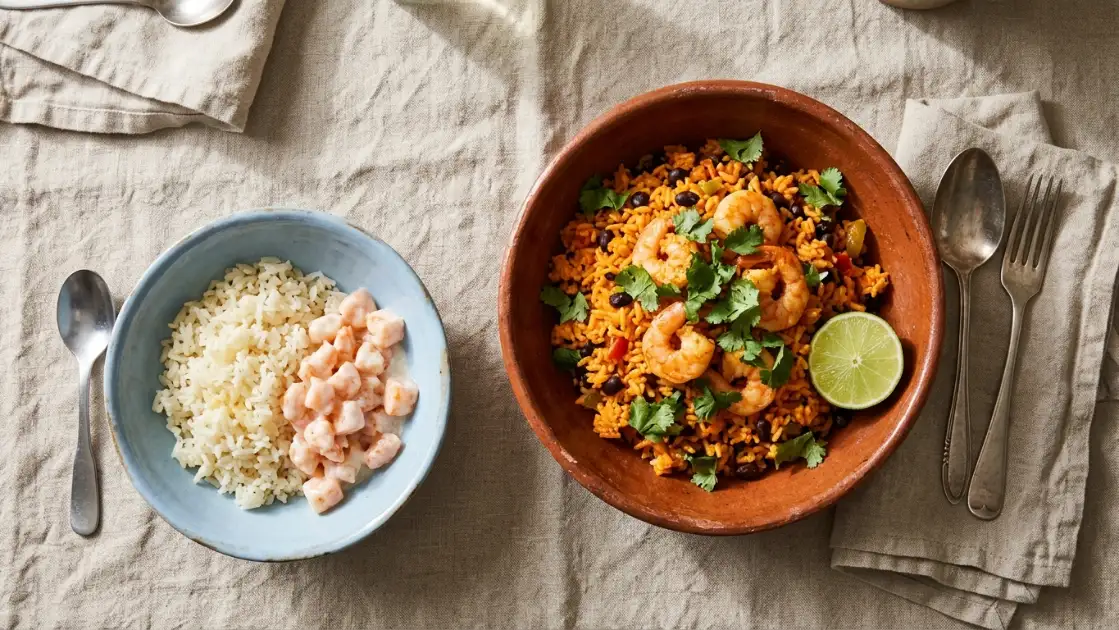
Understanding what people mean when they ask what is shrimp and rice in spanish helps you adjust the acid and herb profile for Latin recipes like arroz con camarones. Swap the lemon juice and zest in the base skillet for fresh lime, replace the chopped parsley with a full cup of fresh cilantro leaves, and stir in one 15 ounce can of drained and rinsed black beans right when you add the raw seafood on top of the simmering grains. Toasting the dry kernels in annatto oil for two minutes before adding the broth stains the starch a bright golden orange and adds an earthy pepper note.
Mild Seasoning Adjustments for Kids
Younger eaters often reject seafood dishes because black pepper specks and strong fishy aromas overwhelm sensitive palates. When searching through dinner ideas shrimp and rice for a family table, soak the peeled raw tails in cold milk for ten minutes before cooking to neutralize trimethylamine odors on the surface of the meat. Skip the cayenne and heavy garlic, dice the tails into bite sized half inch pieces so toddlers do not need a knife, and fold two tablespoons of mild cream cheese into the warm broth right at the end to create a mellow, familiar sauce.
Serve the diced seafood in a separate small bowl alongside plain buttered kernels so picky kids can control their own bites.
Mixing Sauces That Bind Seafood and Starch
Emulsifying Cold Butter Into Pan Drippings
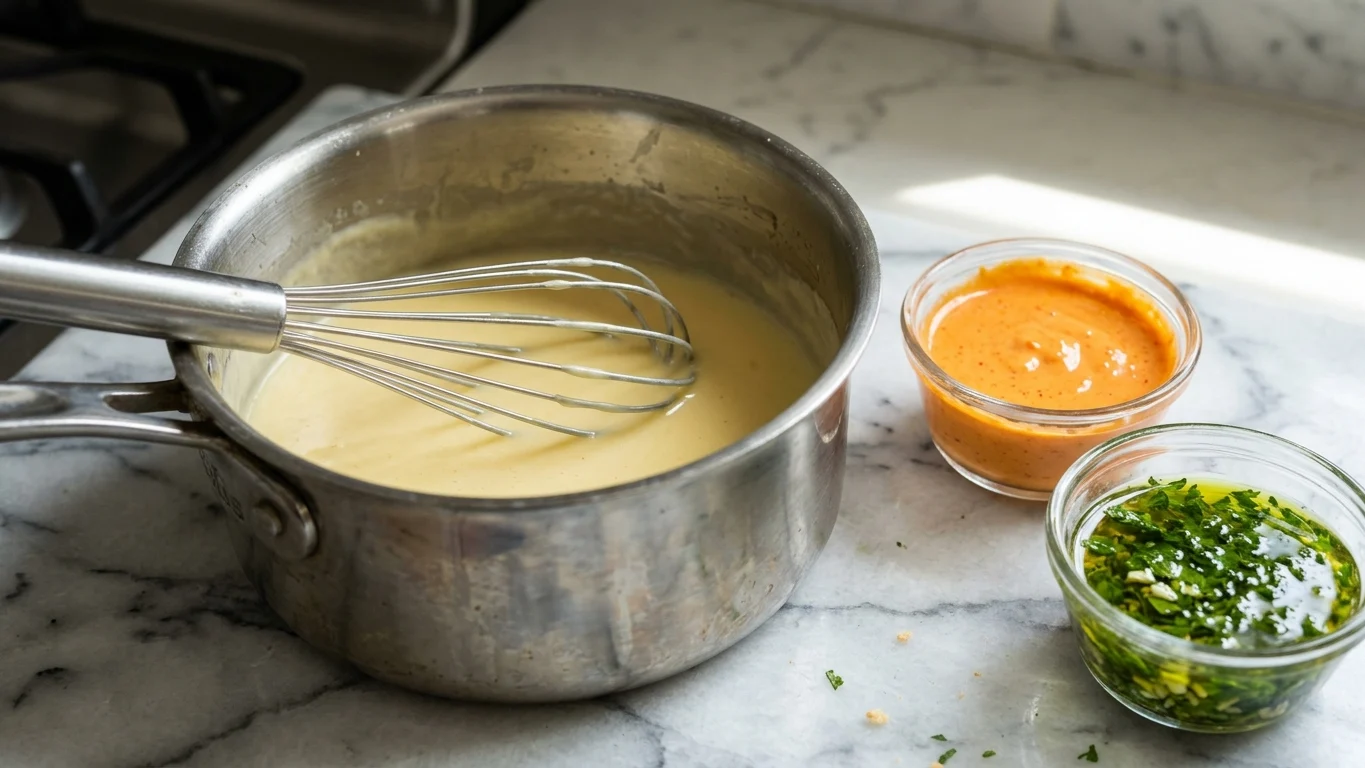
Dry grains need a fat emulsion to coat the palate once the cooking broth evaporates inside the pot. If you need a fast sauce to make with shrimp and rice without dirtying a blender, deglaze the empty seafood pan with a third cup of dry white wine or broth, take the pan off the heat, and whisk in three tablespoons of ice cold cubed butter one piece at a time. Keeping the burner off stops the milk solids from separating out of the fat and gives you a velvety pan glaze in 90 seconds.
Blending Spicy Mayo and Garlic Herb Drizzles
Cold sauces contrast well against piping hot proteins in bowl style meals. Whisk half a cup of full fat mayonnaise with one tablespoon of sriracha, half a teaspoon of sugar, and a splash of rice vinegar for a quick drizzle that takes two minutes to mix in a small ramekin. For a brighter Mediterranean finish without heavy mayo, pulse half a cup of olive oil with flat leaf parsley, oregano, one garlic clove, and red wine vinegar, then spoon it over the hot skillet right at the table.
Never pour mayonnaise based sauces into a pan that is still sitting over an active flame or the egg emulsion will break into yellow grease.
Nutrition Breakdown and Ingredient Swaps
Balancing Protein and Sodium Numbers
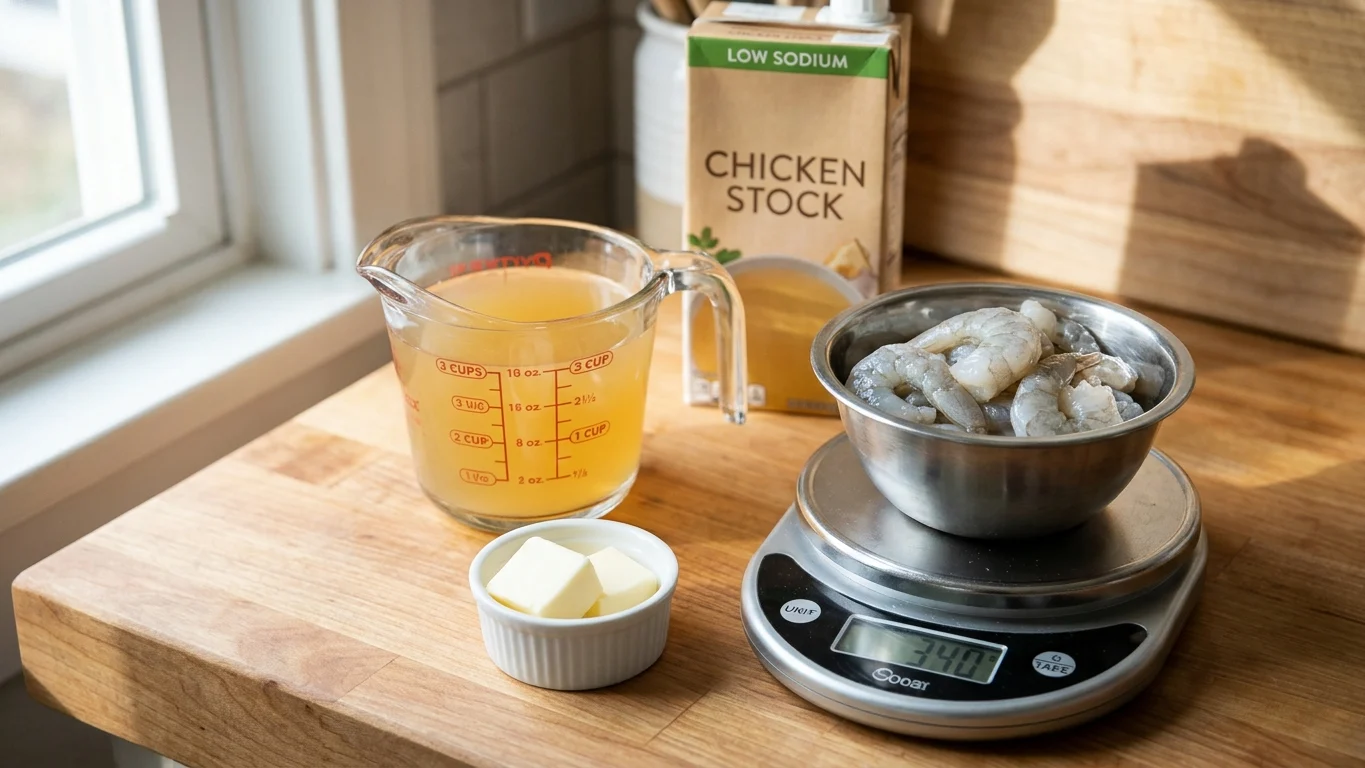
People wondering how healthy is shrimp and rice should look closely at the broth and fat inputs rather than the seafood itself. Three ounces of cooked shellfish deliver roughly 20 grams of lean protein for under 90 calories, while the full butter and parmesan skillet recipe provides about 49 percent of the daily value for protein and 24 percent of the daily value for vitamin A per serving. Standard canned chicken stock packs over 800 milligrams of sodium per cup, which easily pushes a single dinner bowl past half of your daily salt limit before you ever shake the salt cellar.
Cutting Saturated Fat Without Losing Moisture
Evaluating whether shrimp fried rice is good for you comes down to how much oil the cold starch sponges up inside the wok. Each tablespoon of cooking oil adds 120 calories and 14 grams of fat to the pan, and porous day old grains soak up liquid fat on contact. Cut the saturated fat by replacing three of the five tablespoons of butter in the stovetop recipe with low sodium vegetable broth mixed with half a teaspoon of unflavored gelatin powder, which mimics the slick mouthfeel of melted dairy fat without the cholesterol.
Always buy unsalted or low sodium broth cartons so you control the exact gram weight of kosher salt going into the pot.
Fixing Texture Failures Mid Cook
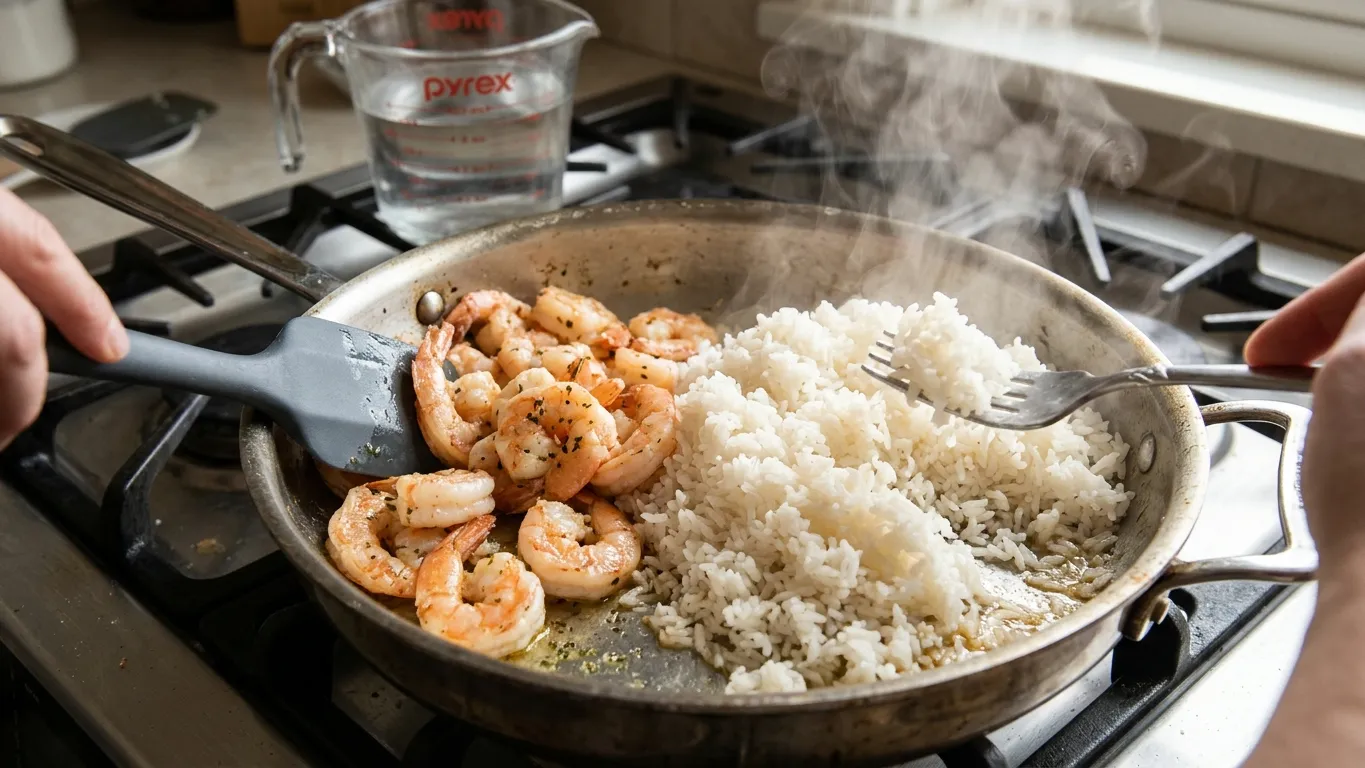
Rescuing Crunchy Underdone Kernels
Discovering hard chalky centers in your starch at the 13 minute mark happens when the burner heat sits too high and boils off the liquid before the grain core hydrates. Leave the raw seafood on the cutting board, heat a third cup of water or broth in the microwave until boiling, and drizzle it evenly across the dry pan surface. Clamp the lid back down, drop the flame to its lowest setting, and steam for four extra minutes before proceeding with the shellfish step. Pouring cold tap water into a stalling pan drops the internal temperature below the starch gelatinization point and ruins the batch.
Drying Out Waterlogged Skillets
Soggy soup at the bottom of the pan means the lid sealed too tightly or the heat sat too low during the main simmer. Take the cover off immediately, push the cooked shellfish to one elevated side of the skillet using a silicone spatula, and crank the burner to medium high for 90 seconds to flash evaporate the pooled broth. Do not stir the wet grains while the water boils off or you will shear the swollen starch granules and turn the liquid into wallpaper paste.
Fluff the drained pan gently with a metal fork rather than a flat wooden spoon once the standing liquid disappears.
Upkeep, Storage, and Reheating After Cooking
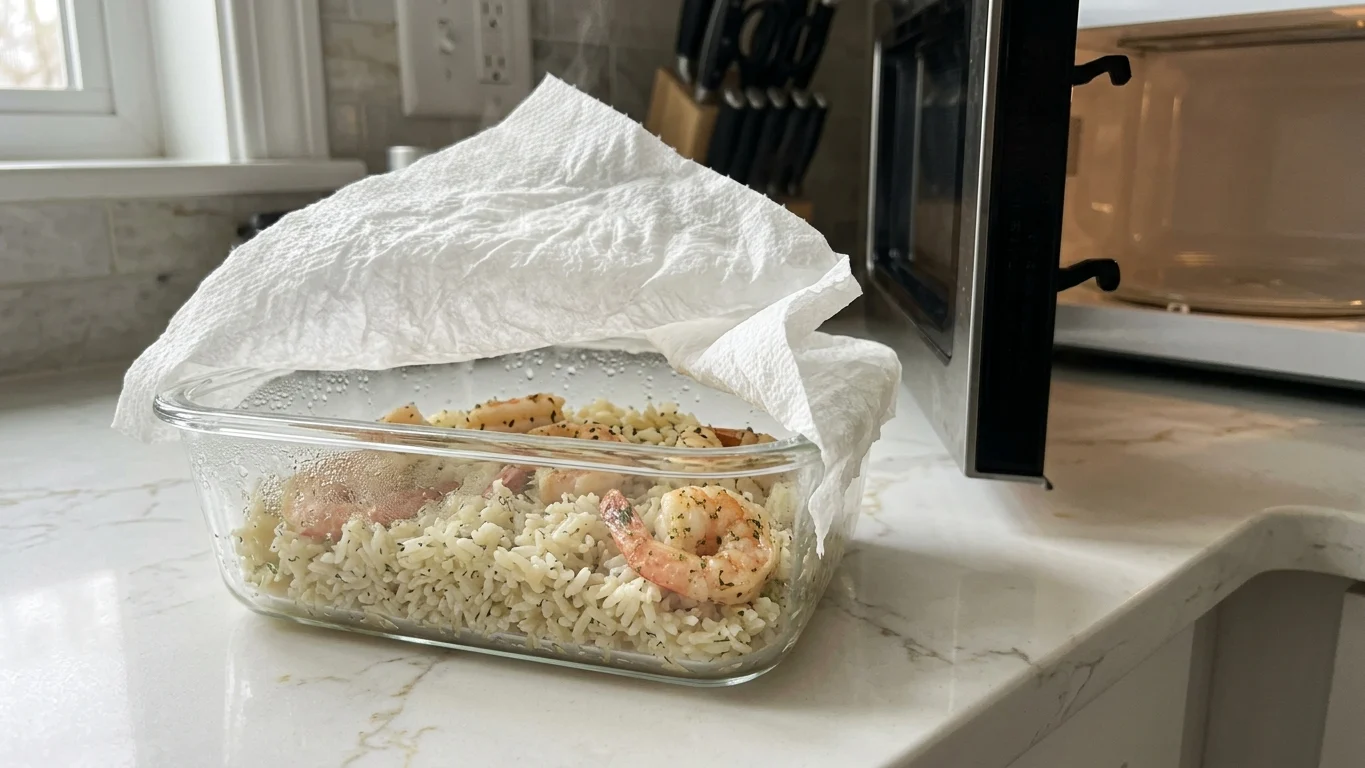
Fridge Shelf Life and Bacterial Risks
Cooked grains harbor heat resistant Bacillus cereus spores that multiply rapidly if the pan sits out on a warm kitchen counter between 40 and 140 degrees Fahrenheit. Scoop leftover shrimp and rice recipes into shallow airtight glass containers within 60 minutes of turning off the stove so the food cools below 40 degrees inside the refrigerator in under two hours. Eat refrigerated shellfish dishes within three days maximum, because crustacean enzymes continue breaking down muscle tissue in cold storage and turn the meat mushy and ammonia scented by day four.
Microwave Power Settings That Save Texture
Blasting cold seafood on 100 percent microwave power boils the internal water molecules inside the tail meat before the surrounding starch even gets lukewarm. Place individual servings into a shallow microwave safe ceramic bowl, sprinkle one teaspoon of plain tap water over the top, and cover loosely with a damp paper towel. Heat the dish on 50 percent power in 45 second bursts, tossing the kernels and tails occasionally with a fork until heated through to 165 degrees Fahrenheit without toughening the protein.
Skip the freezer for dishes made with jasmine starch and whole tails because ice crystals rupture both the grain structure and the delicate shellfish cells upon thawing.
Frequently Asked Questions
Can I drop frozen raw shrimp directly onto the simmering rice without thawing them first?
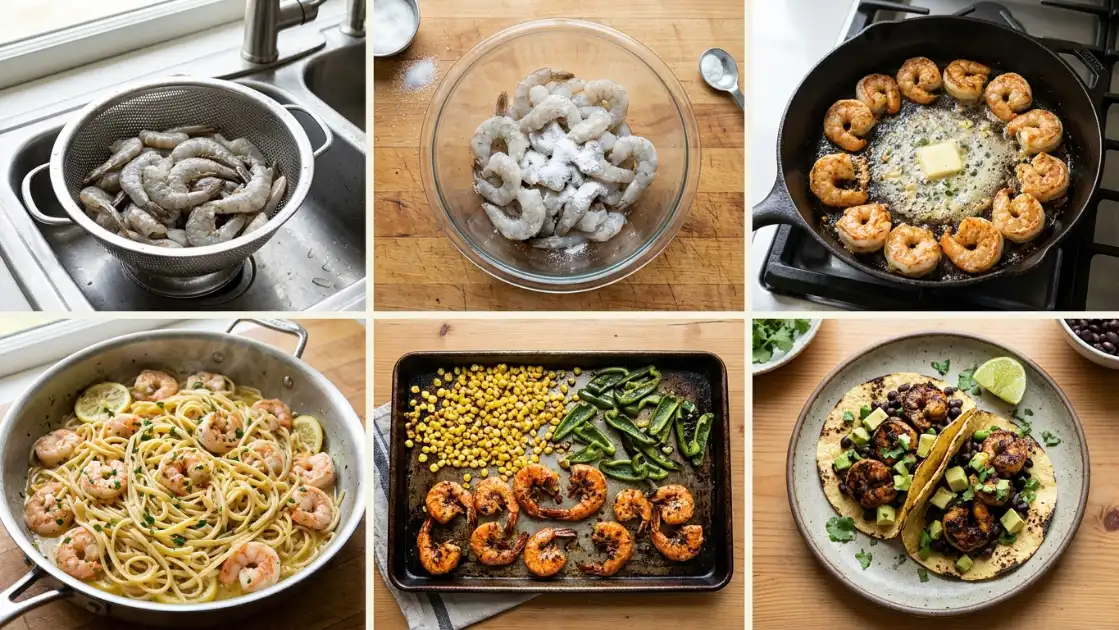
No, placing icy shellfish on top of hot starch dumps excess meltwater into the pan and drops the steam temperature by 20 degrees. The grains underneath the ice crystals turn waterlogged and gummy while the outside of the tail overcooks before the frozen center thaws. Put frozen seafood in a colander under cold running tap water for five minutes and pat every piece bone dry with paper towels before putting them in the skillet.
Why did my white rice turn grey and metallic tasting after adding the seafood?
Cooking acidic lemon juice and sulfur rich shellfish inside an unseasoned cast iron or bare reactive aluminum skillet strips microscopic metal ions straight into the pale broth. Those dissolved metals stain white starch a dull slate grey and leave a sharp penny taste on your tongue. Always use nonreactive stainless steel, enameled cast iron, or anodized nonstick pans whenever citrus juice and seafood simmer together.
Do I leave the tail shells on or pull them off before putting the shrimp in the pan?
Pinch the tail shells off completely at the cutting board if you are mixing the seafood into a casserole, stir fry, or cheesy skillet where diners eat with a fork or spoon. Digging through hot buttery starch with your fingers to pull off slippery shells mid meal ruins the eating experience, and the tiny bit of flavor inside the tail tip does not noticeably change a quick three minute steam.
Putting Your Skillet to Work Tonight
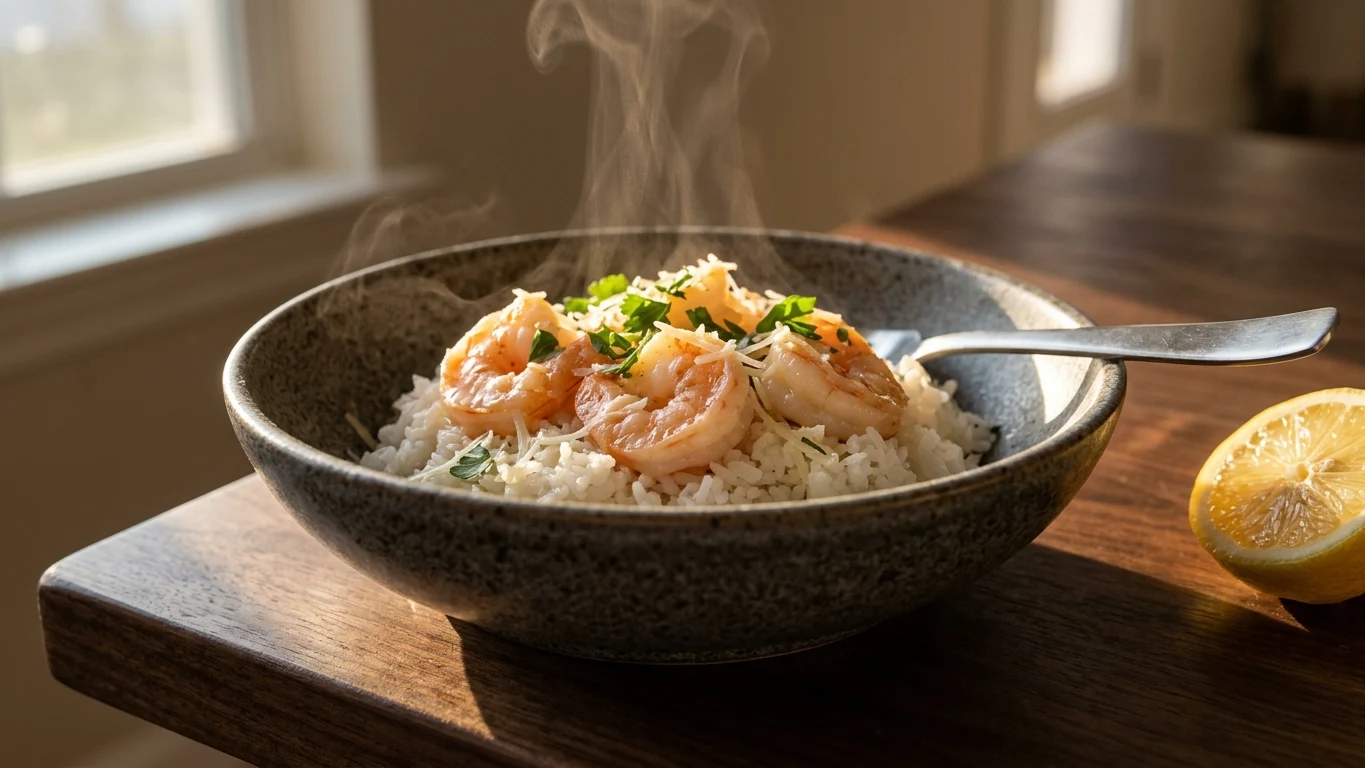
Mastering a reliable shrimp and rice dinner comes down to respecting the 13 minute head start that dry grains require before the delicate shellfish ever touches the pan. Grab a 12 inch stainless skillet, rinse your jasmine kernels until the water runs clear, and watch for that opaque C curve so every single plate leaves the kitchen tender.