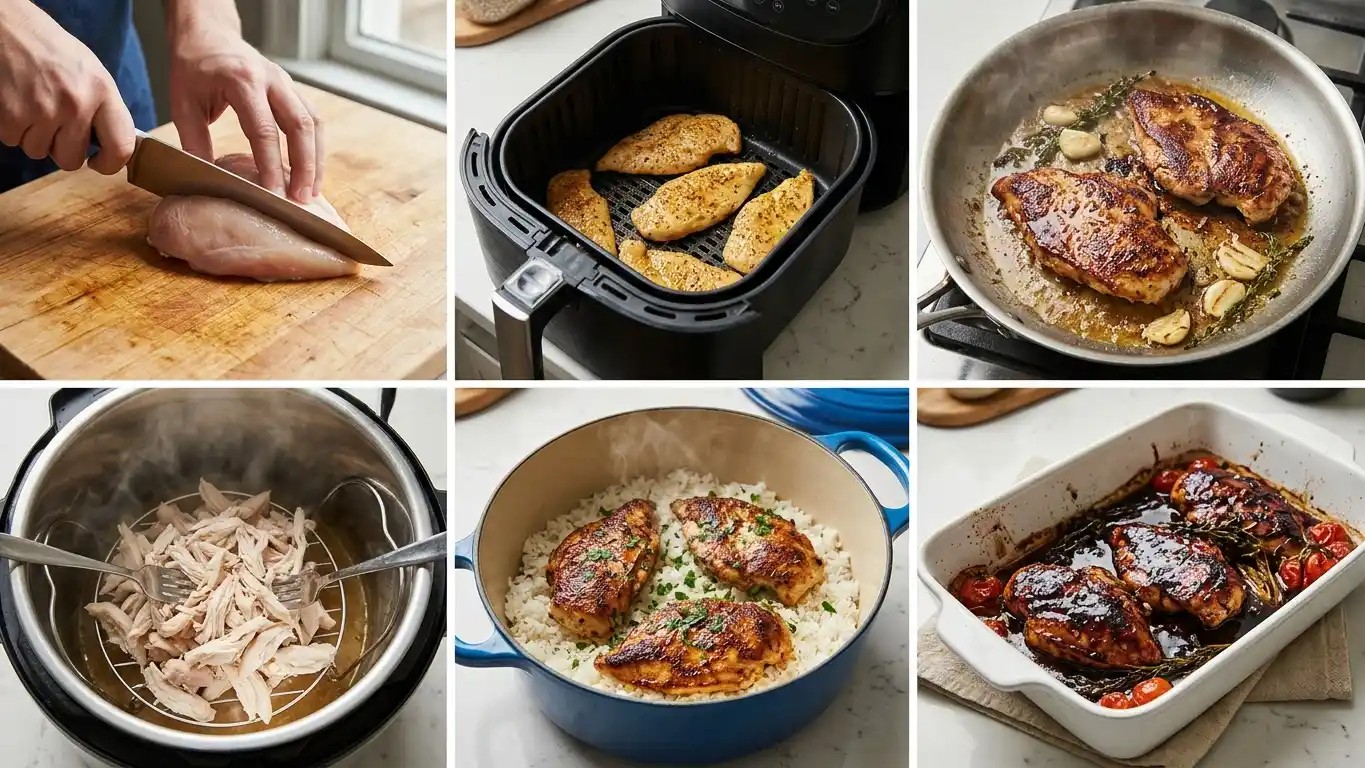

Cooking boneless poultry often turns into a dry, chewy struggle when lean meat loses moisture under unpredictable kitchen heat. Mastering simple chicken breast recipes comes down to managing pan contact, timing your thermal pull, and building quick moisture barriers right on the heat. Once you control meat thickness and internal temperature, everyday dinners become fast, flavorful, and remarkably forgiving.
Prep time: 10 minutes
Cook time: 15 minutes
Total time: 25 minutes
Servings: 4 servings
Ingredients:
- 4 boneless, skinless poultry cutlets, halved horizontally to half-inch thickness
- 2 tablespoons extra virgin olive oil
- 1 teaspoon kosher salt
- half teaspoon cracked black pepper
- 1 teaspoon garlic powder
- 2 tablespoons unsalted butter
- half cup low-sodium chicken broth
- 2 tablespoons fresh lemon juice
- 2 cloves fresh garlic, finely minced
- 1 tablespoon fresh Italian parsley, chopped
Internal doneness target: 165 degrees Fahrenheit after resting. Pull meat from heat at 160 degrees.
Skillet dimension: 12-inch heavy stainless steel or seasoned cast iron skillet.
Visual doneness cue: Clear juices run when the thickest center is pressed lightly, with no pink meat visible at the edge.
How to Cook a Good Chicken Breast on the Stovetop

Flattening Meat for Even Pan Contact
Uneven thickness is the primary reason poultry breasts overcook at the tapered tip while remaining raw in the center. Place each piece inside a zip-top freezer bag and strike the thickest portion with the flat side of a meat mallet until the entire cutlet measures an even half inch. This uniform profile guarantees every square inch sears at the exact same pace.
Securing a Golden Crust in the Skillet
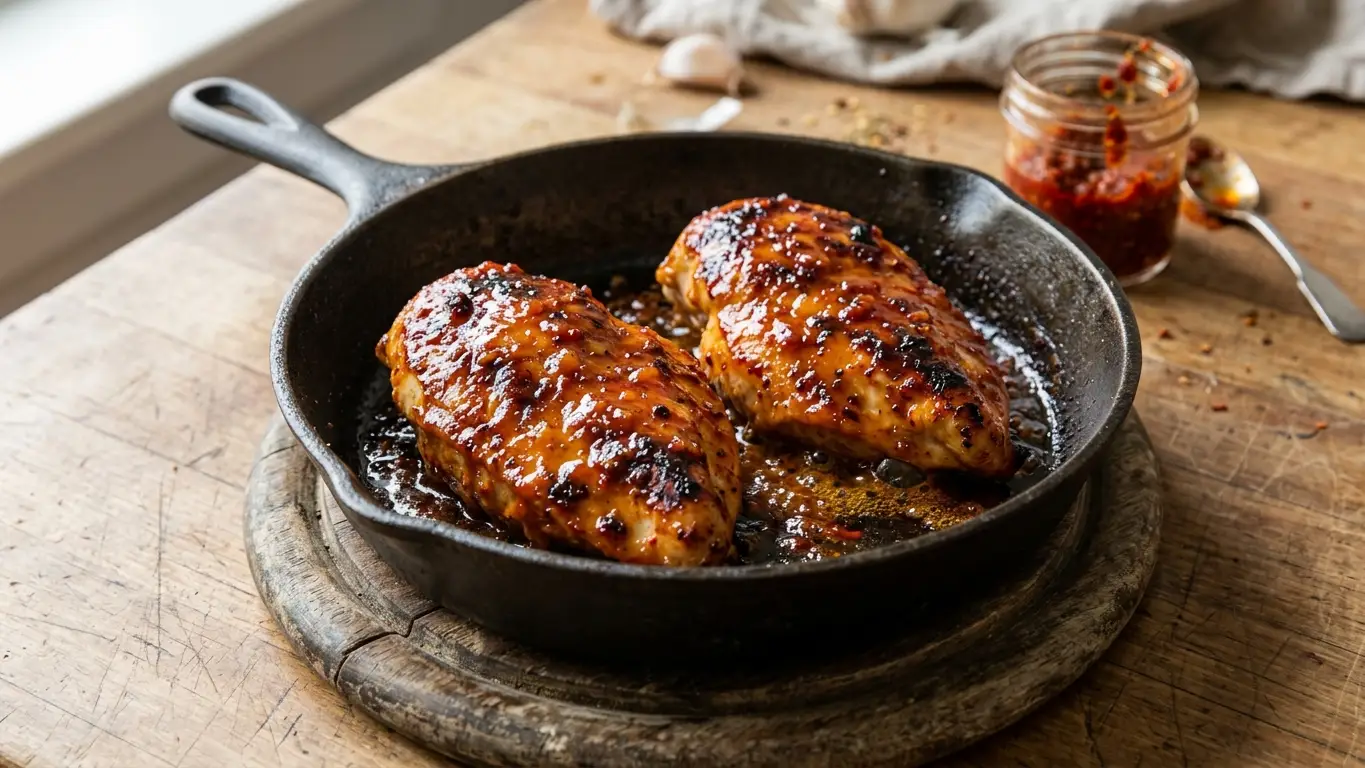
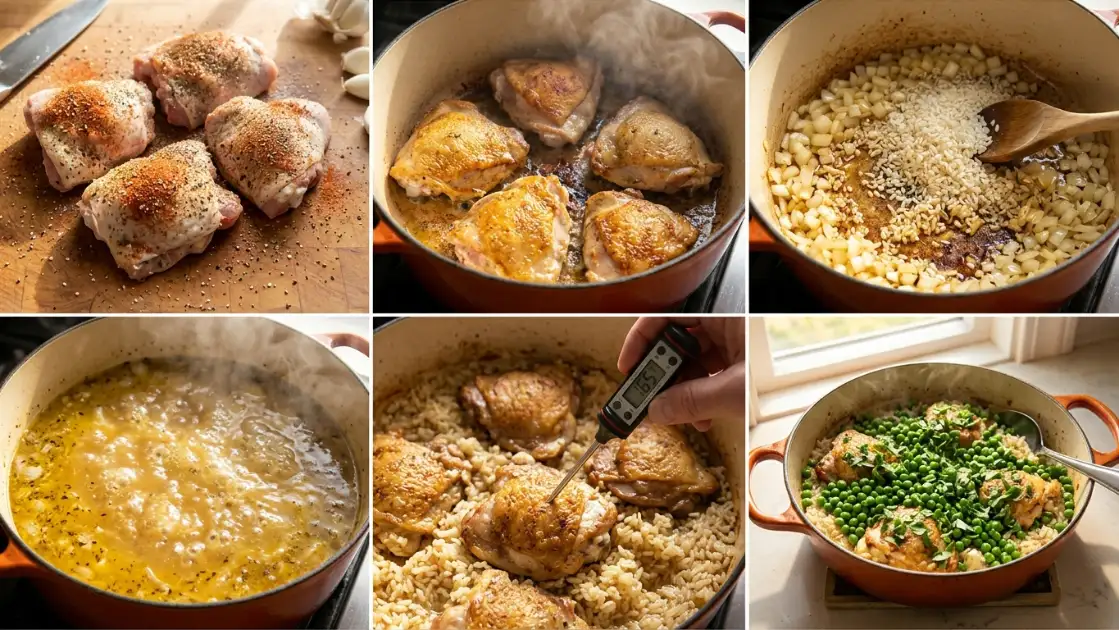
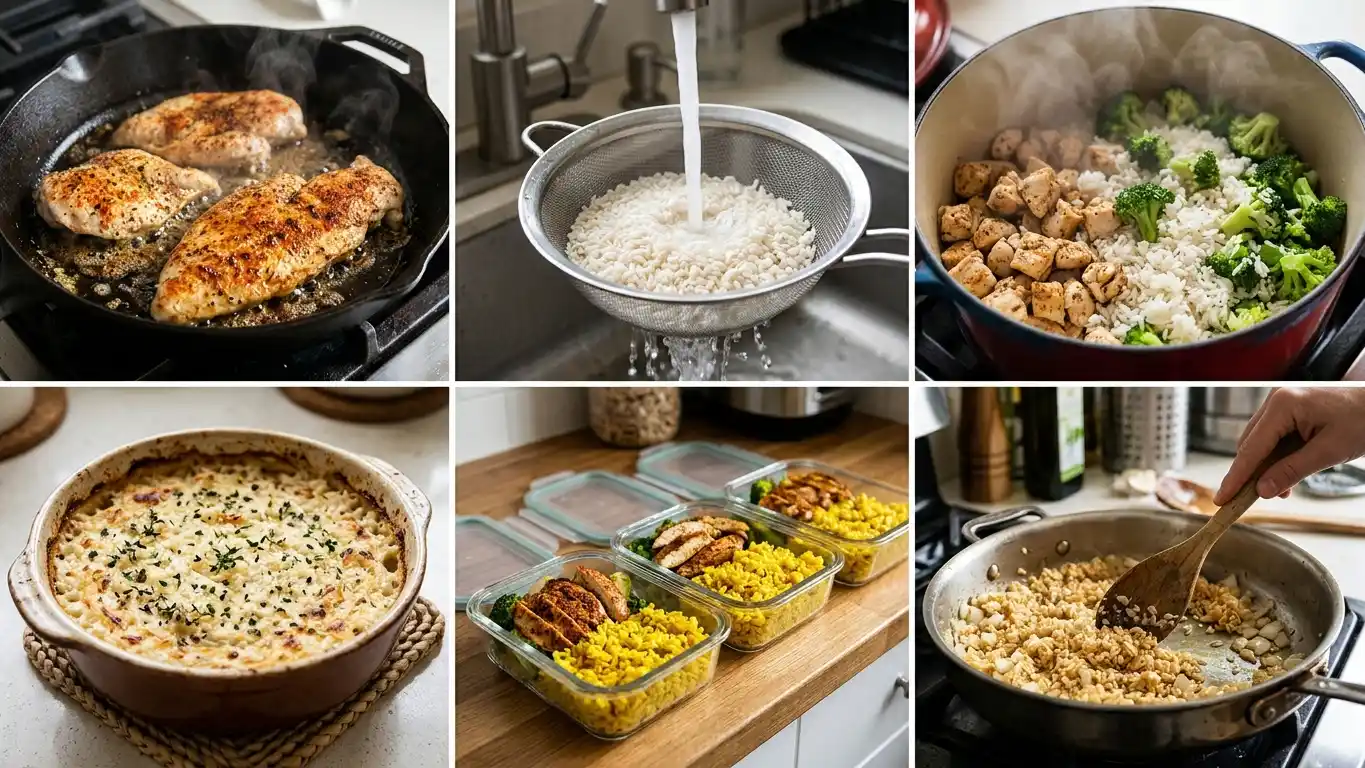
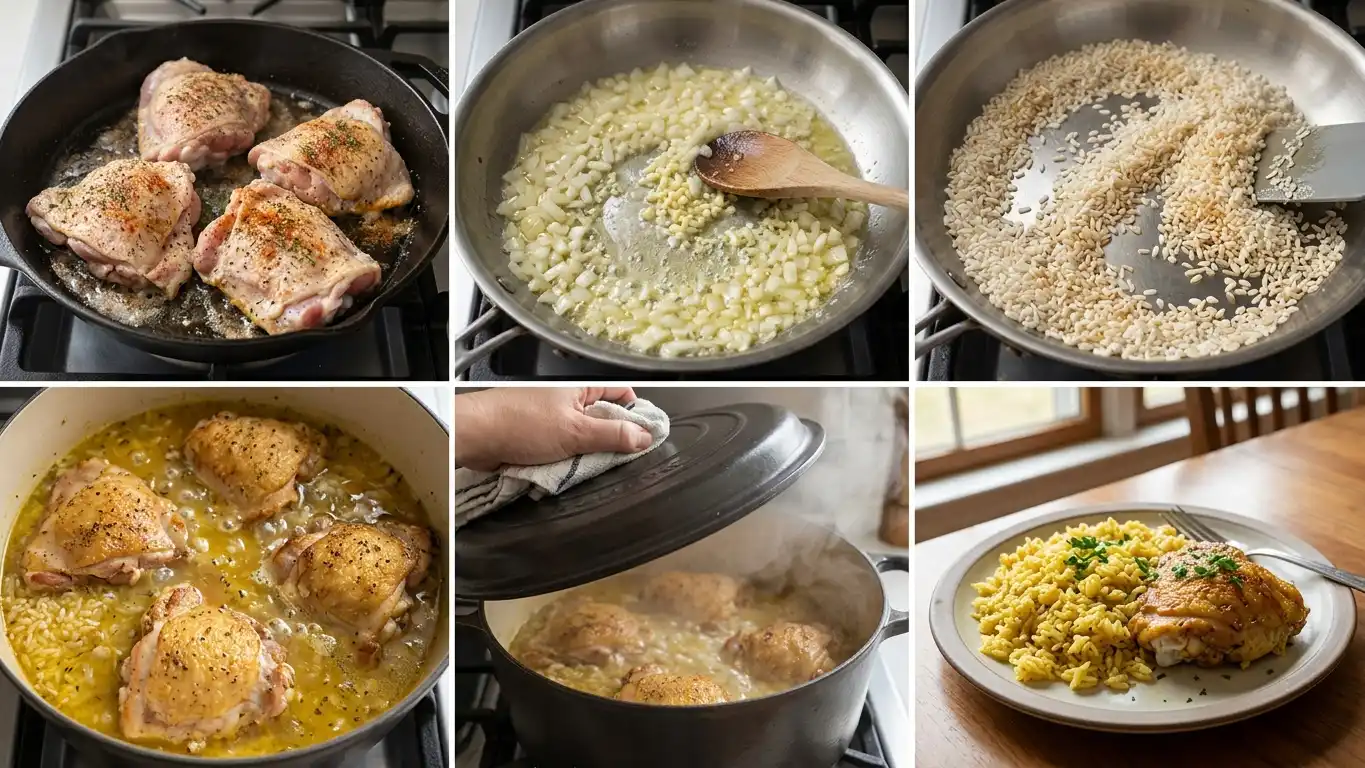
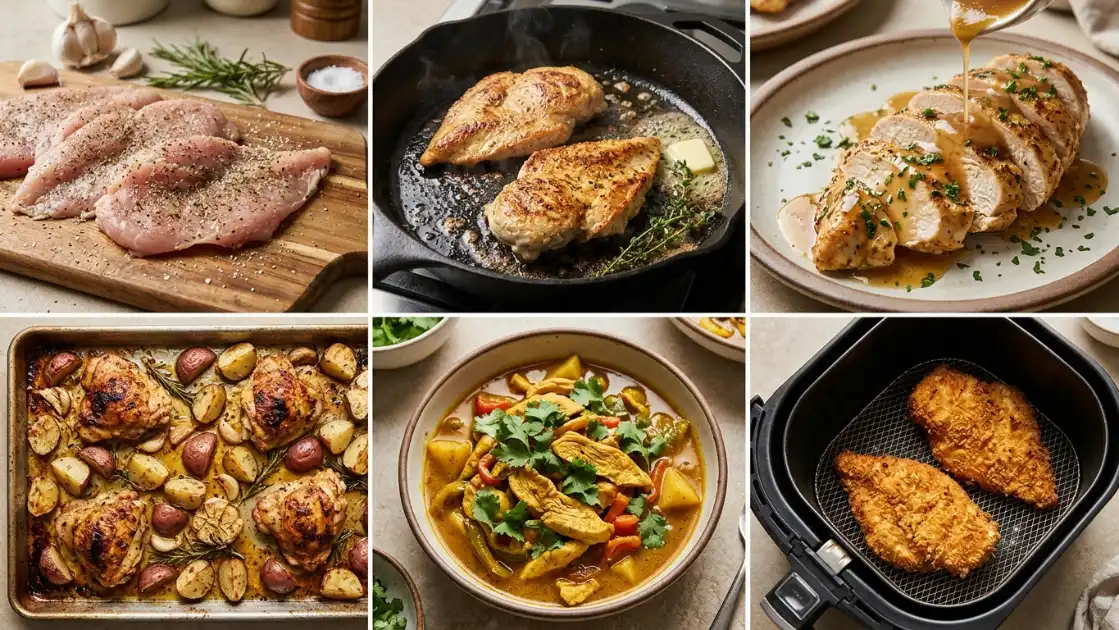
Preheat a heavy 12-inch stainless steel pan over medium-high heat for three minutes before adding two tablespoons of neutral oil. Lay the cutlets down away from your body to prevent hot grease splatters, and let them cook undisturbed for four to five minutes until the edges turn opaque. Flip once and cook for three additional minutes. A digital probe inserted into the center should read 160 degrees Fahrenheit before you pull the meat to rest on a warm board.
Resting the meat for five minutes preserves intramuscular moisture that would otherwise leak onto the cutting board.
Simple Chicken Breast Recipes for Dinner with Pan Sauces

Deglazing Browned Bits with Broth and Wine
The crusty residue clinging to the base of your skillet contains concentrated savory depth. Pour one-third cup of dry white wine or unsalted broth directly into the hot pan over medium heat while scraping the metal clean with a flat wooden spoon. Allow the liquid to bubble vigorously until it reduces by half, which concentrates the natural acidity and salt.
Finishing Silky Reductions with Cold Butter
Take the skillet off the direct flame before swirling in two tablespoons of chilled, cubed butter. The cold dairy emulsifies smoothly into the hot reduction, creating a glossy pan sauce without separating or becoming greasy. Spoon this velvety glaze over warm sliced chicken pasta or alongside steamed garden greens.
Whisking constantly off the heat keeps your pan emulsion smooth and glossy.
Simple Baked Chicken Breast Recipes Boneless and Juicy

Sealing Moisture Under Parchment Paper
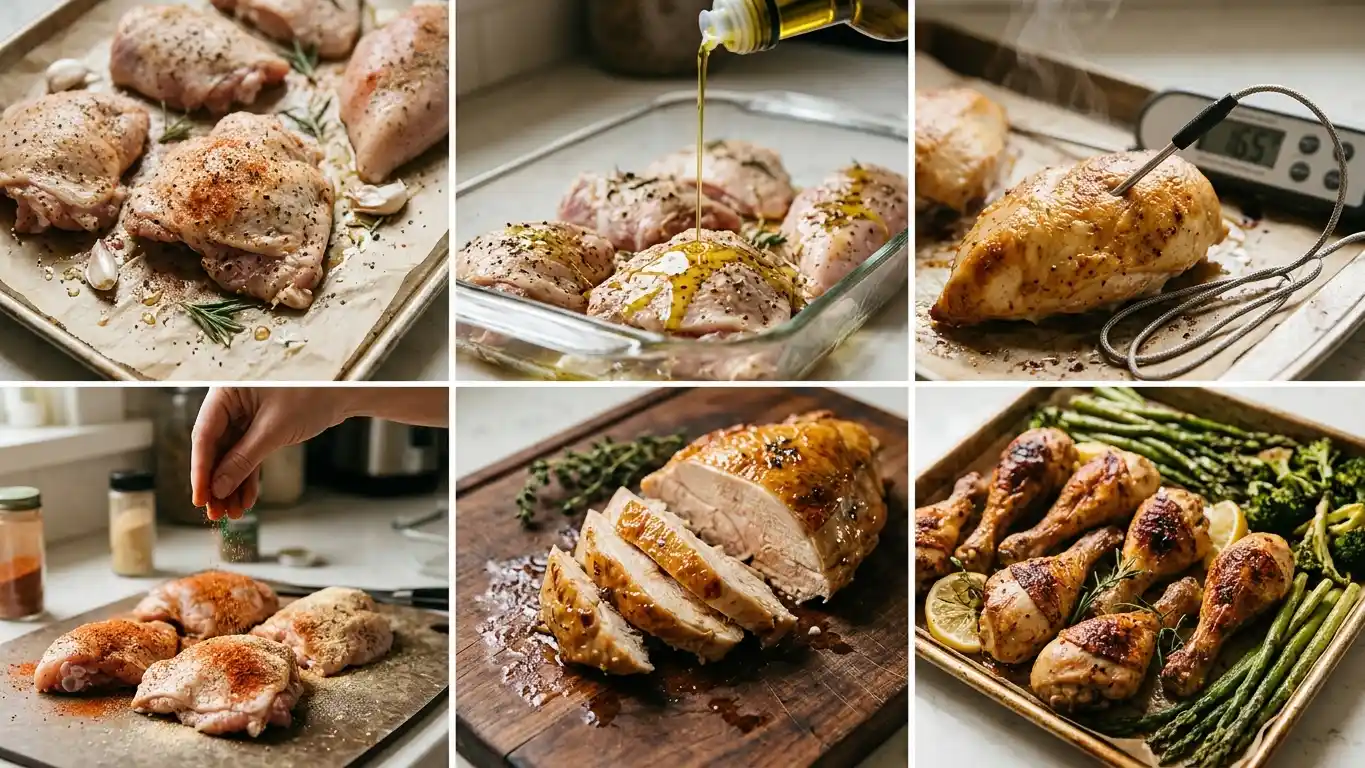
High radiant oven heat draws moisture straight out of exposed lean poultry. Lay seasoned breasts inside an eight-by-eleven-inch ceramic baking dish, drizzle lightly with melted olive oil, and press a sheet of buttered parchment paper directly against the raw meat. This creates an improvised convection pocket that traps releasing steam around the muscle fibers.
High Temperature Roasting Rules
Bake at 400 degrees Fahrenheit for 18 to 20 minutes depending on cutlet thickness. The hot ambient air cooks the poultry quickly, preventing the stringy toughness that occurs when meat bakes slowly at lower temperatures. Check doneness by pressing the thickest center: firm springiness without rubbery resistance confirms the meat is ready.
Remove the dish from the oven the moment your meat probe hits 160 degrees to prevent moisture loss.
Easy Simple Chicken Breast Recipes Using Citrus Marinades

Balancing Acid Ratios to Avoid Mushy Texture
Soaking poultry in pure lemon juice for hours breaks down connective tissue too far, leaving the exterior chalky and dry. Use a ratio of three parts extra virgin olive oil to one part freshly squeezed lemon juice, spiked with minced garlic and cracked black pepper. This gentle balance softens meat fibers while coating the exterior with protective cooking fat.
Strict Marinating Windows for Lean Poultry
Fifteen minutes of soaking at room temperature delivers sufficient surface seasoning without degrading muscle structure. Never exceed thirty minutes in high-acid marinades. Pat the meat thoroughly dry with unbleached paper towels before it touches the hot pan, because surface wetness steams meat instead of creating a crisp, golden sear.
Dabbing the surface dry guarantees a quick, flavorful sear in hot fat.
Simple Chicken Breast Recipes in Oven with Sheet Pan Vegetables

Matching Cook Times for Roots and Greens
Dense root vegetables like cubed red potatoes require twenty minutes to soften, whereas tender poultry overcooks in twelve. Toss your chopped potatoes in oil and roast them alone on a rimmed baking sheet for ten minutes before adding seasoned poultry breasts and tender broccoli florets to the tray. Everything finishes together without turning green vegetables into mush.
Spacing Ingredients to Stop Steaming
Crowding food onto a single baking sheet traps evaporating water, boiling your dinner rather than roasting it. Leave at least an inch of open metal between each chicken portion and the surrounding vegetable clusters. Use two separate half-sheet pans if cooking four full servings at once to maintain crisp edges.
Two baking sheets yield far better vegetable browning than one packed tray.
Simple Chicken Breast Recipes Air Fryer Settings for Fast Meals
Basket Airflow and Temperature Baselines
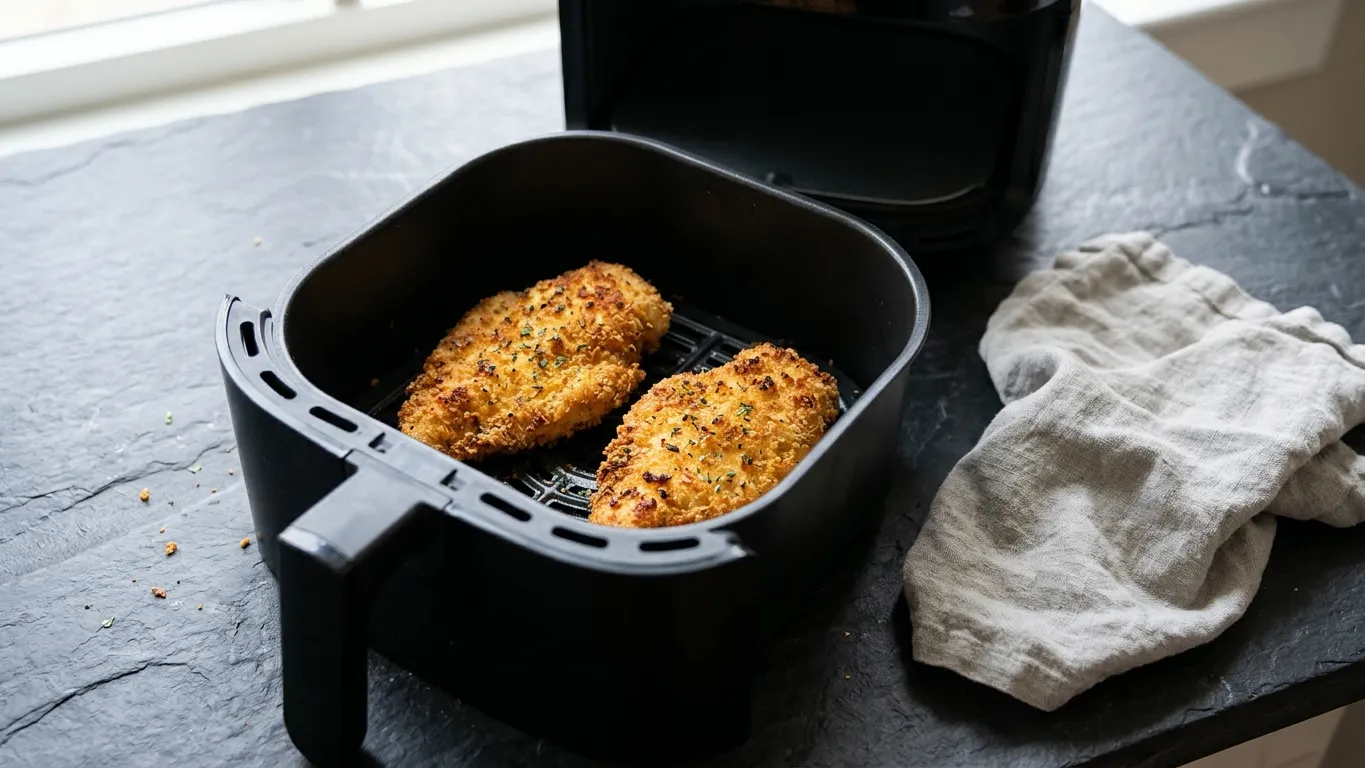
An air fryer acts as a compact convection chamber, circulating dry, intense heat rapidly across food surfaces. Set your appliance to 375 degrees Fahrenheit and mist the wire basket lightly with high-smoke-point avocado oil spray. Lay down cutlets in a single flat layer with clear margins around each edge so hot air circulates freely.
Flipping Intervals for Crispy Cutlets
Cook six-ounce cutlets for ten minutes total, flipping them carefully with silicone-tipped tongs at the six-minute mark. The rapid circulating air crisps seasoned exteriors while keeping the inner core tender and moist. A quick check with an instant-read thermometer ensures meat hits safe doneness without overshooting.
Never stack poultry portions inside an air fryer basket or the center will turn rubbery.
Simple Chicken Breast Gravy Recipes Indian Style

Toasting Whole Spices in Neutral Oil
A quick, aromatic pan gravy begins by blooming whole spices in hot oil to draw out natural essential oils. Warm two tablespoons of neutral oil over medium heat, then drop in half a teaspoon of cumin seeds and a fractured cinnamon stick until they sputter. Stir constantly for forty seconds so the delicate spices toast without charring against the metal.
Simmering Pureed Onions and Tomatoes
Add finely grated yellow onion and cook until sweet and deep amber, roughly seven minutes. Stir in garlic paste, fresh ginger, ground turmeric, and pureed ripe tomatoes, letting the mixture simmer until droplets of red oil separate at the pan perimeter. Slice cooked chicken breasts and fold them into the spiced gravy for three minutes to absorb the deep aromas.
Simmering sliced poultry directly in warm sauce infuses flavor without toughening meat fibers.
Simple Chicken Breast and Egg Recipes for Quick Protein Skillets

Searing Cubed Meat and Scrambling in One Pan
Dice one large poultry breast into uniform half-inch cubes and cook them in a seasoned nonstick pan over medium-high heat with a teaspoon of toasty sesame oil for four minutes. Push the browned cubes to one outer edge of the pan, drop the heat to medium-low, and pour two whisked farm eggs directly into the cleared side.
Soft Curd Management
Gently fold the raw egg mixture across the pan floor with a heat-resistant spatula, lifting large curds away from the heat as they solidify. Stir the cooked chicken back into the soft eggs right as the liquid disappears, taking the pan off the burner immediately so residual heat finishes setting the eggs without turning them rubbery.
Residual pan heat finishes setting delicate eggs without drying them out.
Simple Chicken Breast Casserole Recipes UK Style Comfort

Building Velvety Mustard Leek Bases
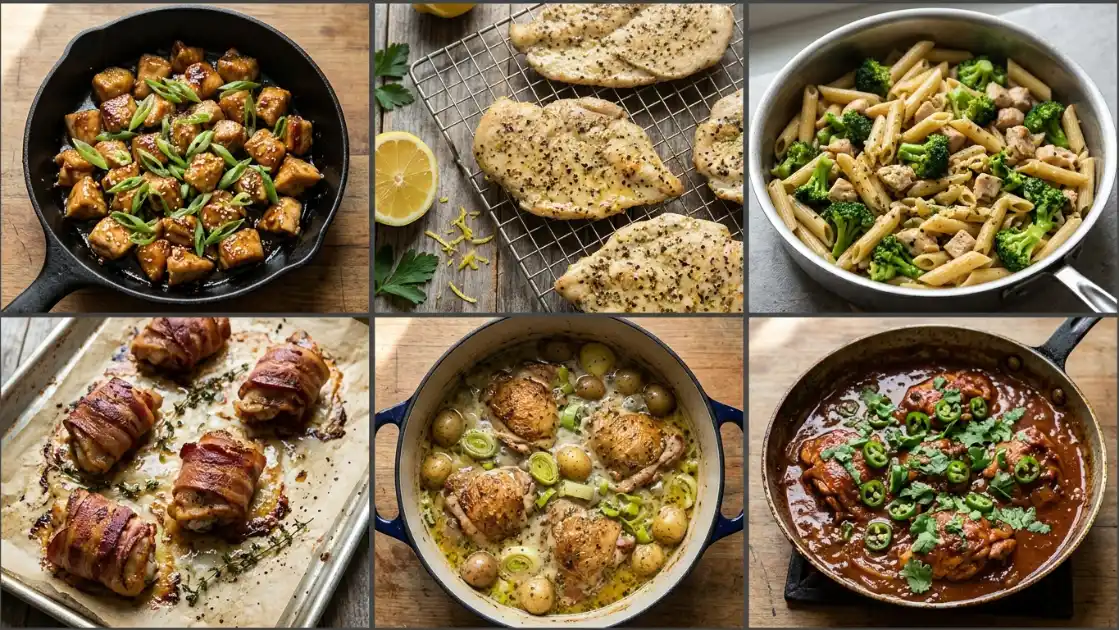
Traditional British weeknight comfort relies on mild leeks melted in butter rather than canned soup shortcuts. Slice two medium leeks into thin rings and sweat them over medium heat in two tablespoons of butter for six minutes until translucent. Stir in a rounded tablespoon of all-purpose flour, cook for one minute, then gradually whisk in warm chicken broth and a spoonful of sharp English mustard.
Breadcrumb Toppings and Baking Limits
Toss diced poached chicken breast into the warm leek veloute, transfer the mixture into a shallow gratin dish, and top with dry coarse breadcrumbs mixed with sharp grated cheddar. Bake at 375 degrees Fahrenheit for fifteen minutes until the surface turns deep golden and bubbles gently at the ceramic edges.
Keeping the baking time under twenty minutes prevents lean poached breast meat from drying out.
Simple Chicken Breast Recipes Dairy Free and Creamy

Coconut Milk and Cashew Purees
Rich, velvety sauces do not require heavy cow cream or melted cheeses to taste luxurious. Simmer raw cashews in boiling water for ten minutes, drain, and blitz them in a countertop blender with warm chicken stock until completely smooth. Pouring this blend into a hot skillet produces an opulent, dairy free reduction that coats the back of a spoon cleanly.
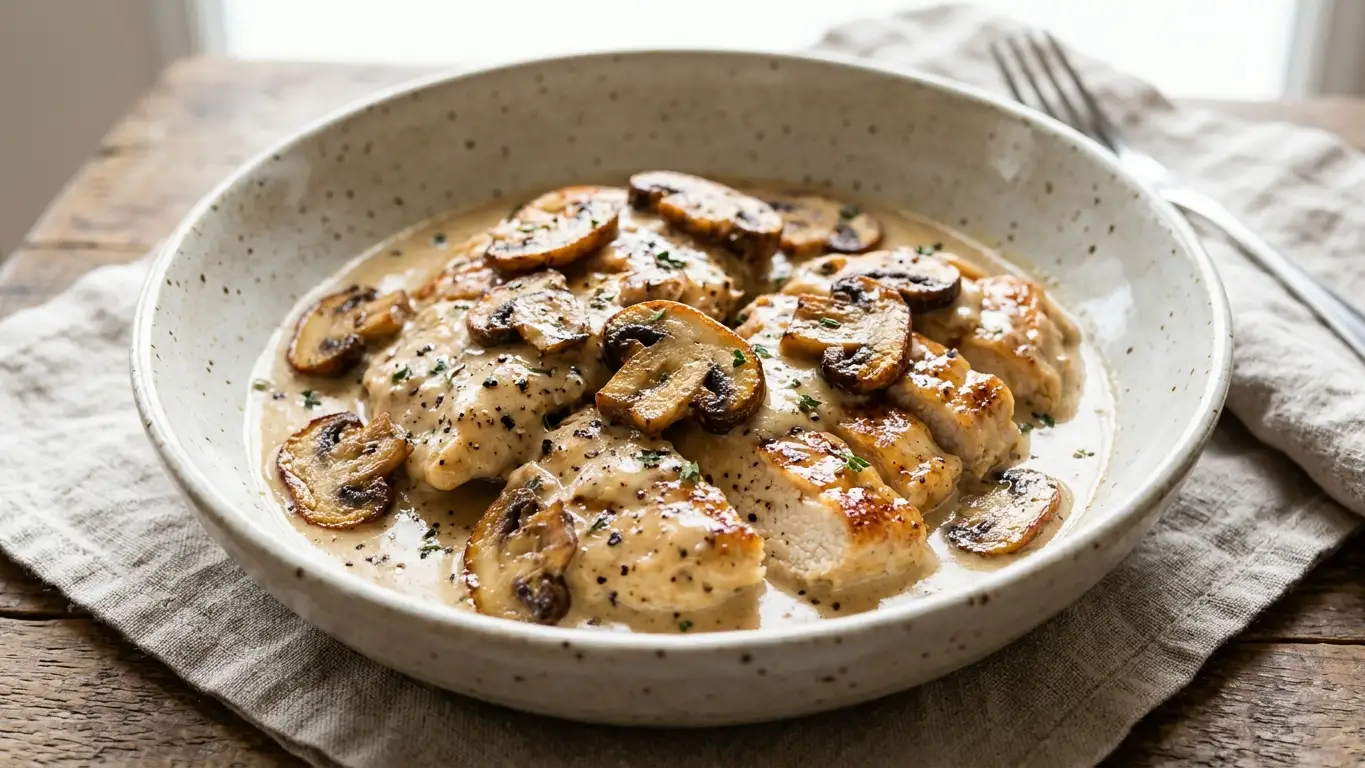
Simmering with Garlic and Mushrooms
Saute sliced cremini mushrooms and minced shallots in olive oil until browned, then stir in your blended cashew cream along with freshly crushed garlic. Add seared poultry strips and let them simmer gently on low heat for four minutes. The sauce tightens naturally without scorching or curdling on the pan floor.
Pureed nut cream delivers identical sauce cling to heavy dairy cream without breaking under heat.
Upkeep and What Changes Over Time with Cooked Chicken
Reheating Cold Poultry Without Ruining Texture
Microwaving cold cooked chicken breast rapidly vibrates water molecules, pushing out lingering moisture and leaving meat rubbery. Reheat cold leftover cutlets in a heavy skillet over low heat with three tablespoons of chicken broth, covered with a tight lid for four minutes. The gentle steam warms the muscle fibers smoothly back to serving temperature without cooking the proteins further.
Food Safety and Chilled Shelf Life
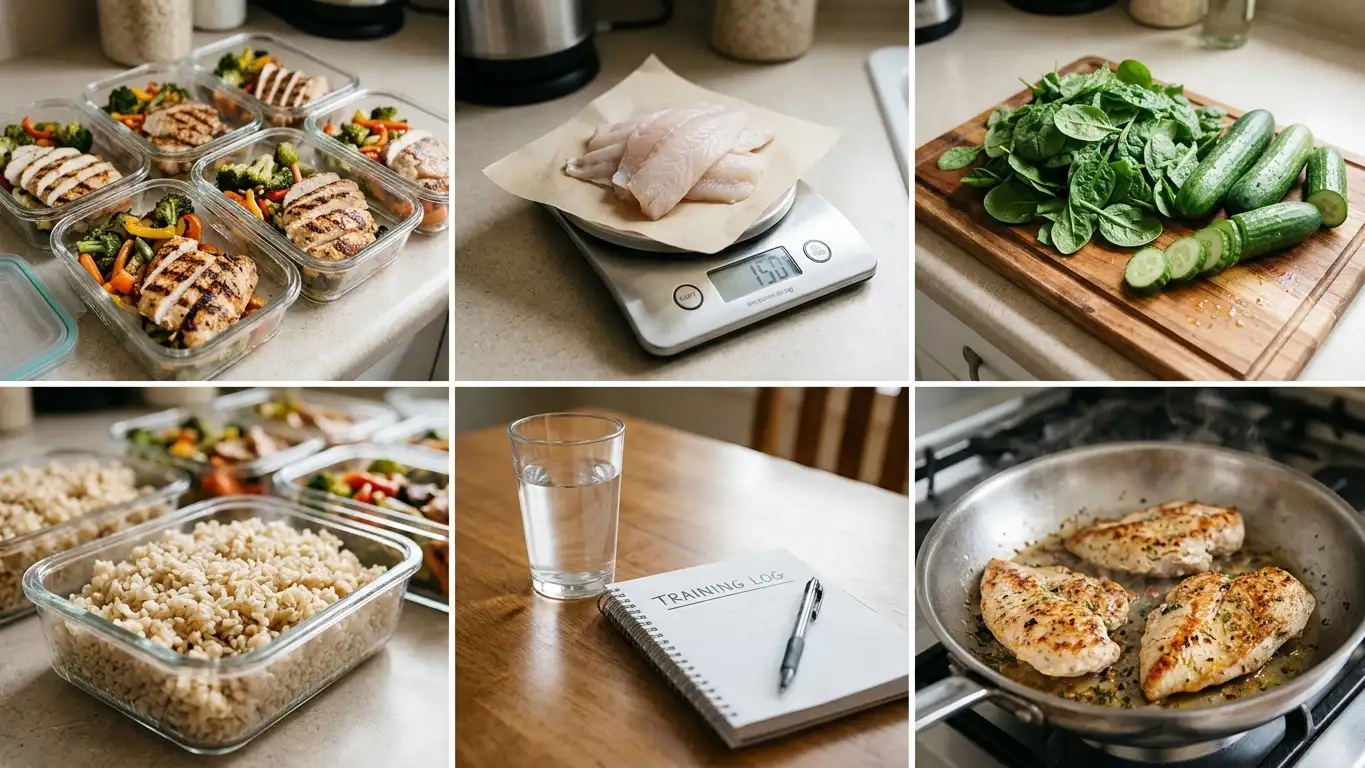
Cooked poultry keeps safely in an airtight glass container inside a 38-degree refrigerator for up to four days. If freezing extra portions, slice the meat cold, wrap each portion securely in greaseproof butcher paper, and seal them inside a heavy freezer bag for up to three months. Thaw frozen portions overnight in the refrigerator rather than on the kitchen counter to prevent bacterial growth.
Gentle steam reheating restores tenderness that rapid microwave heat destroys.
Frequently Asked Questions About Cooking Chicken Breasts
How can you tell a chicken breast is done without cutting into it?
Press your forefinger firmly into the thickest center of the breast; properly cooked meat feels springy and resilient, matching the firm muscle at the base of your thumb when your hand is relaxed. Clear, colorless juices will pool slightly around the edge. Soft, squishy meat remains undercooked inside, while an unyielding, rock-hard surface means the meat has already overcooked.
Why does white meat turn dry even when cooked in liquid?
Lean poultry muscle contains minimal fat and almost no collagen, meaning sustained boiling temperatures seize protein filaments and squeeze out cell water like a wrung-out sponge. When poaching or braising white meat, keep your cooking liquid at a gentle simmer below 180 degrees Fahrenheit rather than a vigorous boil.
Should you wash raw poultry before seasoning it?
Rinsing raw poultry under the kitchen tap spatters invisible aerosolized bacteria across your sink, countertops, and nearby dishware. Skip the water wash entirely and blot the meat with clean, dry paper towels right on your prep board before seasoning. Heat from proper cooking safely destroys all surface bacteria.
Simple Steps for Better Weeknight Chicken
Reliable weeknight cooking relies on simple heat control rather than complicated ingredients. Flattening thick breasts, searing over medium-high heat, pulling meat five degrees before final doneness, and resting for five minutes will consistently yield juicy cutlets. Match your skillet sizes properly, season your pans generously, and let gentle carryover heat complete the cook every single time.