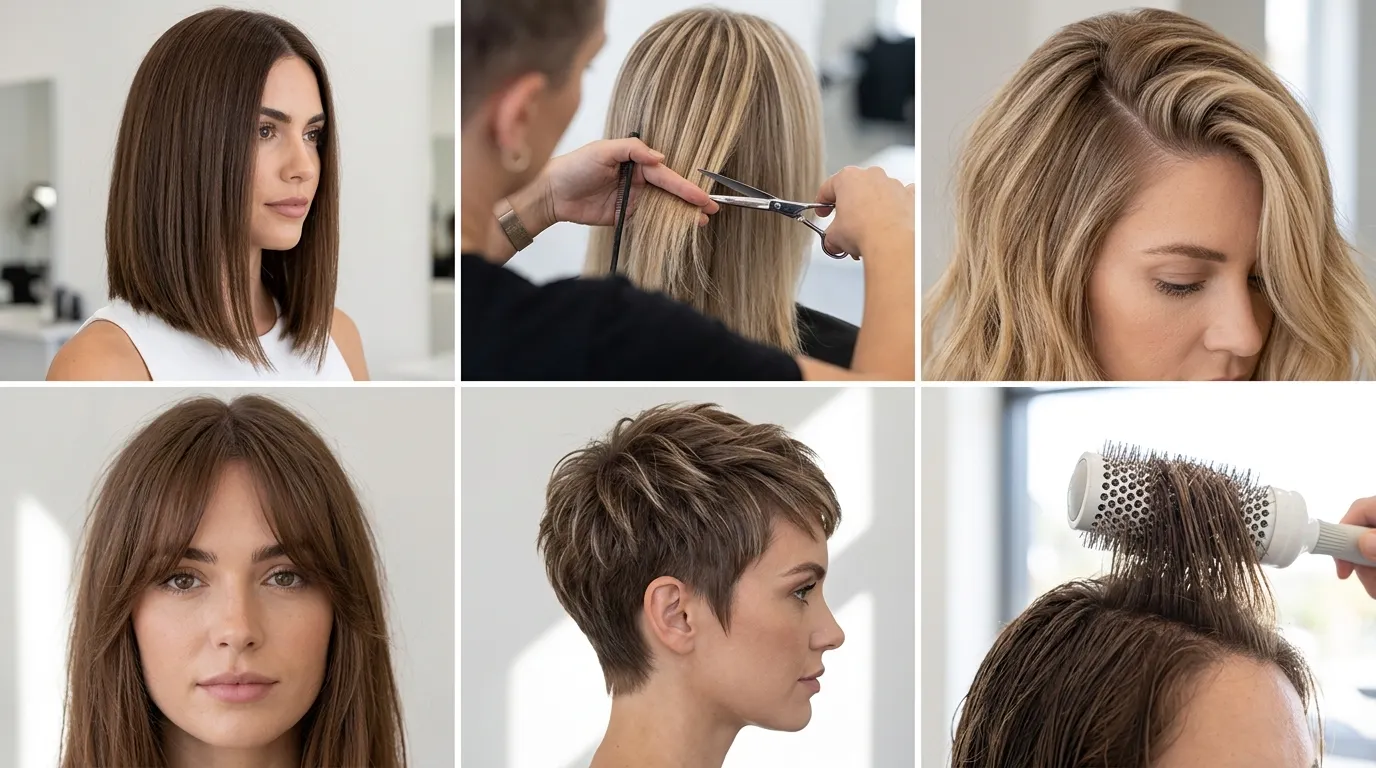

Standing in front of a bathroom mirror holding ordinary kitchen scissors is the fastest way to ruin your haircut. Learning how to cut curtain bangs at home requires sharp hair-cutting shears, a fine-tooth rat tail comb, and dry strands resting in their natural growth fall. Wet hair stretches up to thirty percent beyond its dry length, which tricks beginners into taking off too much length before the fringe springs up into short eyebrow stubs.
What You Need
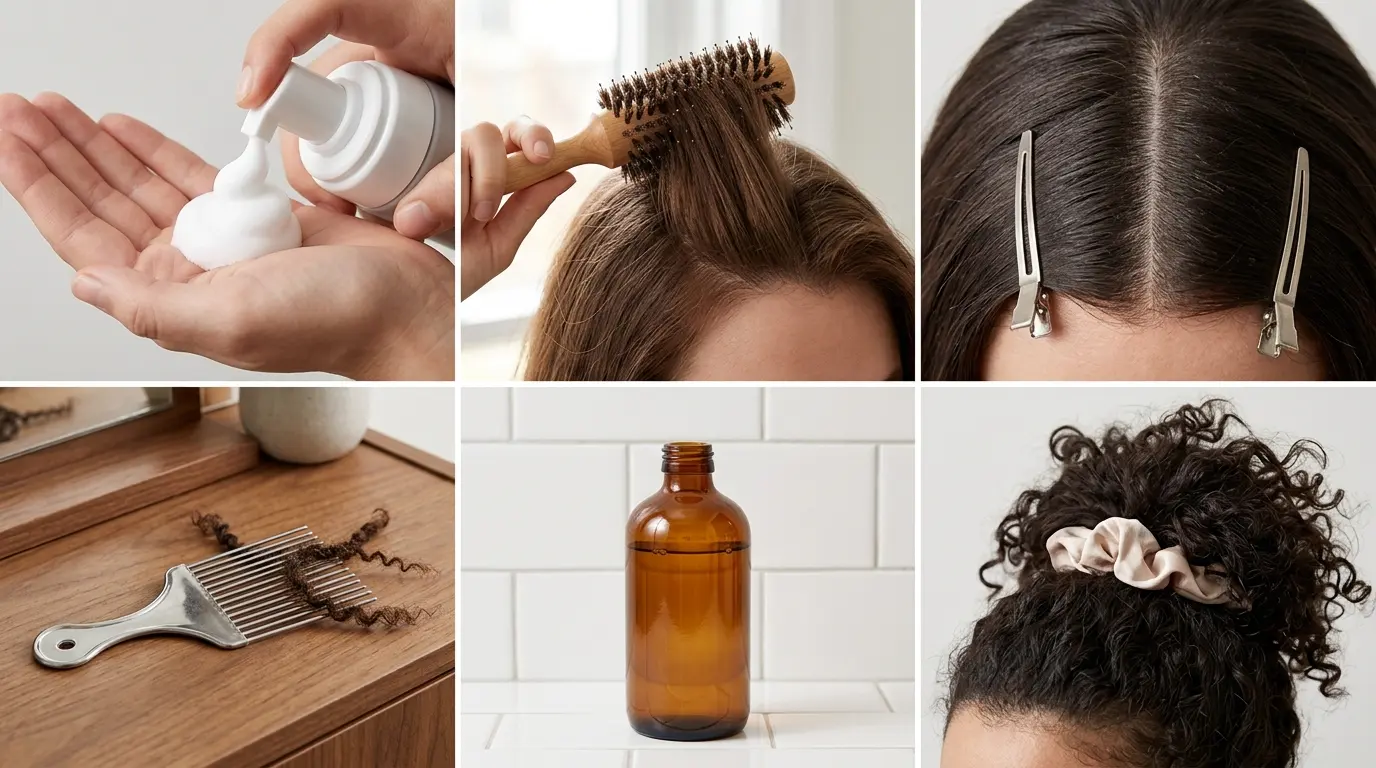
- Professional 5.5-inch stainless steel hair cutting shears
- Fine-tooth rat tail comb with a metal pin tail
- Two salon sectioning alligator clips
- 1.5-inch ceramic round brush
- Handheld blow dryer with concentrator nozzle
1. Prep and Dry Your Natural Part Line
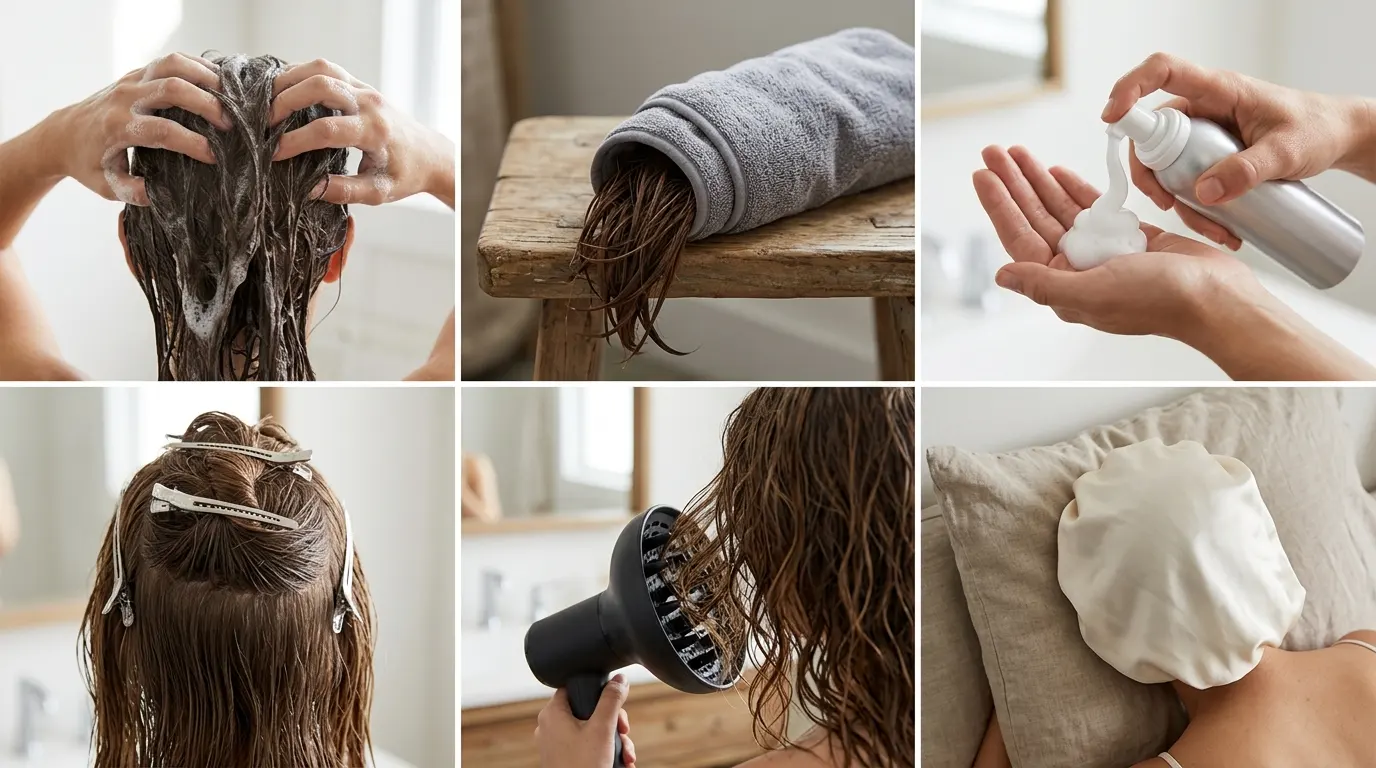
Wash your hair, apply your normal leave-in products, and blow-dry your strands completely smooth until zero dampness remains. Never attempt cutting curtain bangs at home on wet or oily hair. The moisture conceals your real cowlicks, and wet cuticles slide against scissor blades, leaving uneven jagged edges. Place your comb flat along the top of your head to identify your natural center part, which acts as the balance point for both sides of your face. Smooth down any flyaways using a drop of lightweight silicone serum so every hair shaft lies flat against your forehead.
2. Carve a Precise Triangle Section Above the Forehead
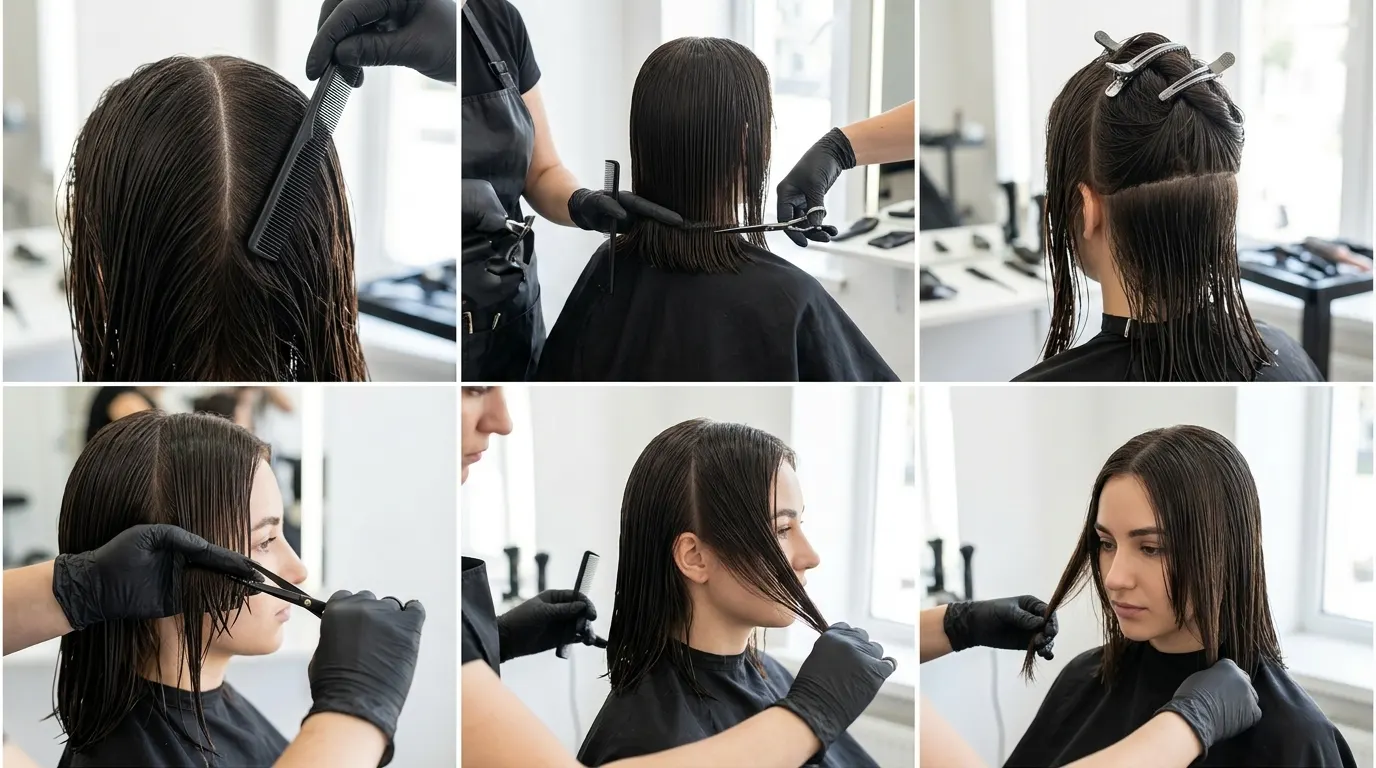
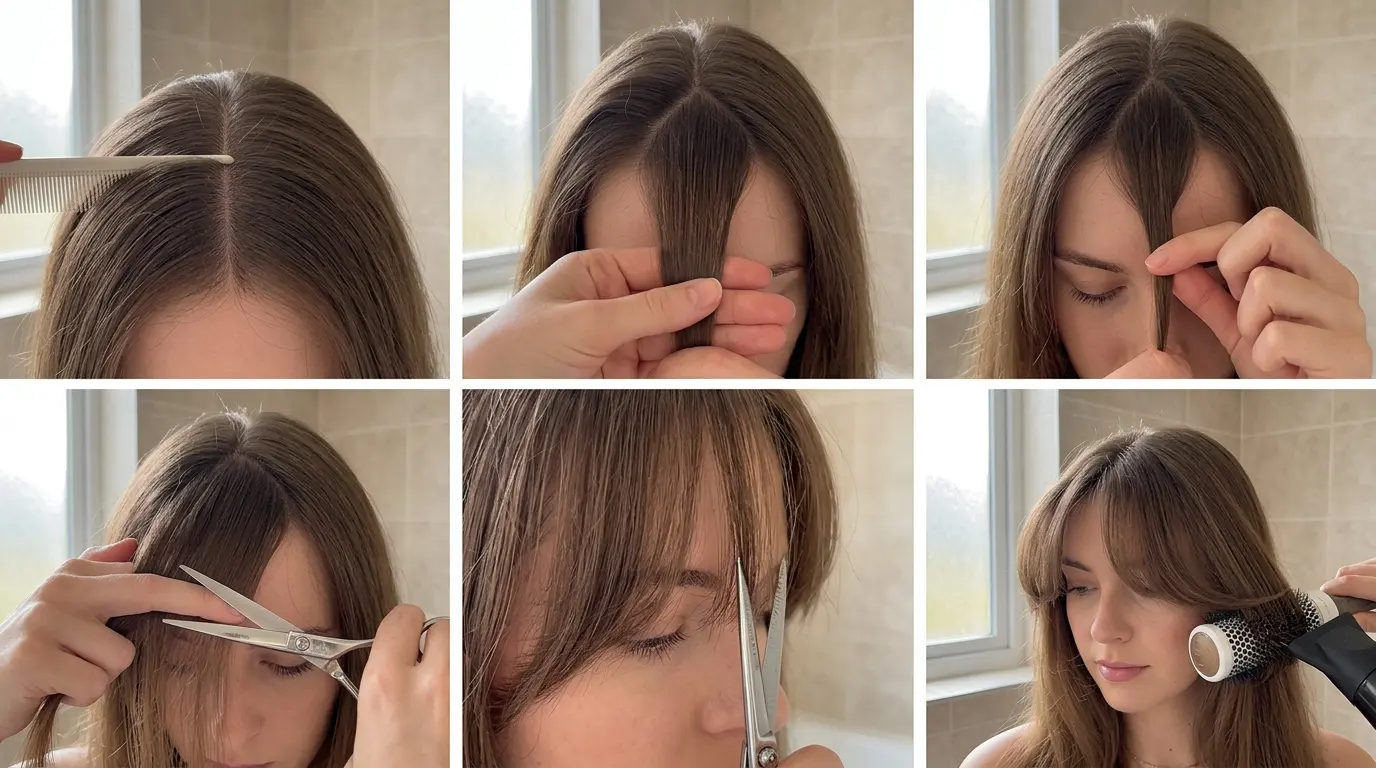
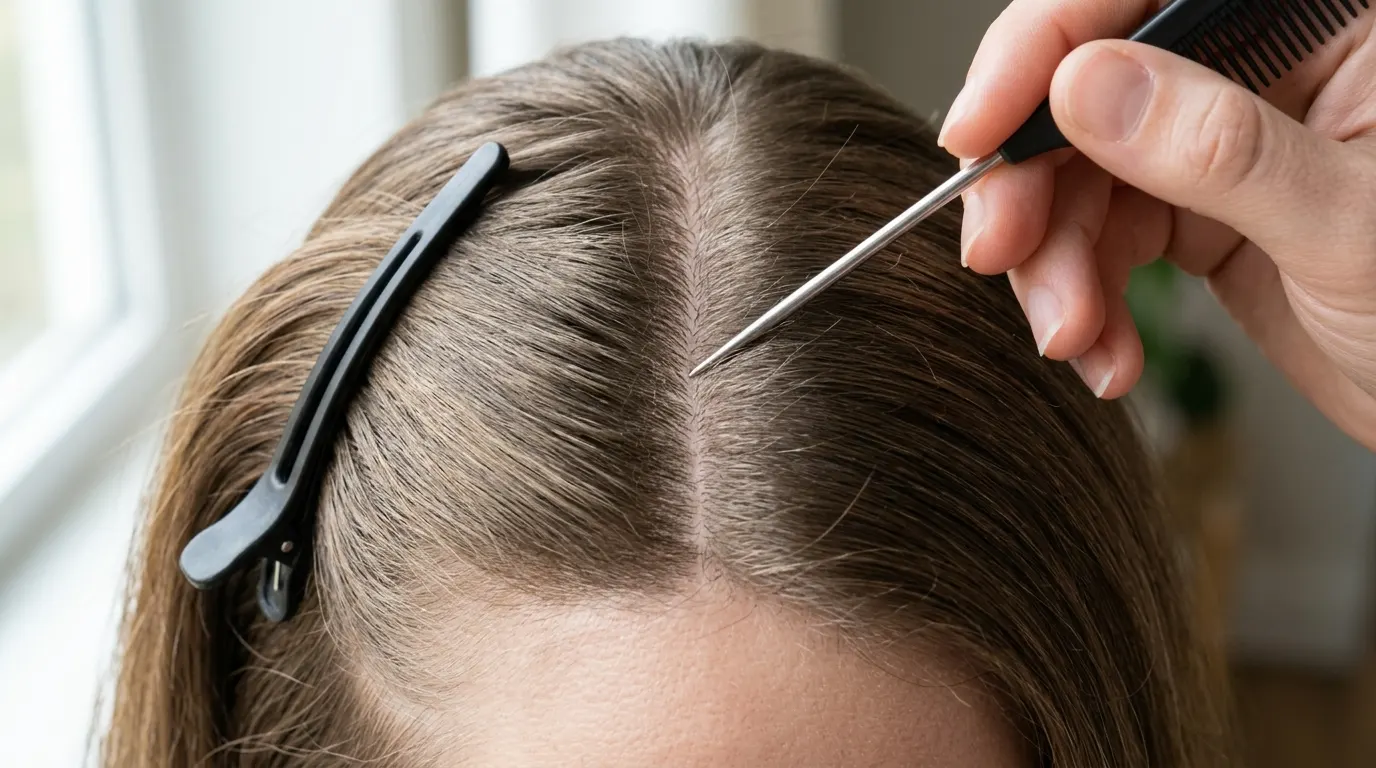
Take the metal pin tail of your comb and position it two inches back from your front hairline along your center part. Draw a straight diagonal line down to the outer corner of your right eyebrow arch, then repeat the motion down to the left eyebrow arch. Comb this isolated hair forward over your face, checking that the shape forms a symmetrical triangle with sharp borders. Clip all remaining side and back hair securely away from your ears using strong alligator clips. Gathering more than two inches of depth results in a heavy, bulky curtain bangs hair cut that overwhelms finer facial features.
3. Establish the Initial Center Guide at the Tip of the Nose
Comb the triangle section forward, separate a half-inch vertical column directly in the middle, and clip the outer wings to each side. Pinch this central column between your index and middle fingers, holding it flat against the bridge of your nose without pulling downward with heavy tension. Rest your shears horizontally and make a soft cut right level with the tip of your nose. Cutting at nose level leaves enough safety room for styling bounce and future trims. If you cut your bangs straight across at chin level during this first pass, you get a much longer drape suited for jawline framing.
4. Angle Shear Blades Outward Along the Cheekbones
Unclip the right side of the triangle and combine it with half of your center guide hair between your fingers. Angle your fingers diagonally so your knuckles point toward the corner of your right mouth and your fingertips tilt toward your right jawline. Rest your shear blades along your fingers and cut downward in small, deliberate snips. Always cut from the shorter center outward toward the longer cheekbone edge. This diagonal trajectory creates the sloping drape seen in every successful youtube how to cut curtain bangs tutorial, preventing square corners from forming near your temples.
5. Mirror the Angle on the Opposite Side
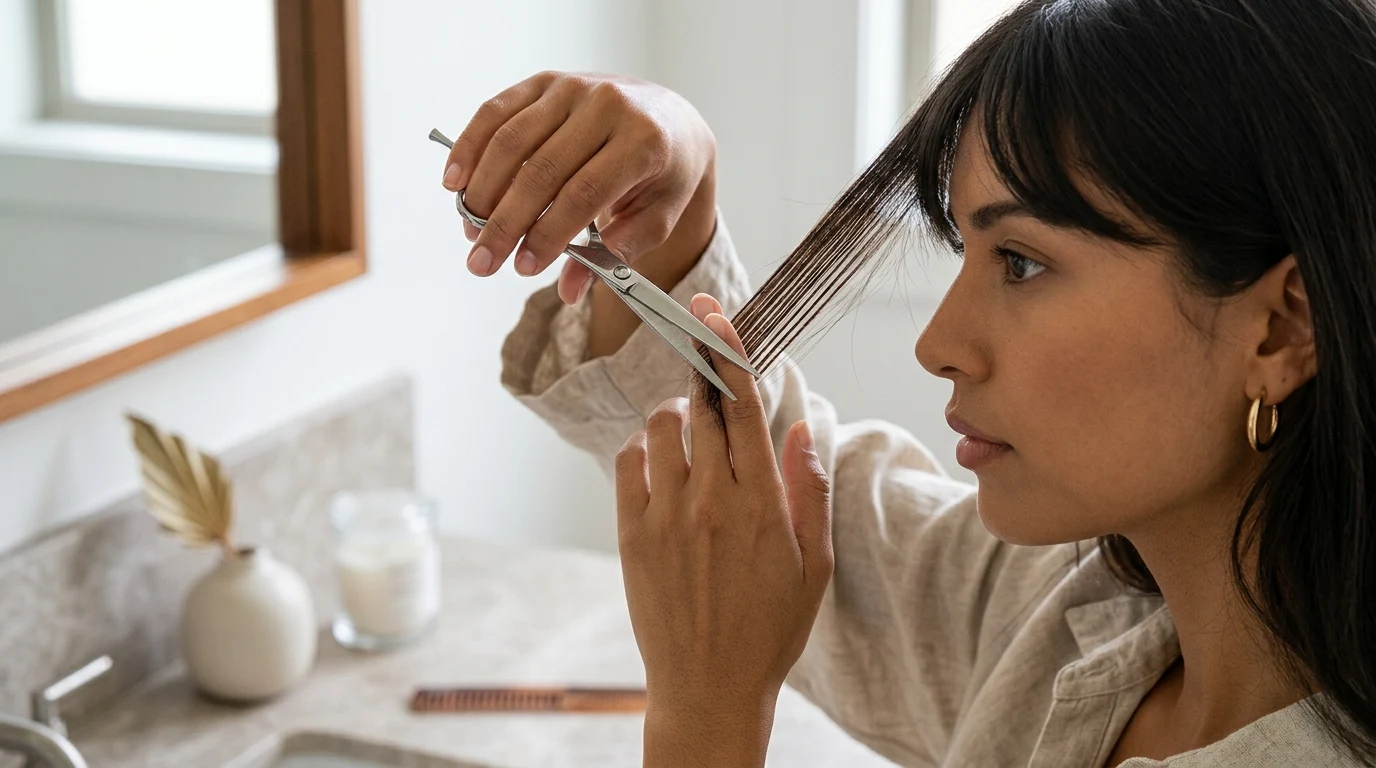
Release the left wing, pinch the remaining half of your center guide together with this unworked section, and angle your fingers downward toward the left jawline. Maintain the exact same finger tilt angle you used on the right side to keep both sides balanced. Slide the shears slowly along the hair ribbon, snipping three-millimeter sections at a time until you reach the outer edge. Stop and step back four feet from your mirror. Tilting your head down allows you to check if the outer tails hit the exact same point on both cheekbones before you proceed to texturizing.
6. Point Cut Vertically to Soften Heavy Edges
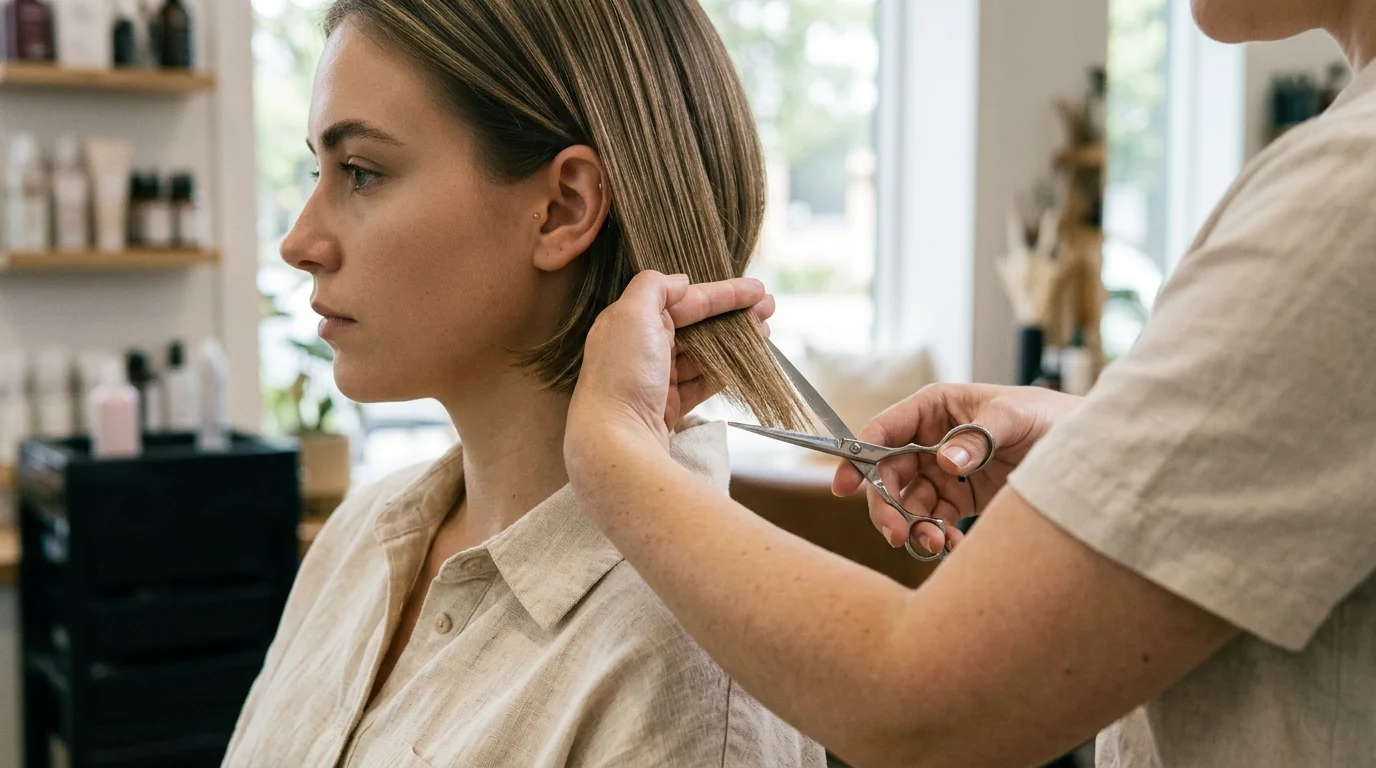
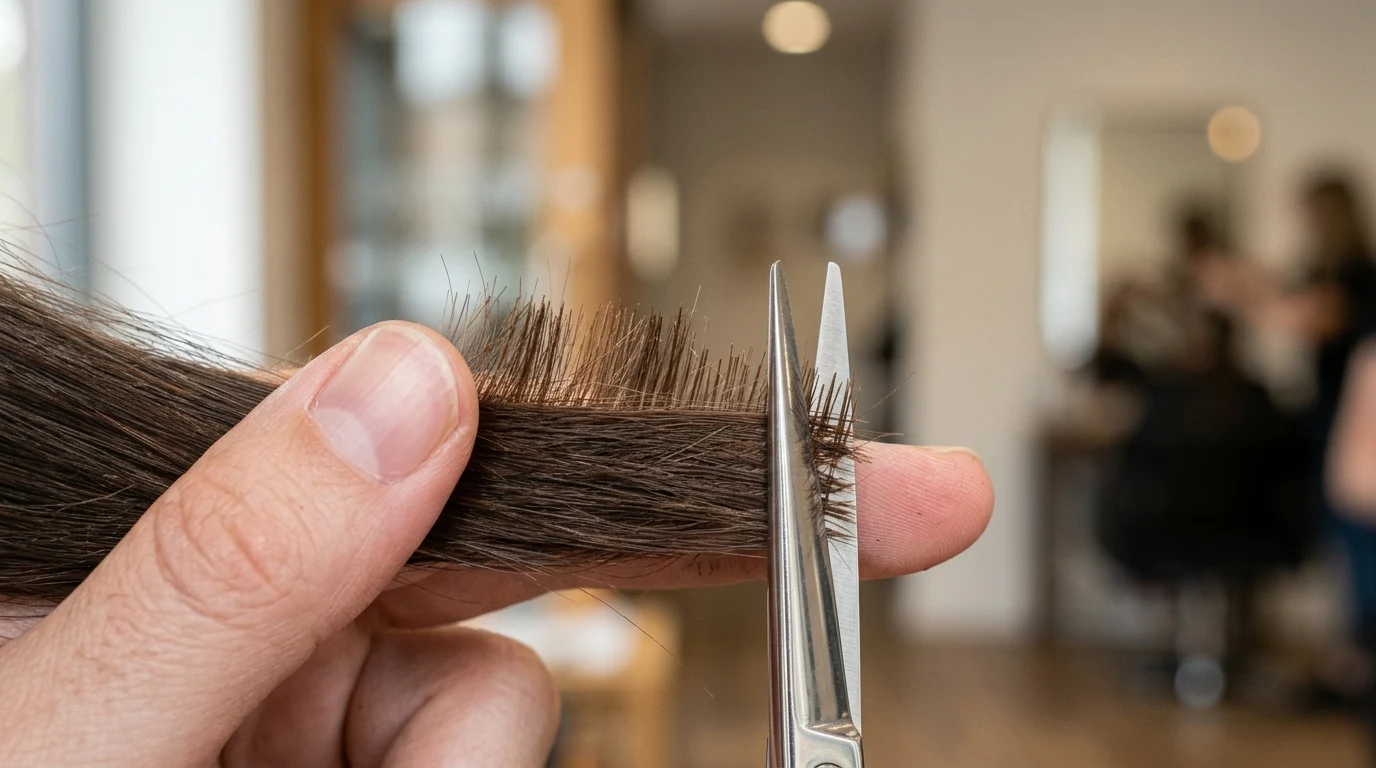
Take the ends of your cut fringe and elevate them straight outward toward the mirror between your fingers. Turn your shears vertically so the pointed tips face upward into the hair ends rather than across them. Snip gently into the bottom quarter-inch of the hair ribbon at varying depths between two and four millimeters. You make vertical cuts to feather your bangs, which removes blunt shelf lines and creates an airy edge that parts naturally. Work across both sides slowly, clearing away thick clumps while keeping the structural triangle outline intact.
7. Blow Dry Away from the Face with a Round Brush
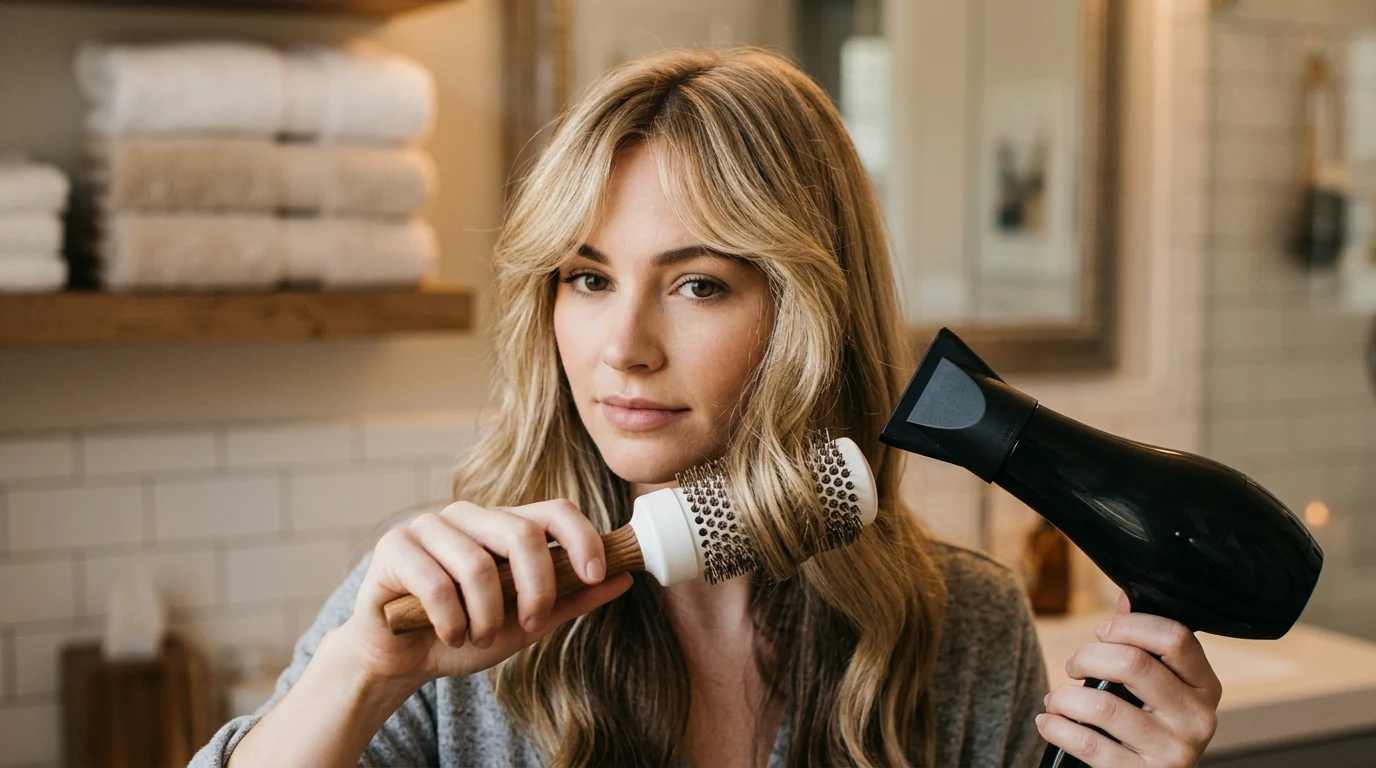
Roll your entire fringe around a 1.5-inch ceramic round brush, wrapping the hair forward toward your forehead under the barrel. Set your dryer to medium heat, attach the concentrator nozzle, and direct the airflow down the brush barrel for twenty seconds. Switch your dryer setting to cold air for ten seconds to lock the bend in place. Release the brush backward and away from your forehead, letting the parted strands drop naturally toward your ears. This classic blowout motion represents the easiest way to cut curtain bangs at home and evaluate your final silhouette under natural movement.
8. Correct Uneven Sides and Hidden Cowlicks
Halt immediately if you discover that one side sits slightly shorter than the other after drying. Beginners often panic and cut the longer side shorter, creating an endless cycle that destroys their length. Leave the short side alone, re-clip the longer side, and remove mere millimeters using light vertical point-cutting until the balance matches. If a stubborn cowlick pushes one wing flat against your forehead, apply warm airflow directly to the roots while brushing the hair against its natural direction for fifteen seconds, then flip it back to reset the root lift.
Troubleshooting Common DIY Curtain Bang Mistakes
Blunt, boxy corners happen when scissors are held horizontally across the side sections instead of angled down toward the jaw. Fix this by picking up the heavy corner, elevating it forty-five degrees, and point-cutting vertically into the weight line to diffuse the solid edge.
When bangs feel too short immediately after styling, avoid making any further cuts for at least three weeks. Hair grows an average of half an inch per month, which quickly drops an overly short nose-level cut down to a comfortable cheekbone drape.
Keep your hair parted in the center and pin the shortest center pieces back with small bobby pins while the length recovers.
Finding the Easiest Way to Cut Curtain Bangs at Home
Mastering your own fringe maintenance gives you total control over how your layers frame your cheekbones and jawline without salon wait times. The entire process hinges on three fundamental rules: never cut wet strands, keep your sectioning triangle narrow, and angle your shears outward toward your shoulders.
Consider this before you commit to curtain bangs: textured fringe requires ninety seconds of daily styling with a round brush or rollers every single morning to prevent the strands from hanging flat into your eyes. Grab a proper pair of shears, follow the nose-level guide, and take your time refining the edges millimeter by millimeter.
Four Common Questions About Cutting Curtain Bangs
What kind of scissors should I buy to cut my own bangs?
Never use household paper scissors or kitchen shears because their dull blades bend hair shafts and crush cuticles, leading to split ends within days. Purchase a dedicated pair of 5.5-inch stainless steel convex edge hair shears from a beauty supply store, which run roughly twenty-five to forty dollars in 2026.
How often do curtain bangs need a trim?
Face-framing fringe requires a mini cleanup every three to four weeks to keep the shortest center pieces from poking into your eyelashes. Regular dusting of the tips also keeps the outer wings blending smoothly into your long side layers.
Will curtain bangs work on curly or wavy hair textures?
Curtain bangs look stunning on wavy and curly hair, provided they are cut entirely dry in their natural curl pattern without being stretched taut. Cutting curly strands under tension causes them to spring up dramatically once released, turning a nose-length cut into forehead-skimming fringe.
How do I stop my bangs from looking greasy by midday?
Bangs absorb natural forehead oils faster than the rest of your hair because they rest directly against your skin. Dust a small amount of non-aerosol translucent dry shampoo through your roots immediately after blow-drying, which absorbs sebum before it travels down the hair shaft.
Related reads: How to Curl Your Hair With Lasting Shape and Minimal Friction, The Best Short Haircuts for Fine Thin Hair to Boost Volume and Low Porosity Hair Care: Solving Moisture Resistance and Cuticle Buildup.