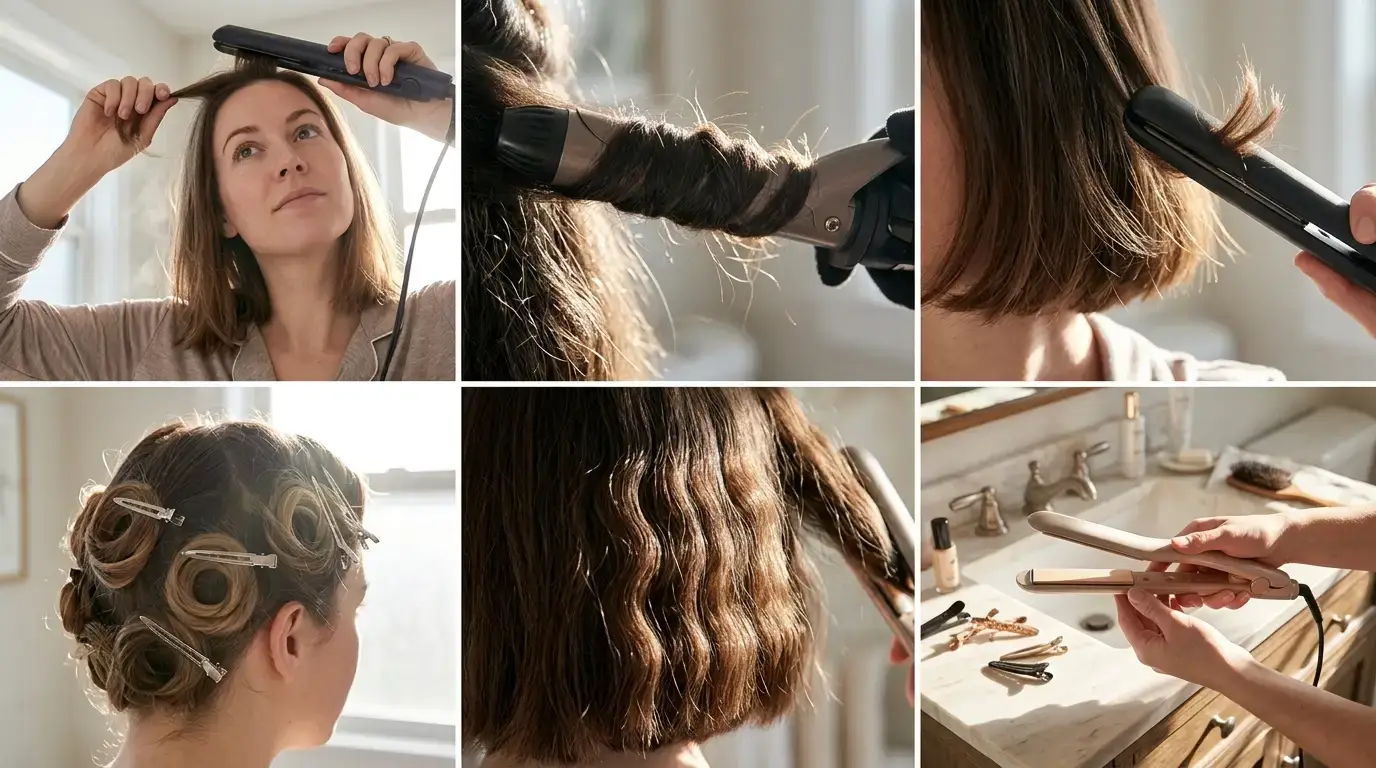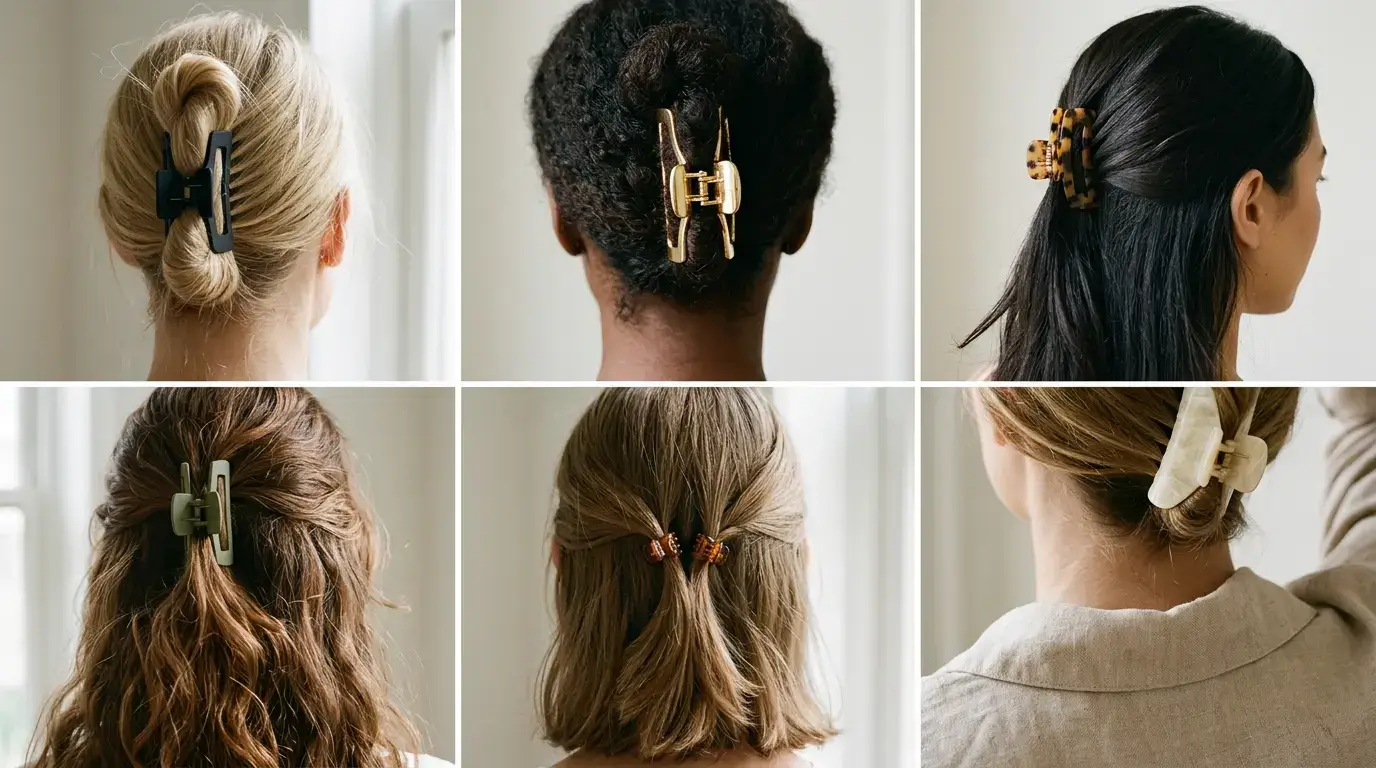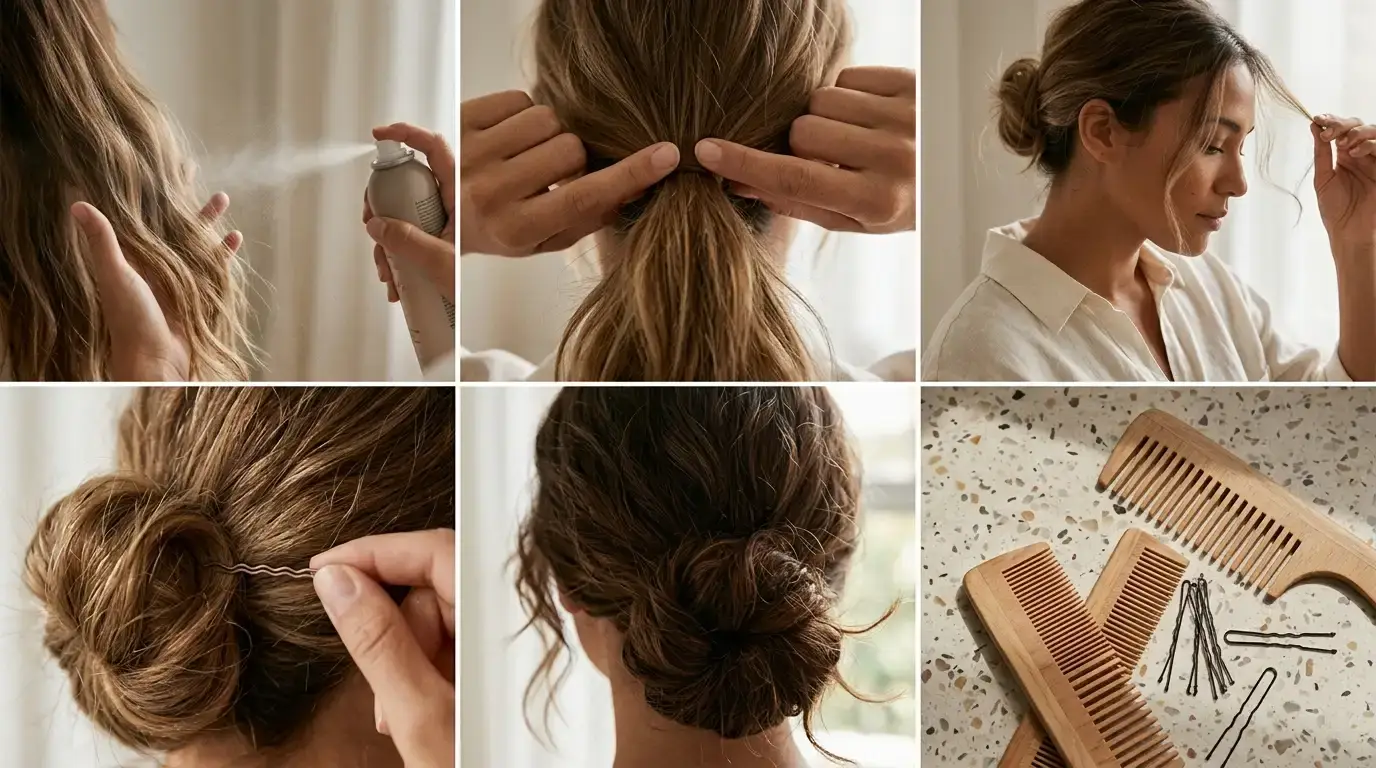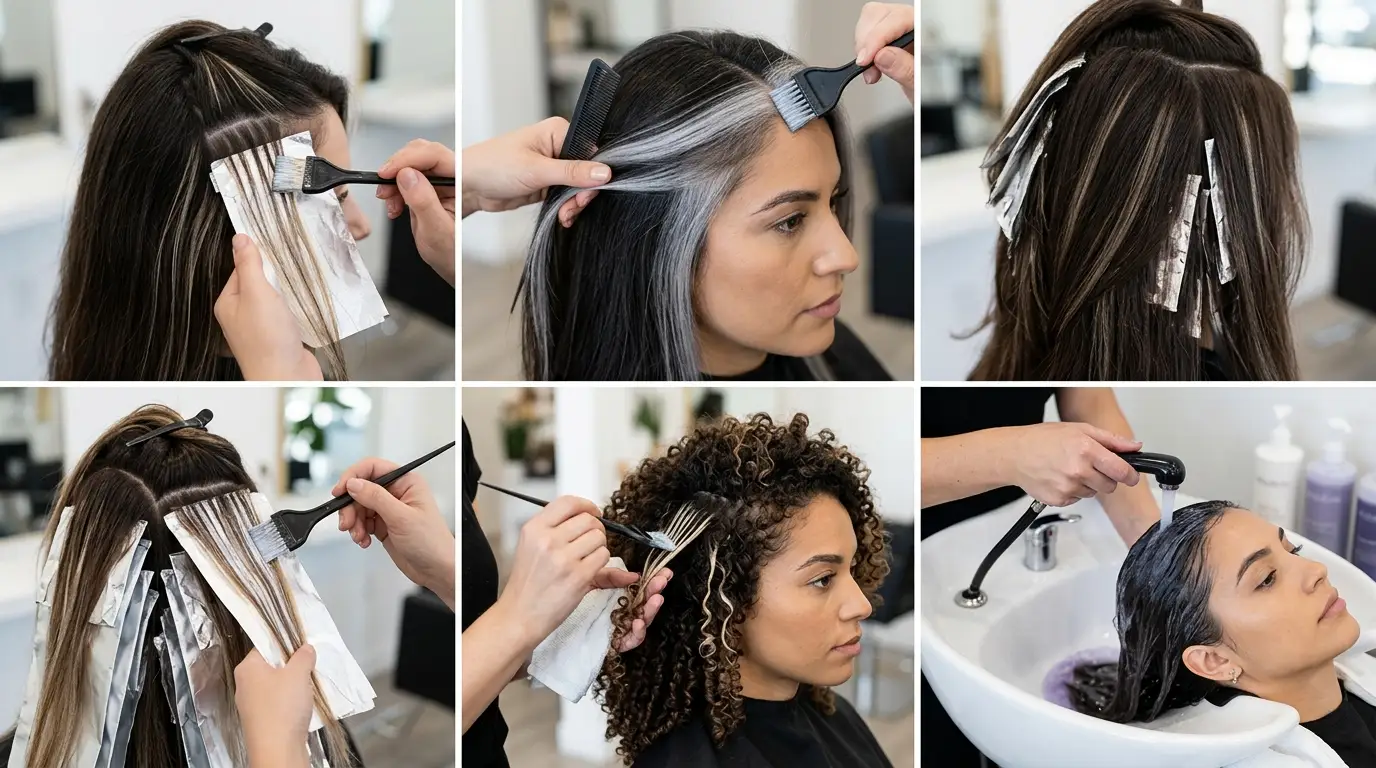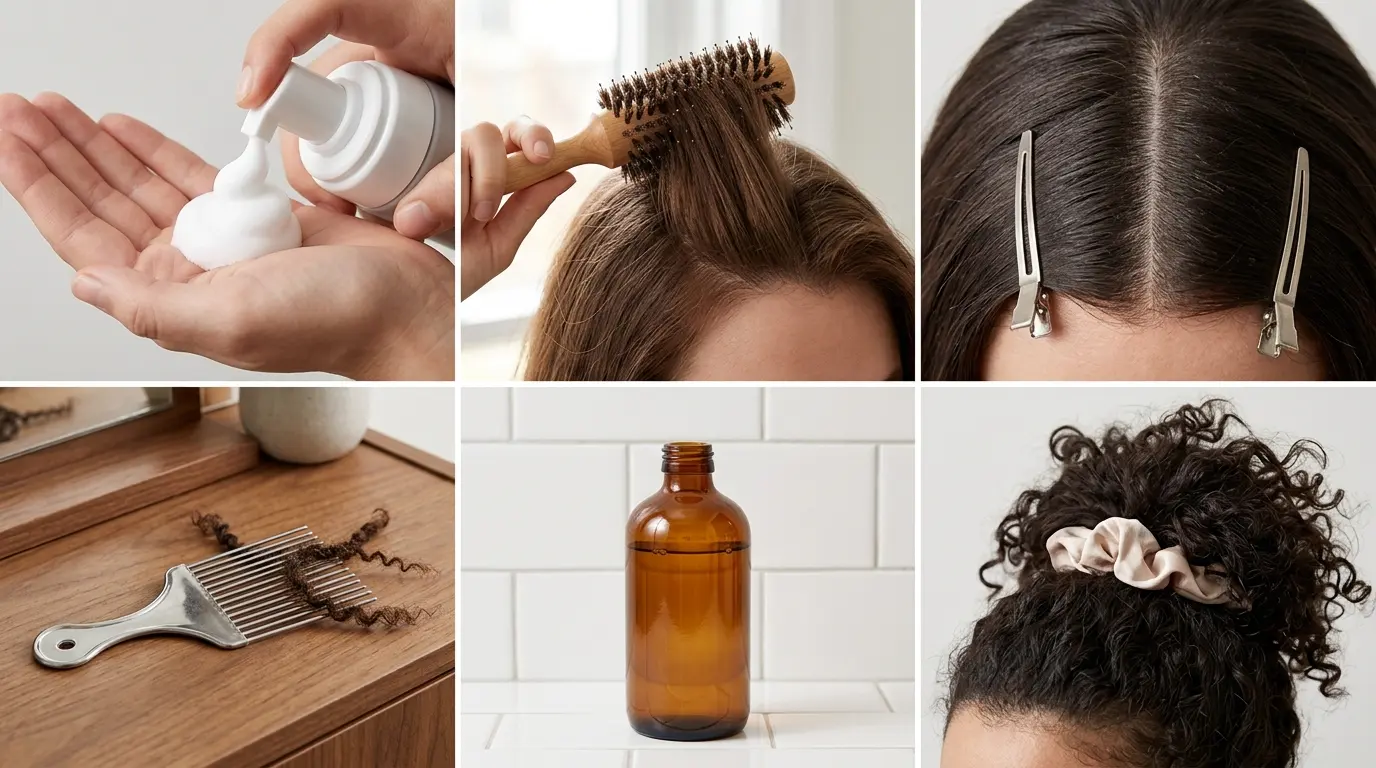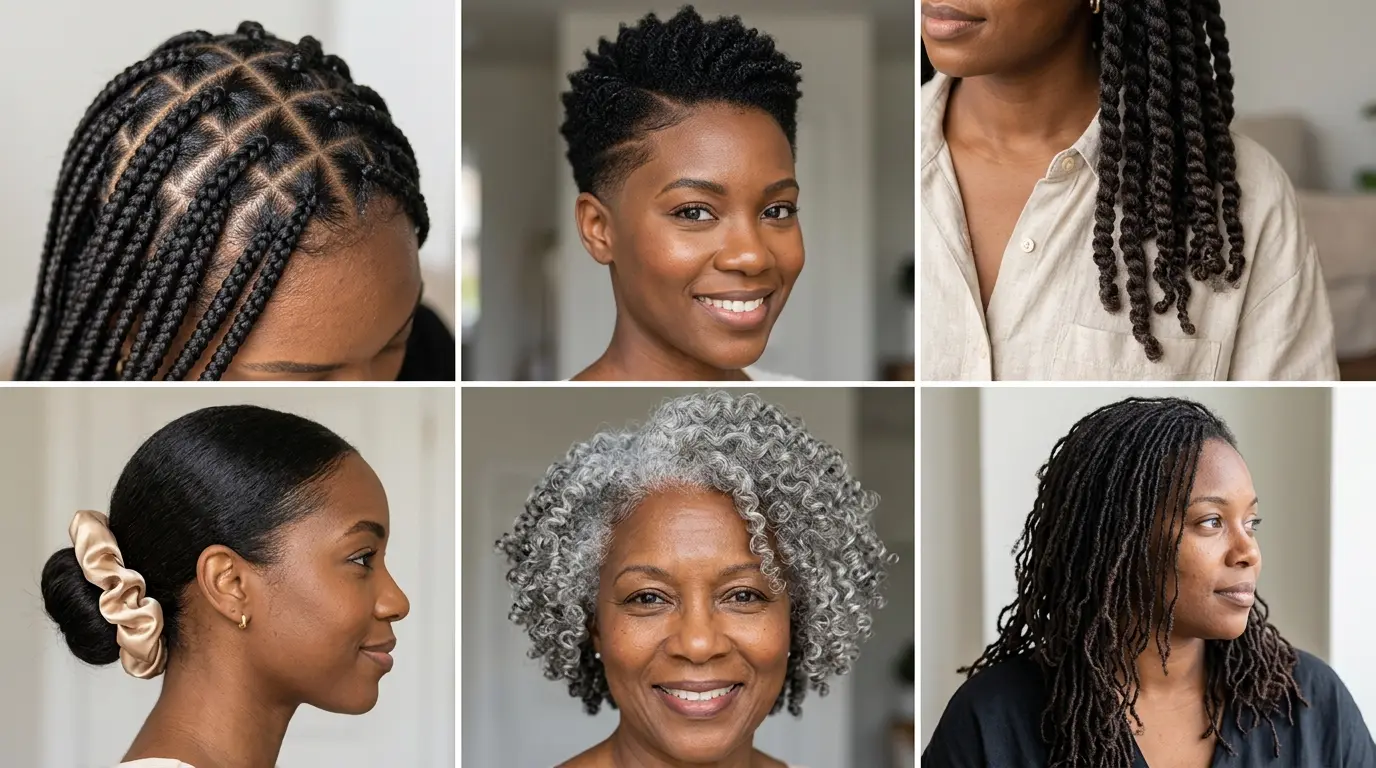

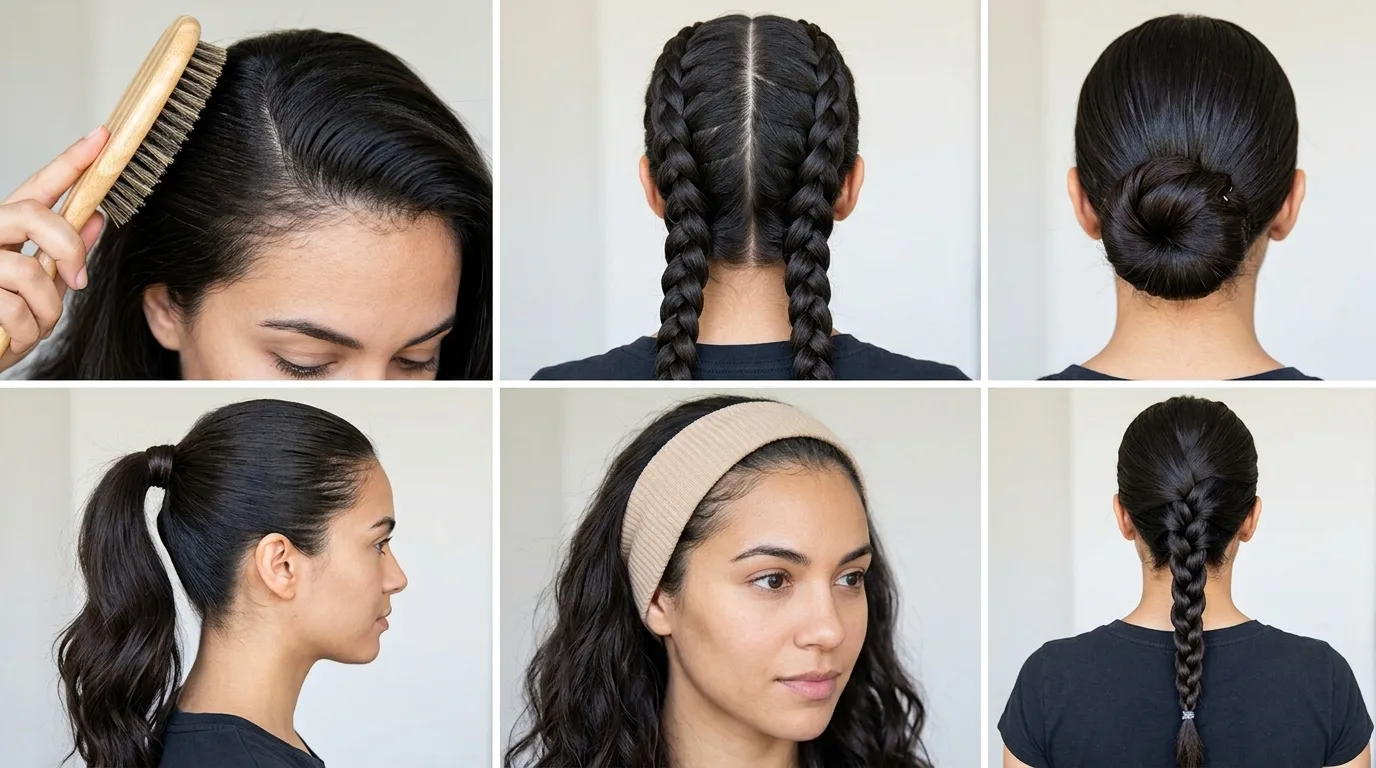
Sebum gathering along your scalp makes clean blowouts separate into stringy clumps within minutes. You do not need to wash your hair every twenty-four hours to look presentable for an eight o’clock morning meeting. Working with your natural scalp oils provides tactile grip that dry hair completely lacks, locking down woven patterns and structured updos without handfuls of synthetic pomade.
What you need:
- A pure boar bristle brush
- A pointed steel tail comb
- Four small snagless polyurethane elastics
- Six two-inch steel bobby pins
- One wide silk scrunchie
- Two small duckbill sectioning clips
Assess Your Sebum Distribution Across the Scalp
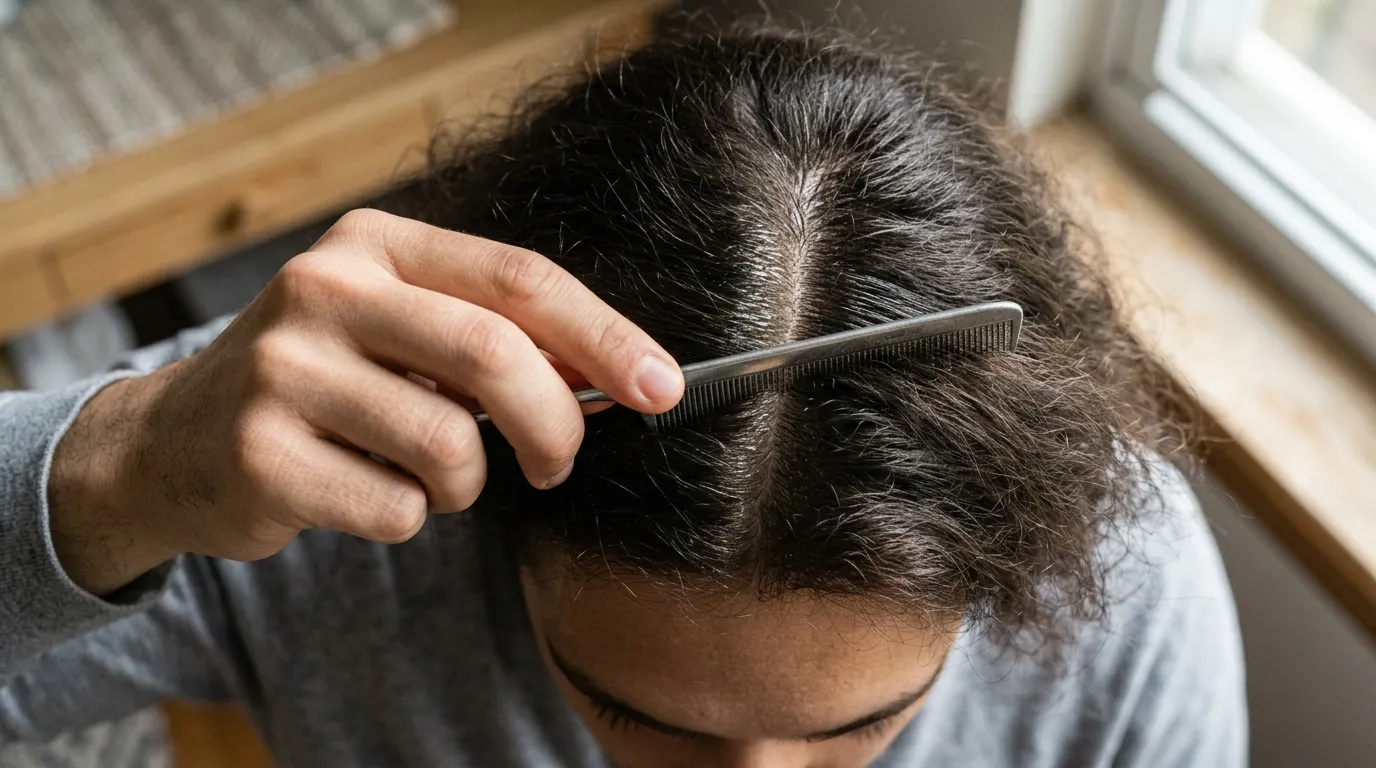
Start by identifying whether oil sits solely at your hairline or coats your mid-lengths down to your ears. Part your hair down the center with the tail of your comb. Press your index finger firmly along the parting line from crown to forehead.
If your fingertip shows a glossy film but your ends feel parched, you have localized root oil. This pattern calls for raised crown styles. If the sheen extends past your ears, you need fully contained plaits. Applying slick styling techniques to dry roots breaks hair shafts, while ignoring saturated ends makes whole sections drop out of pins.
Brush Root Sebum Downward into Parched Ends
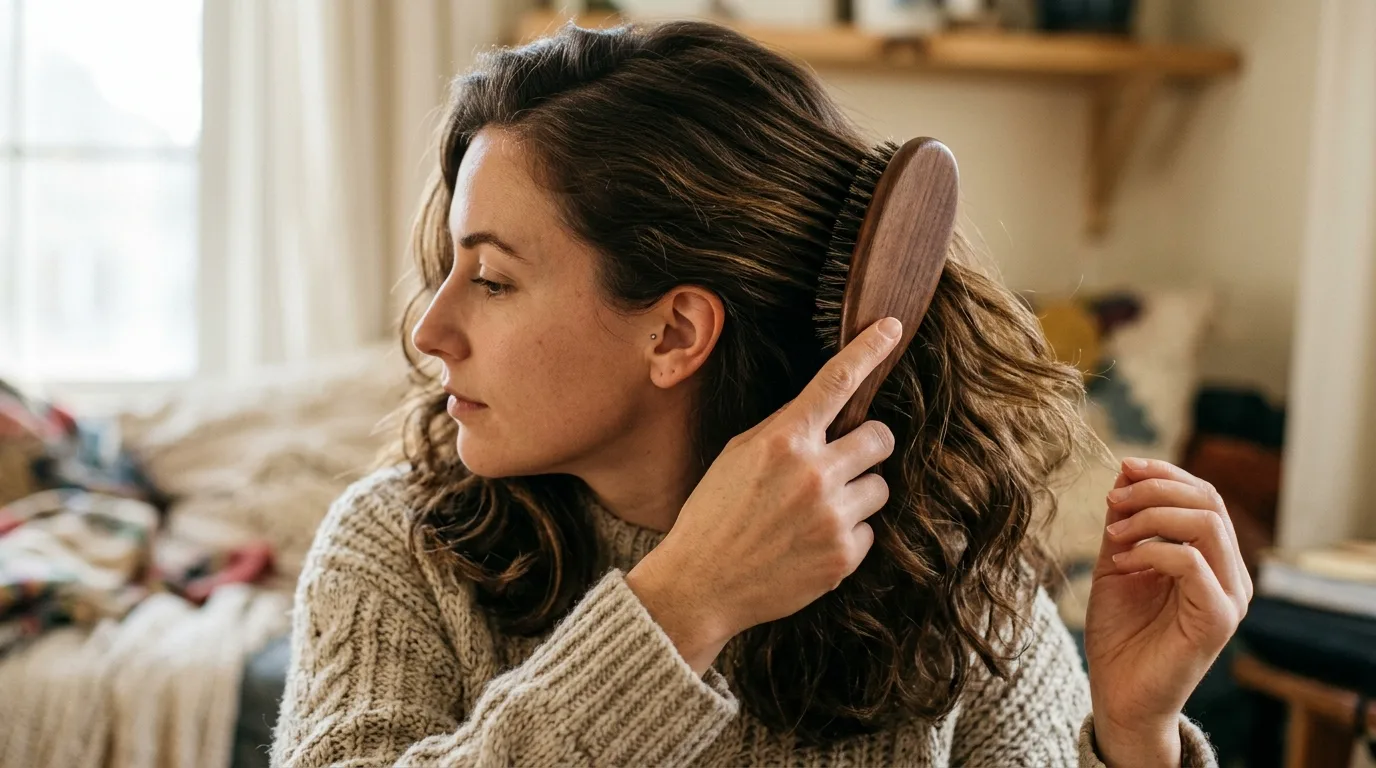
Take your boar bristle brush and rest the dense bristles flush against your front hairline. Pull the brush in long, deliberate strokes from the forehead back to the occipital bone. Make twenty continuous passes across the top, sides, and nape.
Dense boar hairs pick up natural lipid deposits from your scalp and spread them across the dry lower three inches of your hair shaft. This mechanical distribution adds slip to dull ends and reduces wet-looking pooling at your part line. Never skip this stroke count. Rushing with five quick sweeps leaves greasy hair hairstyles looking clumped instead of unified.
Create a Deep Zigzag Part to Break Up Flat Roots
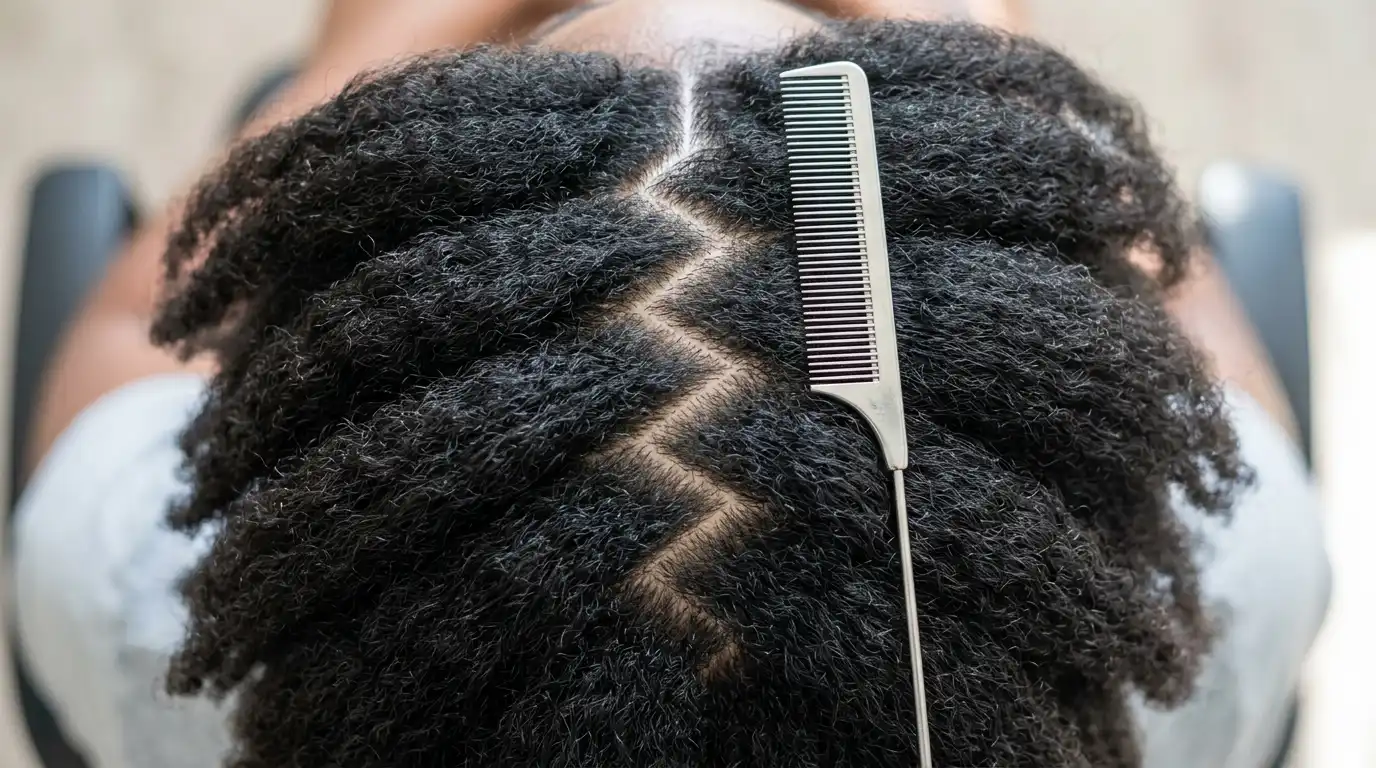
Separating hair into a straight line exposes flat scalp and highlights oil clumping. Place the steel tip of your pintail comb one inch to the left of your natural part at the front hairline. Draw a one-inch diagonal line to the right, then a one-inch diagonal back to the left, continuing three inches toward the crown.
Lift the comb upward to separate the hair. Flipping these zigzagged pieces over creates instant root elevation by forcing hair follicles against their natural growth angle. It conceals shiny scalp gaps completely. This pattern holds for six hours before requiring a finger fluff.
Twist Front Bangs Away into a Low Tension Crown Roll
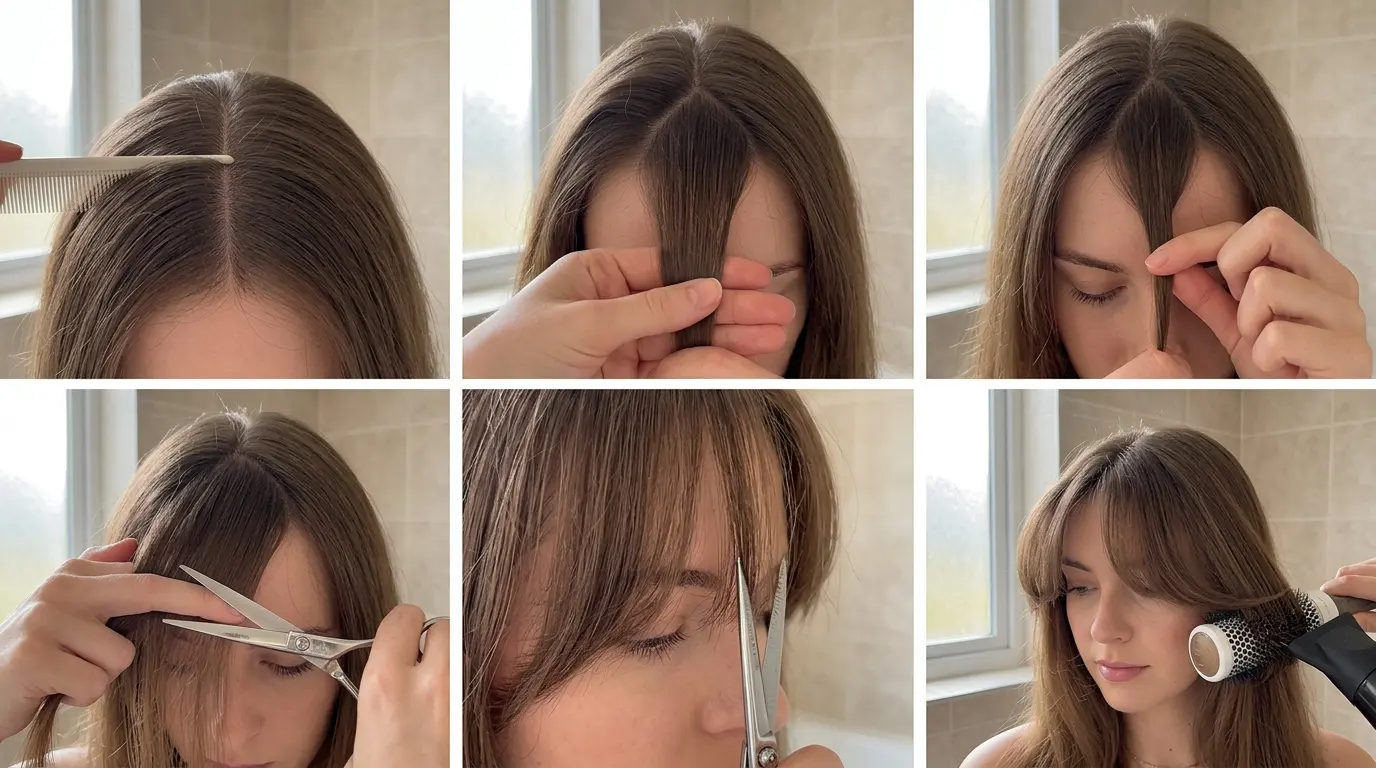
Fringe pieces absorb oil faster than any other section due to contact with forehead skincare. If you wear face-framing layers, hairstyles for greasy hair with curtain bangs begin with an outward rope twist. Separate the front two inches of hair on either side of your temples.
Twist both sections outward toward your ears, rotating each strand twice between your thumb and index finger. Bring both twists back above your ears and join them at the lower crown using a clear elastic. Flipping the tail through the center hole creates a flat anchor that conceals oily forehead strands for work.
Build a Sleek Mid-Height Ponytail for Thick Strands
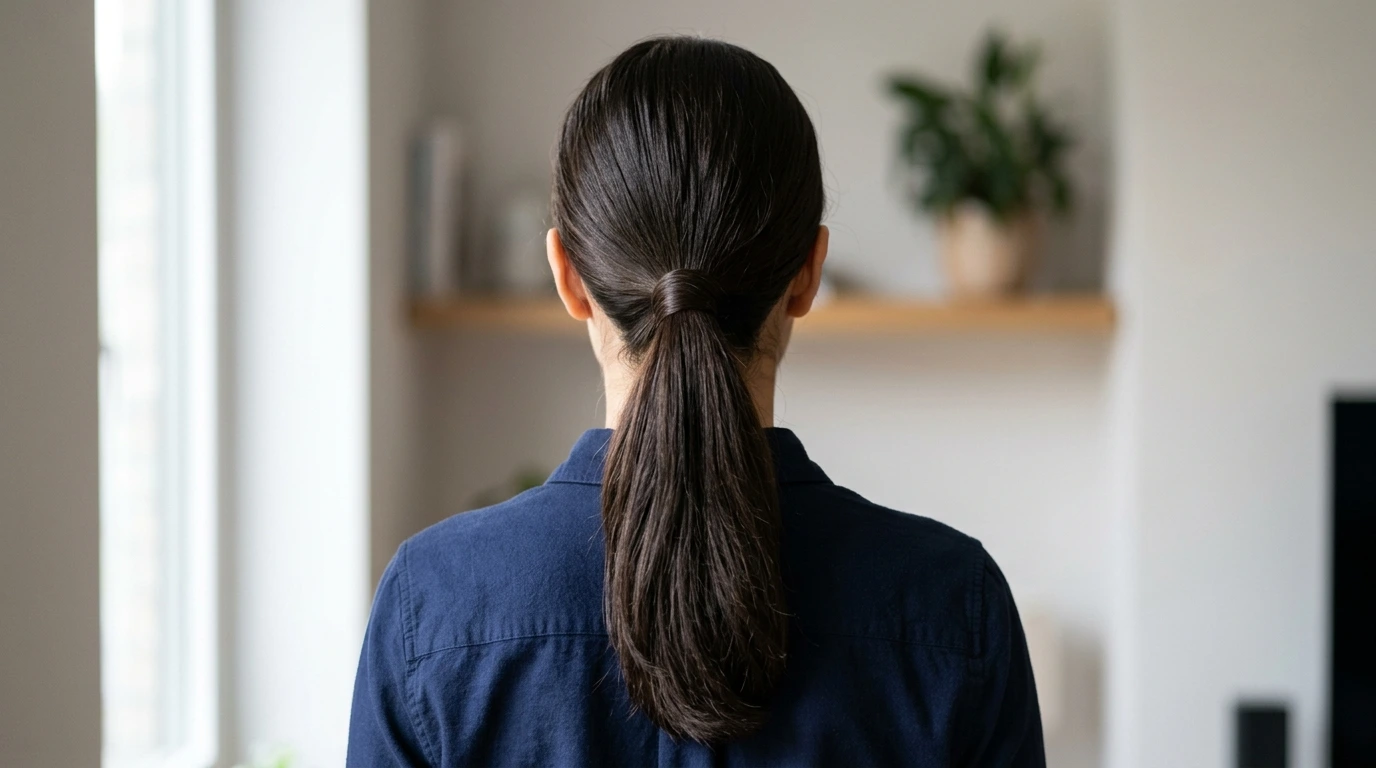
A mid-height ponytail prevents dense hair from pulling painfully while harnessing natural scalp sheen. Tilt your chin upward fifteen degrees. Brush the sides and crown back toward the middle of the back of your skull, positioning the base directly level with the tops of your ears.
Wrap a snagless polyurethane band around the gathered bundle three times until firm. Pull a half-inch strand of hair from underneath the ponytail, wrap it tightly around the band to disguise the plastic, and anchor the tip beneath the base using a single bobby pin. This clean silhouette transforms oily roots into a planned finish for school.
Fold a Loop Bun to Disguise Thin Oily Ends
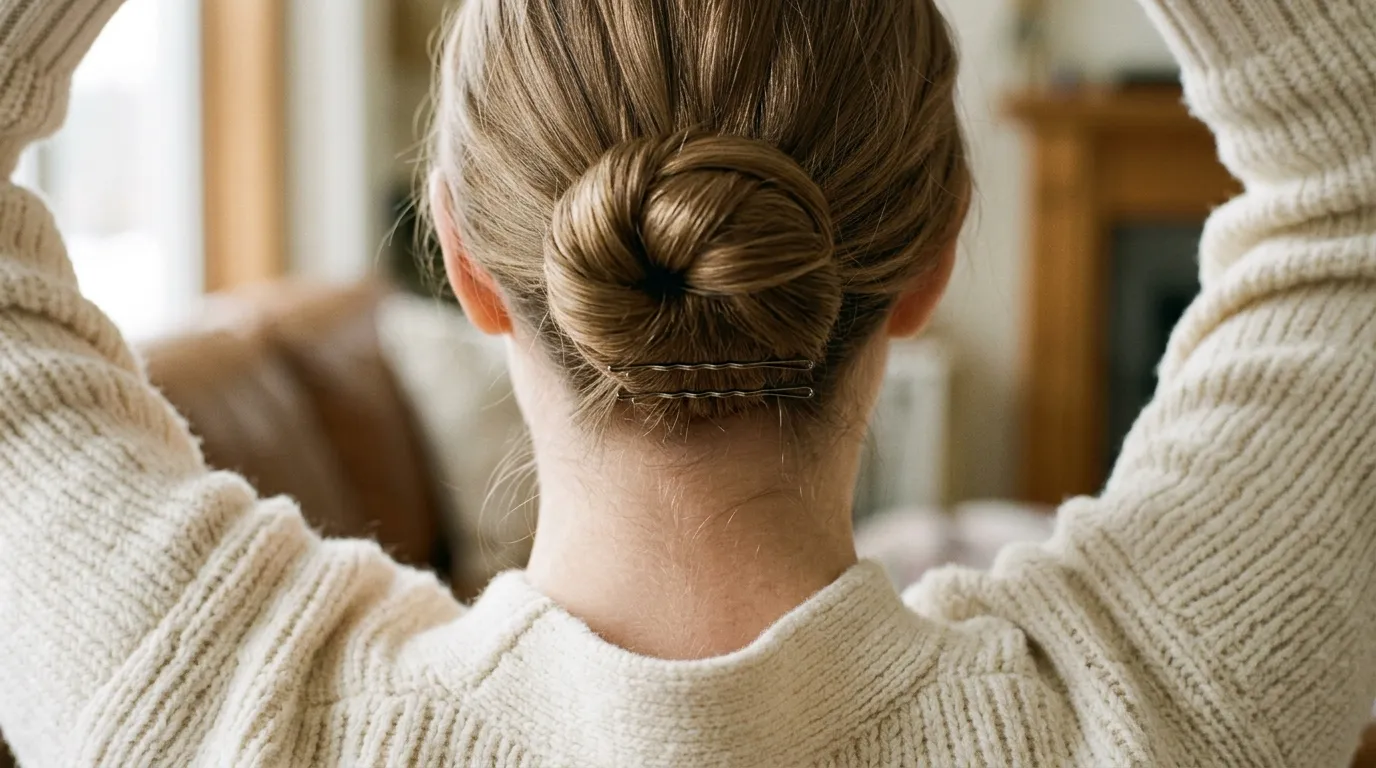
Fine hair turns translucent and stringy at the ends when scalp oil travels downward. Gather your hair into a ponytail at the nape of your neck using an elastic band. Pull the hair halfway through the band on the final wrap, creating a two-inch rounded loop of hair.
Leave the ends hanging downward against your neck. Wrap those loose ends upward around the base of the loop to hide the elastic band entirely. Slide two bobby pins horizontally through the base to lock the wrap. This contained shape creates artificial density without letting thin, greasy ends fan out over your clothing.
Weave Twin Dutch Plaits to Lock Down Heavy Sebum
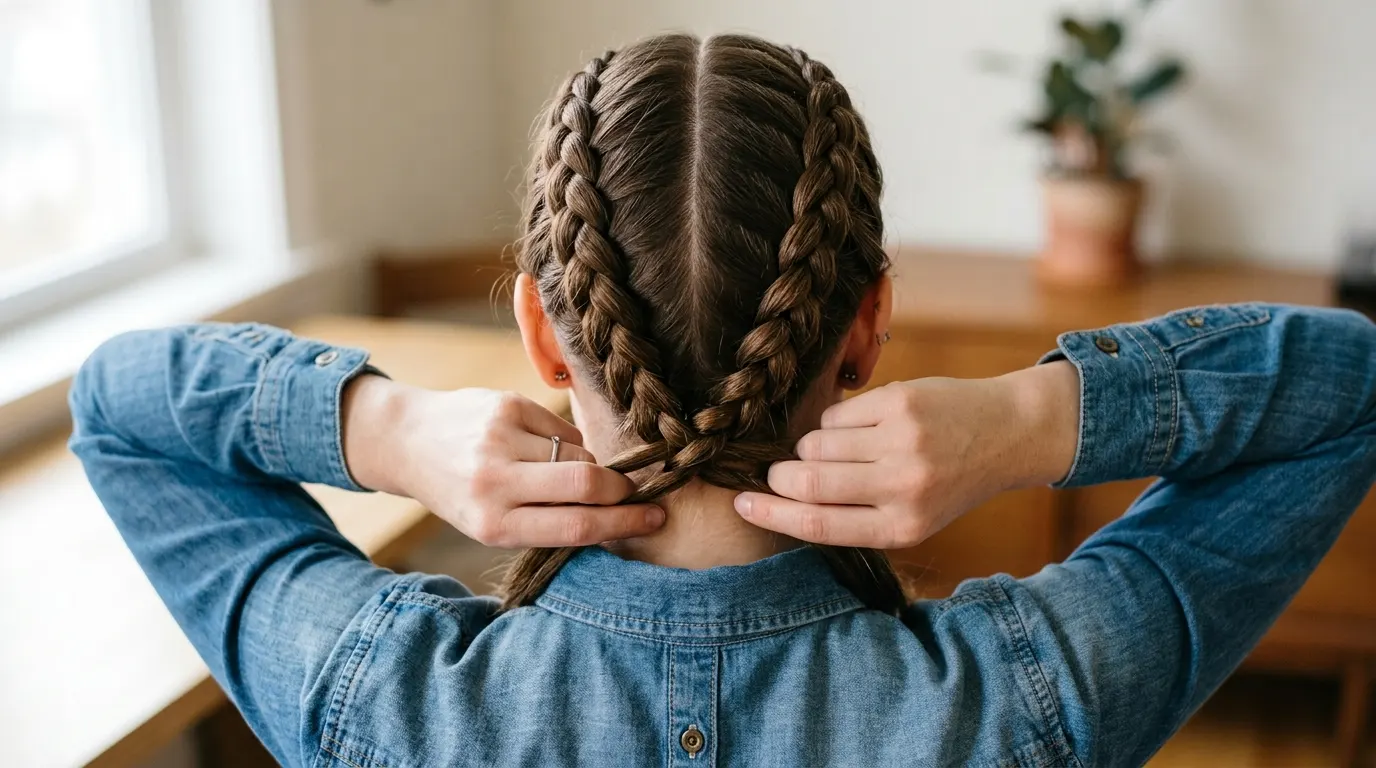
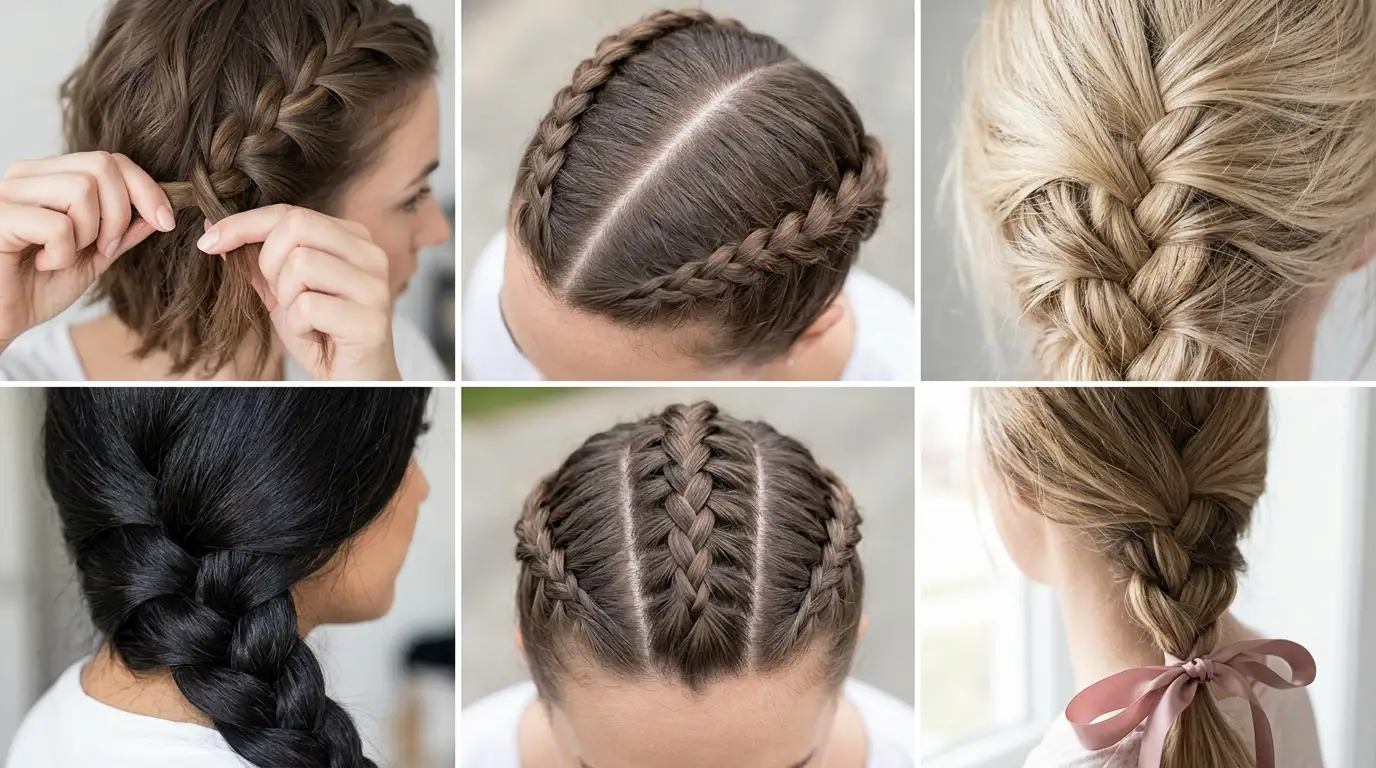
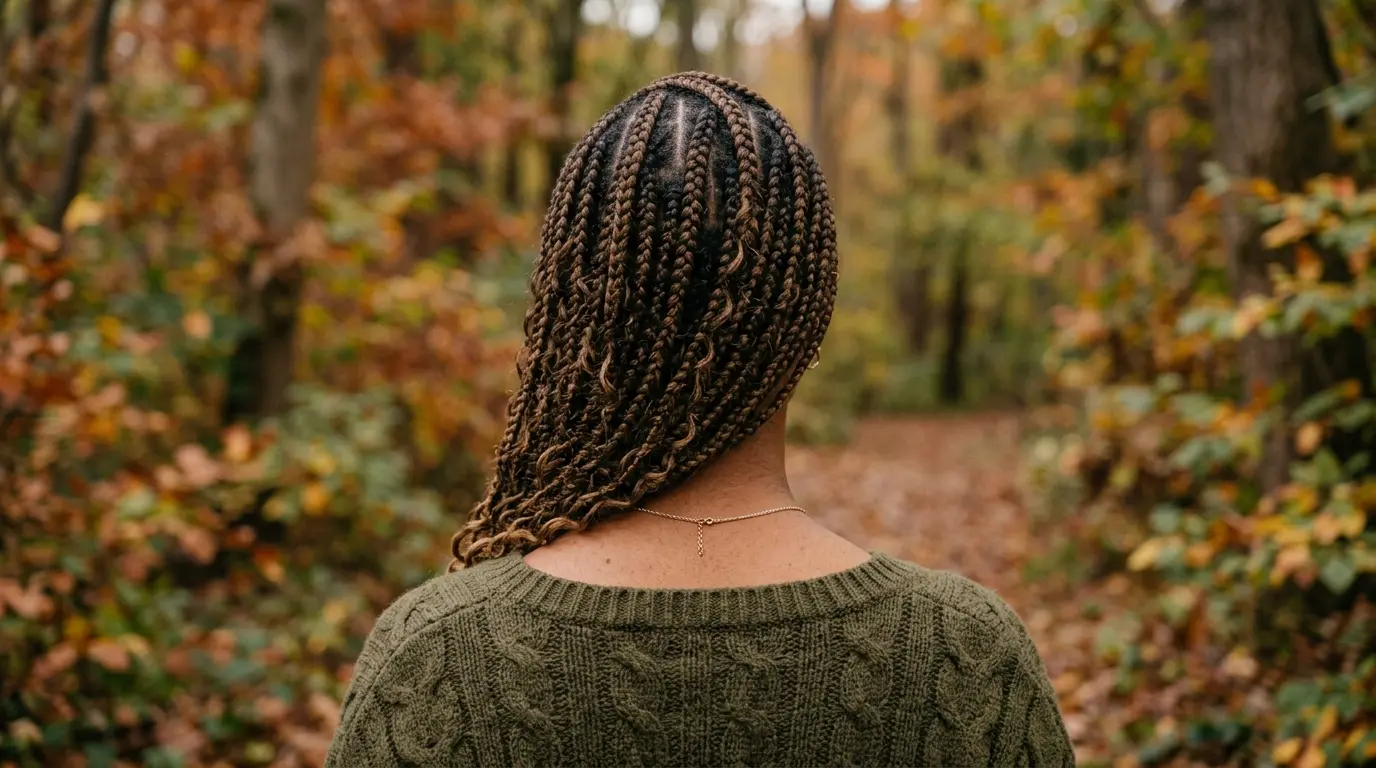
When unwashed hair feels heavy and separates into distinct ribbons, Dutch braids offer the strongest physical grip. Divide your entire head of hair down the spine into two equal halves with a tail comb. Clip the left half out of your way.
Take a one-inch triangular section at the right temple and divide it into three pieces. Cross the outer pieces under the center strand rather than over, picking up a quarter-inch horizontal sliver of hair with every pass. Keep your hands pressed firmly against your scalp as you travel down to the neck. Braid through the tail and secure with an elastic. Repeat on the left side to keep heavy hair secure.
Construct a Half Up Topknot for Long Hair
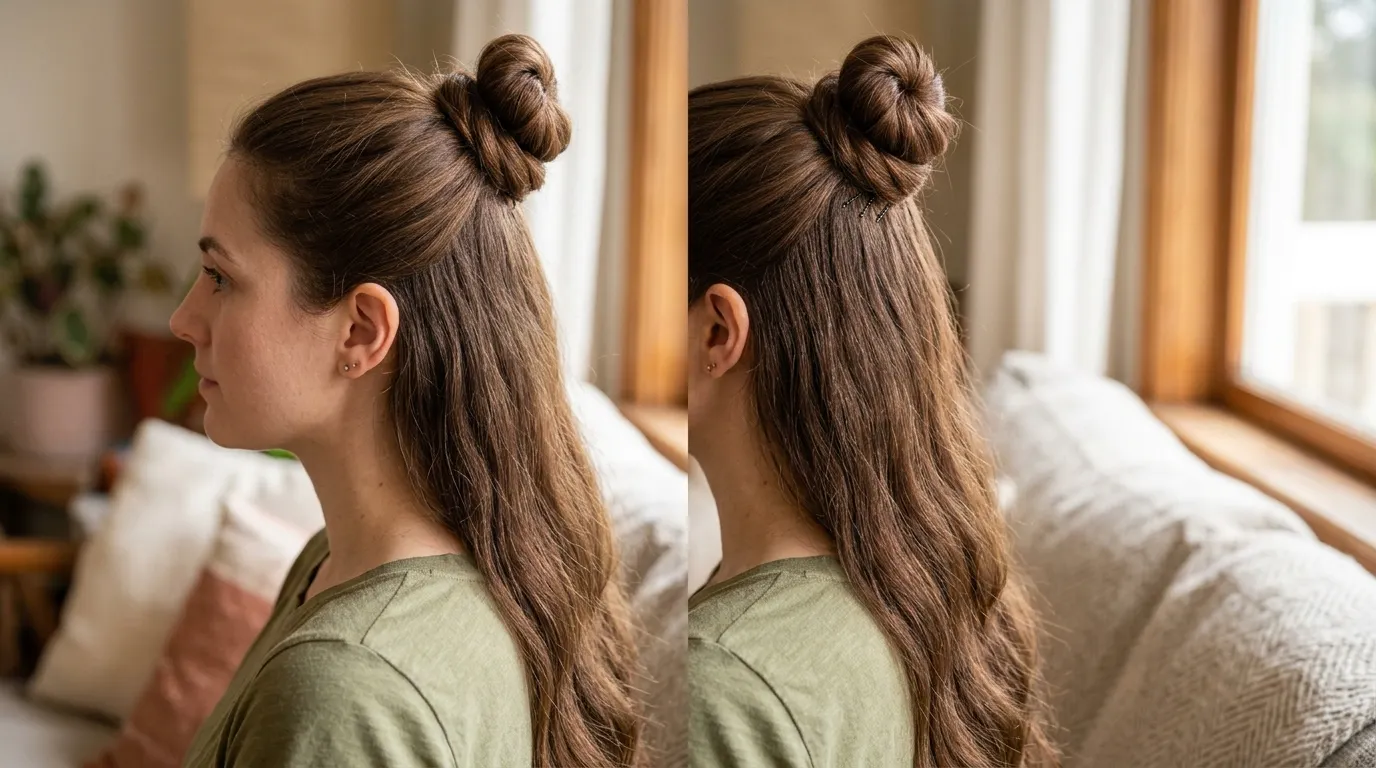
Reaching the third day after washing often leaves long lengths dry while the crown sits heavy with oil. For greasy hair cute hairstyles that preserve movement, separate all the hair above your ears into a top bundle. Comb the perimeter back smoothly with your boar brush.
Twist the top bundle into a firm coil on top of your crown. Wrap the coil around its own base into a compact knot. Secure the perimeter with four bobby pins inserted in an X-pattern. The dry bottom lengths drape freely across your shoulders, while the oiled top remains tucked away in a neat knot.
Form a Structured Rope Braid down the Center Back
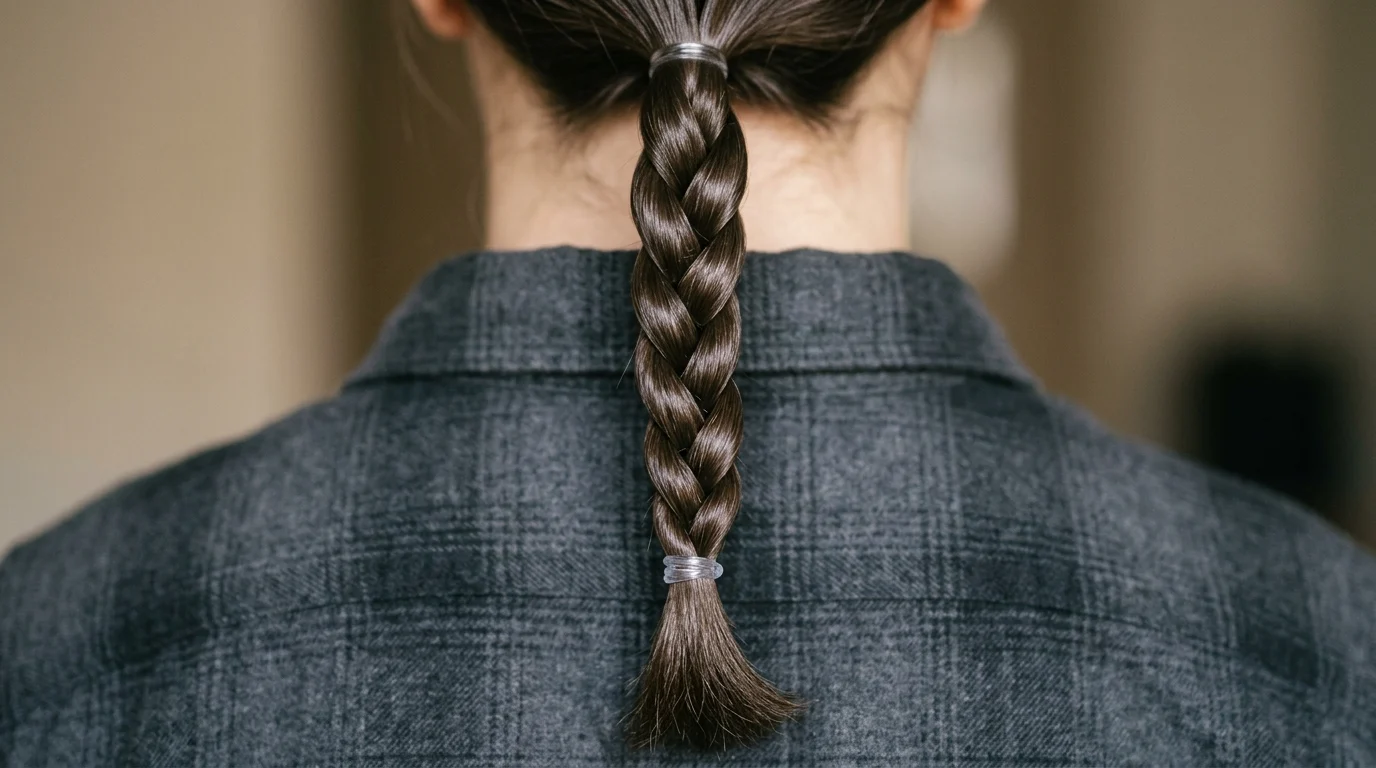
Traditional three-strand braids often show greasy gaps where sections cross. A two-strand rope braid utilizes oil tension to maintain a crisp, rope-like twist. Pull all hair back into a low ponytail at the base of your skull and secure with an elastic.
Divide the ponytail into two equal halves. Twist both individual halves clockwise until firm. Next, cross the right strand over the left strand in a counter-clockwise direction. Continue this opposite-twist pattern down the length and band the bottom. The conflicting tension locks both strands together, preventing oily flyaways from popping free.
Pin a Gibson Tuck at the Nape for Professional Settings
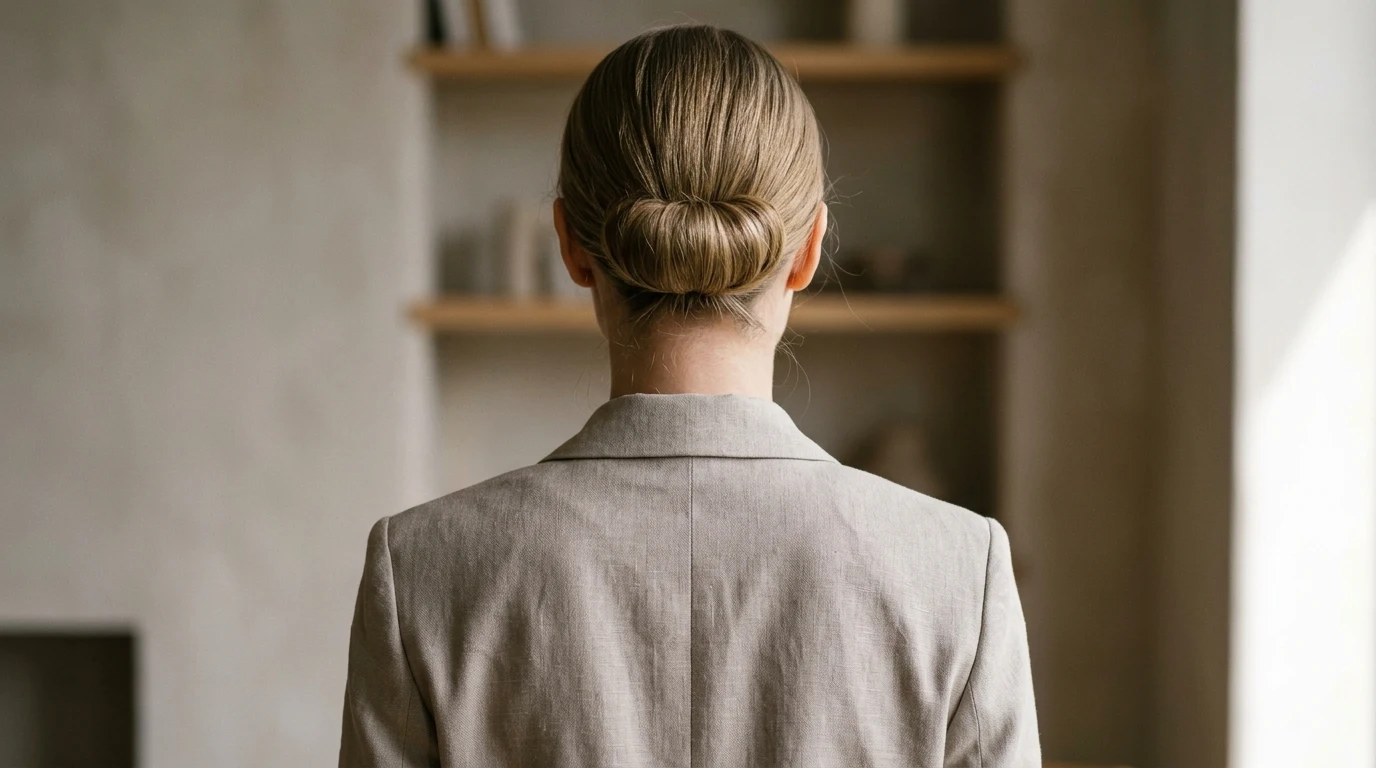
Office environments require neat styling that completely hides disheveled roots. Place a thin, stretchy fabric headband over your head, resting it across your hairline and over the ends of your hair like a crown.
Starting from the front temples, pick up two-inch sections of hair and tuck them downward behind the elastic band. Work your way along the sides to the back until all loose ends roll into a continuous horizontal chignon at your nape. Pin the roll securely with three steel hairpins. The rolled cushion swallows greasy root zones and keeps your neck cool all day.
Apply a Wide Fabric Headband Over Loose Natural Texture

If your scalp is sensitive to tension or you need quick and easy hairstyles for greasy hair, use a four-inch wide ribbed cotton headband. Position the front edge of the band one-eighth of an inch in front of your natural hairline.
Push the band backward gently, allowing it to compress the front three inches of your scalp where sebum concentrates. Let your mid-lengths and ends fall naturally over your shoulders without styling them. The matte cotton weave absorbs surface sheen along your forehead while framing your face without pulling on tender roots.
Create a Fluffed Crown Half-Pony to Conceal a Tall Forehead

High front hairlines become noticeably visible when oil slicks hair flat against the skull. For hairstyles for greasy hair and big forehead concerns, section out a three-inch curved crescent of hair right at the crown, leaving your fringe or temple pieces entirely loose.
Gently backcomb the underside of the crown crescent with your tail comb twice to build internal height. Gather this teased piece into a small half-ponytail at the upper occipital bone and band it loosely. The built-in lift keeps the front canopy arched upward, preventing hair from sticking flat to your forehead skin.
What Goes Wrong and How to Rescue It
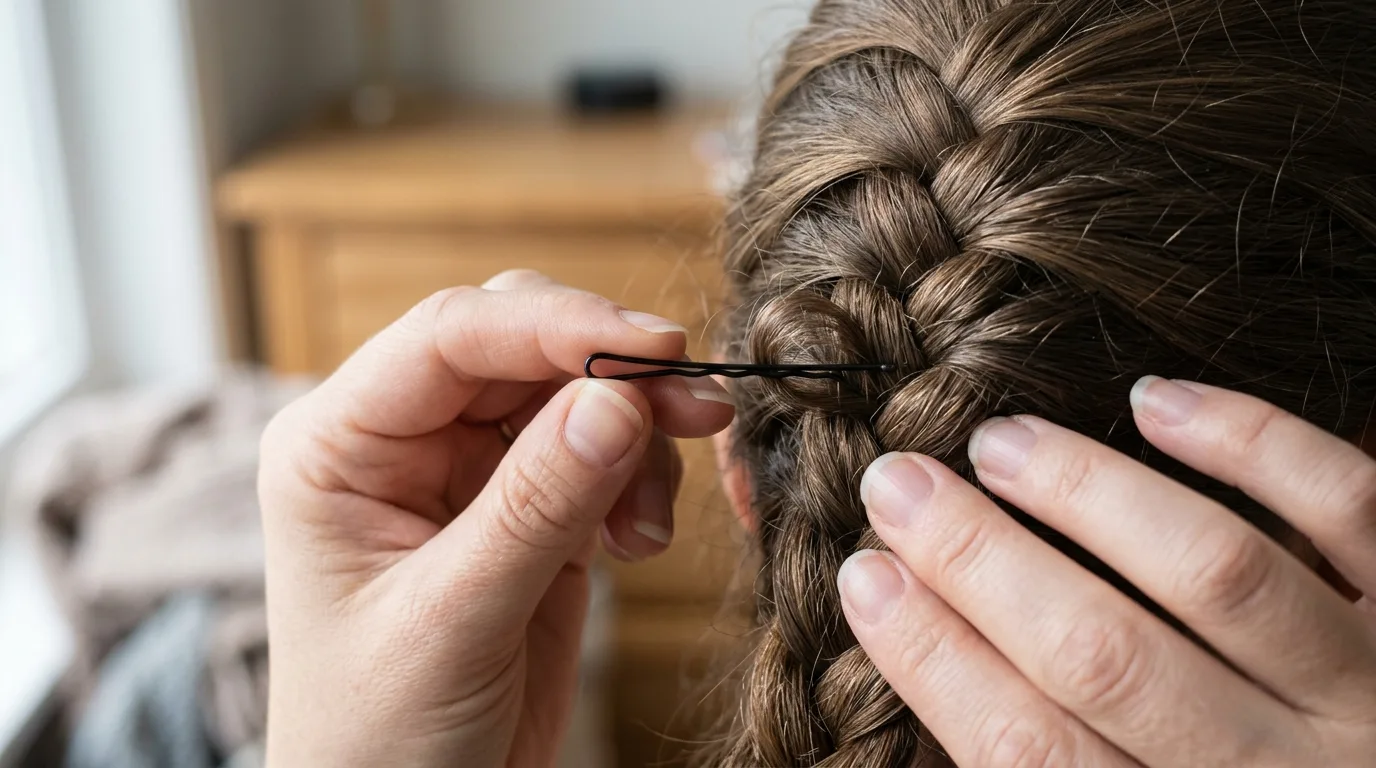
Lifting your hands away from your head while braiding creates sagging, loose pockets that expose oily scalp gaps. If you notice a bulge forming at your crown, do not unravel the entire braid. Slide a steel bobby pin flat against your skull, catching the loose bulge and pushing the pin upward into the dense weave of the plait.
If smooth hairstyles begin to separate into stringy ribbons by mid-afternoon, avoid touching your hair with bare fingers. Hand oils worsen lipid buildup instantly. Take a clean cotton handkerchief and press it flat against the shiny zone for ten seconds to blot surface sebum, then smooth flyaways with your comb.
Establish Overnight Habits to Prevent Morning Greasy Roots
Preventing morning oil slicks starts eight hours before you wake up. Instead of letting hair rub flat against cotton pillowcases, test practical hairstyles to prevent greasy hair overnight. Brush your strands thoroughly, then gather everything at the highest point of your head using a loose silk scrunchie.
Pull the ponytail halfway through on the final loop to form a loose, high pineapple bun. This keeps your roots elevated off your scalp while you sleep, allowing air to circulate around your sebaceous glands. In the morning, shake the bun free to find natural root volume without oil pooling.
Frequently Asked Questions
Is greasy hair good for your scalp health?
Natural sebum protects your hair shaft from environmental friction and locks moisture inside the cuticle. Leaving heavy oil buildup on your scalp for more than four days can trap yeast and dead skin cells, causing scalp inflammation and flaking.
How can you style oily hair if you do not have dry shampoo?
Use a boar bristle brush to draw root oils down to your dry ends, then construct a braided low bun or twin French plaits. Mechanical styling uses your own lipids as a natural setting paste, eliminating the need for starch powders.
What should you do if your bangs look greasy but the rest of your hair is clean?
Clip the rest of your hair out of the way, lean over the bathroom sink, and wash just your bangs using a nickel-sized drop of clarifying shampoo. Blow dry with a round brush for two minutes to refresh your face frame without washing your entire head.
Why does hair seem to get greasy faster after straight heat styling?
Flat irons smooth down the hair cuticle and press strands flat against the scalp. This flat alignment allows natural oils to travel down the hair shaft rapidly, whereas natural curl texture creates physical bends that slow oil movement.
The Morning Styling Sequence
Start by assessing your oil depth and distributing sebum with twenty passes of a boar bristle brush. Build your chosen style using firm tension close to the scalp, whether you select a structured rope braid, twin Dutch plaits, or a rolled Gibson tuck. Pin down loose bulges immediately and leave your hair untouched through the day to keep natural lipids working as your styling foundation.