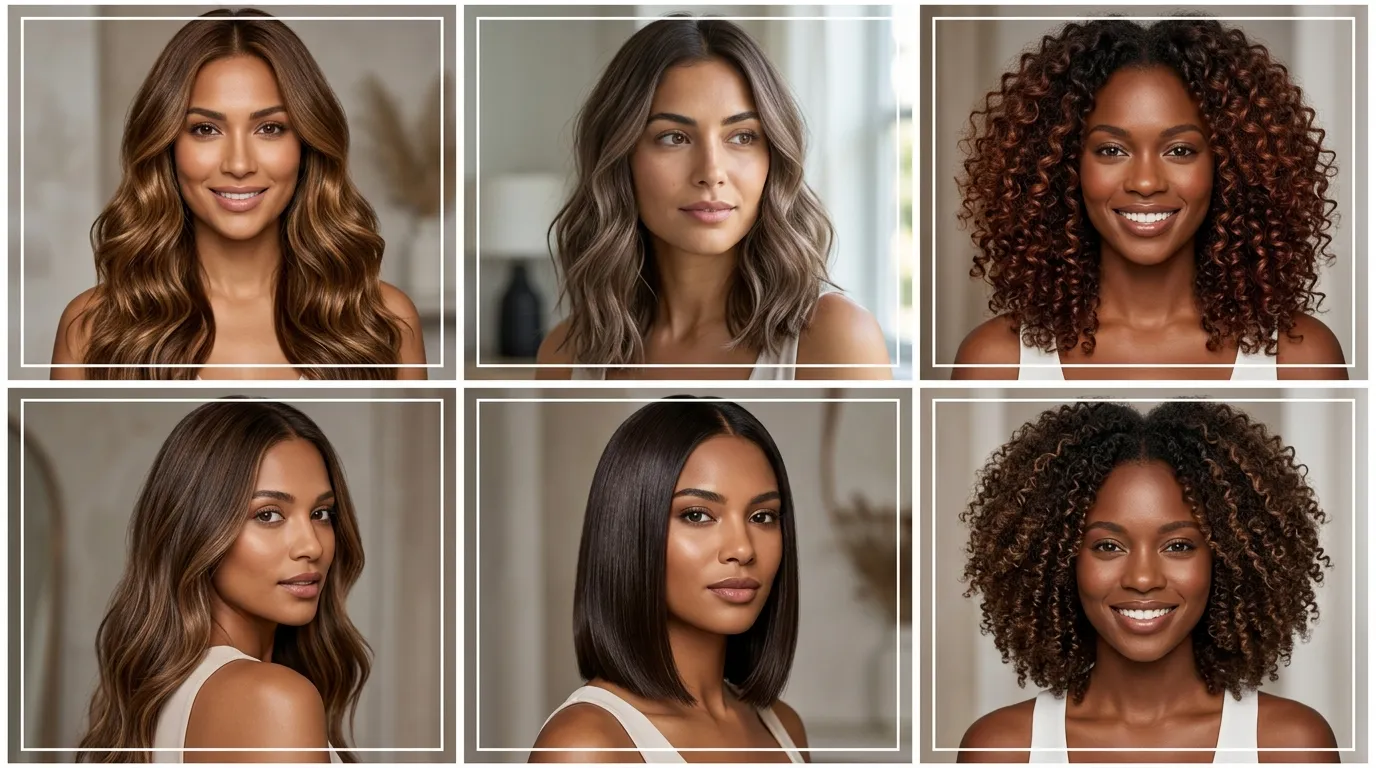

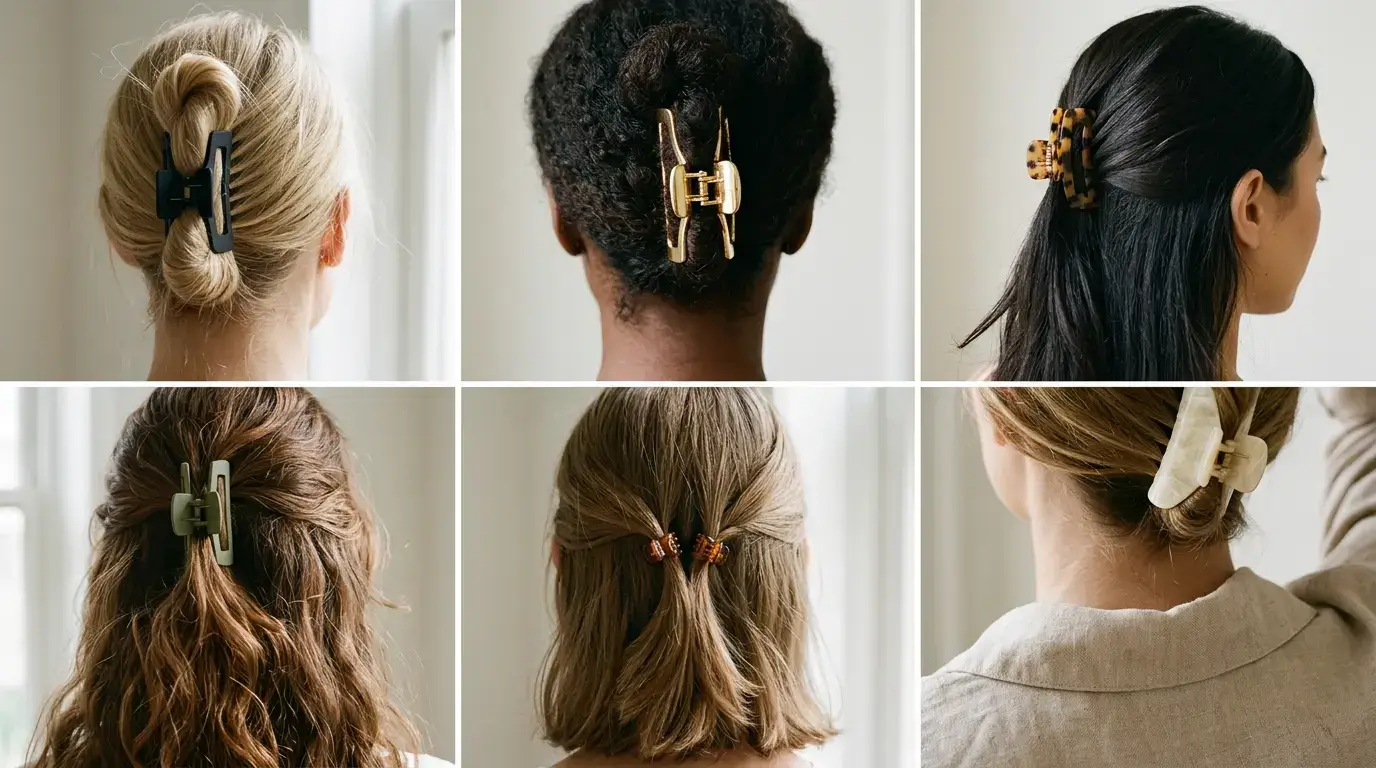
Heavy lengths present an immediate mechanical problem for basic clips. A standard jaw clamp holds forty grams of strands with ease, yet waist-length density creates downward leverage that pulls the hinge open within twenty minutes. Readers managing dense coils face snapping acetate teeth, while readers with silky, low-friction strands battle constant vertical slippage down the nape.
This guide organizes claw clip styling by hair density and physical texture so you can match the correct hinge style, tooth depth, and anchor technique to your specific head of hair. Finding an all-day hold comes down to weight distribution rather than squeezing tighter springs against your scalp.
Fine Strands and the Elongated Base Loop
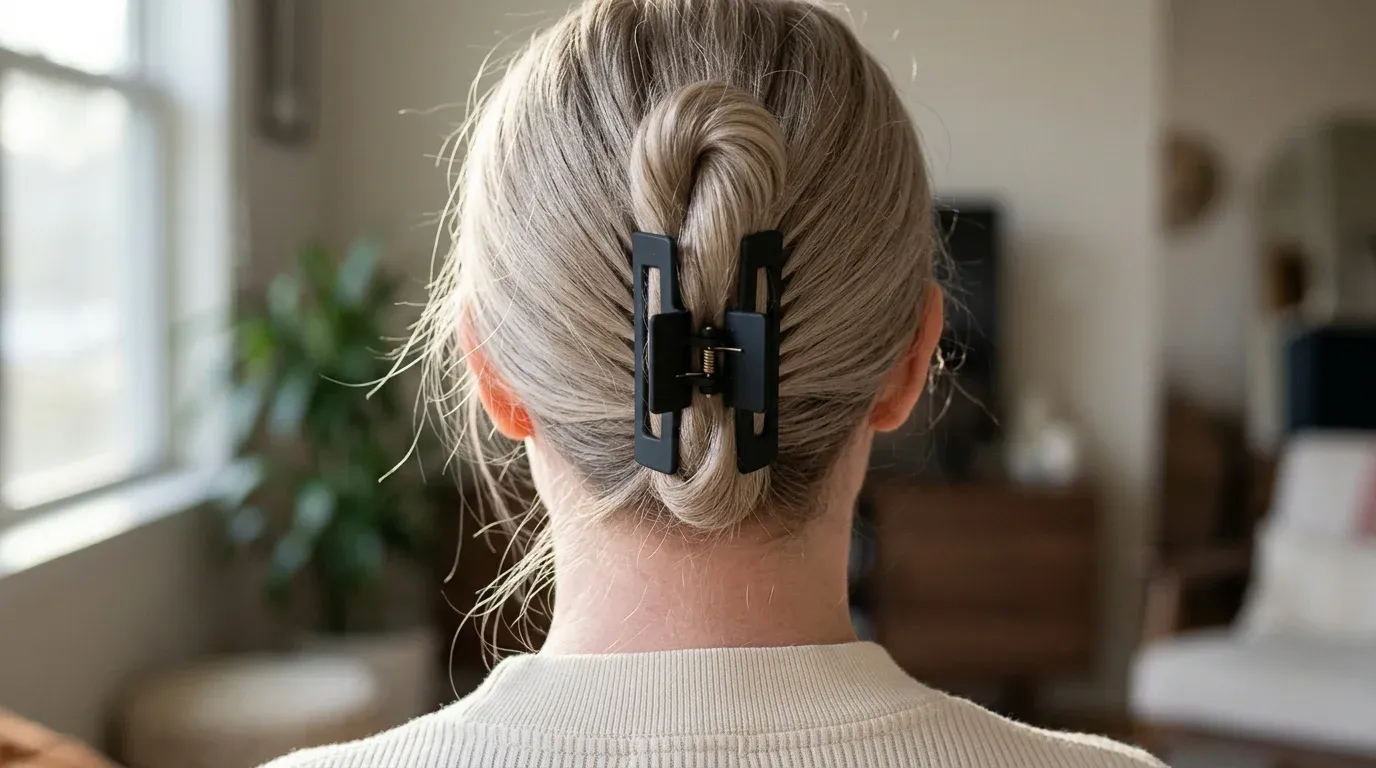
Silky textures lack surface friction, causing teeth to slide down the hair shaft during regular head movement. Gathering fine lengths directly into a basic twist leaves too much empty space between standard teeth, letting the barrel slip. To build an anchor base, apply a dime-sized amount of texturizing dry paste through mid-lengths before gathering your strands.
Gather the hair into a low tail at the nape. Fold the tail upward against the head, then fold the top half back down to create a flat, doubled column. Clamp an eighty-millimeter rectangular flat clip over both layers, catching half an inch of root hair underneath the loop. The dual thickness fills the claw cavity completely, preventing horizontal wobble.
Skip this method if your strands are coarse or dense, as the doubled mass will force the spring beyond its expansion limit.
High Density Coils and the Structural French Twist
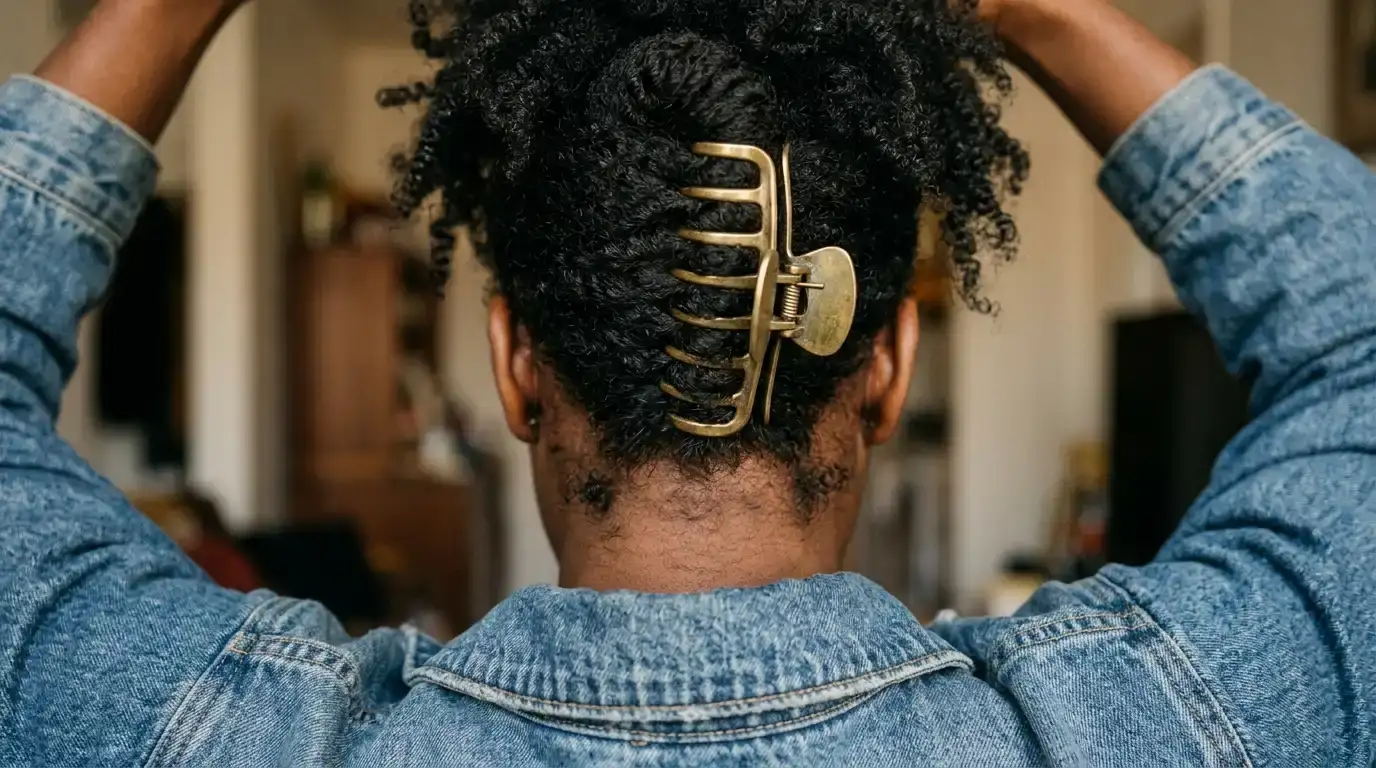
Dense hair easily overwhelms curved claws, leading to broken springs or severe scalp tension headaches. Managing this density requires dispersing the bulk vertically along the occipital bone rather than bunching it into a spherical knot.
Smooth hair back with a boar-bristle brush, gathering strands just above the neck line. Twist the base firmly two turns clockwise, then drive the remaining tail straight up toward the crown. Anchor this line using a five-inch metal jaw clip featuring wide-spaced, curved prongs. Seat the right row of teeth directly into scalp hair alongside the twist before levering the left row over the folded roll.
This creates three anchor points that distribute the physical pull across five inches of scalp. Avoid this technique on straight, slippery textures, as the wide tooth spacing allows smooth strands to spill out between the prongs within an hour.
Heavy Silky Strands with the Concealed Base Band
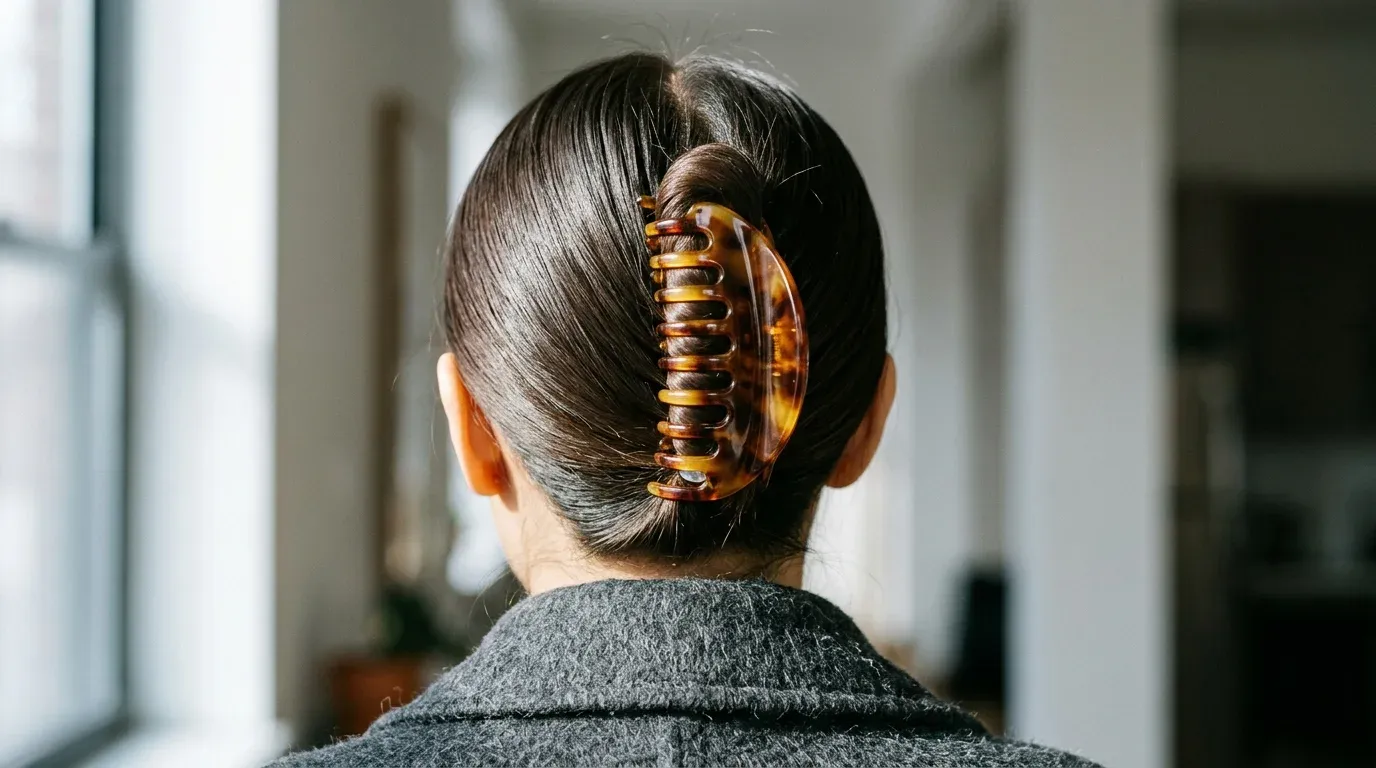
Straight hair with zero natural wave will slide out of acetate clamps because the hair cuticles lie flat and smooth against one another. The solution relies on creating an internal ledge that stops downward slide without showing on the outside.
Isolate a thumb-width horizontal section at the crown, slip a tiny clear elastic around it, and split the hair above the band to flip the tail downward through itself. Now gather the remaining bulk of your long hair in a claw clip, pulling the full mass upward over the topsy tail. Position a curved four-inch jaw directly over the elastic knot, letting the teeth bite beneath the silicone band. The band acts as a physical shelf, stopping any downward drift.
Those with fragile, brittle strands prone to mechanical breakage should avoid clear elastics and rely instead on textured clips with rubberized inner coatings.
Natural Wave Patterns and the Half-Up Crown Anchor
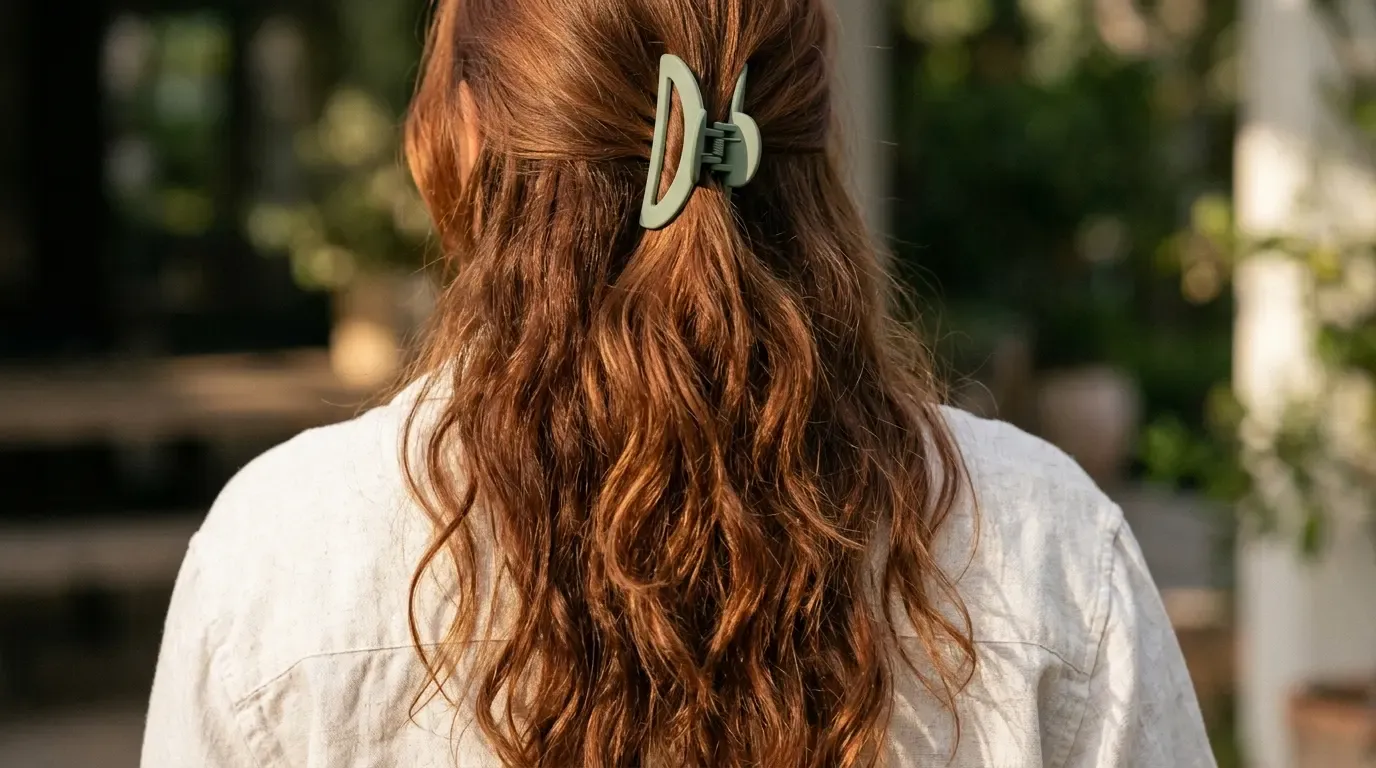
Wavy textures have natural volume that can look messy if gathered entirely into a single high clamp. Using a half-up anchor removes weight from the front while displaying your natural wave pattern across the shoulders.
Part hair from the top of each ear straight back to the crown, leaving the bottom half completely free. Twist this upper section once, push it upward slightly to create a slight lift at the roots, and fasten it with an arched three-inch claw. Position the hinge flat against the skull to keep the profile sleek. Let the remaining hair fall over the back to display your natural texture without pulling at the temples.
Skip this placement if your hair is extremely fine at the crown, as parting lines will expose the scalp around the upper grip.
Shoulder-Length Strands and the Double Small Grip
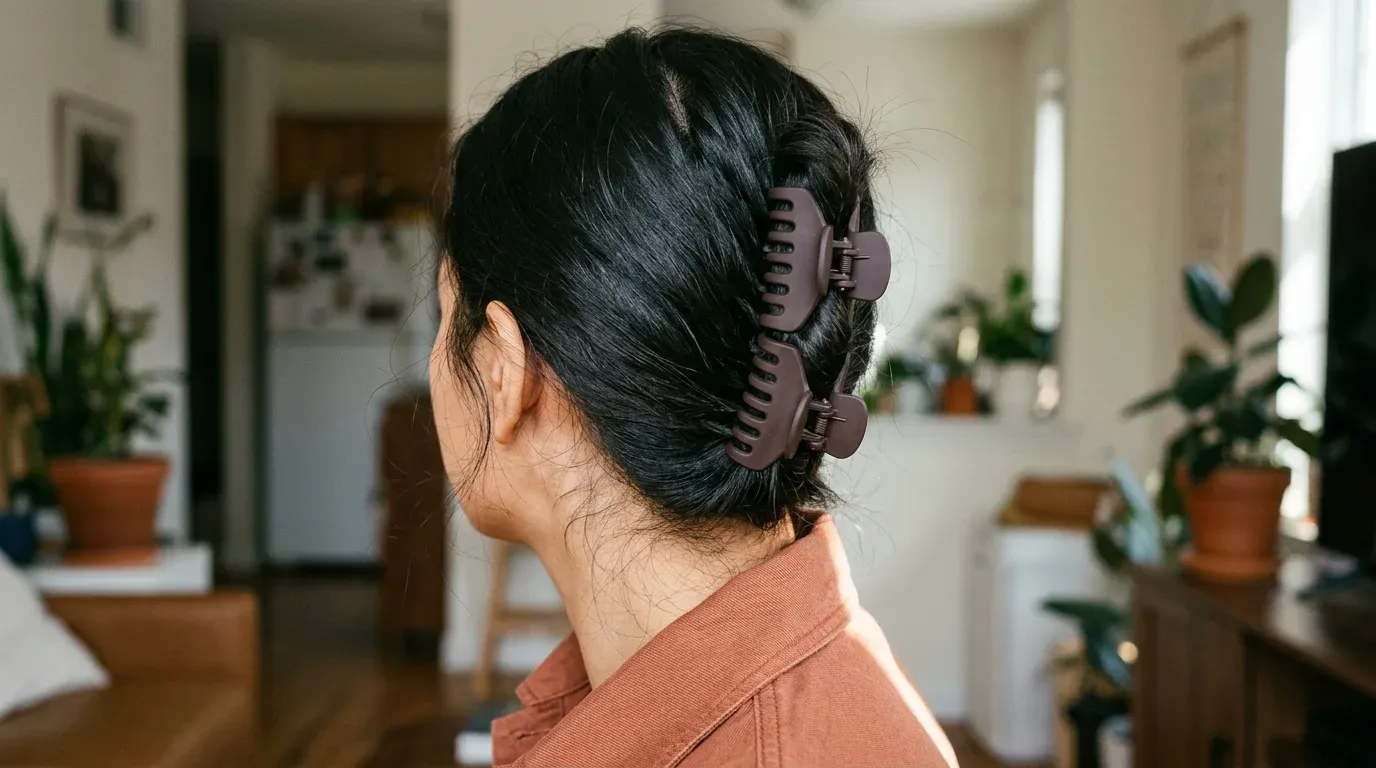
Medium-length strands often slip out of large claws because the ends lack enough length to wrap fully back into the jaw cavity. Working with two smaller clips solves this issue by locking down independent zones along the head.
Split the hair horizontally into a top section and a bottom section. Twist the lower portion up to the mid-head and press a one-and-a-half-inch claw over the folded ends. Next, twist the top half downward to meet the first clip, securing it with an identical small claw placed directly above the first. The two clips lock together, balancing the physical pull and preventing loose bottom strands from dropping out.
This look fails on thick, waist-length locks, which overwhelm the small prongs and force the springs apart immediately.
Bleached or Fragile Textures with the Low Nape Cradle
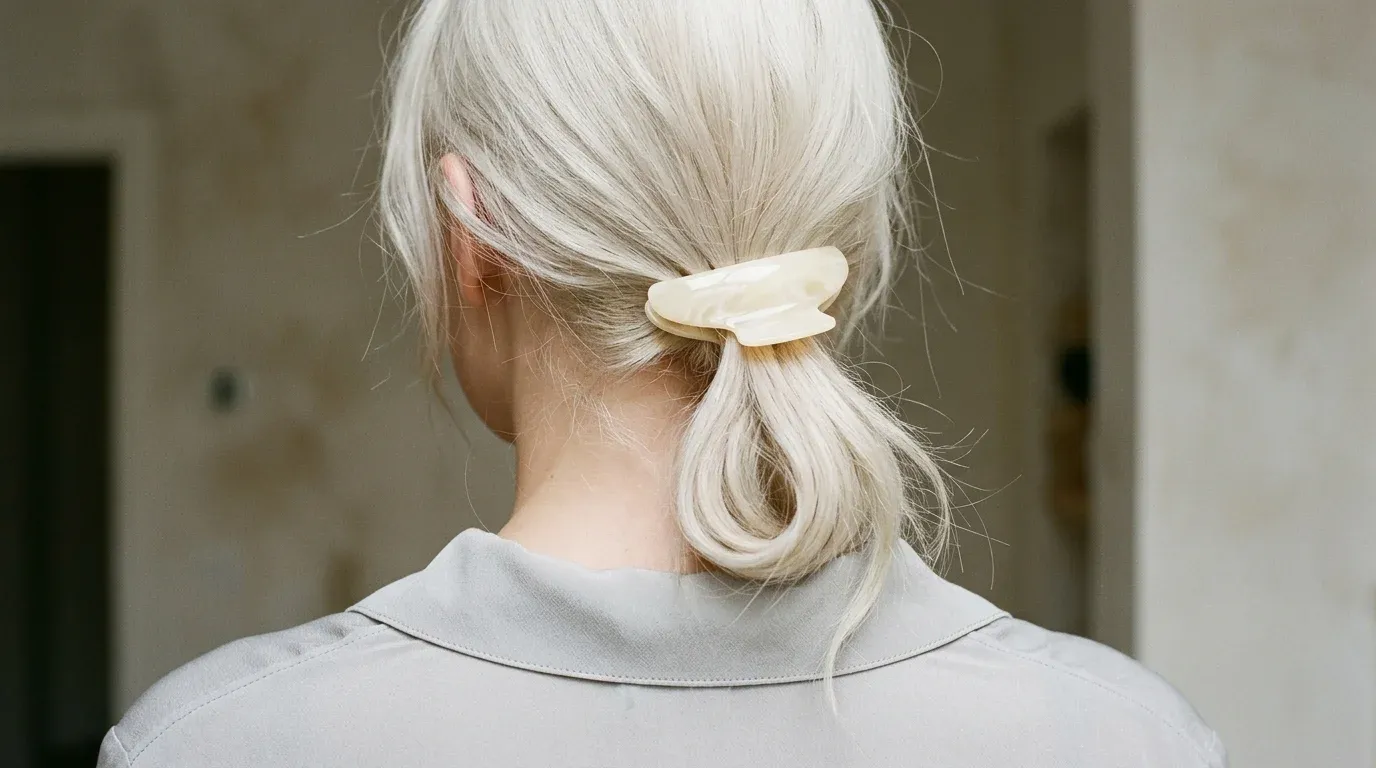
Chemically treated hair breaks easily under the localized pressure of tight metal hinges and sharp plastic seams. To protect delicate ends from friction, the clip must rest entirely against the neck rather than pulling from the crown.
Loosely gather strands at the base of the skull without using a brush to avoid tension on weakened follicles. Fold the tail in half so the ends stay hidden behind the bulk, pointing downward. Seat a smooth, curved bio-acetate clip around the fold, keeping the spring loose and the teeth resting against the skin of the neck. This keeps the hair stationary without applying any pulling force to the fragile hairline.
Do not use this style if you spend long hours seated against a high-backed office chair or car headrest, as the low hinge will press uncomfortably into your cervical spine.
Compact Updos for Coarse Curls Using Big Clip Claws for Long Hair
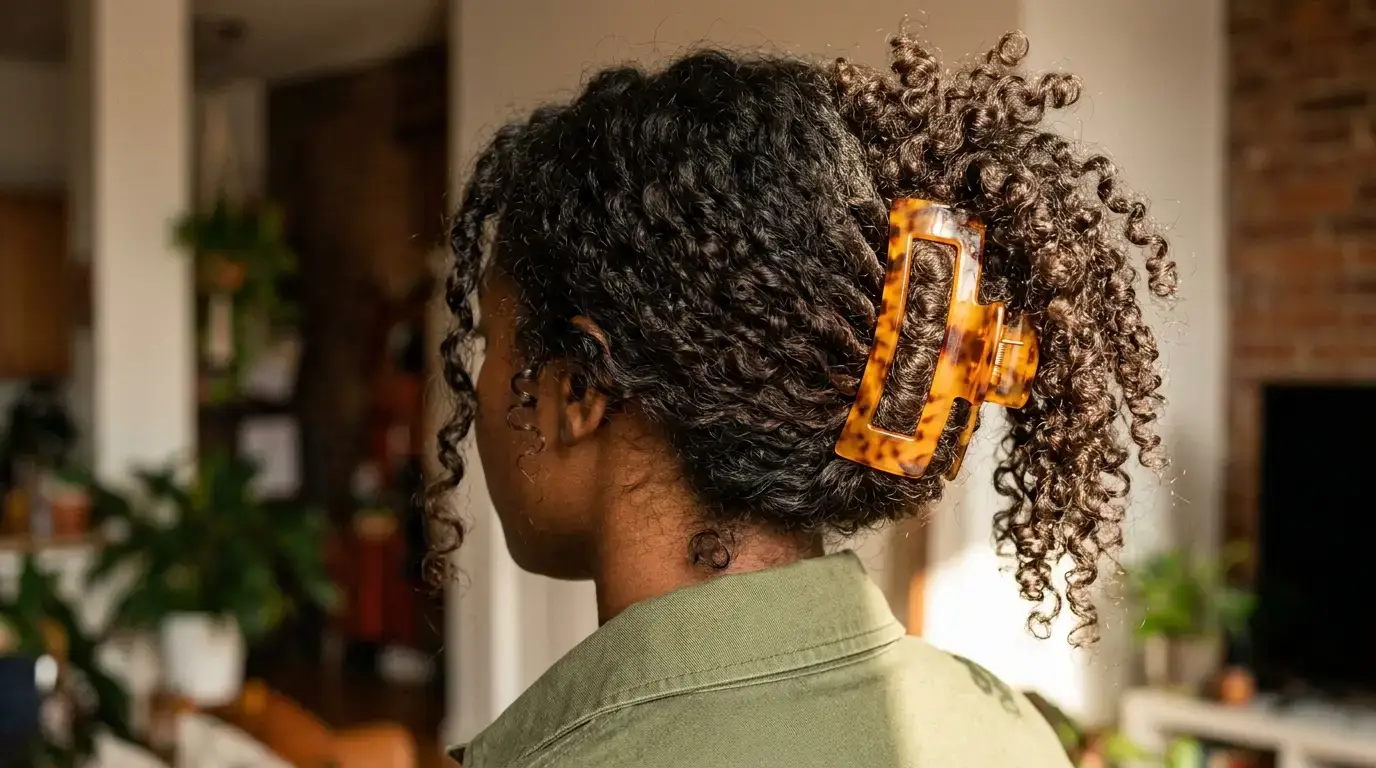
Coarse curl patterns require deep claw chambers that accommodate volume without flattening the curl formation. When you twist coiled strands too tightly, you lose the natural shape and create painful pinch points at the roots.
Gather dry curls loosely upward toward the mid-crown using your fingers. Fold the hair once in an accordion fold, letting the curl ends spill naturally over the top like a fountain. Drive a large, hollow-frame acetate jaw into the center of the fold, pressing the teeth flat against the scalp to grab the root hair. The hollow center leaves the curls uncompressed while the perimeter teeth hold the updo steady.
This approach fails on low-density, fine strands because the open chamber leaves the hair too loose to stay clamped.
Quick Everyday Styling with cute easy claw clip hairstyles
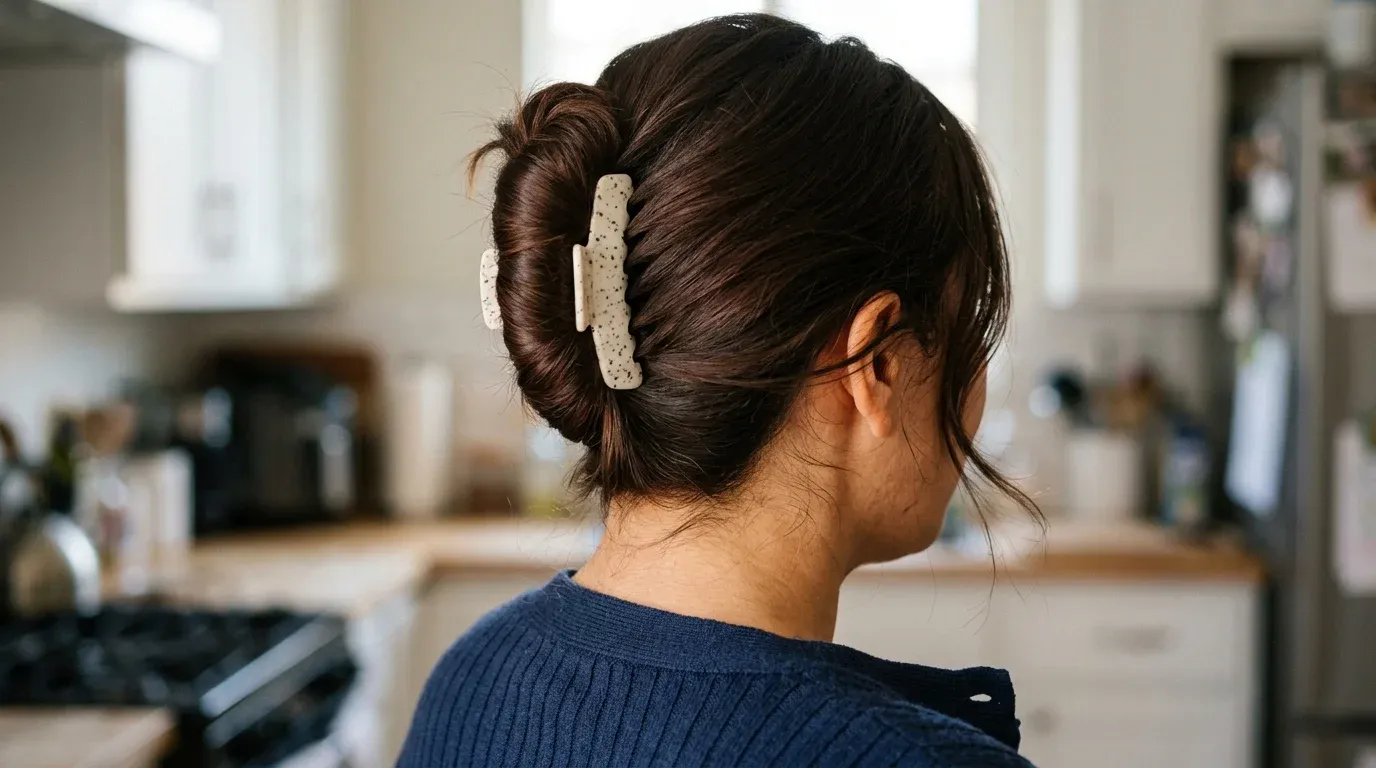
Morning routines often require an updo that takes thirty seconds without mirrors, sectioning clips, or styling sprays. The loop-and-tuck French roll provides instant hold using pure directional tension.
Hold your hair in a low ponytail with your dominant hand. Point your index finger down, wrap the hair around it once, and rotate your finger upward so the ponytail twists in on itself against your head. Slide your finger out, press the roll flat, and fasten a ninety-millimeter claw across the center of the roll. The rotational tension keeps the hair locked against the head without requiring any bands or pins.
Avoid this quick method on recently conditioned, freshly blow-dried hair, as the lack of surface grit will cause the single twist to unravel quickly.
Minimalist Sections Using hairstyles with tiny claw clips
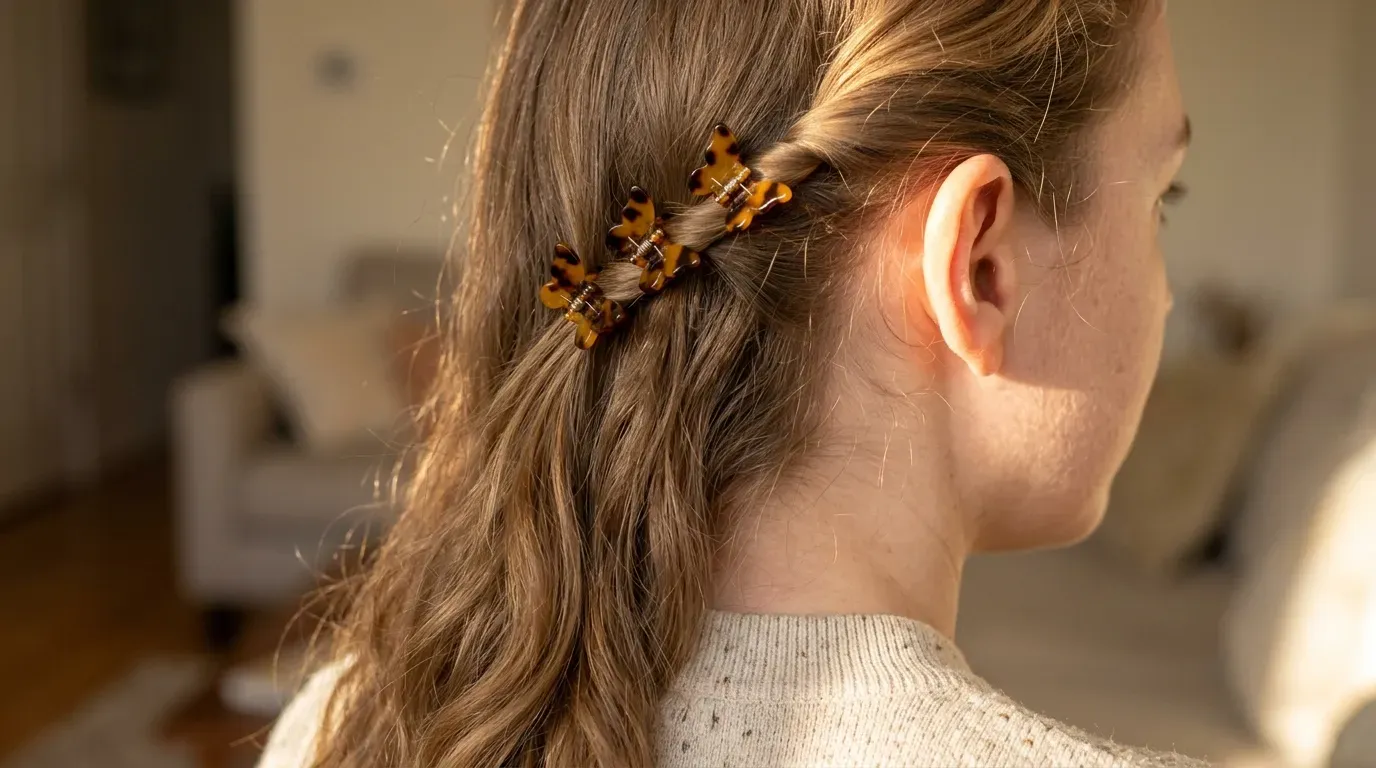
Distributing multiple micro-clips around the perimeter allows you to control face-framing strands without putting weight on a single central hinge. This setup prevents the tension headaches often caused by large, heavy hair clamps.
Part the front two inches of hair down the center. Take a half-inch section along the hairline, twist it away from the face two turns, and place a fifteen-millimeter butterfly clip behind the ear to pin it flat. Repeat this step with two more sections directly behind the first. The back lengths hang free while the front remains securely out of your eyes throughout the day.
This arrangement fails to hold heavy hair up during workouts or rainy weather, as the free-hanging length remains exposed to sweat, wind, and friction.
How Hair Density Matches Claw Clip Dimensions
| Density and Texture | Ideal Clip Length | Material and Tooth Style | Primary Hold Mechanism | Where It Fails |
|---|---|---|---|---|
| Fine and Straight | 70mm to 80mm | Rubberized acrylic, dense interlocking teeth | Double-folded base friction | Heavy, coarse hair bends the teeth |
| Medium and Wavy | 85mm to 100mm | Standard acetate, curved teeth | Single twist root anchor | High-impact running causes bounce |
| Coarse and Curly | 105mm to 120mm | Metal alloy, wide-spaced tines | Hollow chamber volume lock | Fine strands slide through the gaps |
| High Density Coils | 115mm to 130mm | Reinforced resin, extra-deep curve | Vertical occipital roll | Short layers fall out of the sides |
| Chemically Fragile | 90mm | Seamless bio-acetate, flat prongs | Low-tension nape cradle | Headrests push the hinge into the neck |
Choosing the Right Clip for Your Hair Setup
Buying an accessory that fails to hold your hair wastes both money and drawer space. A standard cellulose acetate clip costs between eight and fourteen dollars in 2026, while heavy-duty cast metal versions run between sixteen and twenty-four dollars. Selecting the correct model depends on the physical dimensions of the clip rather than the pattern printed on the plastic.
Look first at the hinge spring. A thin wire spring with three coils will lose tension within a few weeks of holding thick strands. Look for heavy steel springs with five or six tightly wound coils that resist outward finger pressure. Check the interior edge of each tooth for sharp mold lines left over from manufacturing. Rough plastic edges snag hair cuticles, causing friction breakage every time you pull the clip open.
Pay close attention to tooth length. If the teeth measure less than one inch from tip to spine, they cannot reach your scalp through dense hair, leaving the clip floating insecurely on top of your strands. For fine strands, look for interlocking teeth that touch along their full length to pinch thin hair securely.
Frequently Asked Questions About Claw Clips
Which clip material provides the longest lifespan without cracking?
Cellulose acetate lasts far longer than standard injection-molded acrylic. Acetate is derived from wood pulp, giving it natural flex that bends under internal pressure rather than snapping when dropped on tile.
How do you prevent a heavy clip from pulling down on scalp roots?
Seat the teeth directly into the stationary hair beneath your twist before closing the jaw. The clip should rest against the curve of your skull rather than hanging from the twisted hair bundle itself.
Why do the ends of long hair always flop forward over the top of the claw?
Long tails flop forward when the clip is placed too low on the roll. Move your anchor placement one inch higher up the twist, or tuck the loose ends back down into the hollow barrel before clamping the teeth shut.
Can you wear a claw clip securely while working at a computer all day?
Flat-backed claw clips lay flush against the skull, letting you rest your head against high office chairs without pushing the spine of the clip into your scalp. Standard round barrels force your neck forward into an unnatural posture.
What size clip works best for securing hair during home workouts?
Metal rectangular clips between seventy and eighty millimeters hold tightest during movement. The rigid metal frame does not flex under bouncing, keeping tension locked against the skull far better than flexible plastic.
Selecting Your Long Hair Setup
If you remain unsure which direction to take, make your choice based strictly on ponytail thickness. Gather your strands into a tight bundle and wrap your thumb and index finger around the base. If your fingers overlap generously, buy an eighty-millimeter rectangular clip with tightly spaced teeth and rely on a doubled-back loop to create holding bulk.
If your fingers barely touch or leave a gap around the base, skip standard plastic accessories entirely. Invest in a four-and-a-half-inch cast metal jaw with deep tines, and anchor your hair using a vertical French twist along the occipital ridge. Matching clip volume to hair mass solves slipping issues permanently.