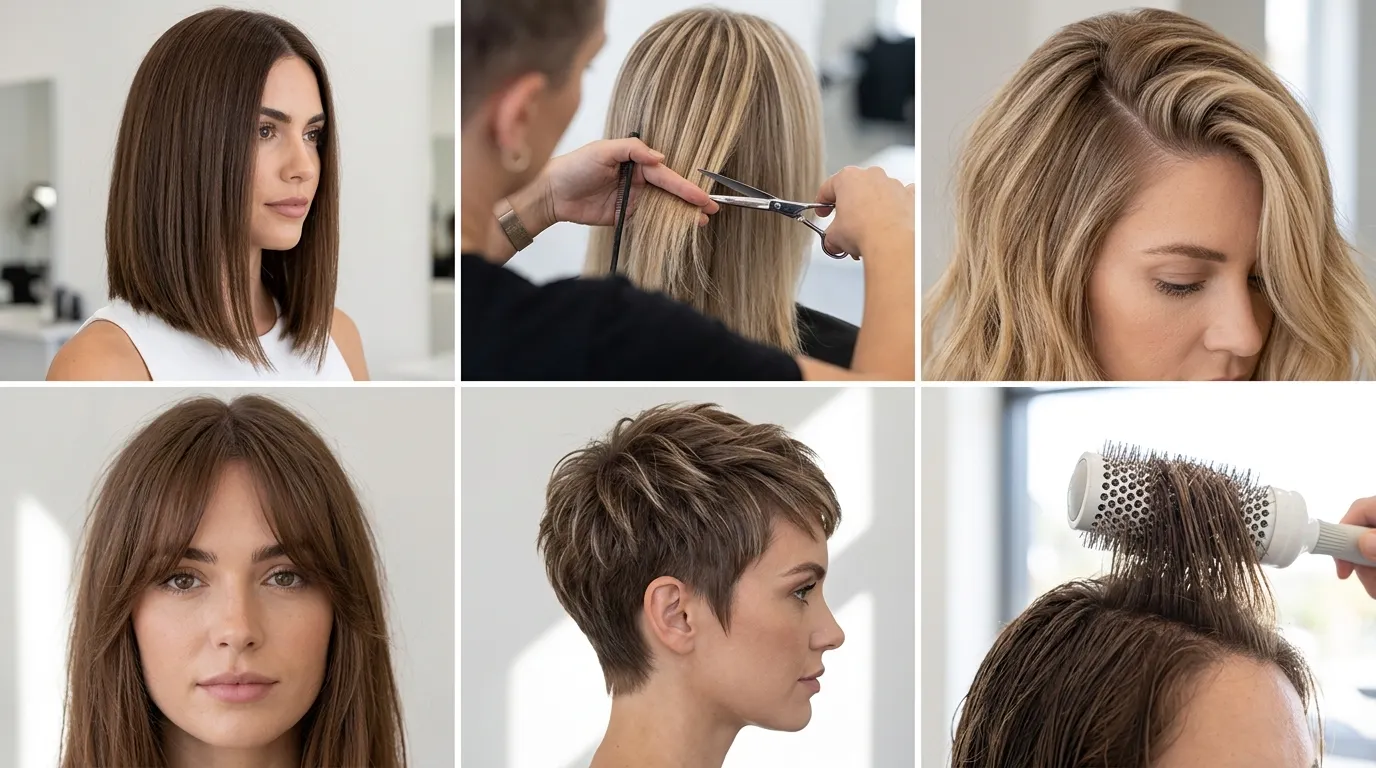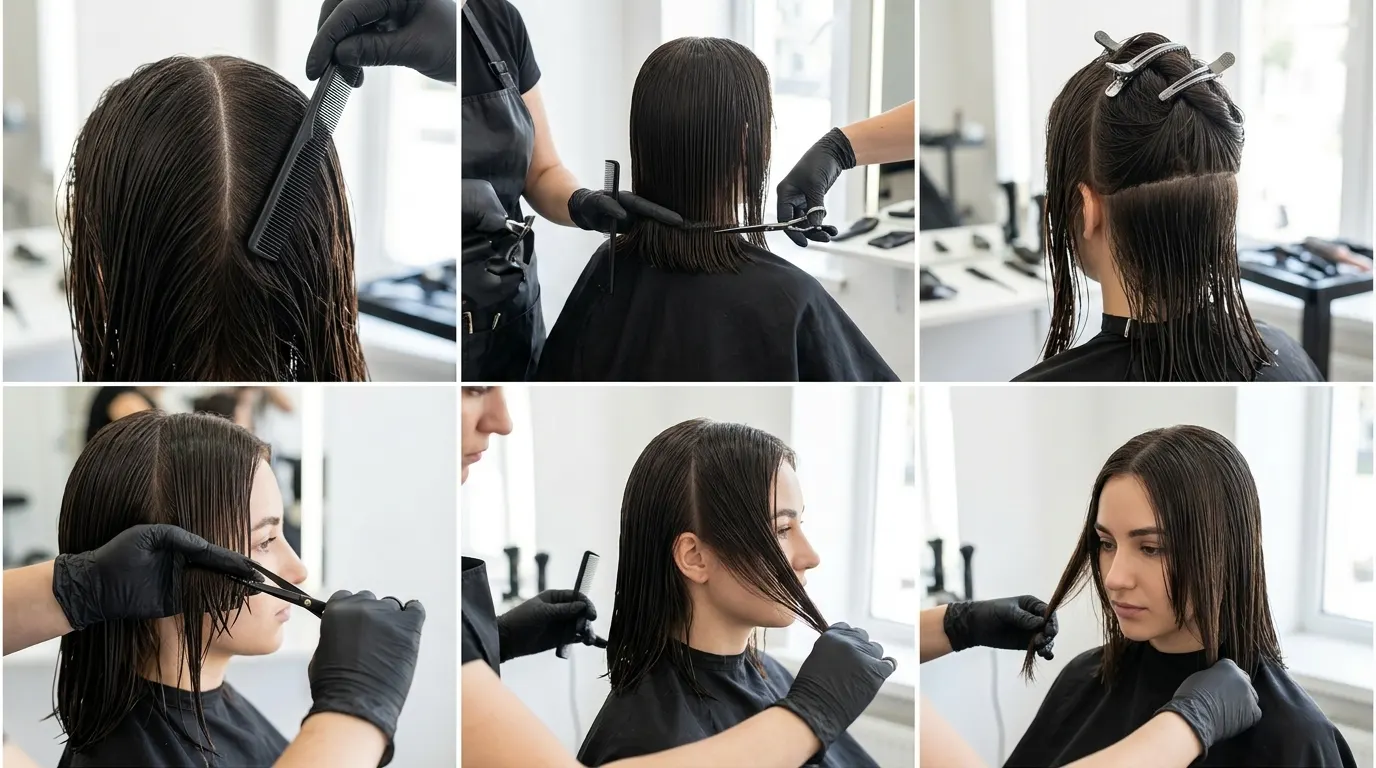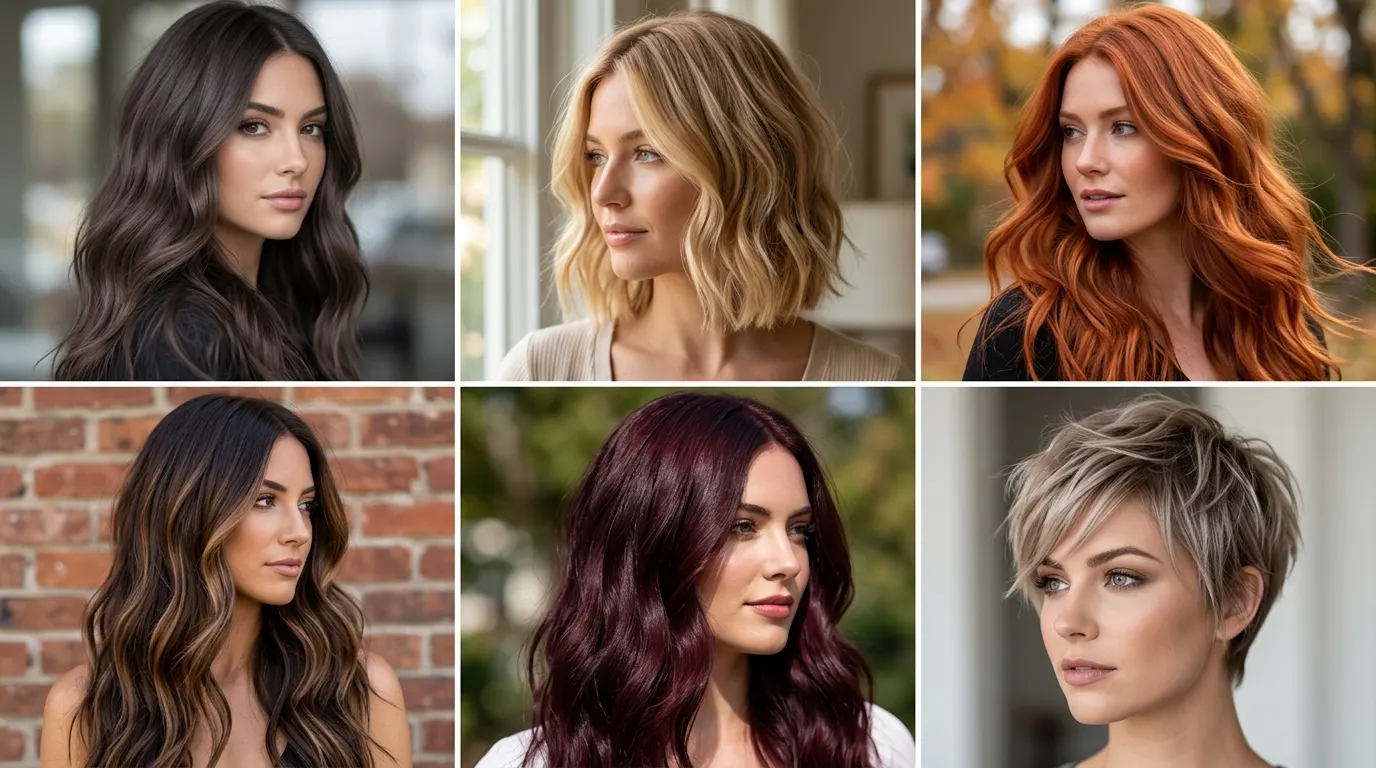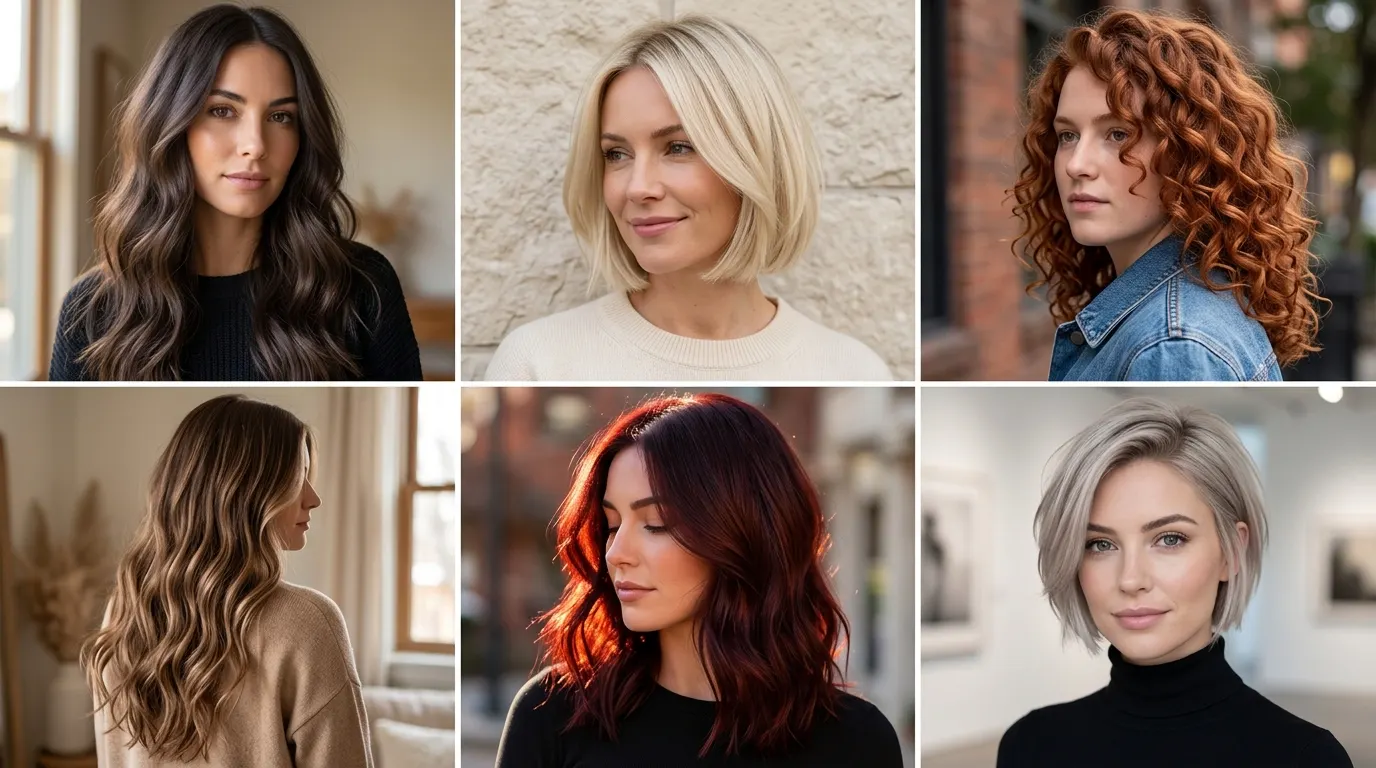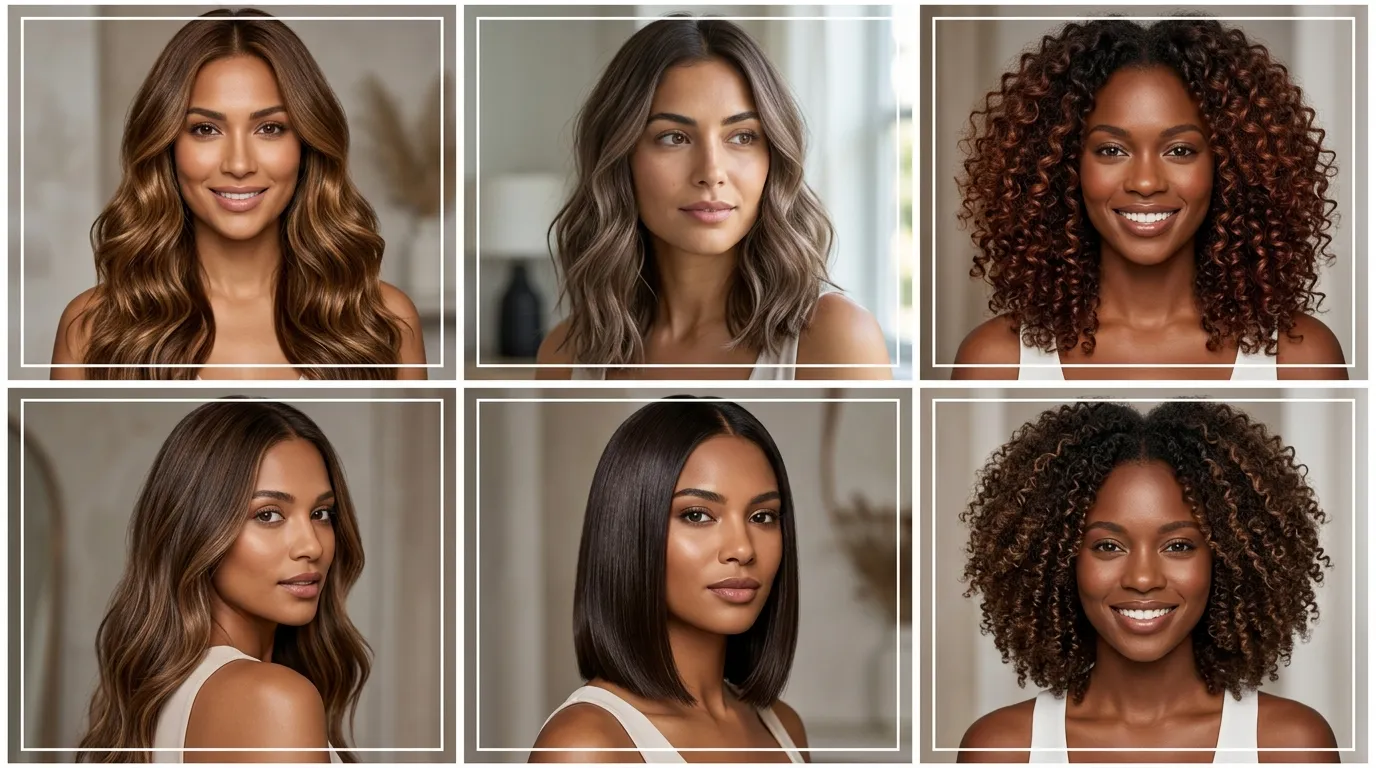

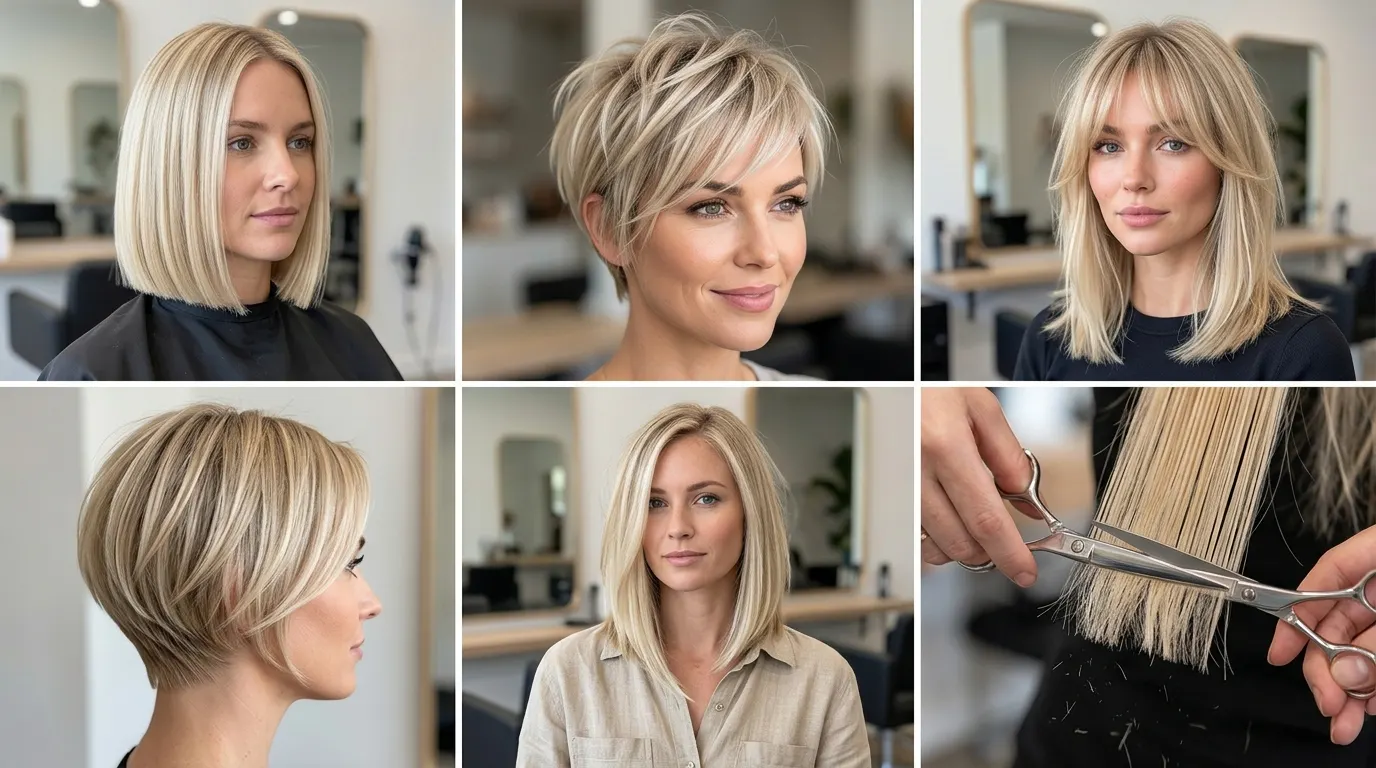
Delicate strands collapse when a stylist removes weight from the wrong zone of the head. When seeking a functional haircut for fine thin hair, you have to treat individual hairs like architectural columns. If the base of the perimeter is hollowed out with thinning shears, the entire silhouette caves inward against your cheeks and neck within three weeks of leaving the salon chair.
Women dealing with genetic sparseness, post-menopausal shedding, or naturally narrow strand diameters face very different styling hurdles. Some readers want to retain shoulder length, while others need a short crop that conceals scalp visibility at the crown.
Real density comes down to clean weight lines, blunt baselines, and restrained internal graduation. This guide breaks down thirteen distinct physical situations so you can choose a shape that supports your hair profile.
Round Face Shapes Needing Vertical Elongation: The Asymmetrical Blunt Lob
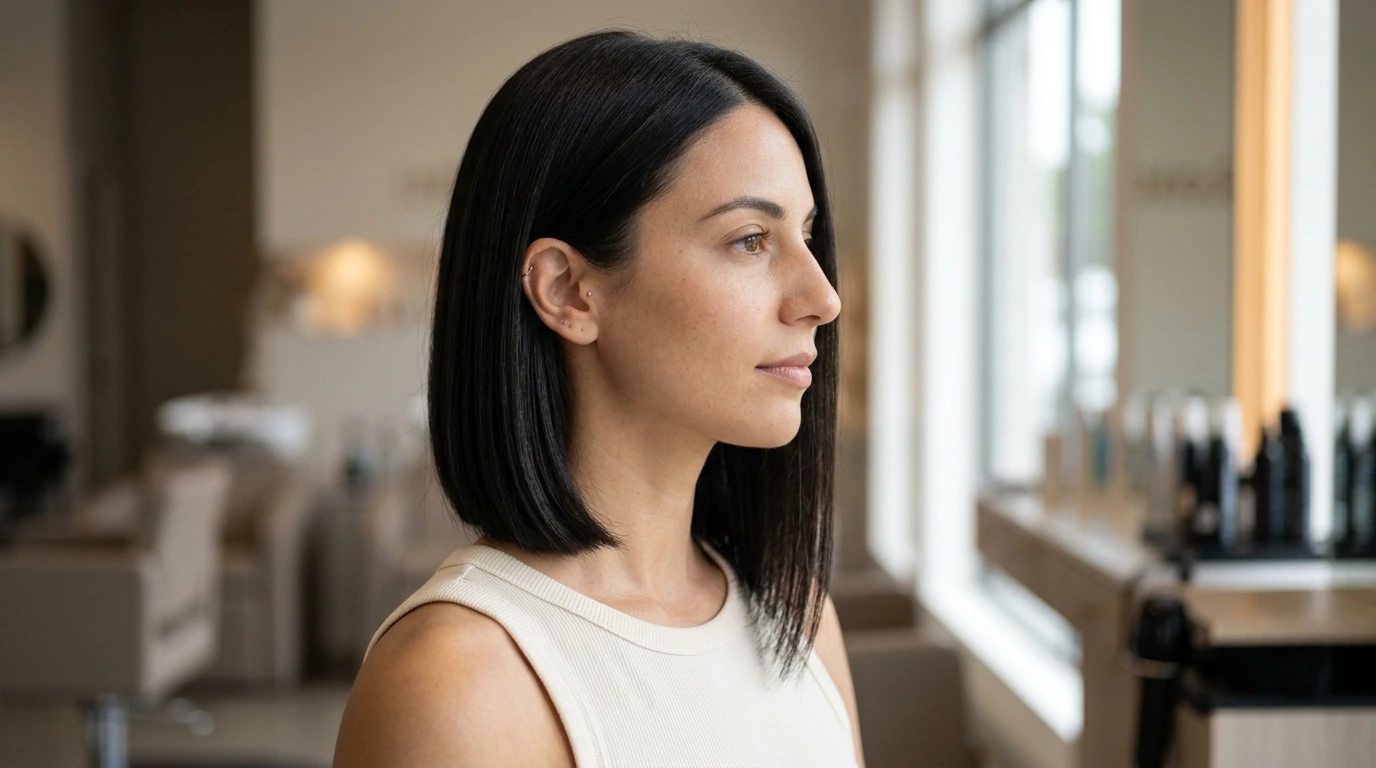
Round face profiles feature soft jawlines and equal width across the cheekbones, which makes typical round bobs look overly spherical. This structural cut is engineered for women wanting an elongating effect while preserving perimeter bulk. It fails for anyone with severe temporal thinning, as the deep side sweep exposes recession around the temples.
Direct your stylist to cut an asymmetrical long bob that sits two inches below the collarbone on the longer side and grazes the collarbone on the shorter side. In 2026, expect to spend around $65 to $110 for this precision cut at a reputable urban salon.
The baseline must be cut completely blunt with Japanese steel shears on dry, straightened hair. No texturizing shears should touch the ends. To style this haircut for fine thin hair round face shapes benefit from, apply a coin-sized amount of styling lotion to damp roots. Blow-dry the longer side forward across the cheek using a flat paddle brush to slice visually through facial fullness without sacrificing edge density.
Oval Face Geometry Seeking Crown Height: The French Chin-Grazing Bob
Oval facial proportions carry balanced symmetry, but low-density strands cause the silhouette to appear stretched and flat on top. This shape belongs to women who want to accentuate their jawline while creating artificial fullness across the sides of the head. It will not suit anyone with strong neck cowlicks that flip hair upward.
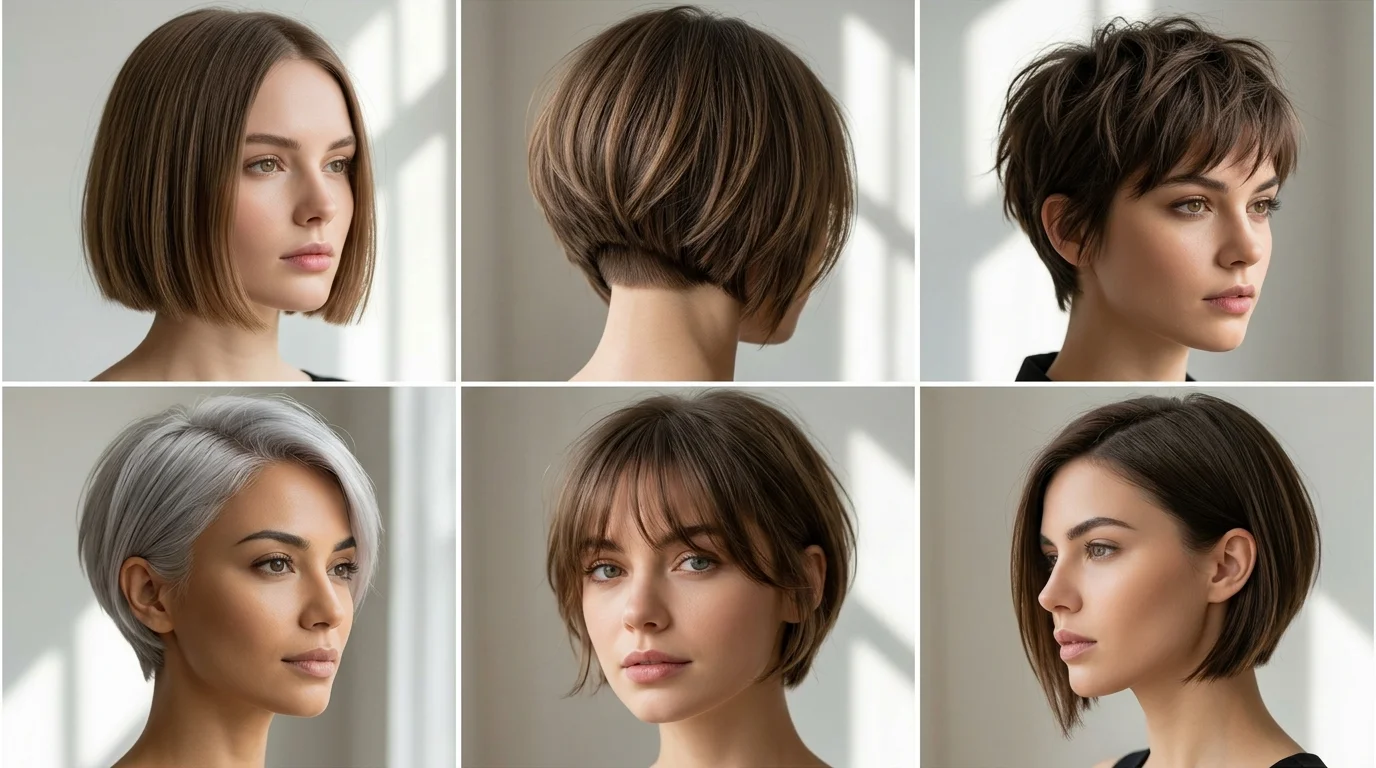
Instruct your stylist to cut a classic French bob that terminates precisely at the corner of the jawline, paired with subtle eyebrow-skimming bangs. The back perimeter should feature a subtle two-degree bevel cut from underneath, which forces the exterior strands to tuck inward naturally.
When picking haircuts for fine thin hair oval face frames support best, keep layers away from the surface canopy. Dry your fringe forward until it is about 90% dry at the root, moving your fingers side to side to eliminate parting splits. Spritz a dry mineral spray beneath the crown canopy to lift the upper strands, creating horizontal width that balances facial length.
High Porosity Strands Past the Shoulders: The Dense One-Length Perimeter
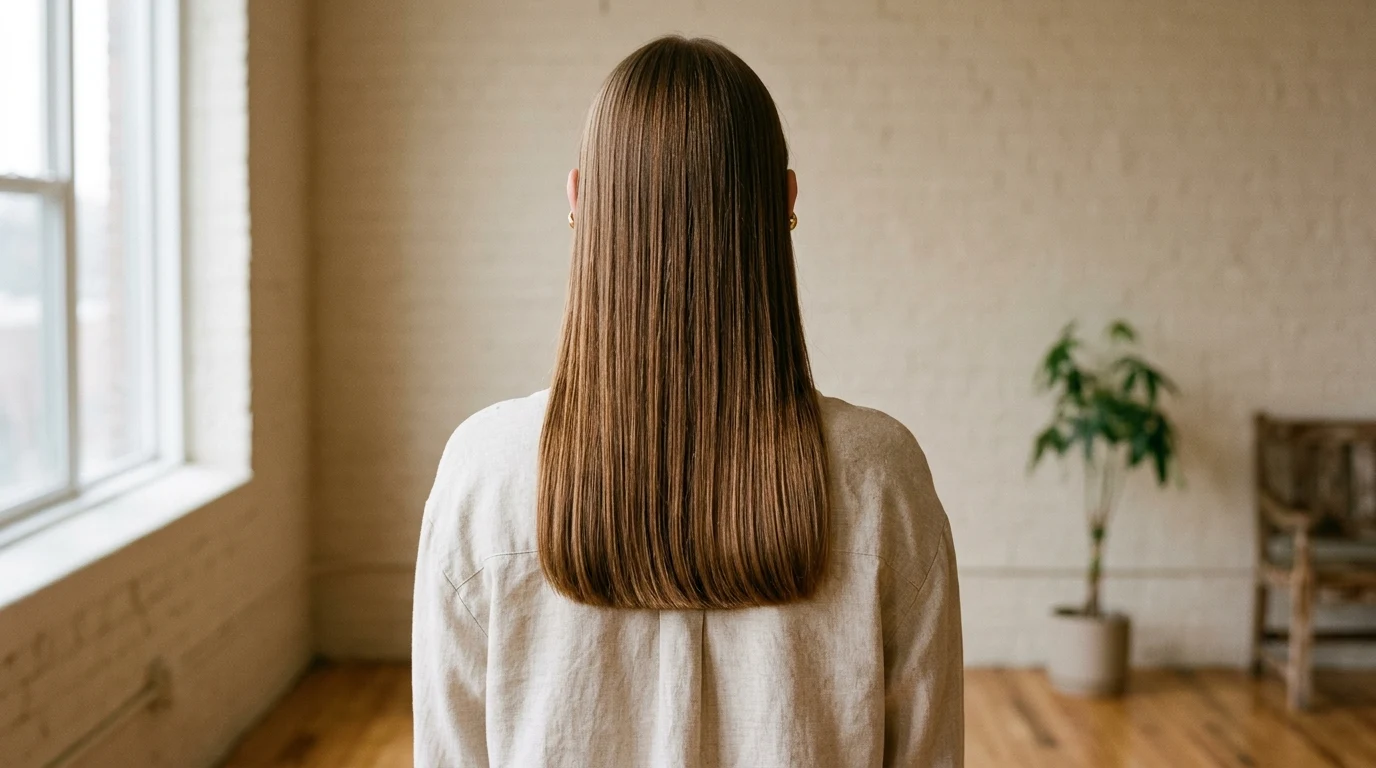
Long fine hair easily develops translucent, see-through ends that make the entire style appear stringy. This method serves women committed to keeping their length down to the shoulder blades without looking wispy. It is completely unsuitable for hair that has snapped off from severe bleach damage, which requires cutting away split ends.
Your stylist must cut a solid horizontal line across the back with zero elevation, keeping the comb flat against your shoulder blades. Any lifting of the hair during cutting creates unwanted beveling that weakens the baseline.
Choosing a haircut for fine thin hair long options provide requires strict maintenance. Book a dust trim every 6 to 8 weeks to remove frayed tips before they split upward into the shaft. Avoid using round barrel curling irons, which thin out ends; instead, set large Velcro rollers on dry crown sections for ten minutes to generate body while leaving the blunt bottom edge thick and dense.
Square Jawlines Demanding Softness: The Graduated Collarbone Cut

Prominent angular jaws clash with severe blunt bobs, accentuating harsh bone angles while emphasizing thin roots. This cut is designed for square-jawed women who need soft movement around the face while maintaining a solid base behind the neck. It does not work on curly type 3 hair, as the graduation shrinks into a wedge.
Request an A-line lob where the back sits at the nape and angles gently downward toward the collarbone. The front edges should be point-cut at a forty-five-degree angle to soften the corners near the chin.
Stylists should cut subtle internal layers through the occipital zone to encourage root lift without thinning out the exterior perimeter. Work a dollop of featherlight mousse through mid-lengths before blow-drying. Wrap two-inch sections around a medium ceramic brush, blast with warm air for eight seconds, and let the hair cool completely in your palm before letting it drop.
Receding Temples and Frontal Thinning: The Textured Curtain Fringe Lob
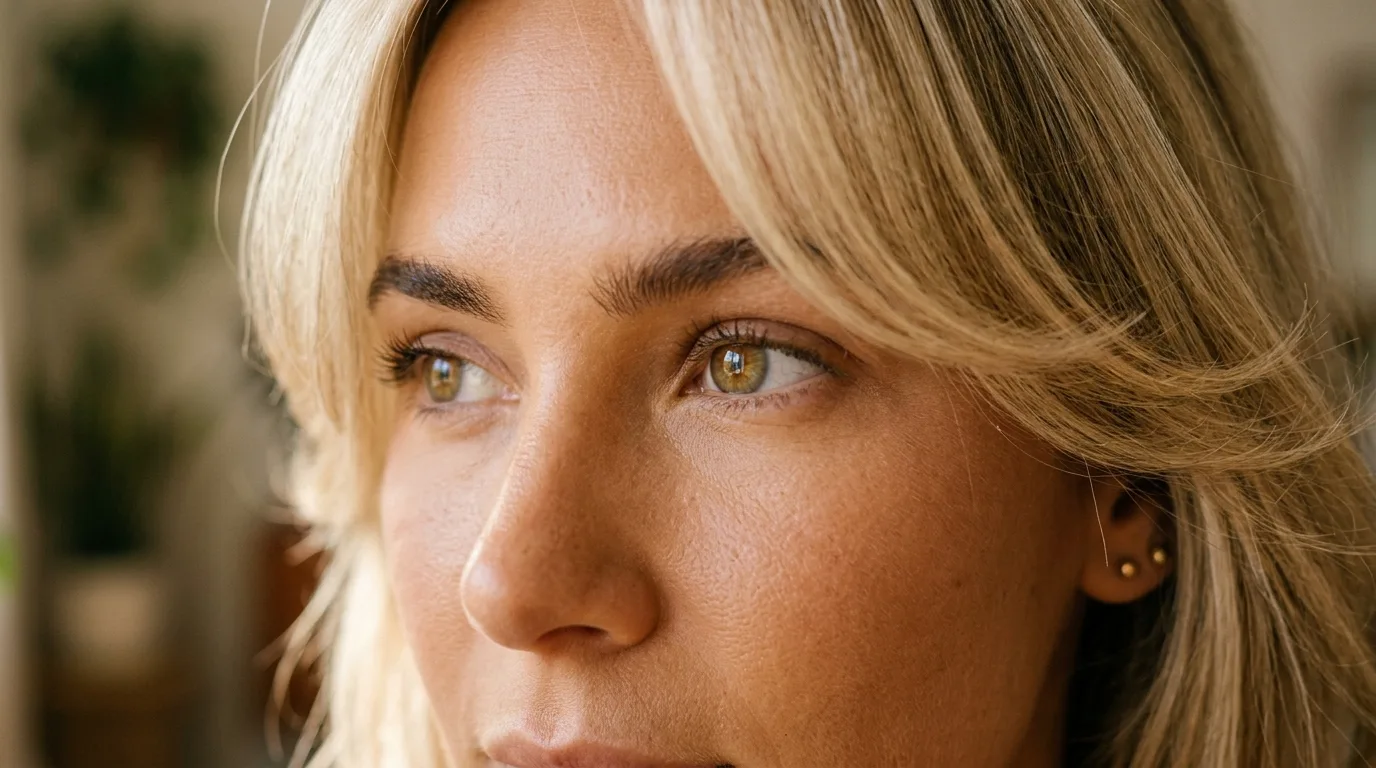
Hairline recession along the front temples leaves visible gaps that standard center parts make worse. This solution serves women experiencing frontal thinning who want to camouflage sparse corners without committing to full, heavy bangs. It fails on oily foreheads unless the wearer washes their fringe daily.
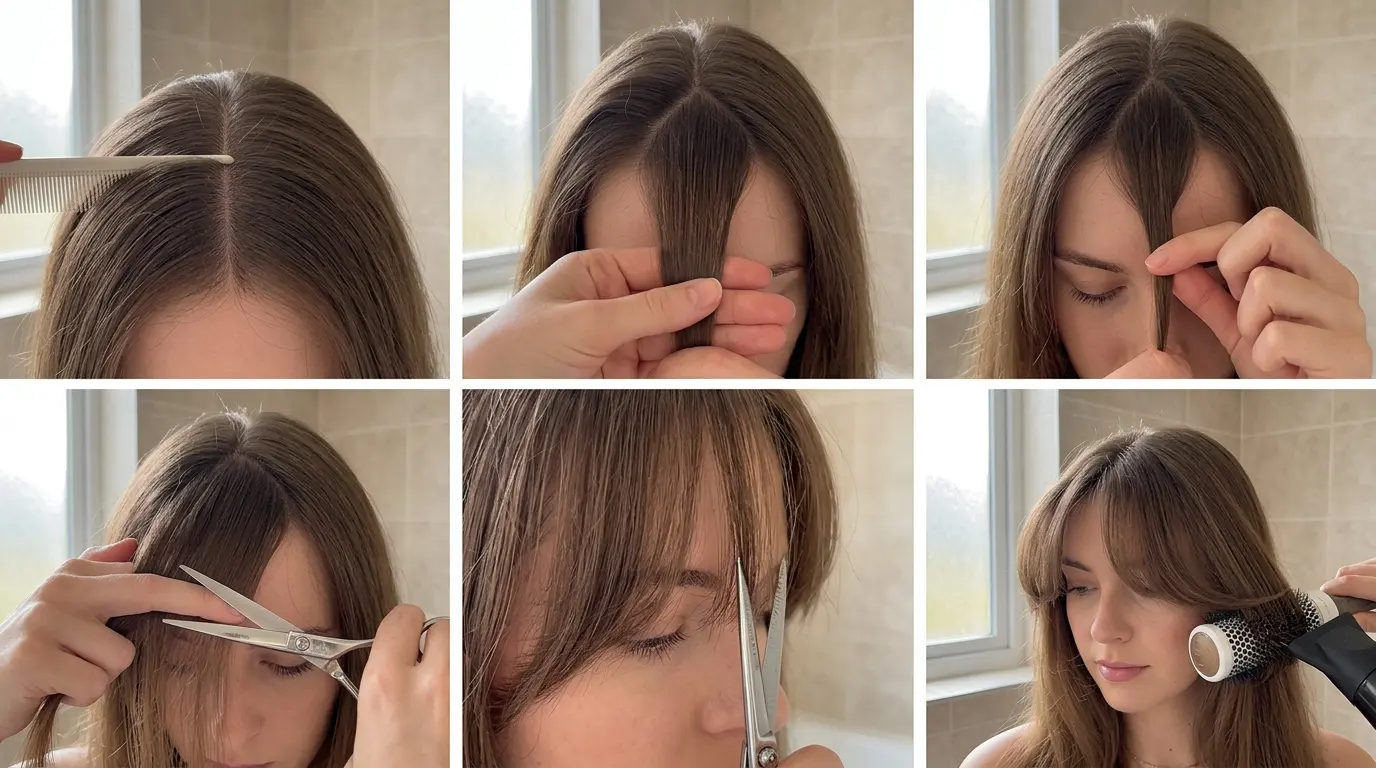
Have your stylist section a shallow triangle from the high point of your head down to the outer arch of your brows. Cut curtain bangs starting at the bridge of the nose and curving down to graze the cheekbones, leaving the perimeter of your bob blunt at the base of the neck.
When styling haircuts for fine thin hair with bangs, dry the fringe forward using a small boar bristle brush. Once the roots are 90% dry, sweep them backward away from the face to create a soft, arched curtain. This physical barrier conceals recession zones while redirecting the eye toward your cheekbones.
Mature Thinning Strands: The Stacked Nape Wedge
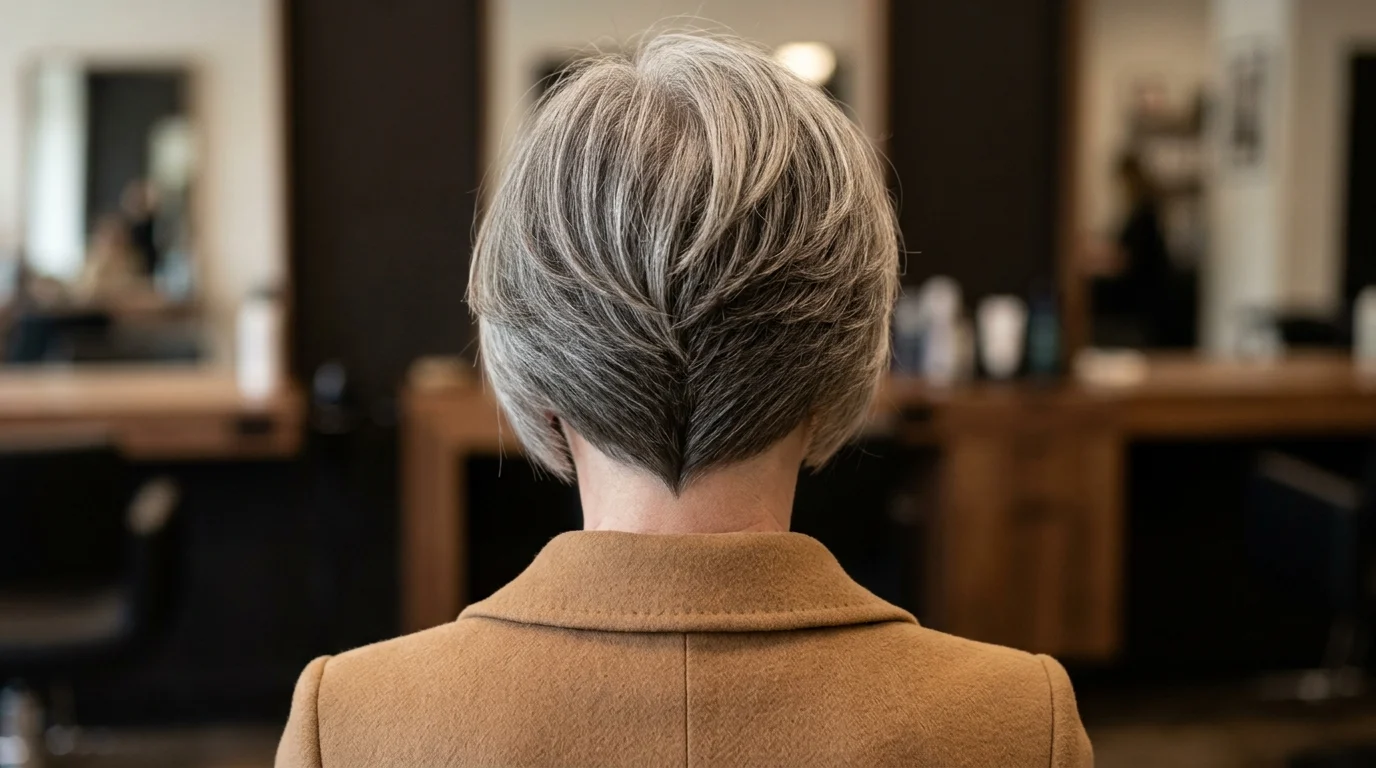
Hormonal shifts reduce strand counts per square centimeter, leaving the back crown exposed and flat. This architectural wedge serves women in their fifties who want maximum volume across the crown without daily curling iron marathons. It will not suit anyone who wants to tie their hair back into a functional ponytail.
Your cutter should establish a tight, clipper-tapered baseline at the nape, building graduated forty-five-degree elevation upward toward the crown. This creates a dense structural shelf that physically props up the finer, longer strands falling over the top.
Selecting a haircut for fine thin hair over 50 requires attention to structural mechanics rather than surface feathering. Apply a pump of root-lifting foam directly to damp roots at the crown. Direct your blow-dryer upward from the nape using a vented skeleton brush, setting the root cuticle in an upright posture for fullness that lasts through the day.
Advanced Age with Delicate Gray Follicles: The Cropped Pixie
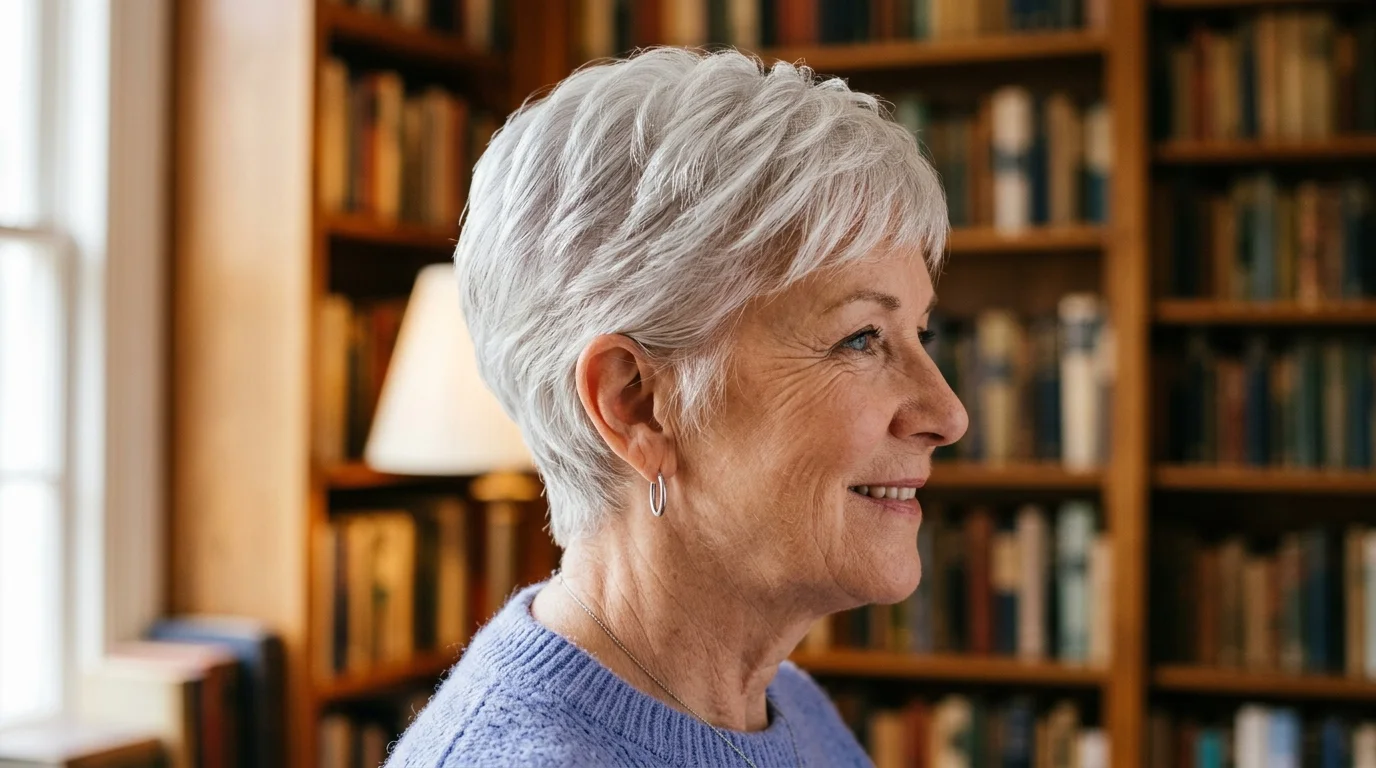
Gray hair often emerges with erratic wiry patches mixed with baby-fine strands, creating a fuzzy, hollow appearance when grown out. This classic crop suits women in their seventies who need an easy, wash-and-wear silhouette that brightens facial features. It is a poor choice for anyone with prominent scalp sensitivity to sun exposure.
Instruct your barber or stylist to use shears over comb along the neck and around the ears, leaving two inches of length through the top crown. Avoid razor cutting entirely, as razor blades fray brittle gray cuticles and cause surface fuzz.
These specialized haircuts for fine thin hair over 70 focus on preserving follicle integrity. Massage three drops of squalane oil across your palms and smooth over the top to tame wiry silver strands without weighing down the fine gray hairs underneath. Maintenance is effortless: shampoo with a violet toning bar every third wash and schedule a cleanup every five weeks.
Narrow Rectangular Face Shapes: The Shattered Bob with Face Framing

Long, narrow faces look pinched when hair hangs straight and flat against the ears. This style is built for women who need horizontal fullness across the cheek line without thinning out their ends. It will not work on hair with extreme oiliness, as day-two grease will plaster the layers to the skin.
Ask for a blunt bob hitting mid-neck, combined with shattered horizontal layering placed solely between the eye line and the jawline. The perimeter stays thick, while the side layers expand outward during movement.
To wear this haircut for fine thin hair medium length enthusiasts appreciate, rough-dry strands with your head tilted sideways to break the natural fall. Use a flat iron on low heat to add a gentle bend at cheekbone level, flicking the hair slightly outward. The horizontal flick widens the visual appearance of your face while giving the illusion of double your natural hair mass.
Sparse Crowns with Diffuse Hair Loss: The Tapered Boyish Crop
Diffuse thinning across the top makes traditional parts widen into broad expanses of visible scalp. This short, tailored cut belongs to women experiencing all-over density loss who want to eliminate parting lines entirely. Skip this if you are uncomfortable exposing your forehead and ears.
The back and sides should be clipped tight using a number three guard, blending cleanly into a two-inch layered top. The cut must be designed to be styled forward from the crown whorl rather than parted to the side.
Among short haircuts for fine thinning hair, this forward-swept crop provides the most reliable scalp coverage. Disperse a pinch of silica-based volumizing powder through the crown. Use dry fingers to rake the hair forward toward the brows, creating a piecey, modern texture that covers thinning zones without relying on heavy styling gels or hairsprays.
Extreme Fine-Grained Texture: The Micro-Bob at the Lip Line
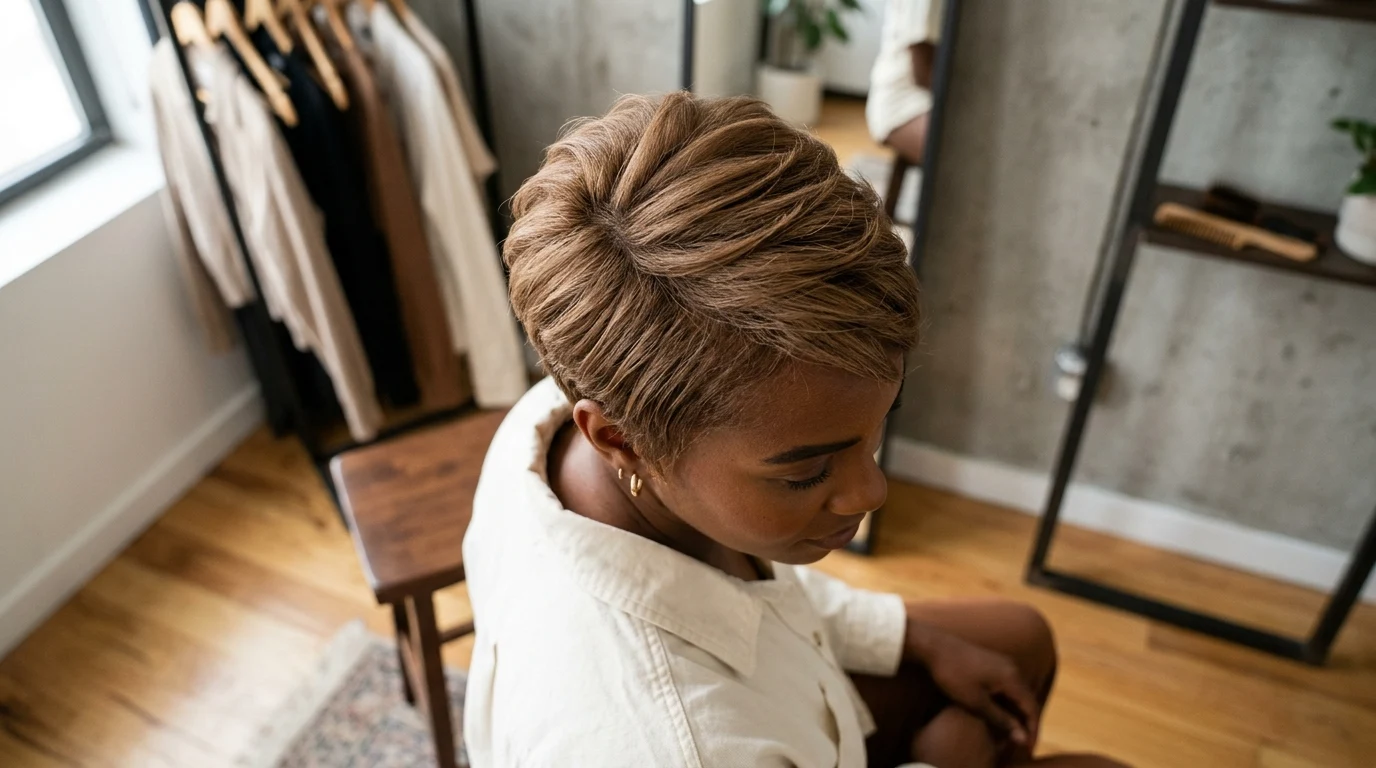
Ultra-fine strands lack a continuous internal medulla, meaning they behave like spun silk and collapse under their own length. This cut serves women with baby-soft, slippery hair that slips out of pins and goes limp by noon. It fails on round jaws or short necks, where the blunt lip line feels restrictive.
Your stylist must cut the hair dry in its natural resting state, establishing a level perimeter exactly parallel to the lower lip line. The perimeter must be cut using point-cutting with the shear tips angled at ninety degrees to avoid harsh chop marks.
When dealing with haircuts for extremely fine thin hair, weight is the enemy. Skip heavy conditioners in the shower; instead, use a lightweight leave-in spray on the ends. Blow-dry using fingers alone on medium heat. The short length allows the featherweight strands to rebound against gravity, creating immediate natural volume.
Severe Genetic Thinning Across the Part: The Deep Side Part Pixie

Severe thinning concentrated along the central vertex leaves the scalp bare under direct overhead light. This directional cut is tailored for women who need to redistribute remaining density from one side of the head over a sparse crown. It is unsuitable for individuals with symmetrical receding hairlines on both temples.
Cut the back and sides short, leaving three to four inches of length on one side of the top. Create a deep lateral part starting above the outer tail of the eyebrow, sweeping all available hair across the sparse central zone.
This targeted haircut for fine thinning hair shifts the weight distribution across the head. Apply an alcohol-free volumizing mousse to the base of the deep part. Dry the hair with airflow pushing against the growth direction to lift the root follicle upward before sweeping it flat over the crown to conceal thinning areas.
Wavy Fine Hair Prone to Clumping: The Deconstructed Shag
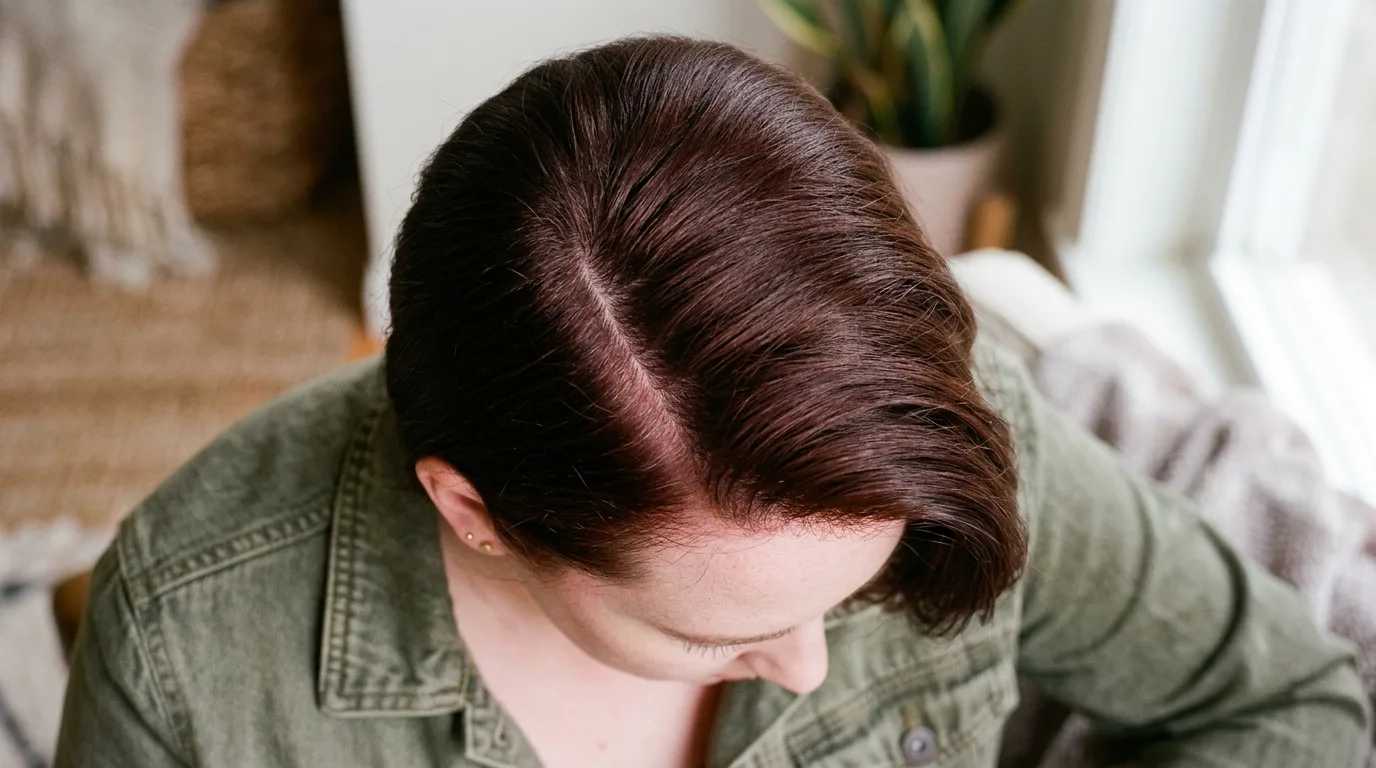
Fine hair with a slight wave often looks sparse because waves clump together, revealing broad patches of scalp beneath them. This cut is designed for type 2A and 2B waves that need separation and crown lift without losing their bottom edge. It does not work on bone-straight hair, which hangs like limp ribbons when shaggy layers are cut.
Ask for a modern soft shag featuring disconnected interior layers and feathered cheek-skimming pieces, keeping the bottom perimeter at collarbone level. The interior layers break apart the wave clumps, spreading the strands across a broader surface area.
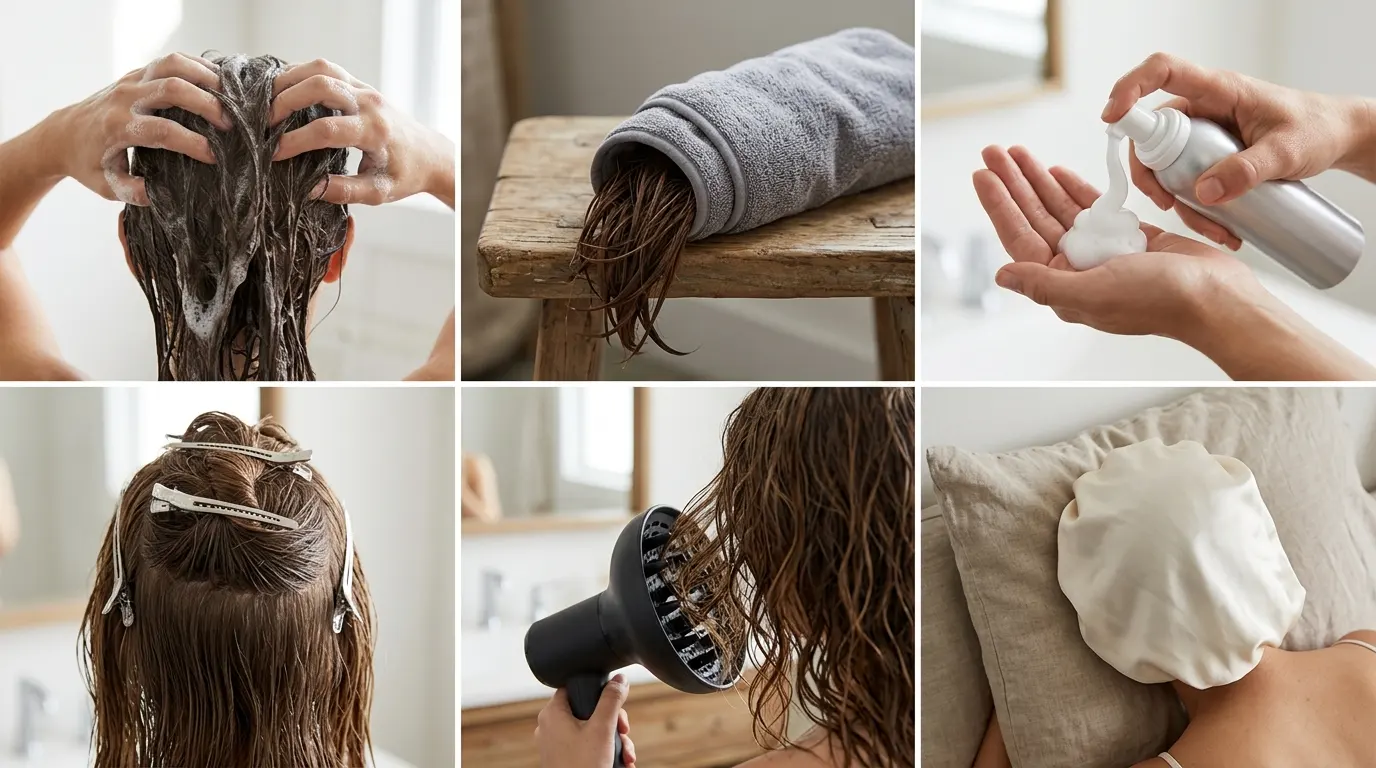
Distribute a nickel-sized puddle of lightweight curl foam through damp mid-lengths. Scrunch with a microfiber towel to remove moisture, then air-dry completely. The dispersed layers bounce upward independently, creating the impression of thick, active volume across the crown and temples.
Heart-Shaped Faces with Narrow Chins: The Chin-Length French Bevel

Heart-shaped faces possess wide foreheads and delicate, pointed chins, which causes top-heavy styles to make the jaw look frail. This chin-length cut provides weight where the lower face needs it most while keeping the crown airy. It fails on women with prominent neck cords or broad lower jaws.
The hair should be cut to terminate precisely at the tip of the chin with a zero-elevation blunt baseline. Have the stylist snip minimal interior graduation into the bottom half-inch to encourage the ends to curve softly outward rather than curling under.
Blow-dry with a medium round wooden brush, rolling the ends outward at the jawline. This outward flick creates horizontal fullness right beside the narrow chin, balancing the broader upper forehead while keeping the fine strands clustered for maximum density.
| Hair Situation | Target Silhouette | Cutting Methodology | Primary Styling Tool | Critical Error to Avoid |
|---|---|---|---|---|
| Round Face Shape | Asymmetrical Lob | Dry blunt perimeter shear | Flat ceramic paddle brush | Feathering edges with thinning shears |
| Oval Face Shape | French Chin Bob | Under-beveled dry perimeter | Boar bristle fringe brush | Over-layering the surface canopy |
| Long High Porosity | Dense One-Length | Zero-elevation horizontal cut | Large Velcro crown rollers | Point-cutting into the bottom baseline |
| Square Jawline | Graduated A-Line | Soft 45-degree corner point | Ceramic round barrel brush | Cutting an unyielding blunt chin line |
| Frontal Recession | Curtain Fringe Lob | Shallow triangle face framing | Small round wooden brush | Center parts that split the hairline |
| Menopausal Thinning | Stacked Nape Wedge | 45-degree occipital graduation | Vented skeleton brush | Leaving long wisps down the back neck |
| Mature Gray Strands | Scissor Cropped Pixie | Shears over comb detailing | Pure squalane oil drops | Using thinning razors on gray cuticles |
| Rectangular Face | Shattered Mid Bob | Horizontal mid-shaft layering | Low-heat flat iron | Letting long straight hair drop flat |
| Diffuse Thinning | Forward Boyish Crop | Number three guard perimeter | Silica volumizing powder | Parting hair down the thinning center |
| Spun-Silk Fine Hair | Micro Lip-Line Bob | Dry precision point cutting | High-airflow hair dryer | Applying heavy conditioning masques |
| Part Line Thinning | Deep Side Part Pixie | Asymmetrical weight sweep | Alcohol-free root mousse | Maintaining an exposed center part |
| Clumping Fine Waves | Deconstructed Shag | Disconnected interior layers | Microfiber scrunch towel | Allowing waves to clump together |
| Heart-Shaped Face | French Chin Bevel | Outward beveled baseline | Medium round boar brush | Stacking excessive volume on top |
Choosing the Best Haircut for Fine Thin Hair
Choosing your haircut requires understanding how hair diameter and scalp density work together. Many women hope a single cut will magically double their hair strands, but real fullness is an optical effect created by crisp perimeters and smart graduation. When hair lacks individual strand thickness, blunt ends create a dense baseline that resists transparency.
Keep your maintenance schedule consistent. Getting regular trims every 6 to 8 weeks prevents fragile ends from splitting, which keeps the lower perimeter looking thick and solid. Avoid asking for heavy texturizing, which hollows out thin hair.
Instead, rely on clean lines, light styling mousses, and directional drying to build lasting lift. A well-constructed shape does the hard work for you, giving you consistent crown height and density every single day.
Frequently Asked Questions
Should I choose a blunt cut or a heavily layered style for thin hair?
Choose a blunt cut if your primary goal is making the bottom edge of your hair look thick, dense, and full. Opt for soft, restrained internal layers only if you have enough density to spare and need to remove weight to help the crown spring upward.
How do I choose between curtain bangs and a full blunt fringe?
Pick curtain bangs if you want to frame your cheekbones and have fine hair with low forehead density, as they blend into your side lengths without requiring much hair. Select a full blunt fringe only if you have a dense frontal hairline and want to hide forehead lines completely.
Does a short pixie or a shoulder-length bob provide more lift for older women?
A short pixie provides significantly more lift because short strands are light enough to resist gravity without collapsing under their own weight. A bob offers classic framing around the jaw, but fine hair will eventually drag the crown flat as it grows past the chin.
Should I choose a razor cut or a shear cut for my fine strands?
Choose a shear cut performed with high-end Japanese steel blades to keep the cuticle ends sealed and clean. Avoid razor cuts entirely on fine or thinning hair, as the scraping motion frays fragile cuticles, leading to split ends and a fuzzy perimeter.
How do I decide whether to cut my fine hair short or keep it long?
Choose a short style if you can see through your hair ends when standing in front of a window or light source. Keep your length at the collarbone or below only if your baseline remains solid and opaque from the nape down to the tips.
The Clear Direction for Thin Strands
If you are standing before your bathroom mirror trying to make a final decision, choose the blunt chin-length bob. It is the most forgiving haircut for fine hair, instantly cutting away ragged ends while establishing a thick, opaque baseline that supports your jawline. Book your stylist, tell them to leave the thinning shears in the drawer, and let a clean geometric perimeter do the work.
Disclaimer: Sudden, unexplained hair loss or localized bald spots should be evaluated by a board-certified dermatologist. Patch test any topical styling formulations on your forearm prior to scalp application.
Related reads: The Best Short Haircuts for Fine Thin Hair to Boost Volume, The Truth About Perms for Fine Hair Before and After Across 13 Hair Profiles and Diamond Face Shape Haircut Options That Balance Sharp Features.