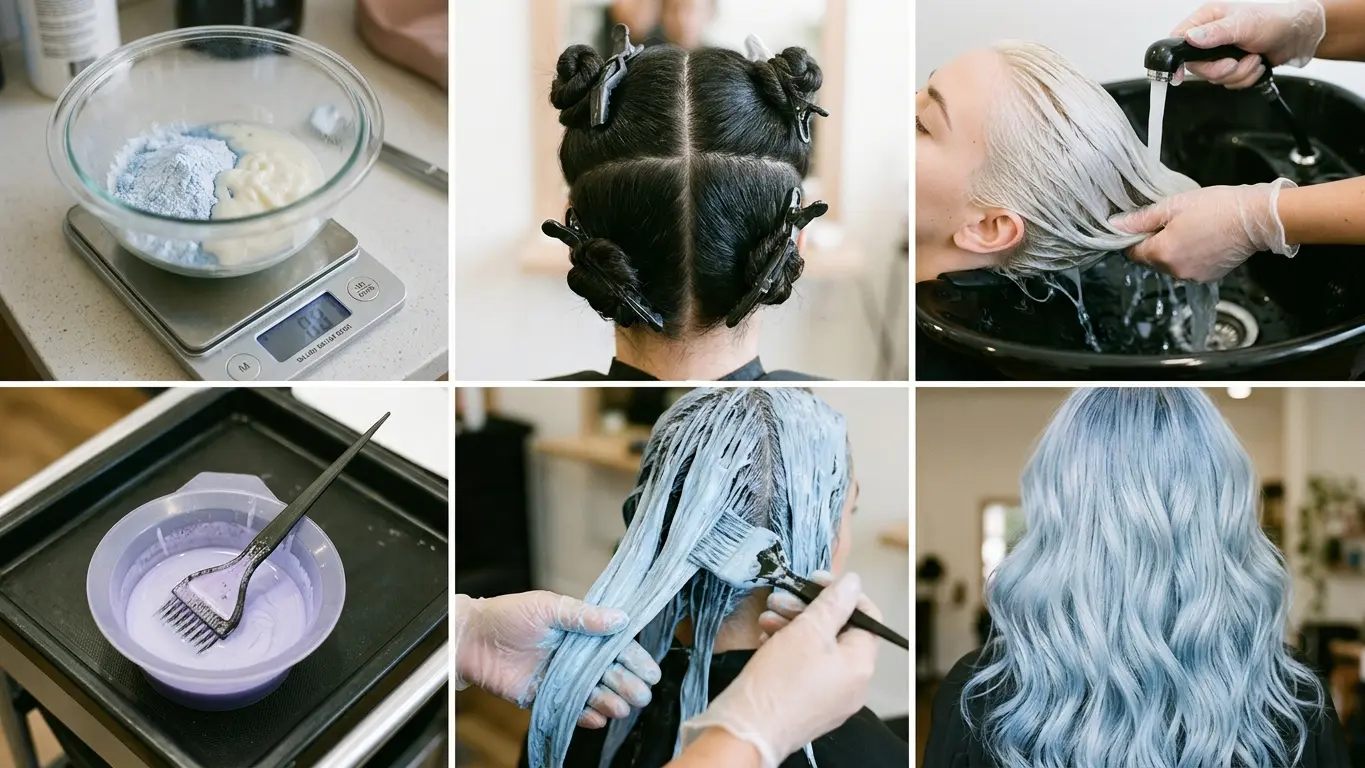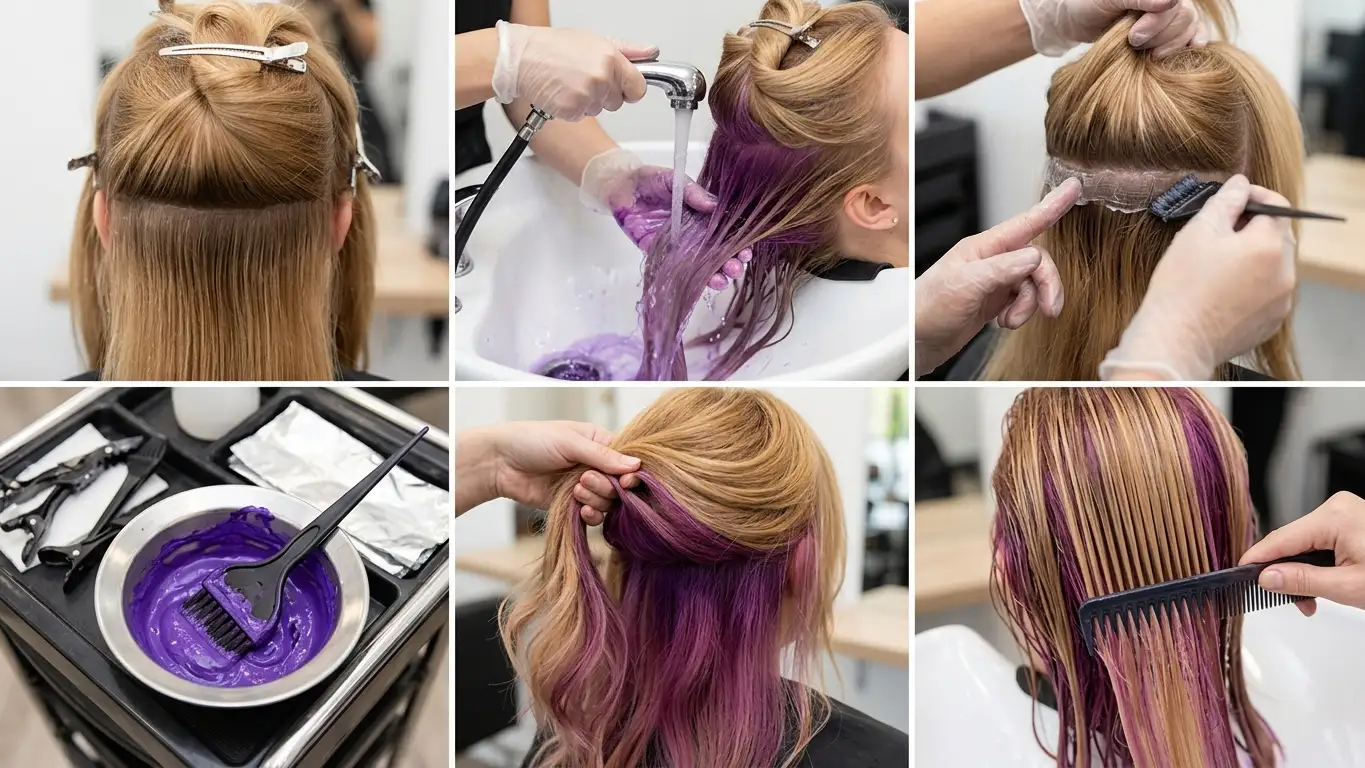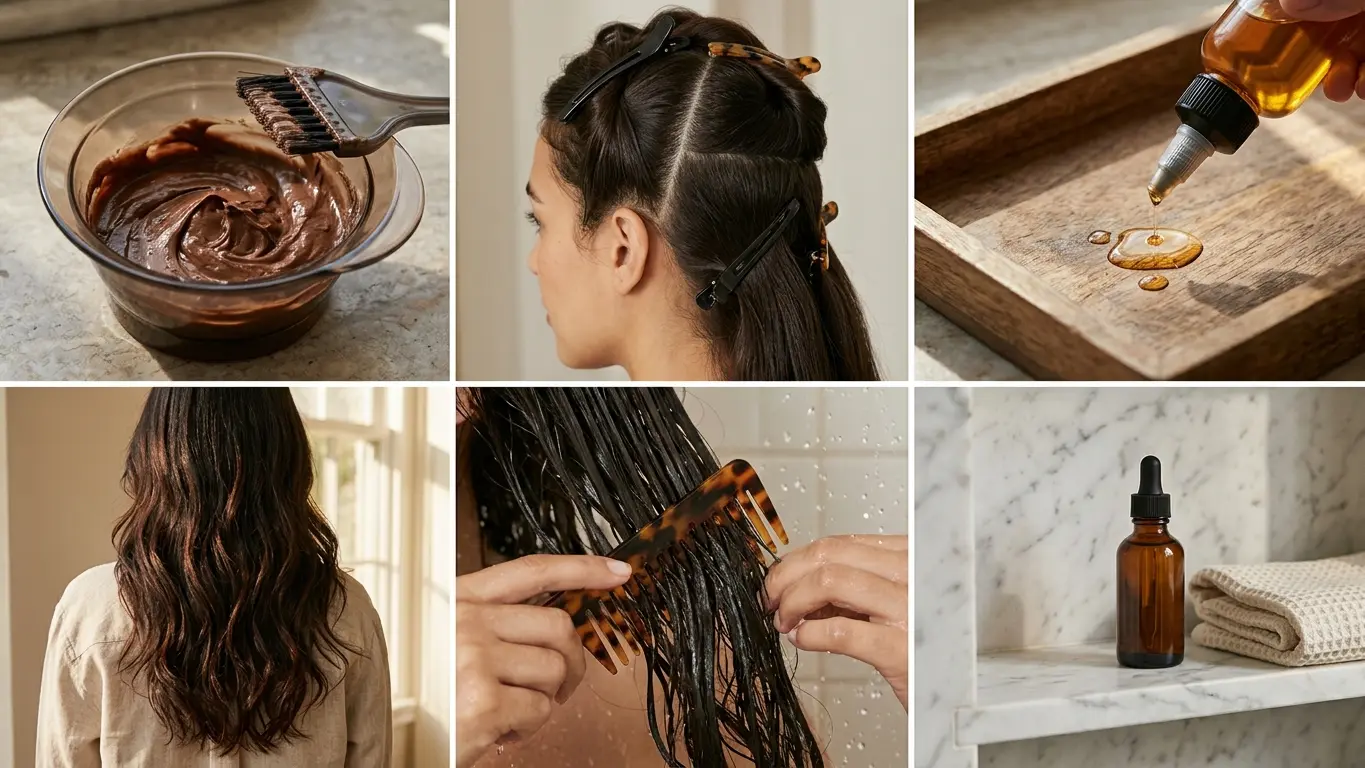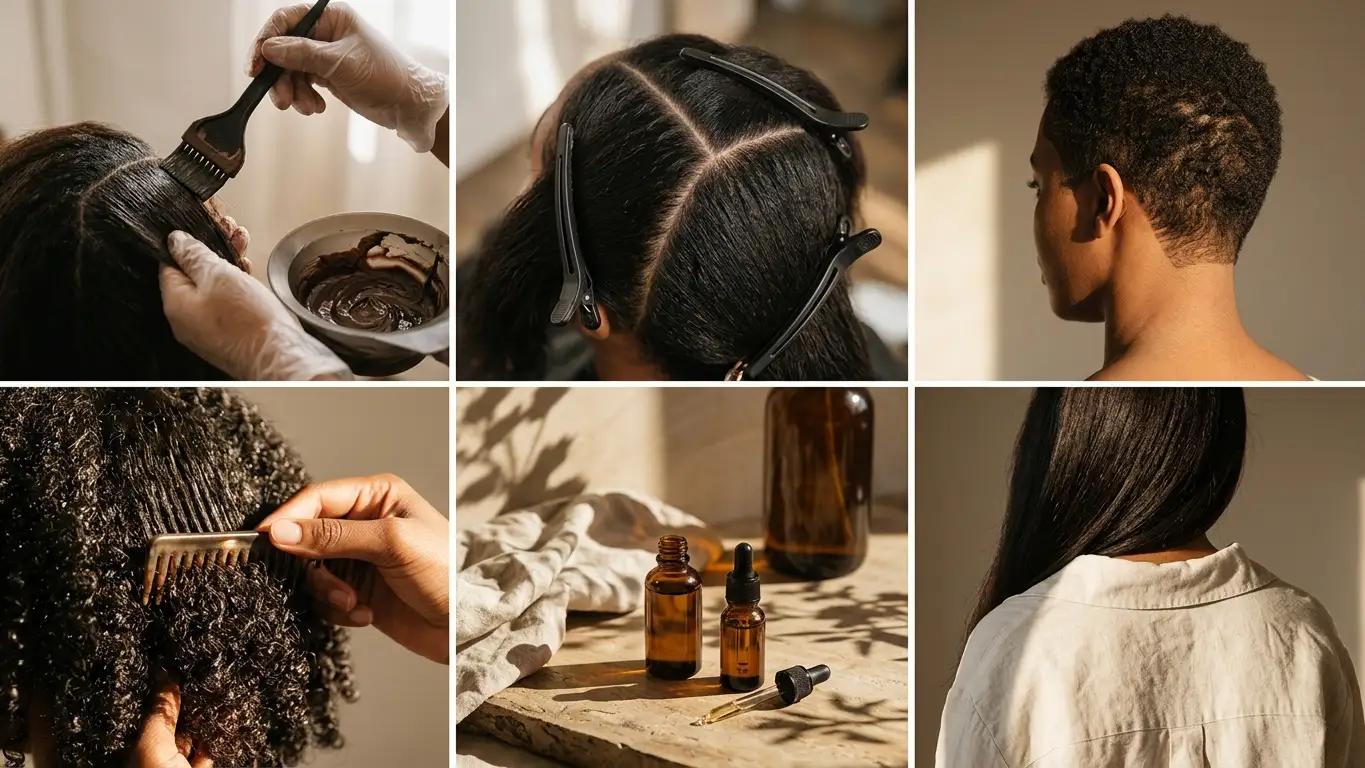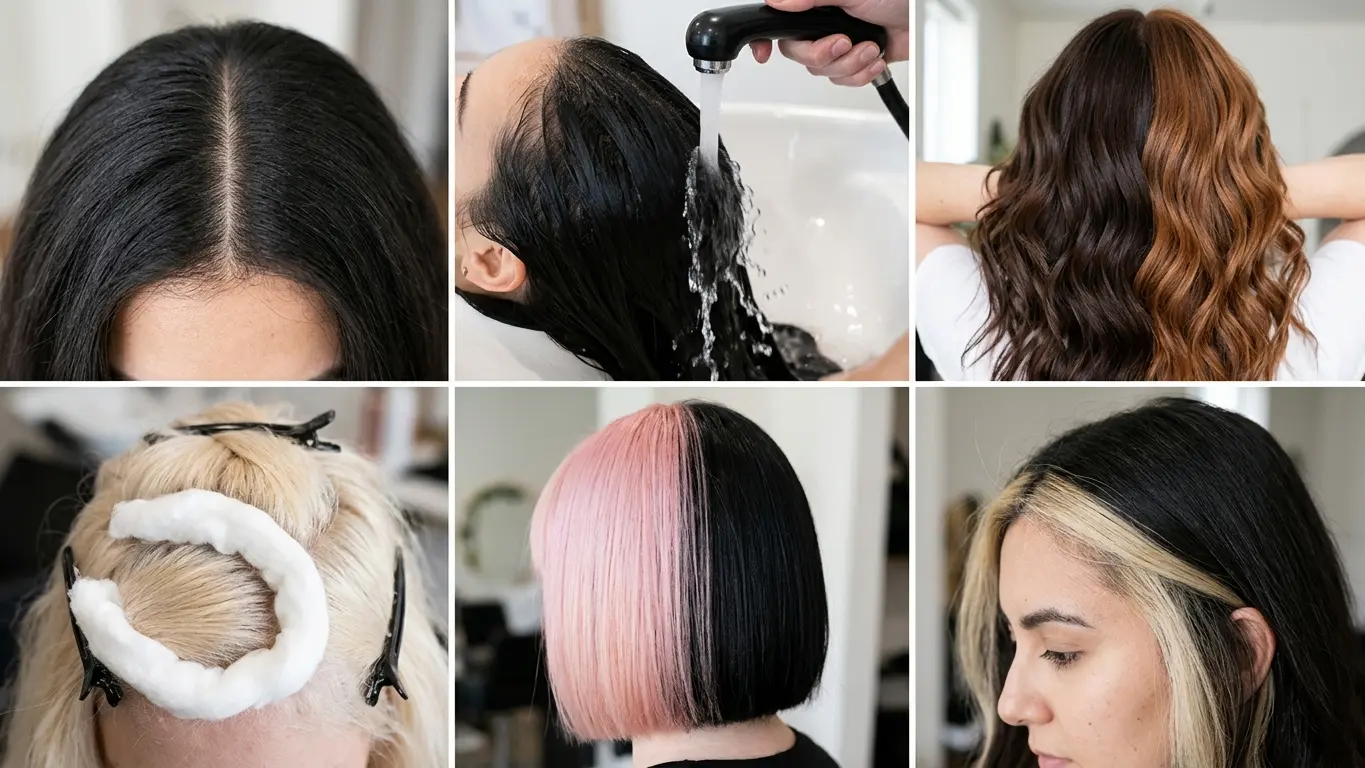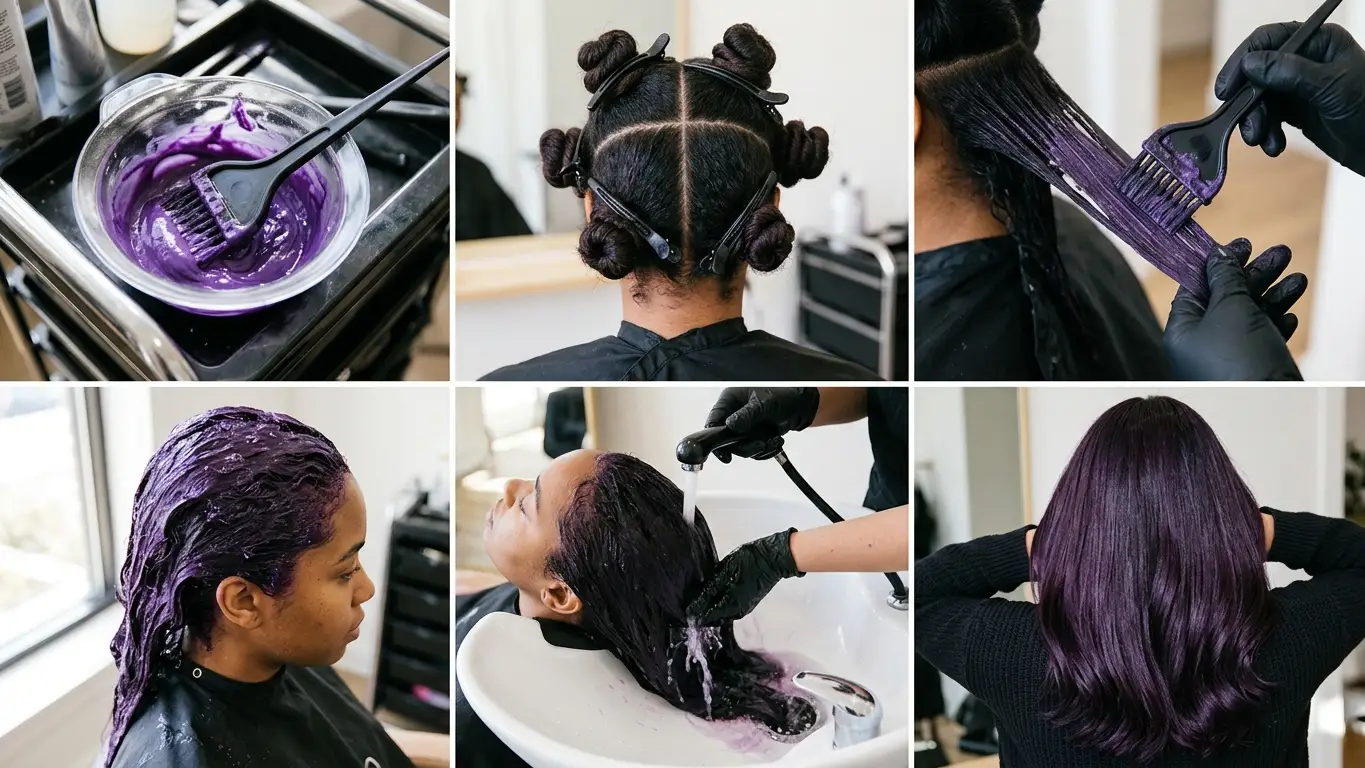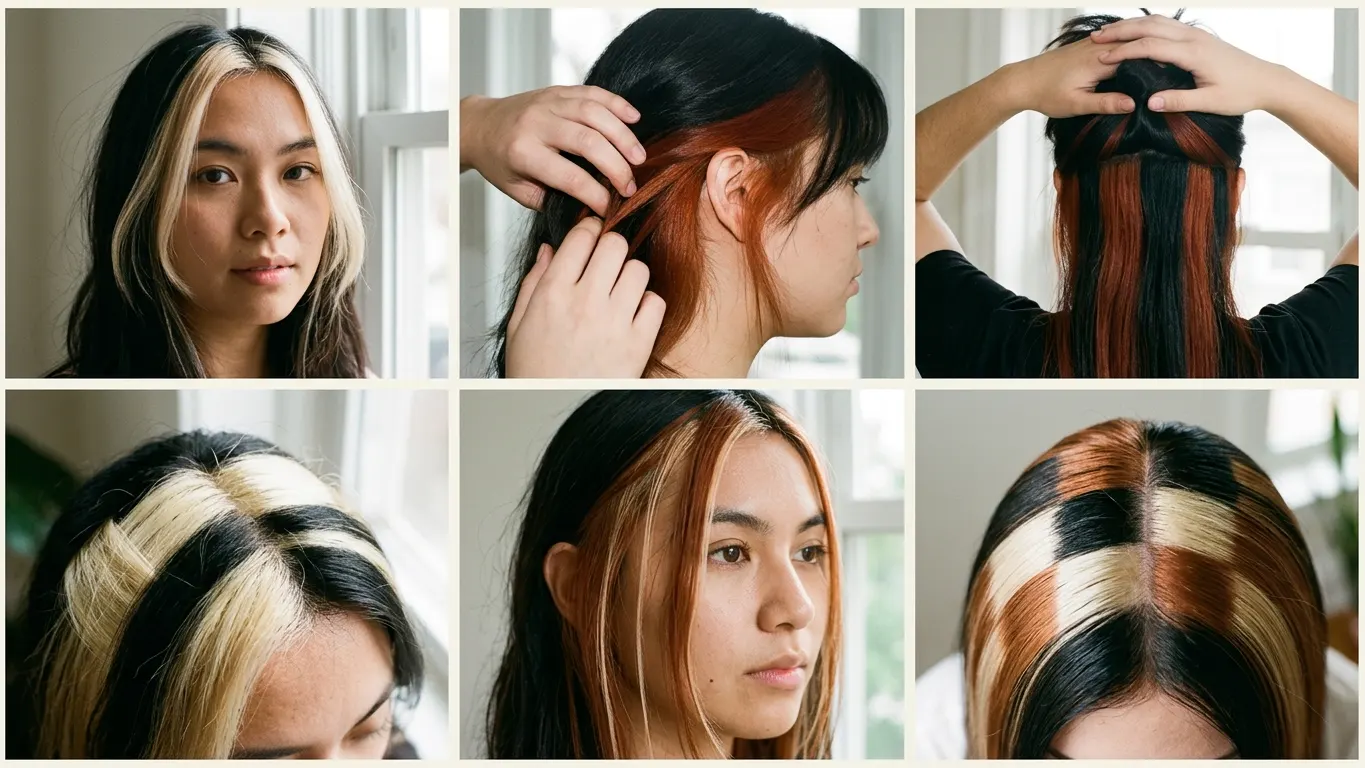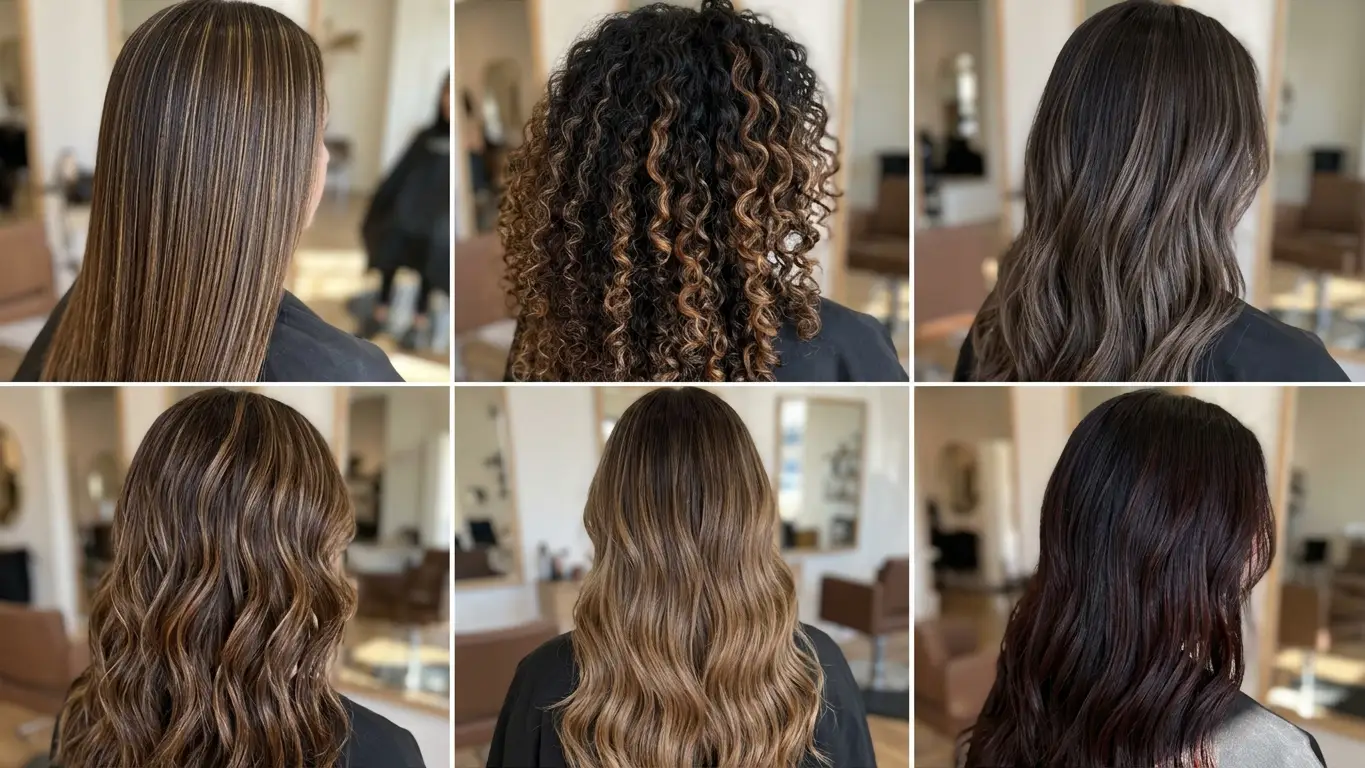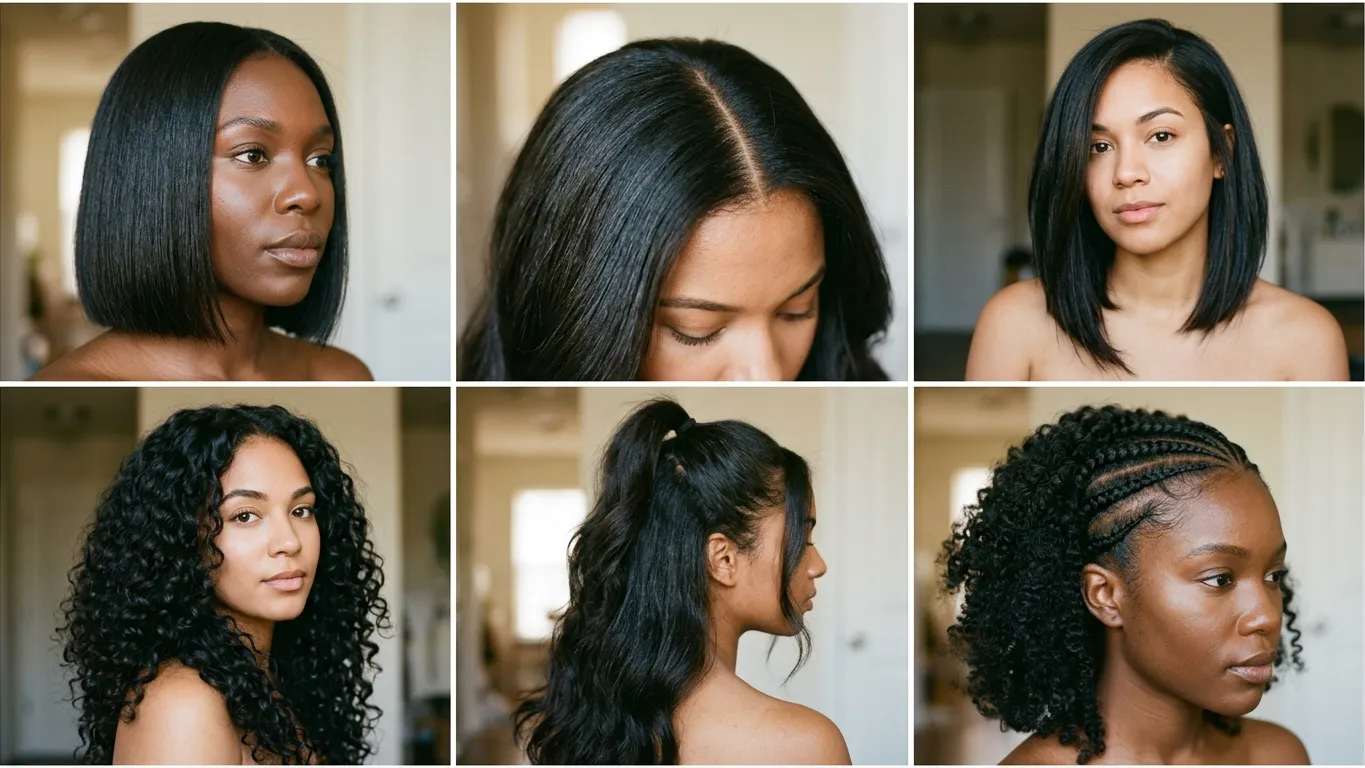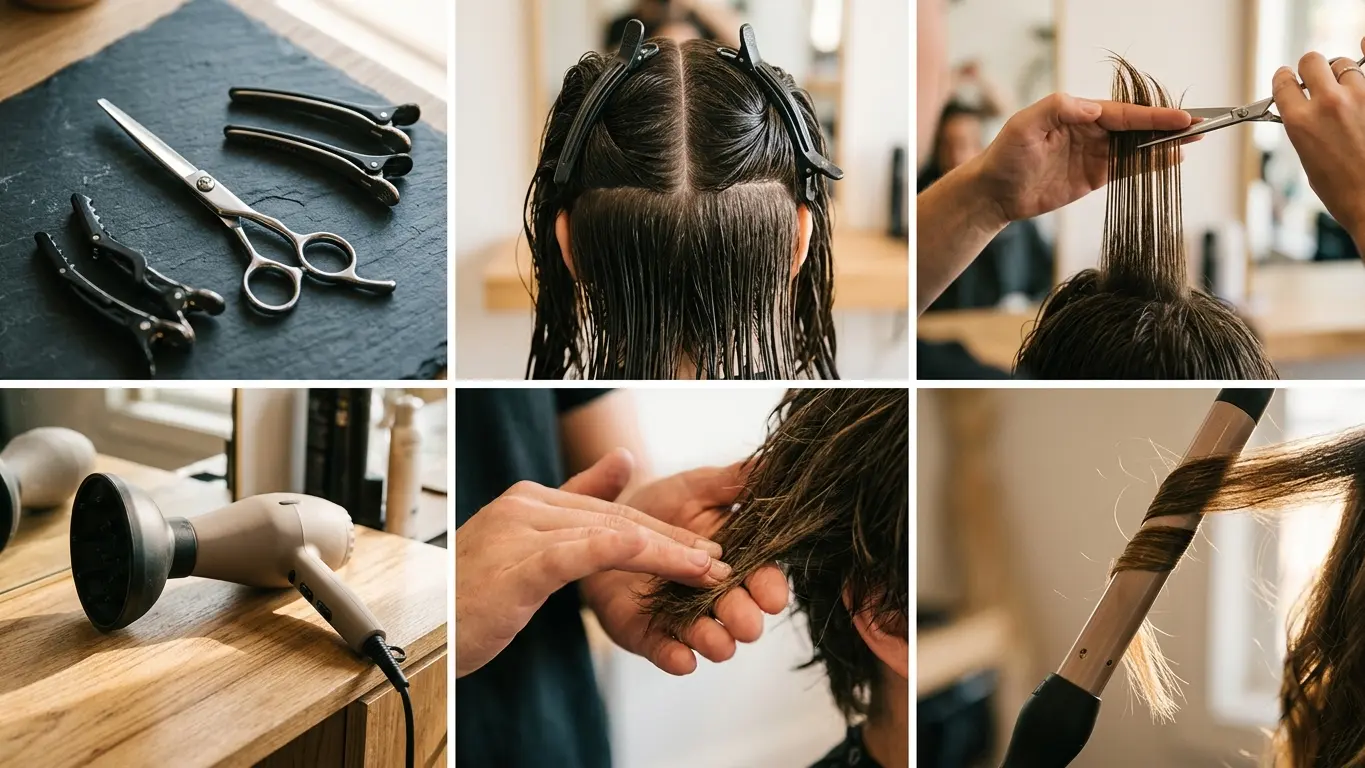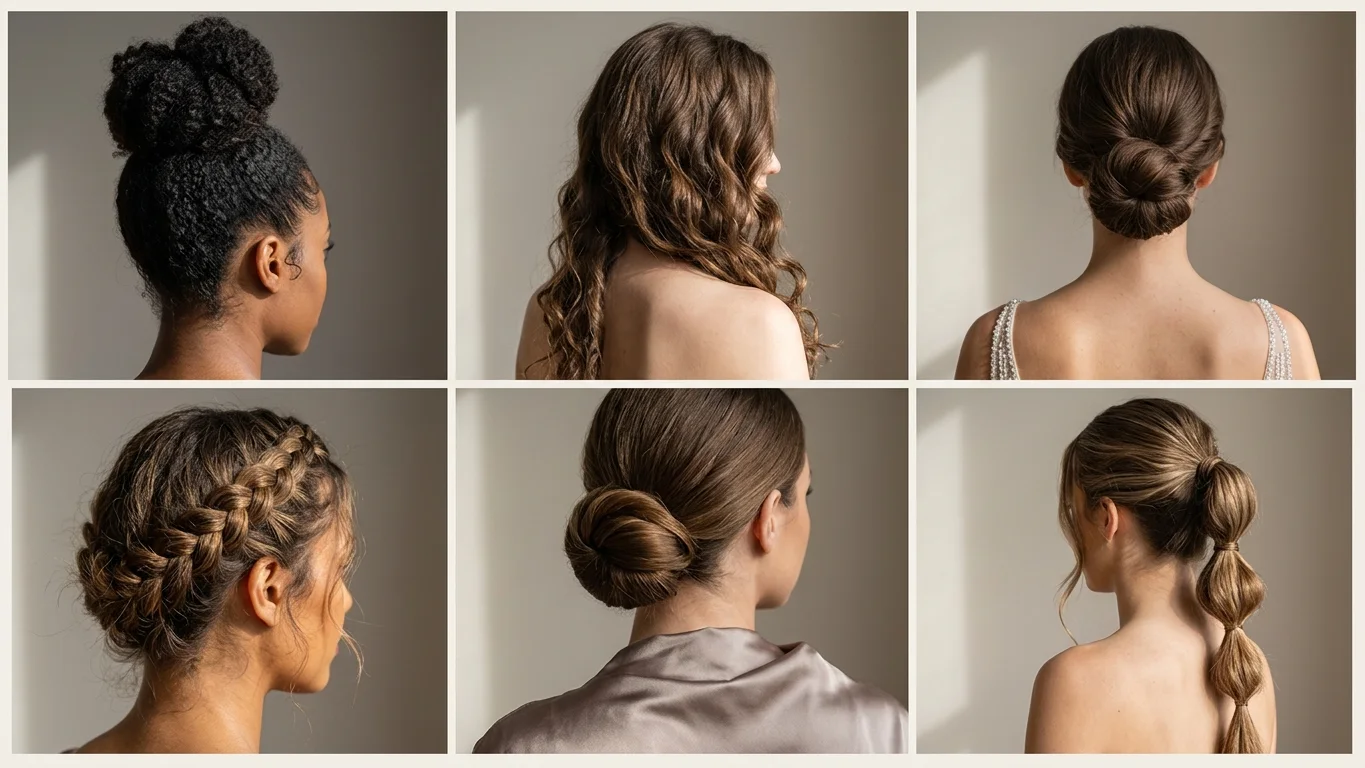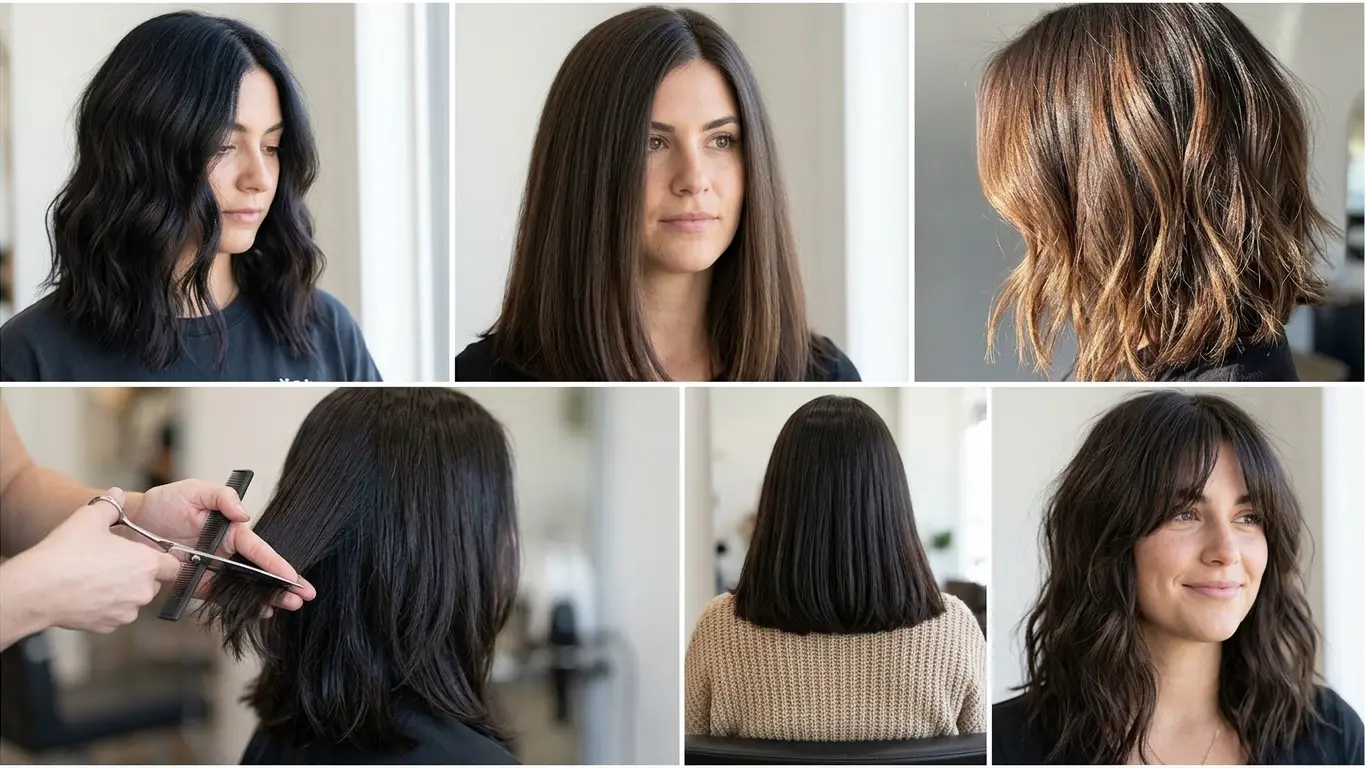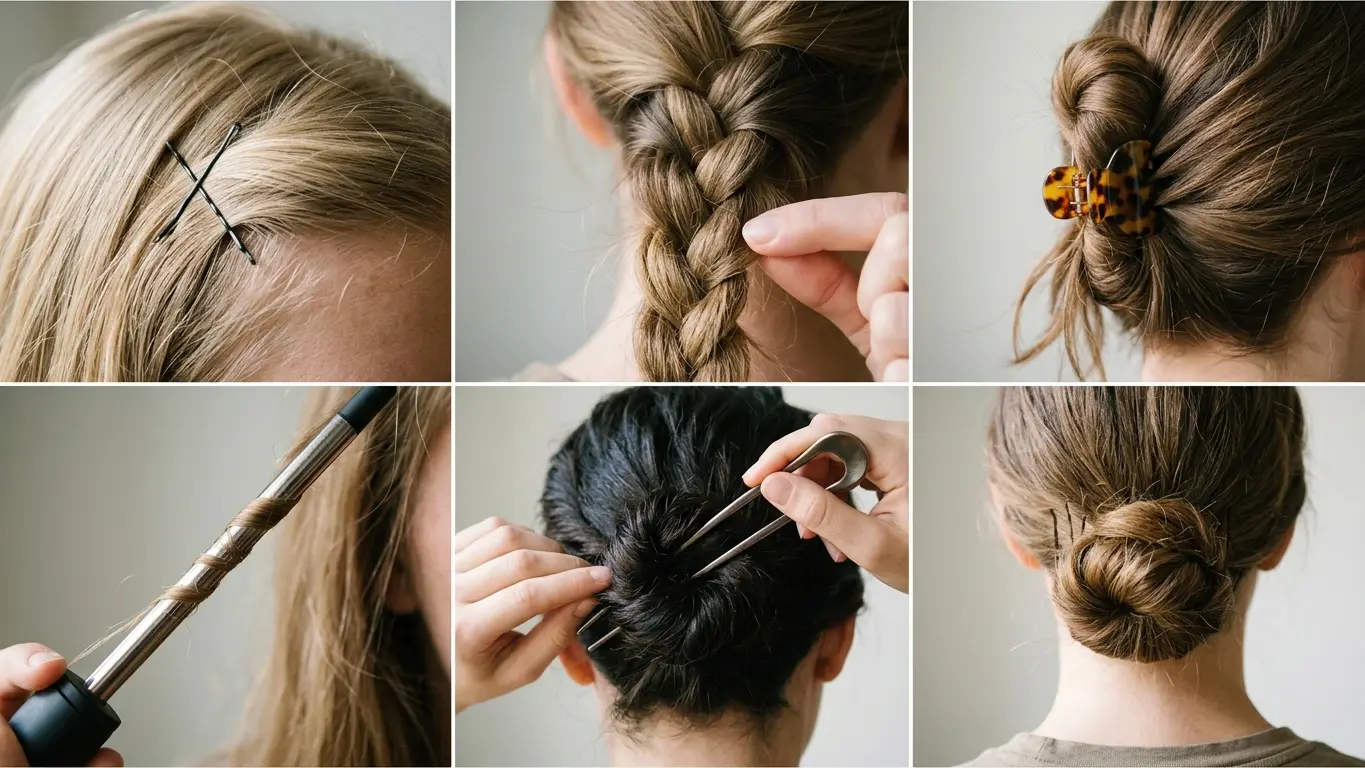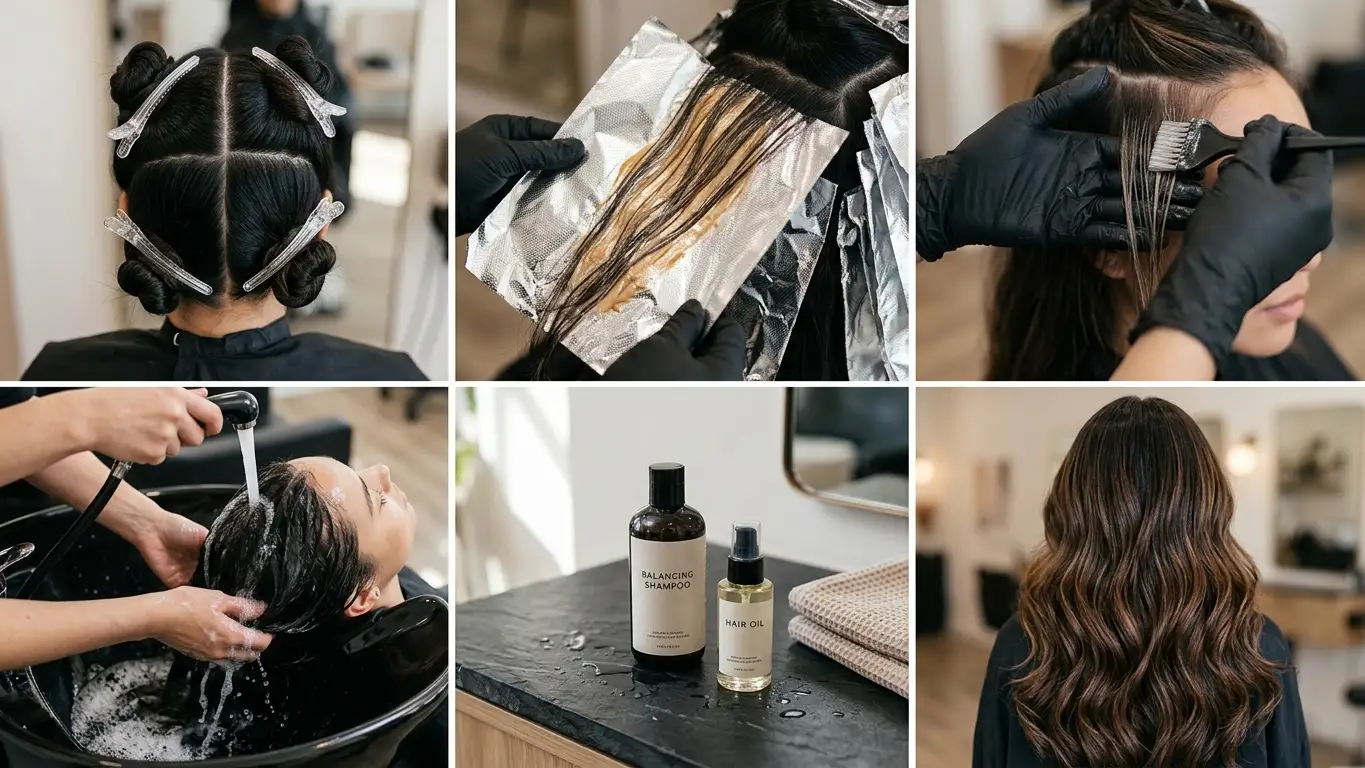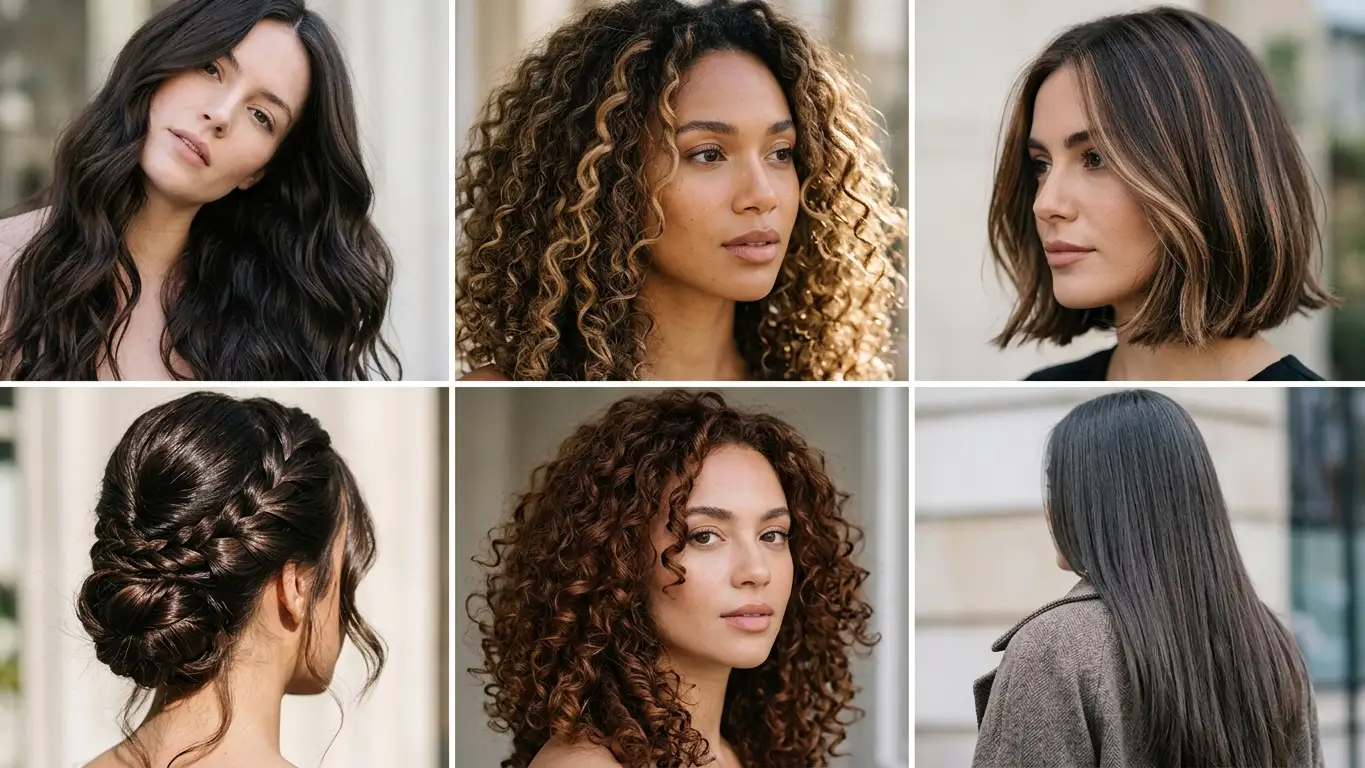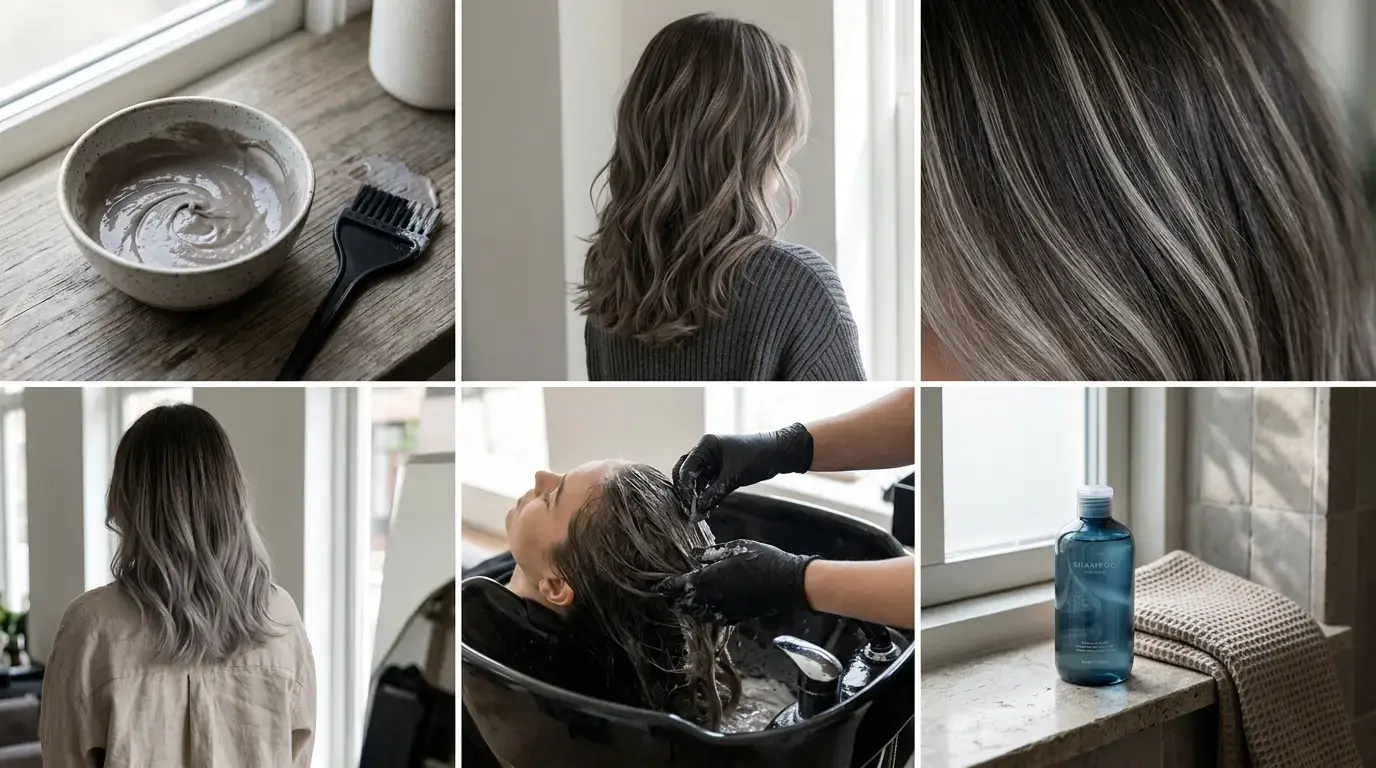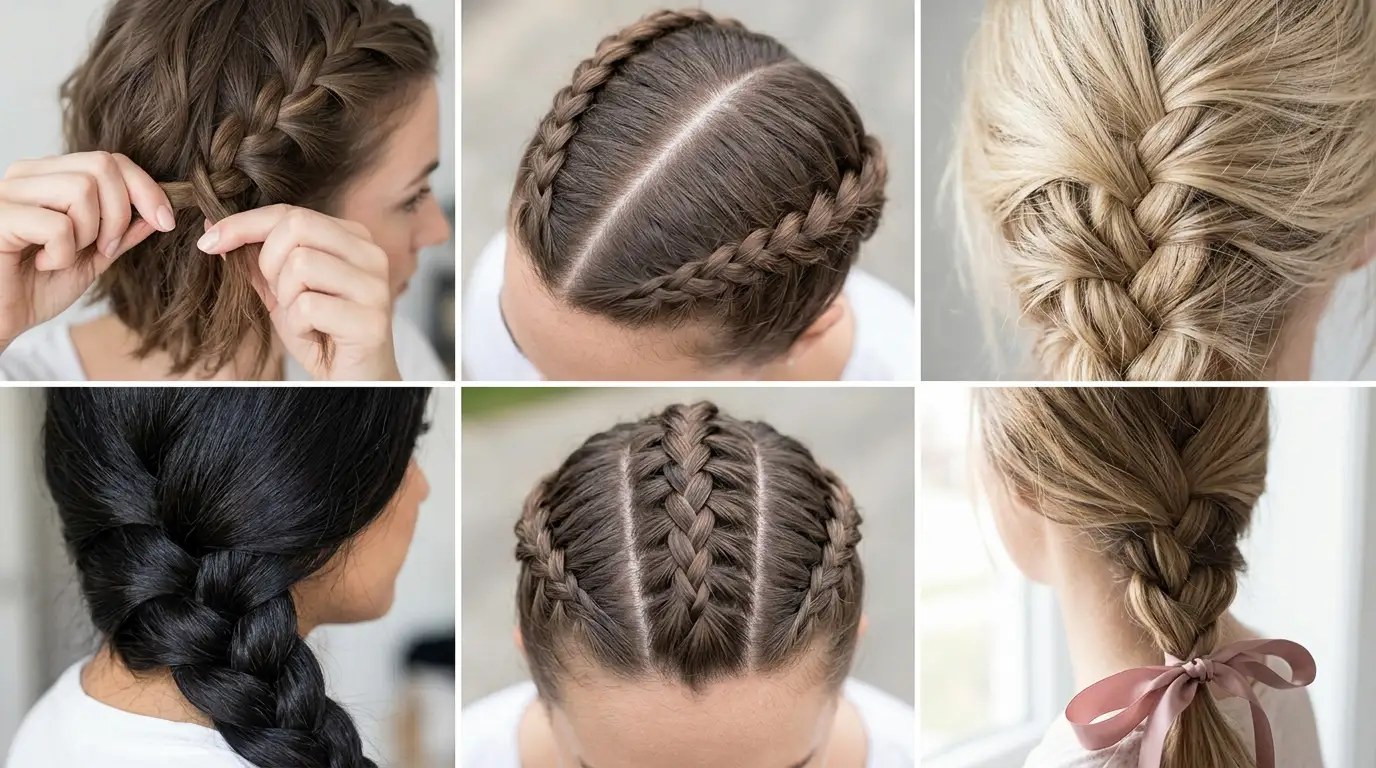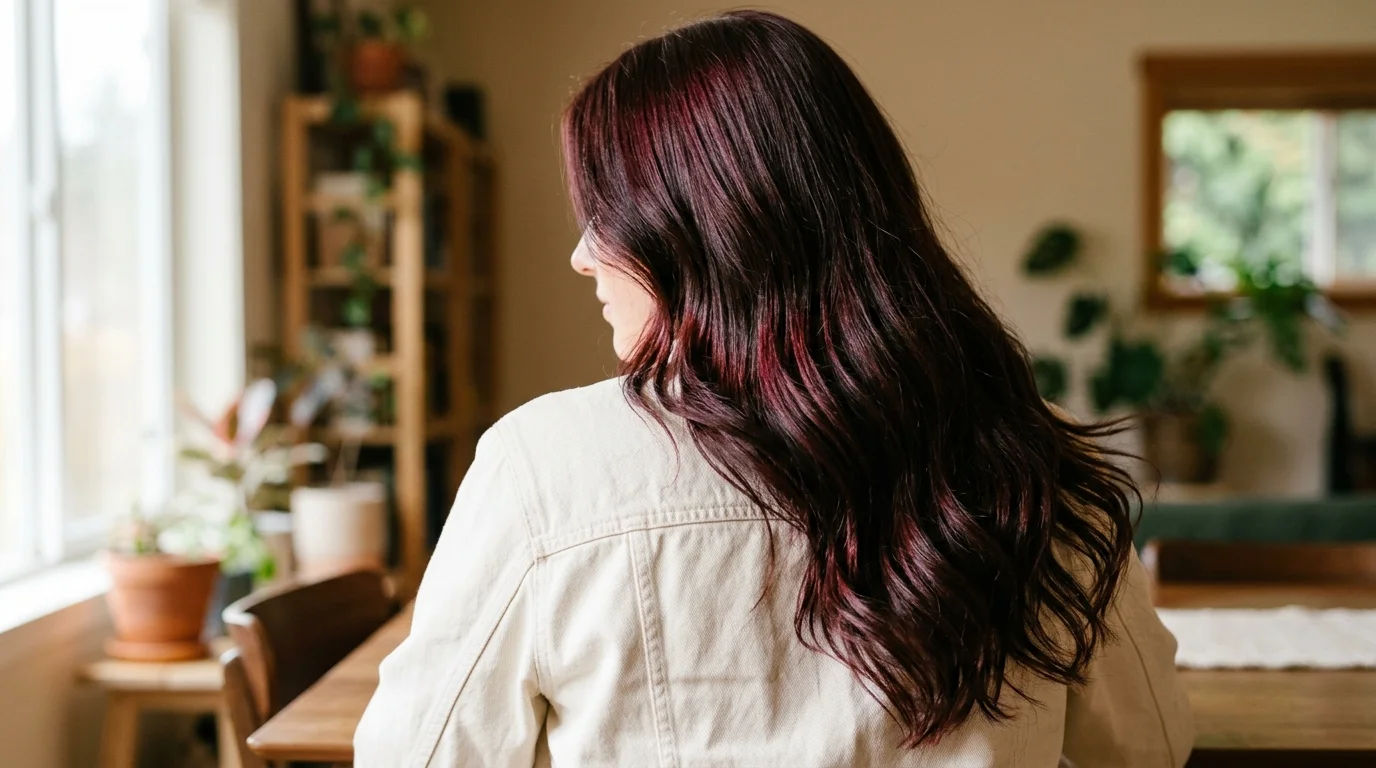

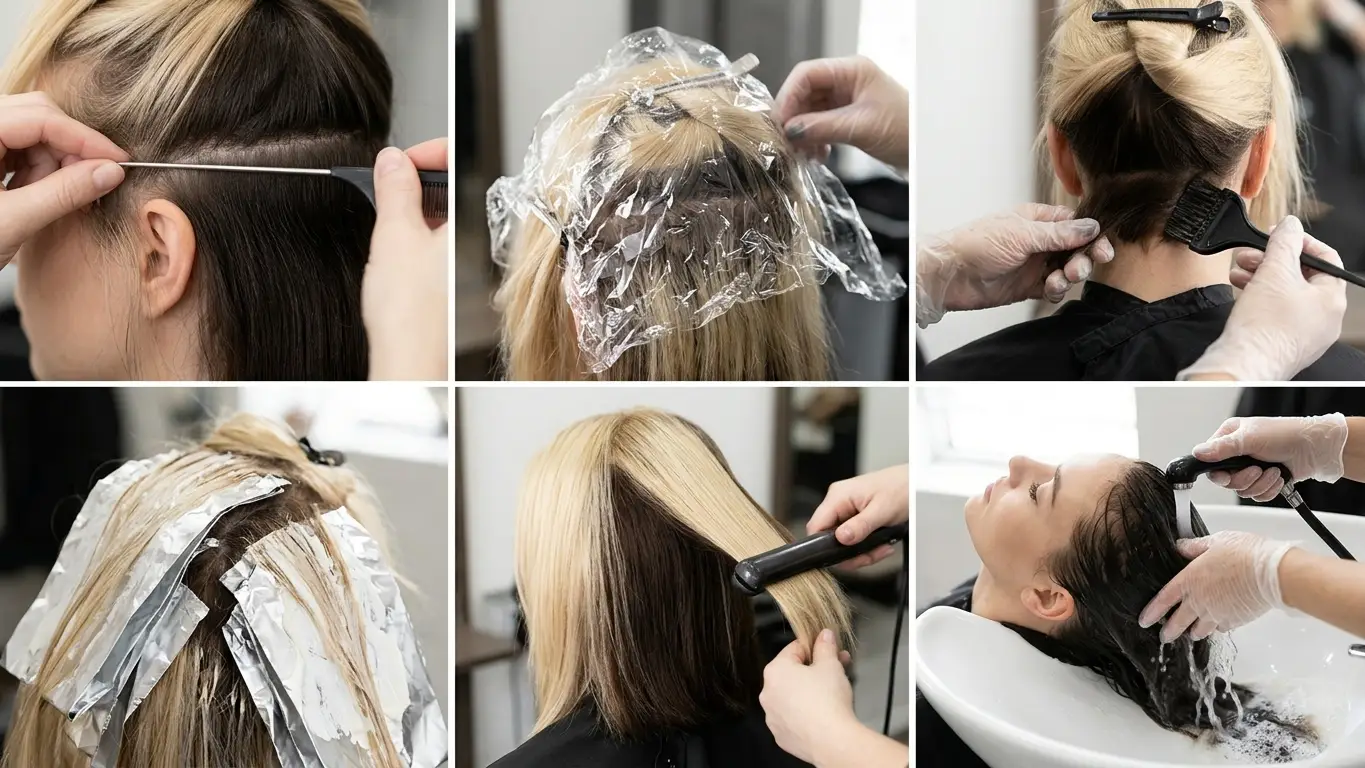
Blonde hair with dark underneath creates dramatic dimension by isolating deep pigment beneath high-contrast surface lightness.
What you need:
- Professional lightener powder with bonding additives
- 20-volume and 10-volume cream developer
- Demi-permanent deposit-only color in level 3 or level 4
- Tail comb with a metal pintail
- Four heavy-duty crocodile sectioning clips
- Two non-metallic mixing bowls and two tint brushes
- Acidic bonding treatment and pH-balancing color-safe shampoo
Map your horizontal horseshoe parting
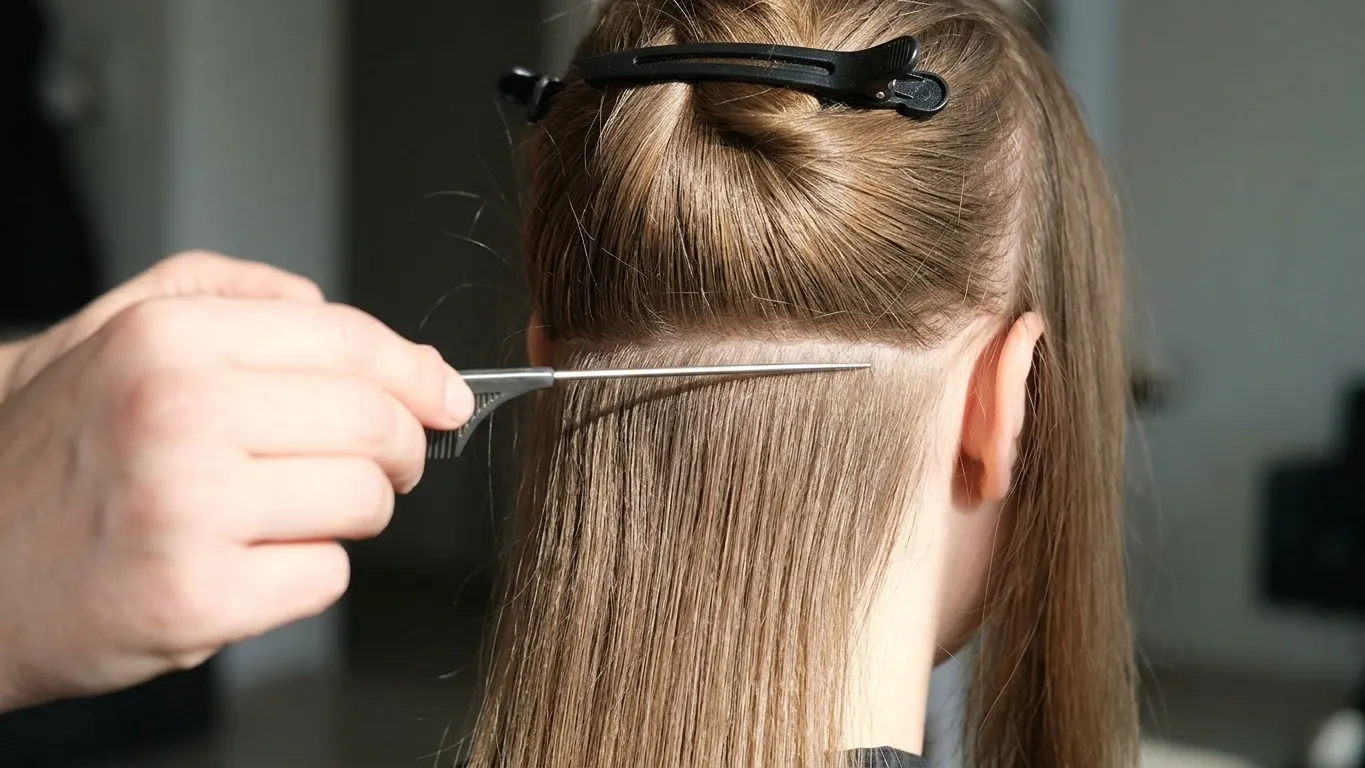
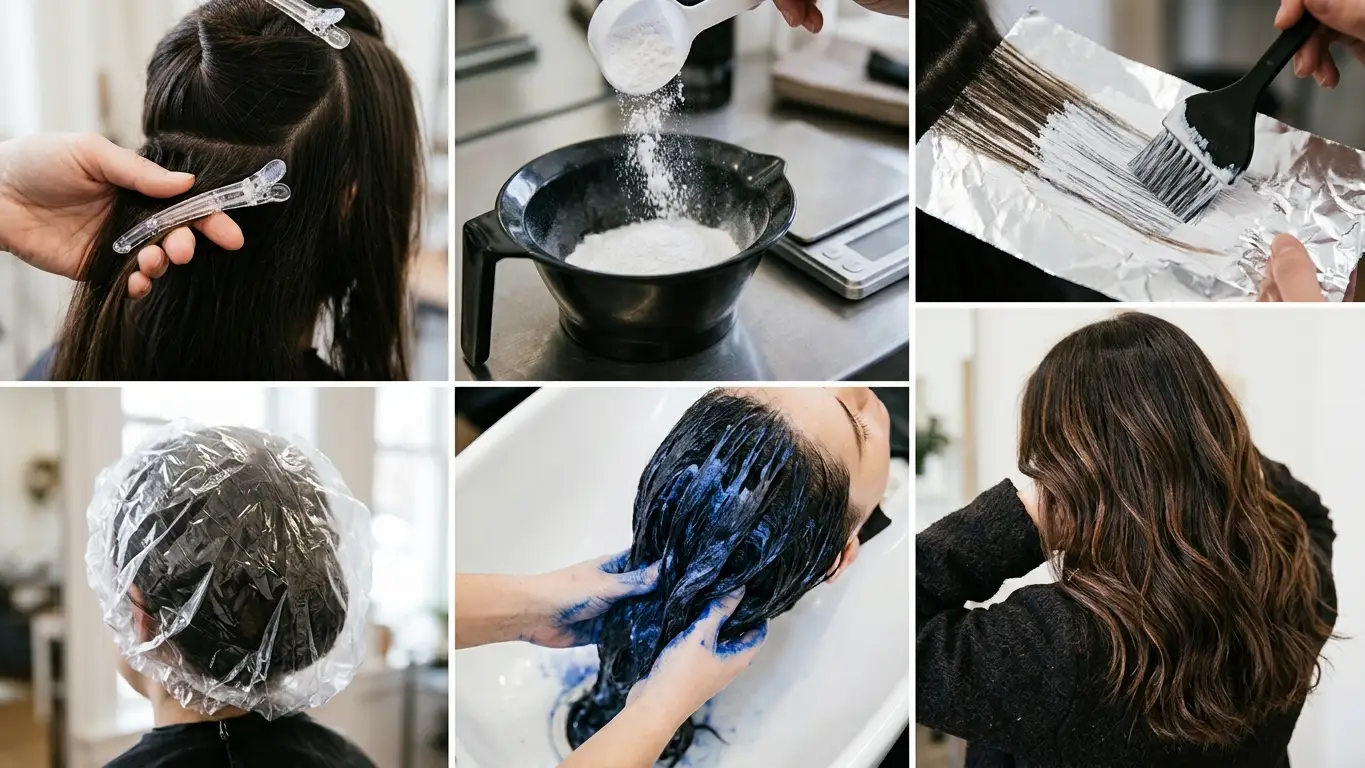
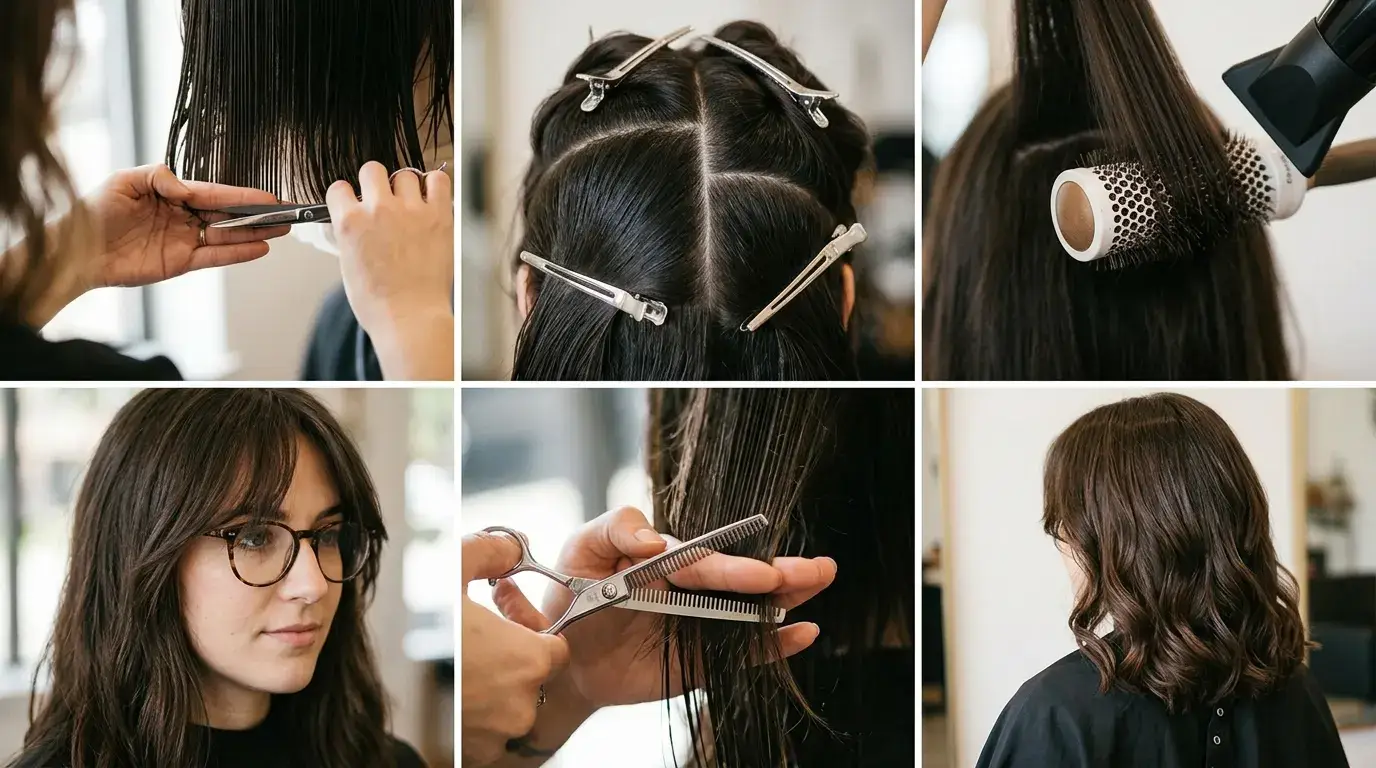
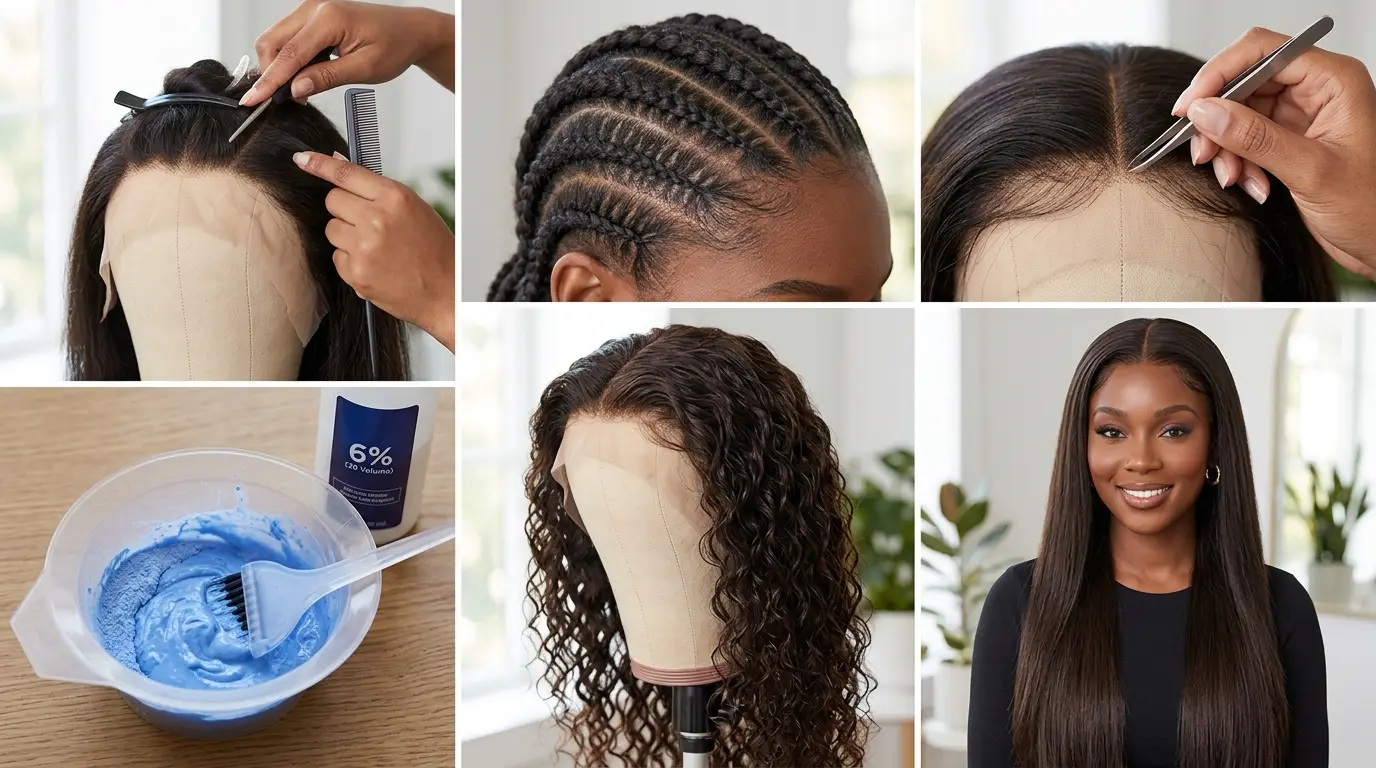
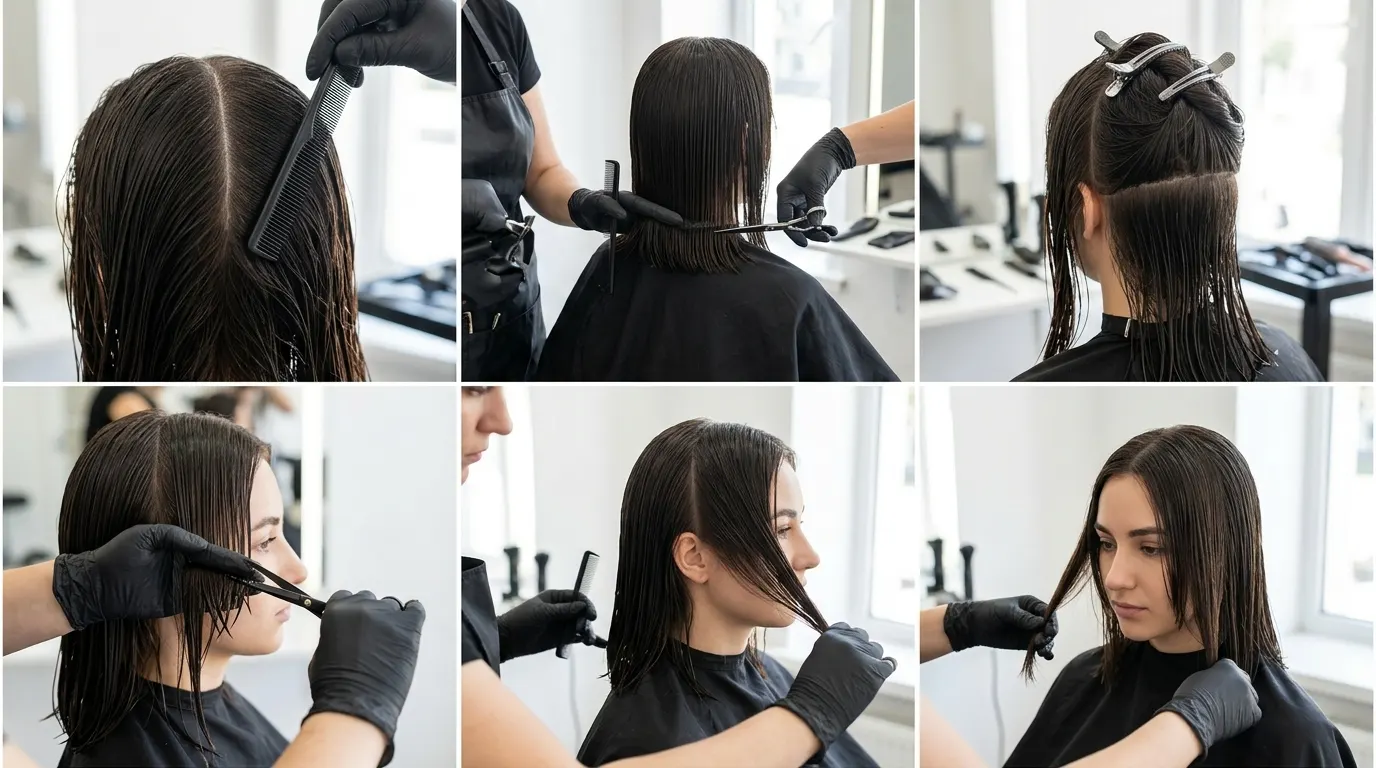
Clean geometric sectioning determines whether this color placement looks deliberate or accidental. Take a metal pintail comb and draw a clean horizontal line starting one inch above the tip of your left ear. Carry that line around the lower curve of the occipital bone and connect it directly behind your right ear.
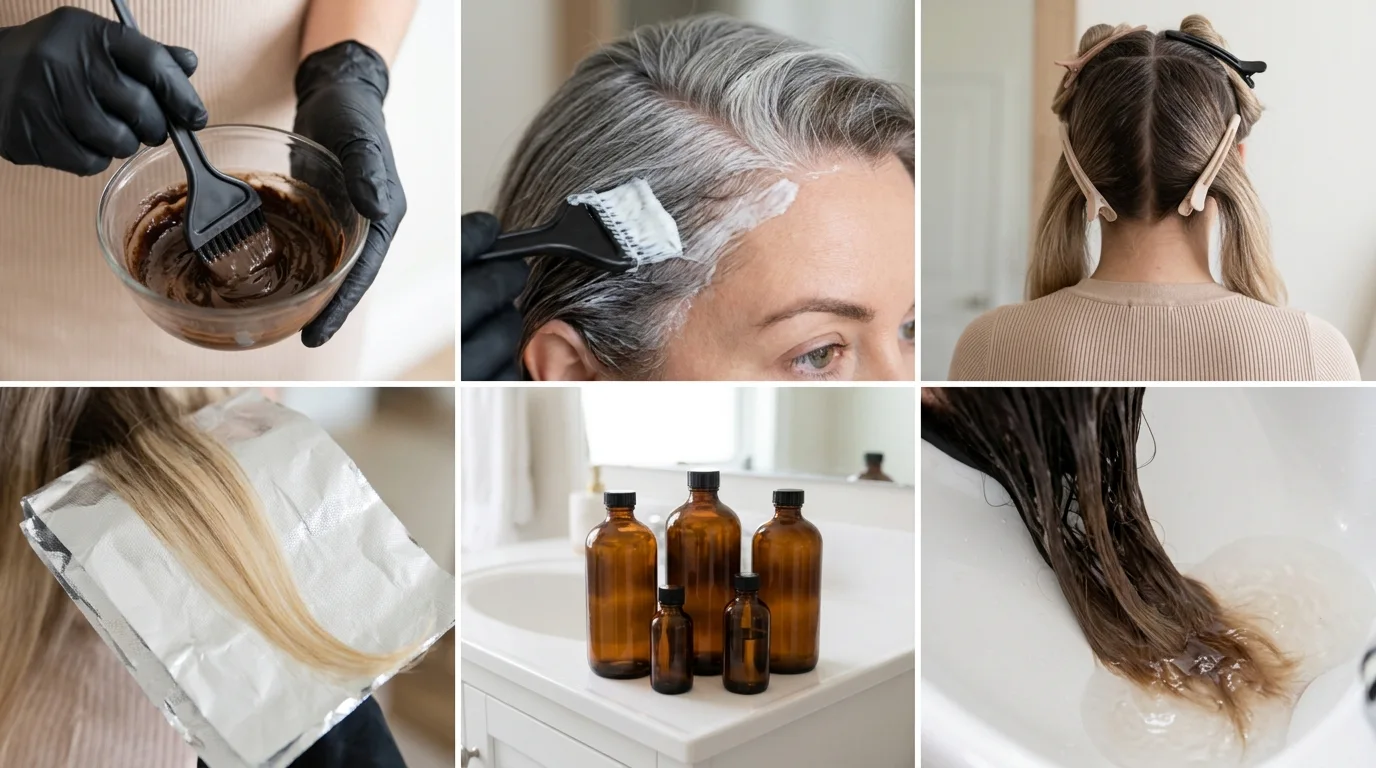
Clip the entire crown section tightly out of the way using two crocodile clips. The hair left hanging along the nape is your dark foundation zone.
If you prefer two tone blonde hair with darker underneath to show heavily from the front, raise that parting line another half inch toward the temples. Keep the line level. A crooked boundary causes dark spots to bleed into your blonde canopy whenever your hair swings naturally.
Protect the upper blonde canopy before coloring
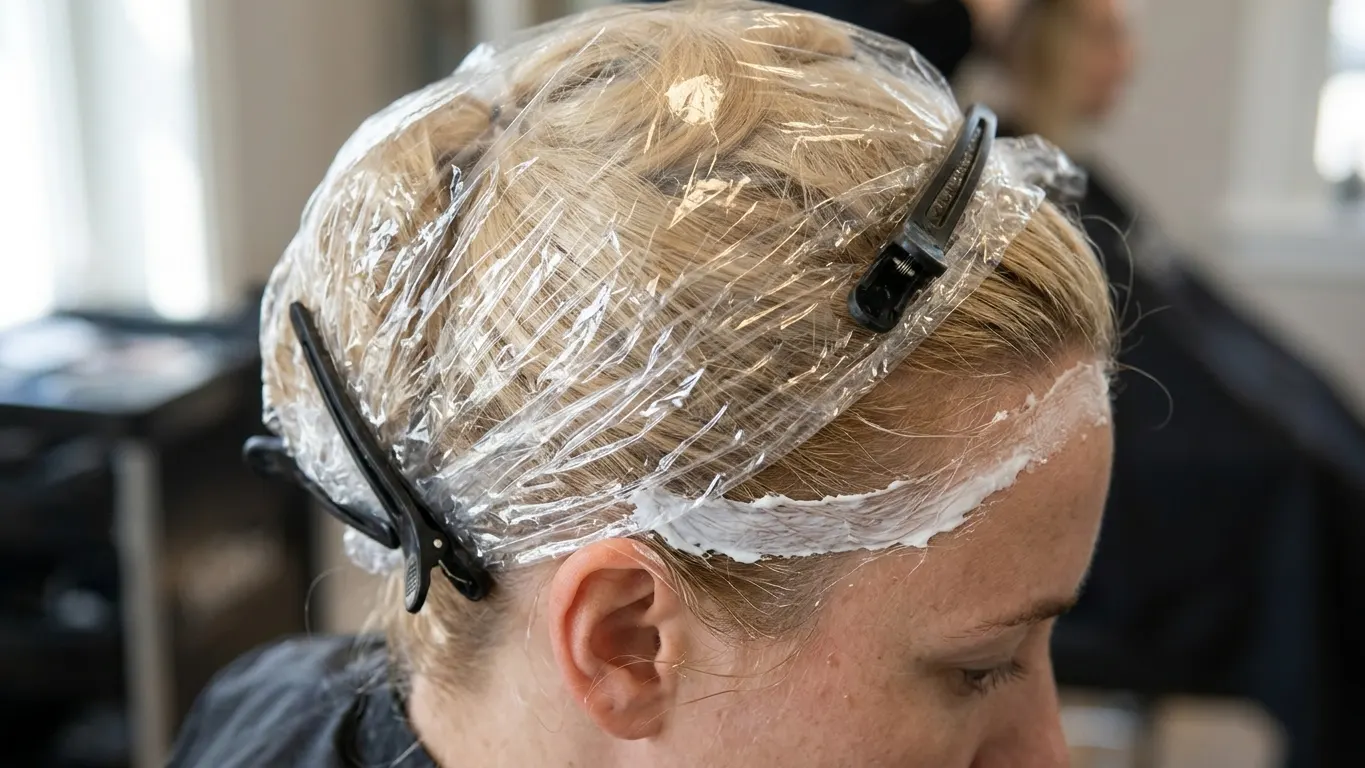
Bleach and dark dye cannot touch the same strand at the same time. Coat the entire upper blonde section with a heavy barrier cream or thick silicone conditioner from root to tip.
Wrap this top section in plastic cling wrap before mixing any dye. Fold the wrap upward and clip it flat against the crown. This physical barrier stops stray drips of dark pigment from splattering across your blonde layers while you work on the nape.
Skipping this step leads to permanent dark smudges on porous, pre-lightened hair that take hours of corrective work to strip out.
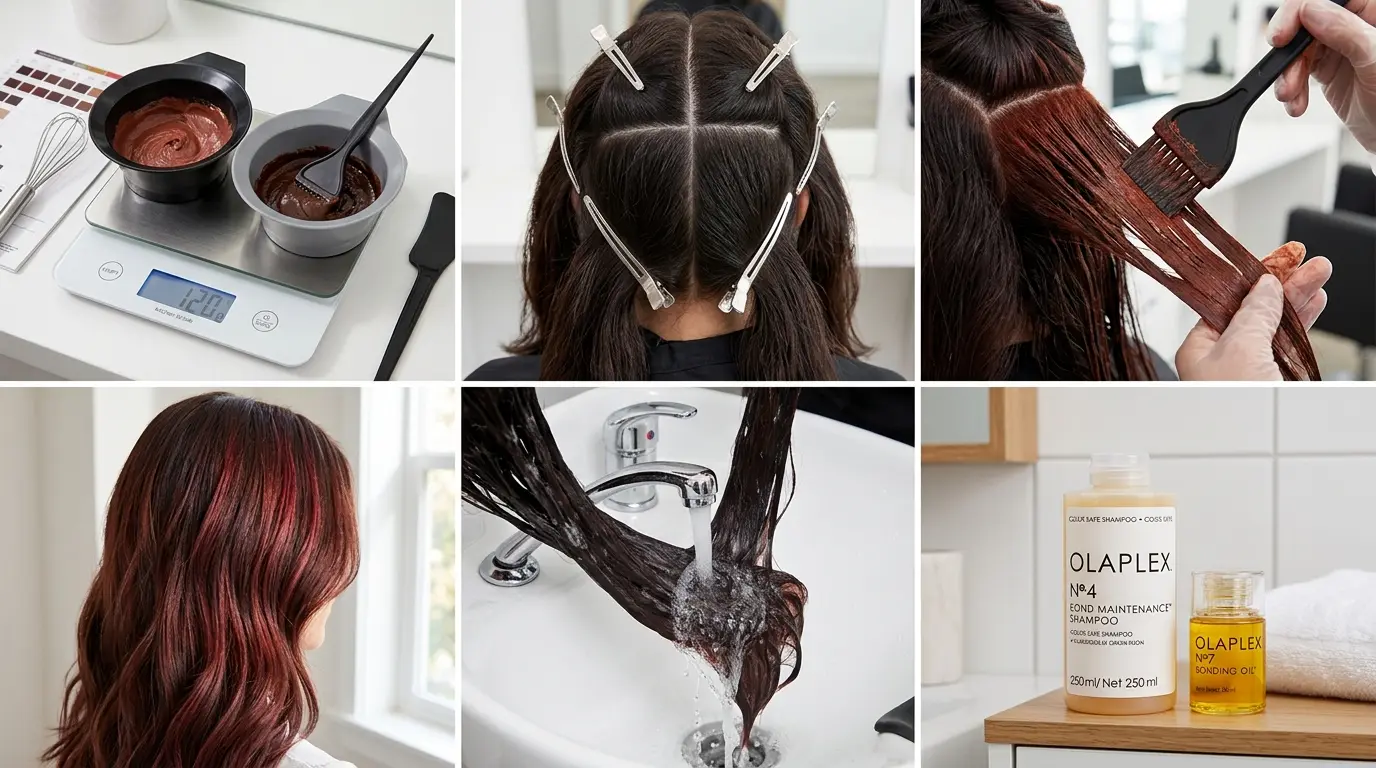
Formulate and apply the dark underneath base
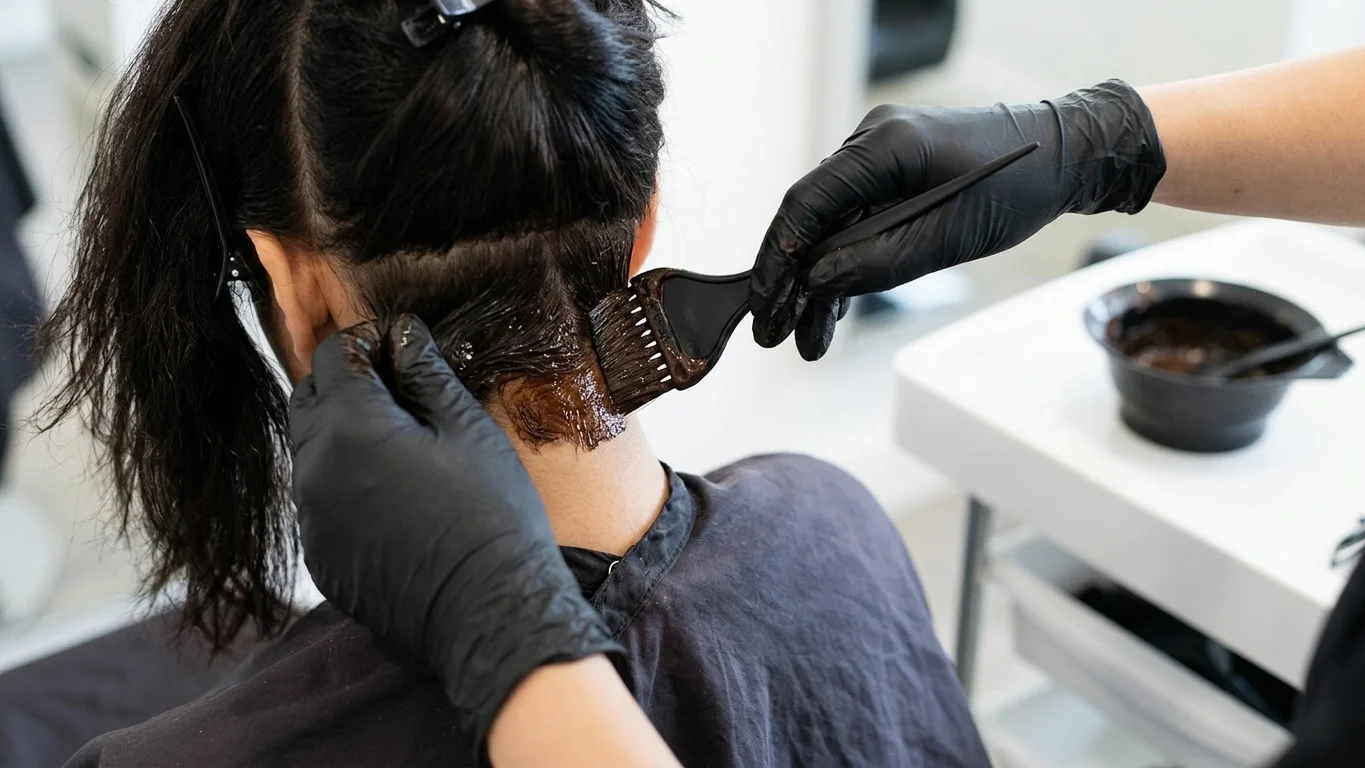
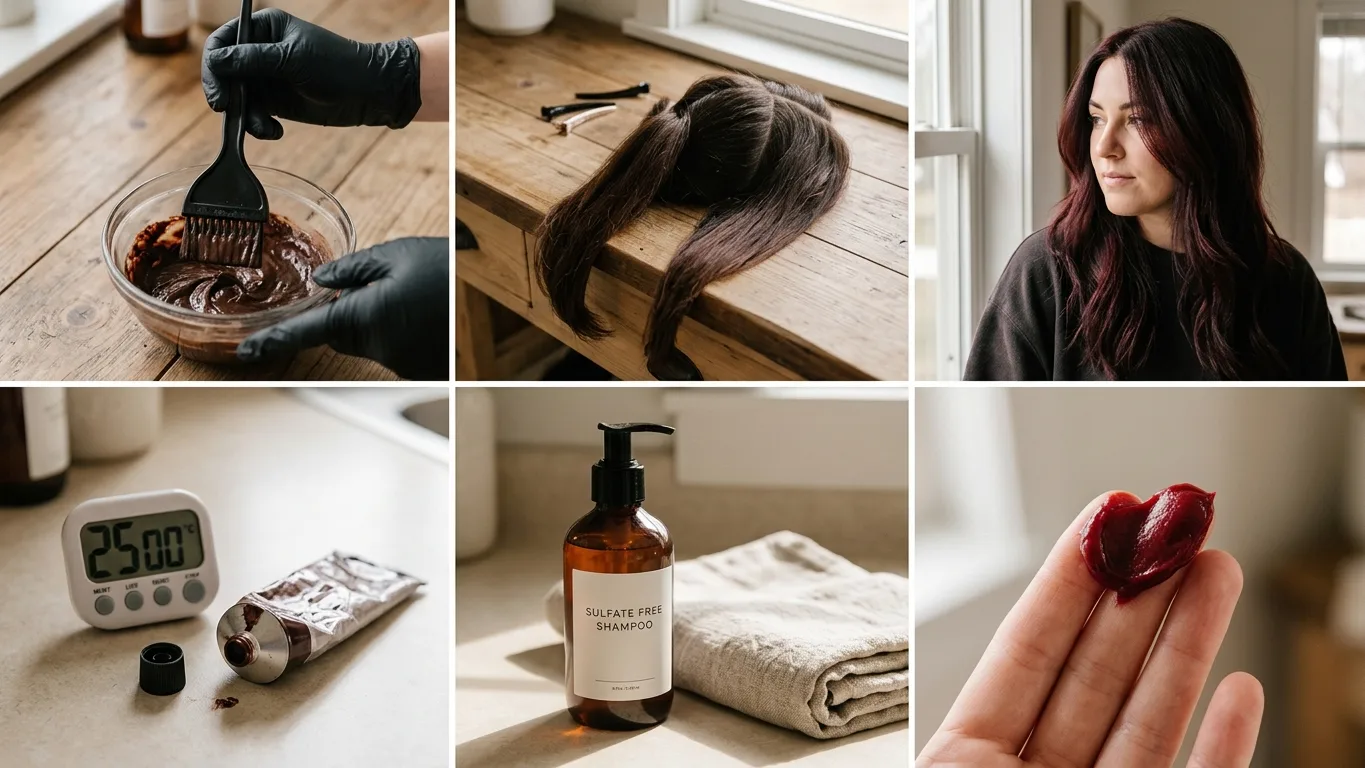
Mix a level 3 or level 4 demi-permanent pigment with 10-volume developer at a strict 1 to 1 ratio inside a plastic bowl. Never use permanent box dye for this step. Permanent color drives too deep into the hair shaft, making future removal nearly impossible if you want to lighten the nape later.
Start applying the mixture half an inch away from the scalp across the nape. Work in thin, horizontal quarter-inch slices using firm downward brush strokes.
Once the mid-lengths and ends are fully saturated, return to feather the color onto the root area. Set a kitchen timer for 25 minutes.
Lighten the surface layers evenly

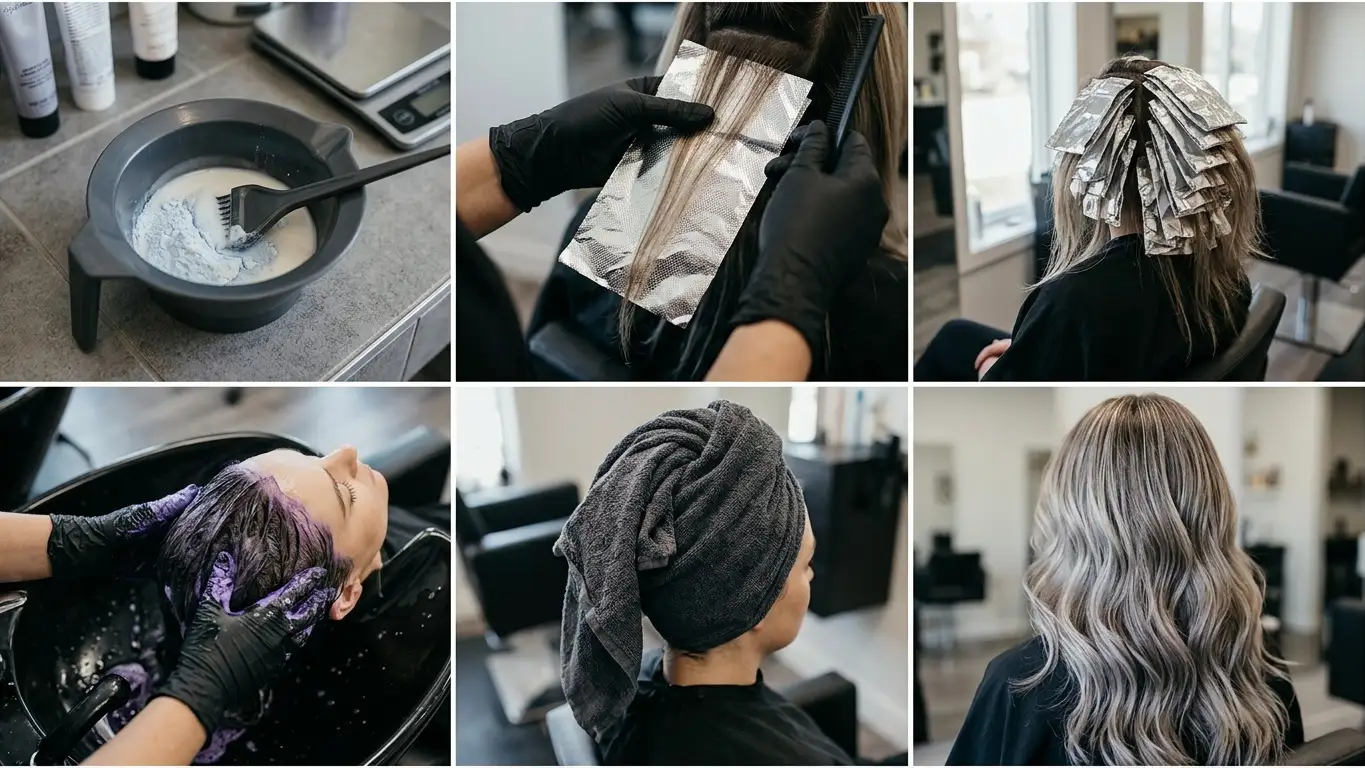
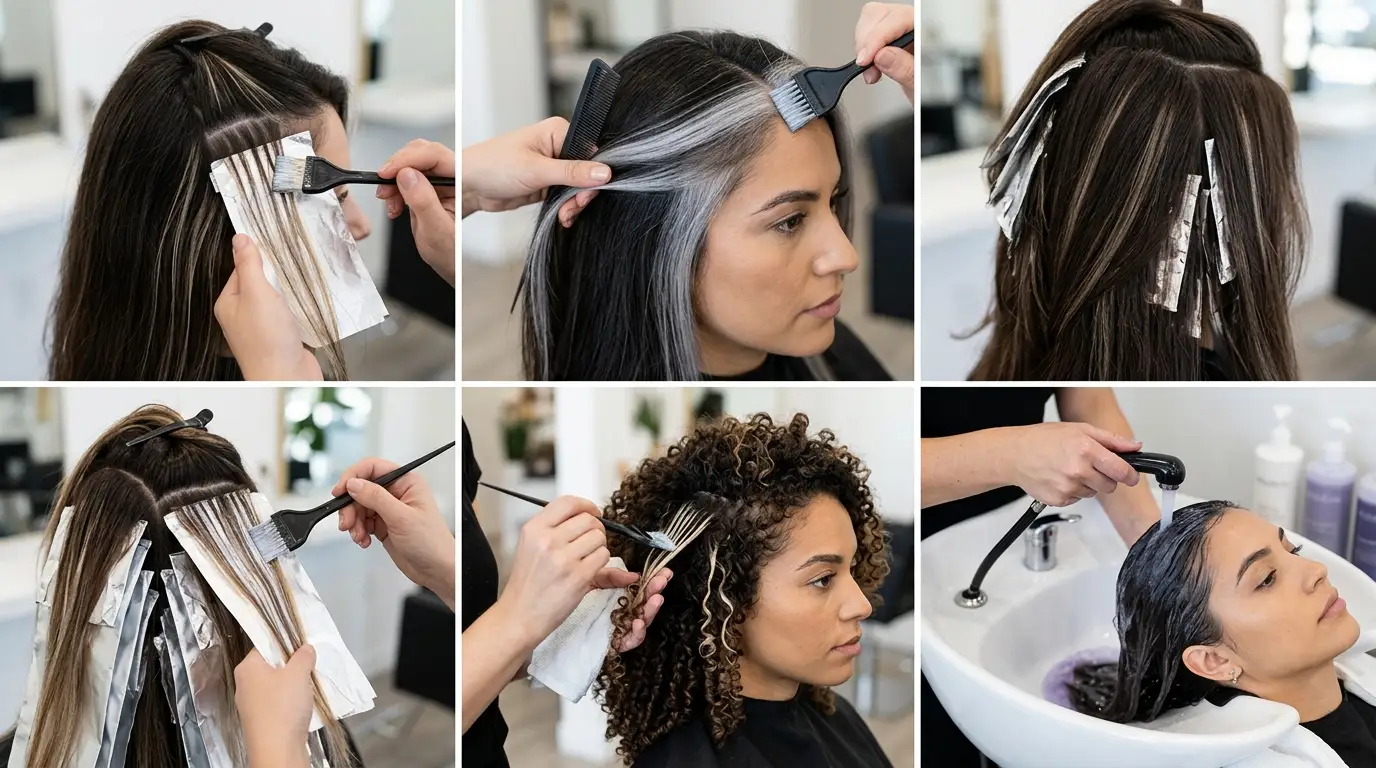
Unclip your top tier carefully while the base processes. Mix your cream or powder lightener with 20-volume developer to lift the canopy safely.
Begin applying the lightener at the mid-lengths first, keeping the product a full half-inch away from the scalp. Natural heat radiating from your head makes root hair process twice as fast as the mid-shaft.
Leave the mid-lengths to lift for 15 minutes. Once the hair turns golden yellow, apply lightener directly to the roots. Process everything together for an additional 20 minutes until the entire canopy reaches a pale pale-butter stage.
Introduce blonde hair with dark underneath and lowlights
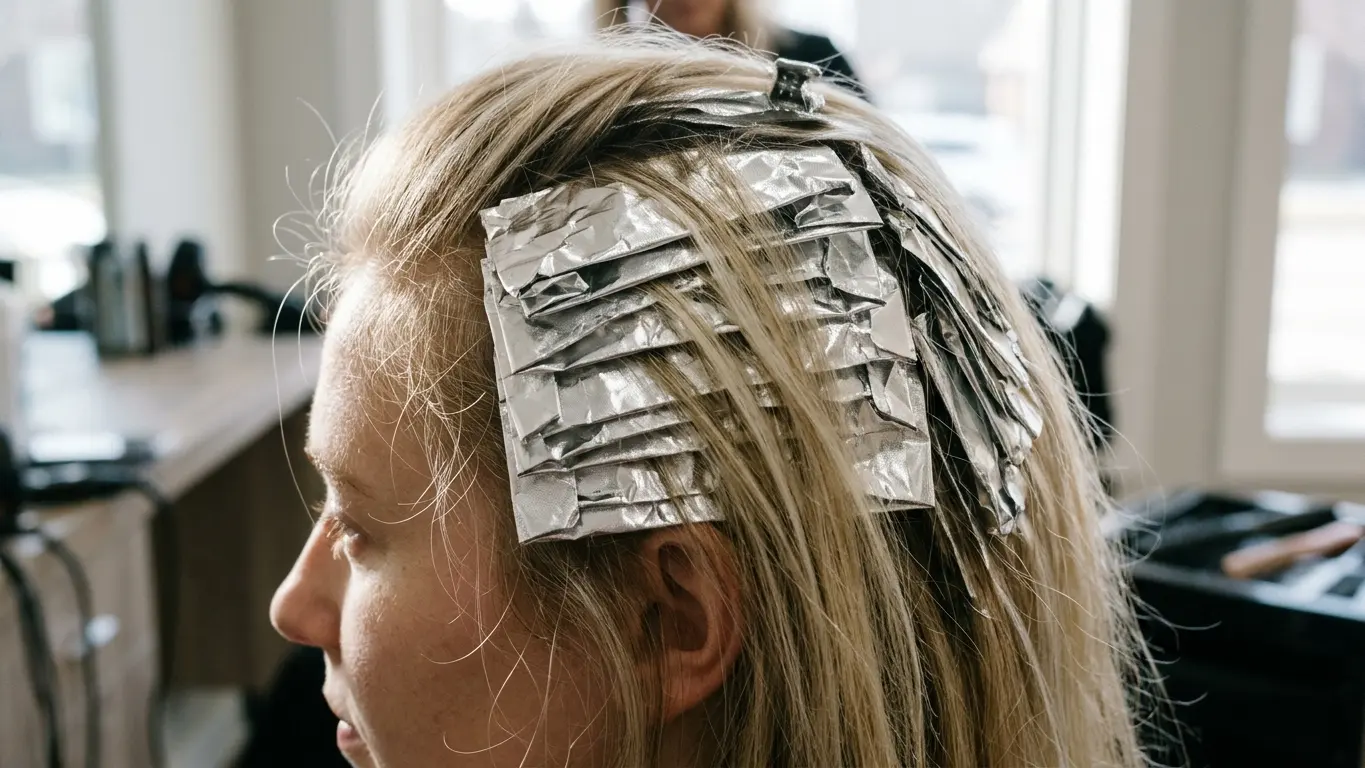
Adding subtle lowlights through your blonde surface creates a cohesive bridge down to the dark foundation. Pick out fine, woven ribbons of hair across the top crown using your pintail comb.
Saturate these fine ribbons with a level 6 neutral ash demi-permanent color instead of the deep level 3 base shade. Wrap each treated ribbon in salon foil to isolate it from the surrounding lightened strands.
This technique prevents harsh demarcation lines. It softens the optical jump between your light surface layers and the hidden dark underlayer every time your hair moves.
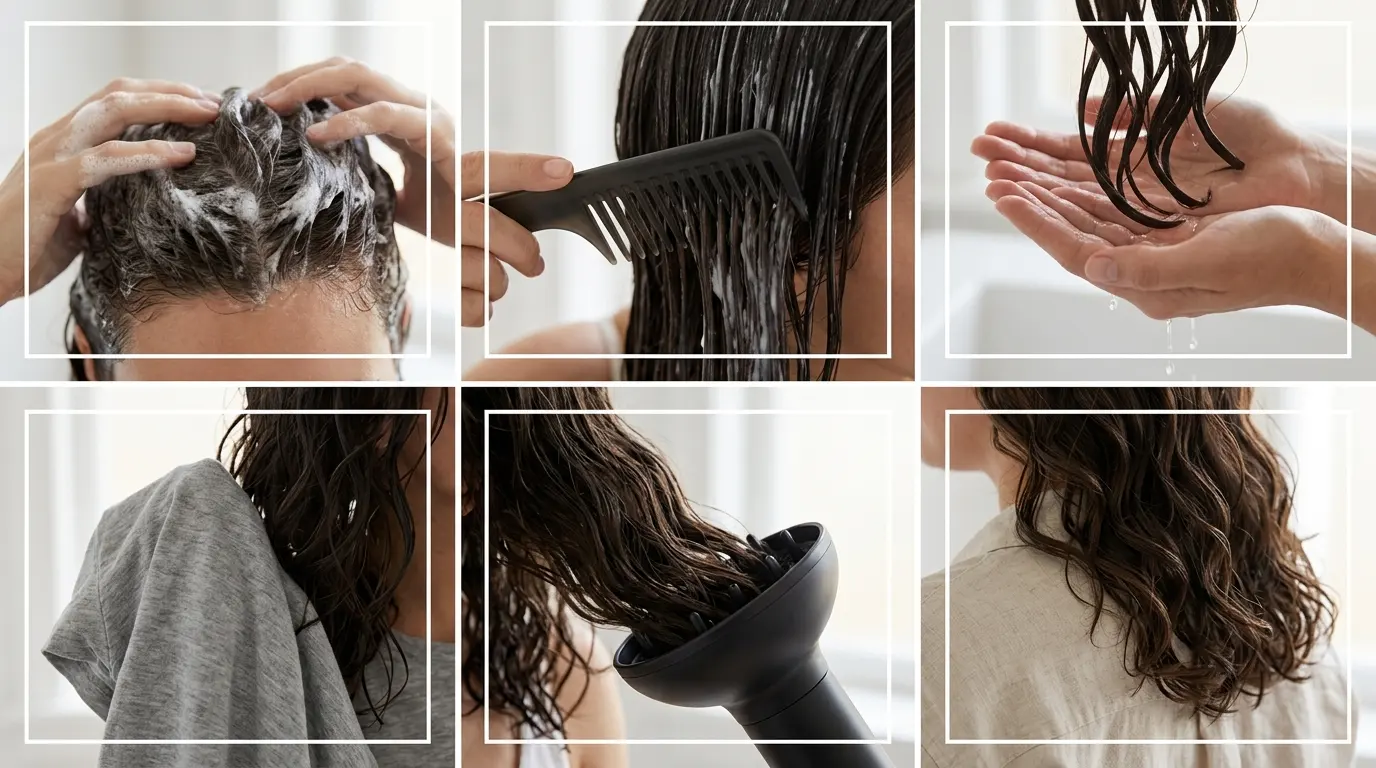
Rinse and wash both zones with cold water
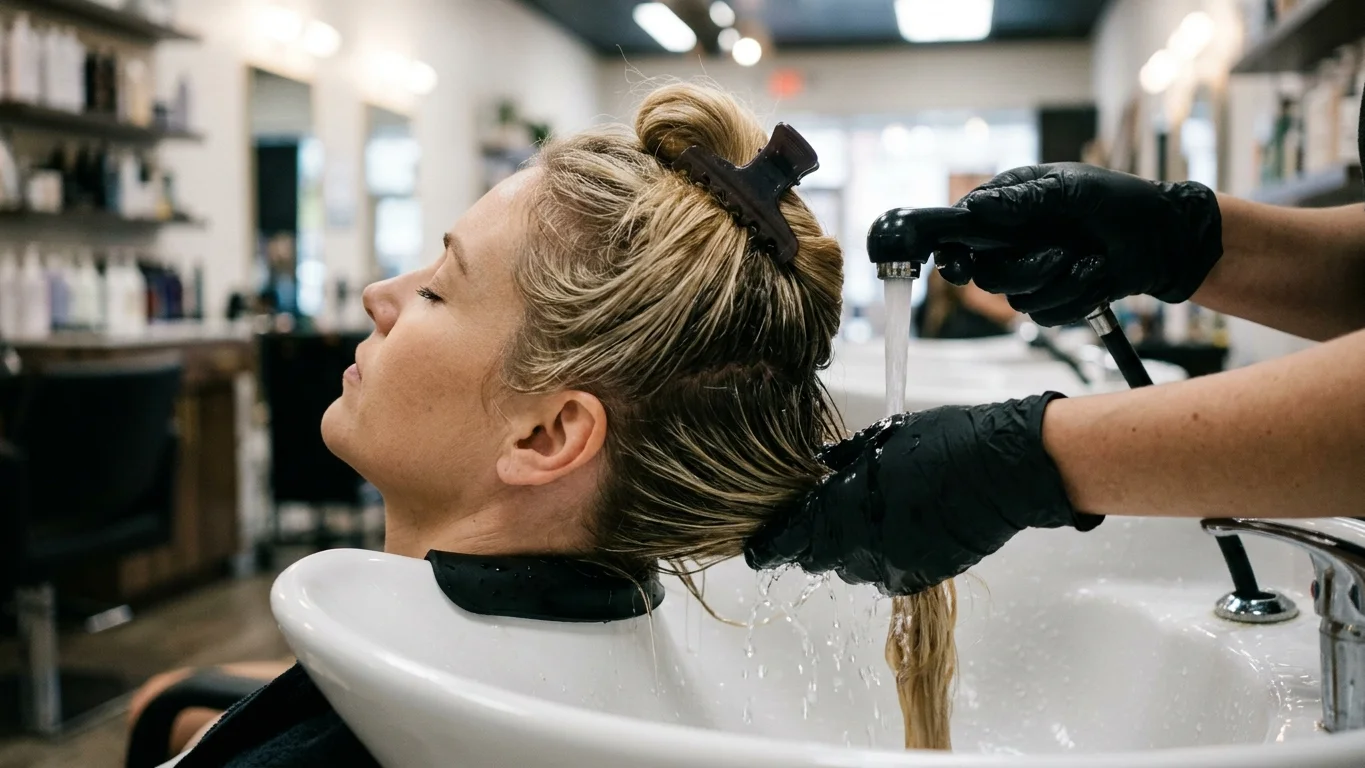
Rinsing both shades at once under warm water will ruin hours of work. Cold water keeps the hair cuticle closed and prevents rich dark pigments from bleeding into fresh, porous blonde.
Lean back over a sink and unclip the lower dark section first. Rinse the nape completely clean until the runoff water is clear, keeping the top blonde layers pinned up.
Once the dark dye is gone, unpin the blonde top and rinse the lightener out thoroughly. Wash the entire head using a sulfate-free, pH 4.5 shampoo to restore the natural acid mantle of your scalp.
Neutralize brass using targeted toners
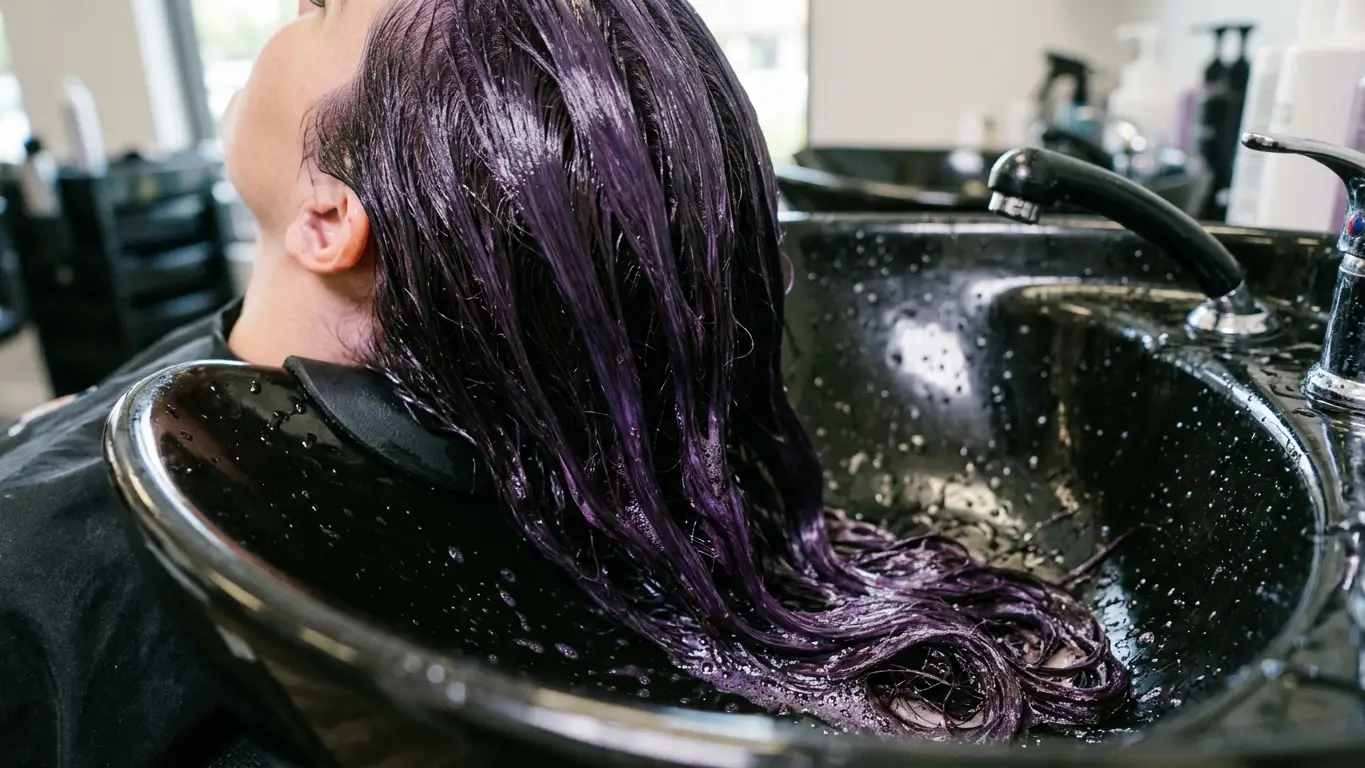
Raw bleached strands look yellow and unpolished without corrective toning. Formulate a violet-based level 10 liquid toner mixed with processing lotion to neutralize remaining warmth in your blonde layers.
Apply this toner exclusively to the top section with a fresh bottle applicator. Keep the liquid away from the dark nape. While toner will not visibly lighten dark pigment, it leaves an unwanted dull film over deep brown or black hair.
Let the toner sit on the pale hair for exactly 10 minutes. Rinse quickly using cold water and towel dry gently without rough friction.
Style blonde hair with dark underneath straight hair
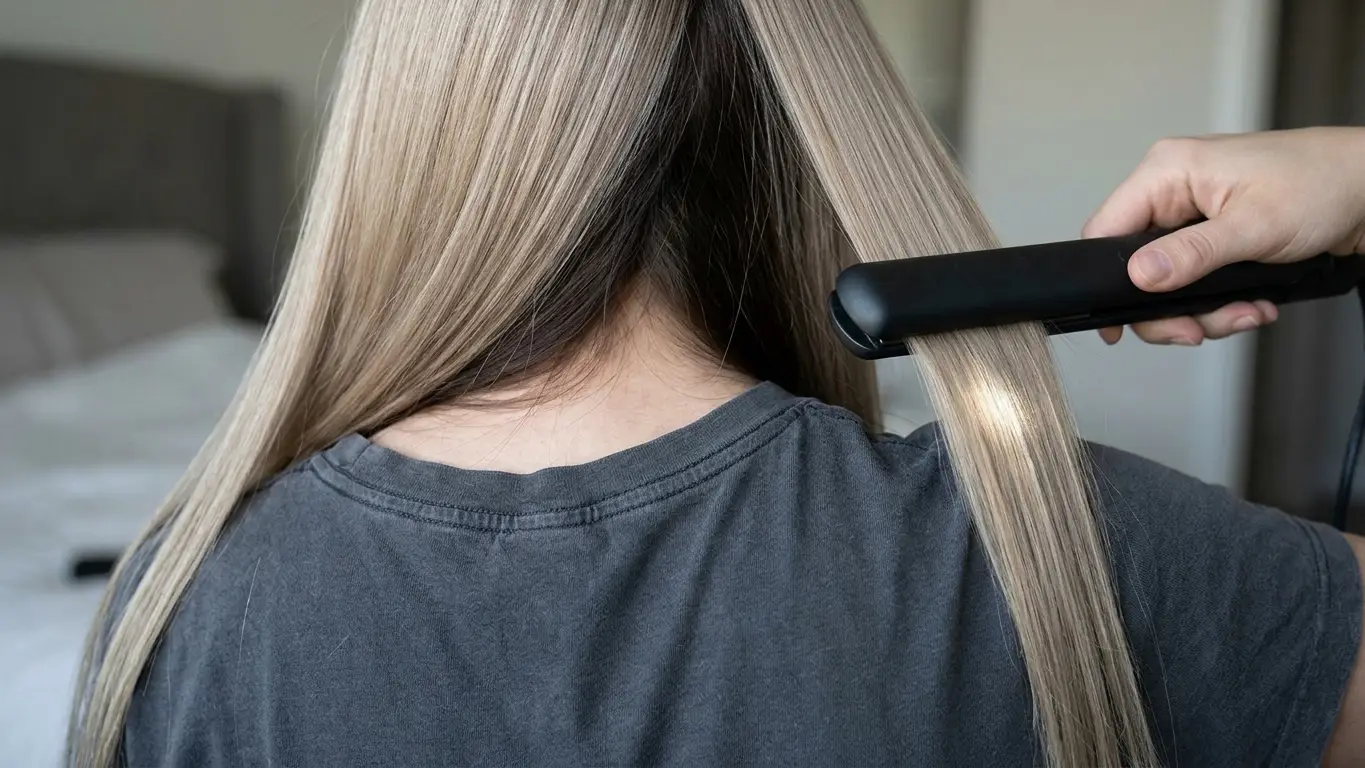
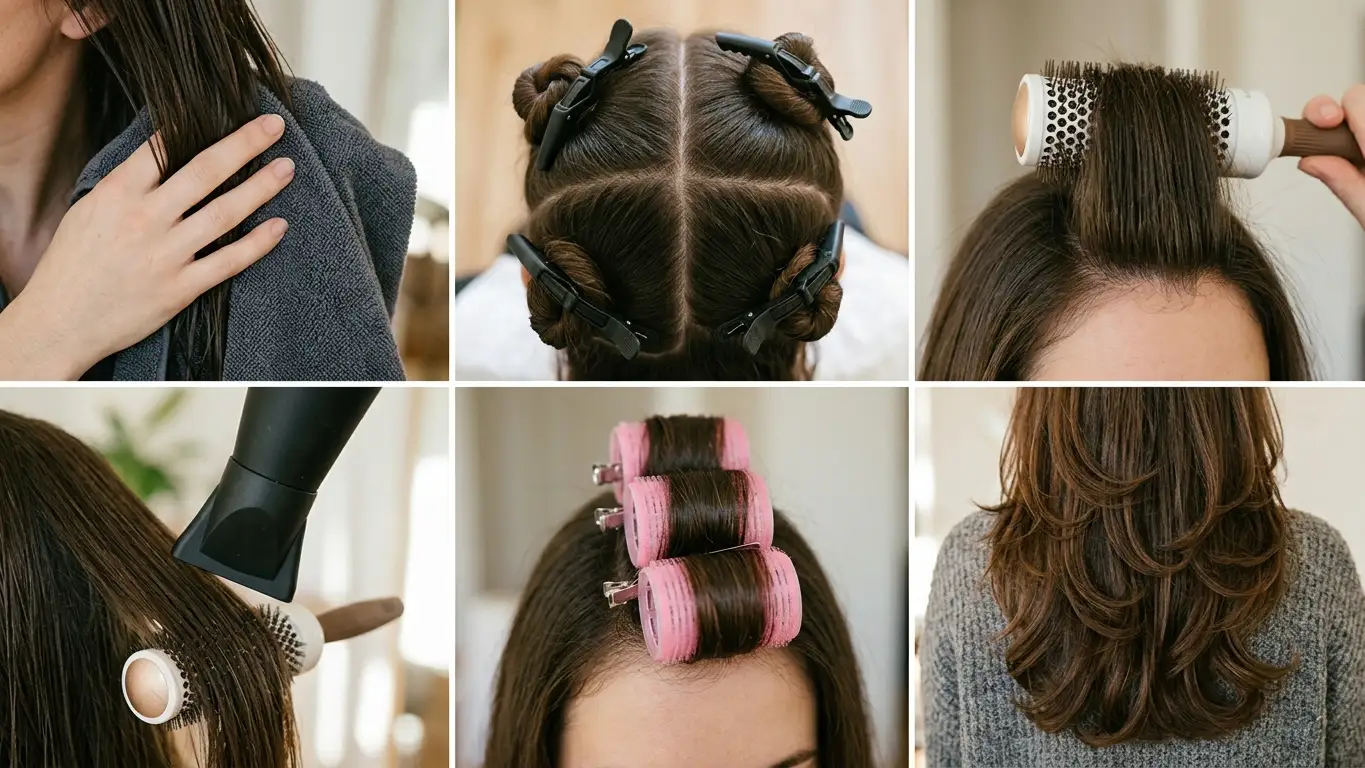
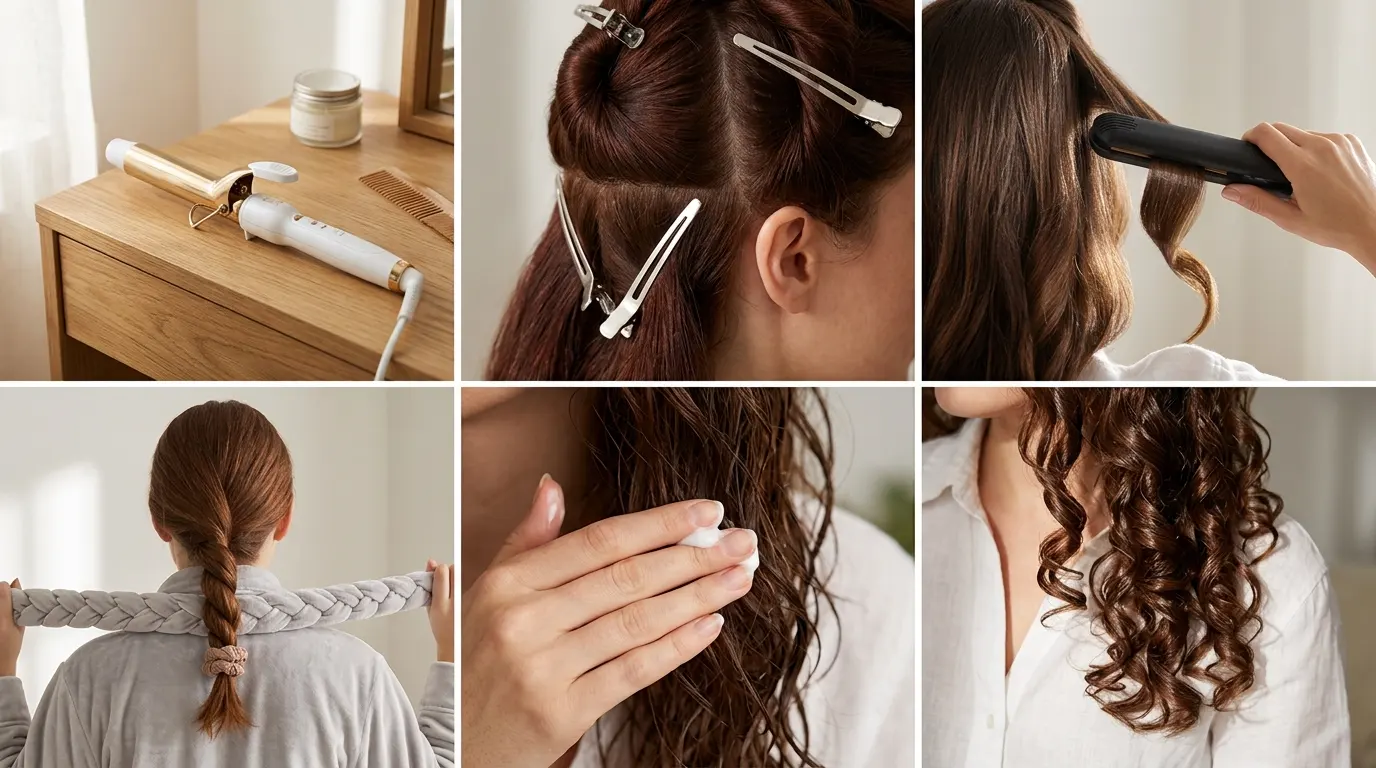
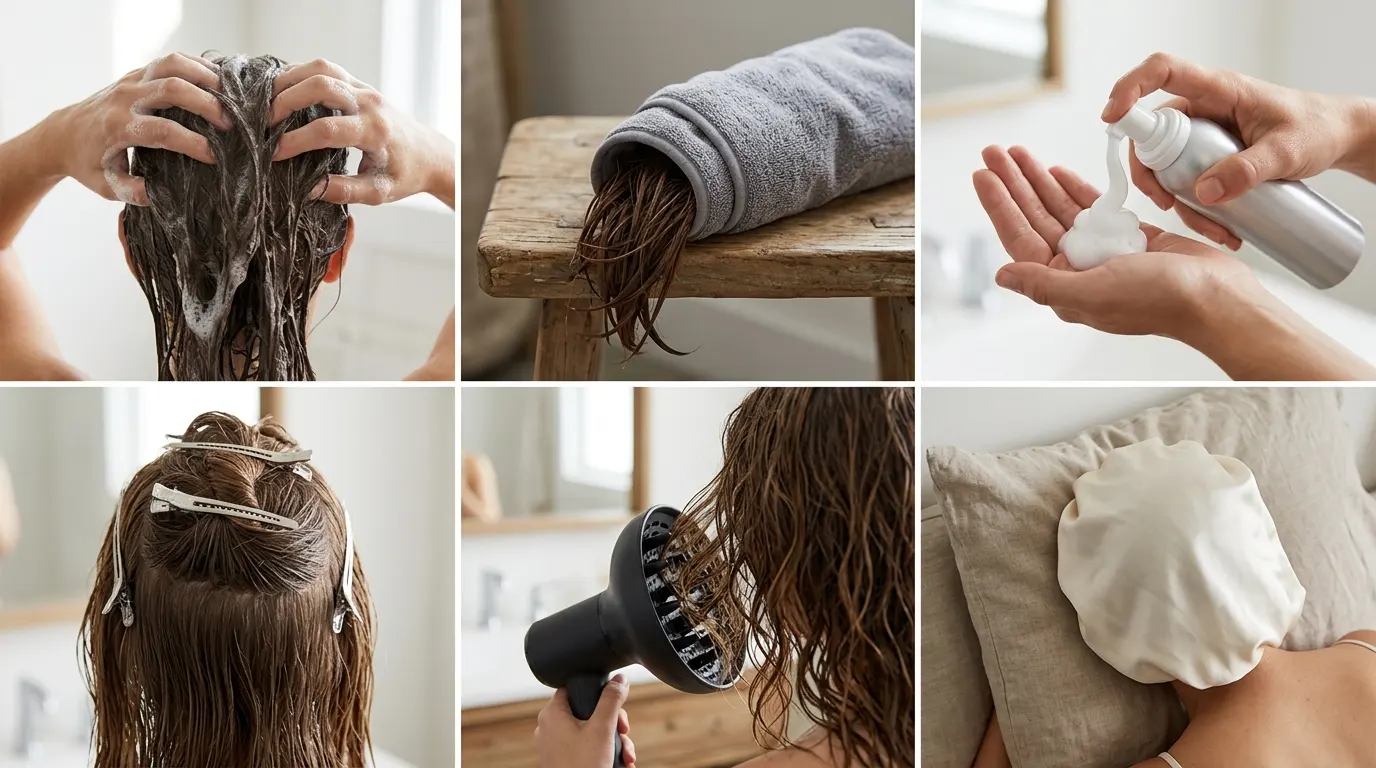
High contrast color looks sharpest when styled flat and glossy. Apply a dime-sized amount of thermal protectant serum over damp lengths before blow-drying downward with a ceramic paddle brush.
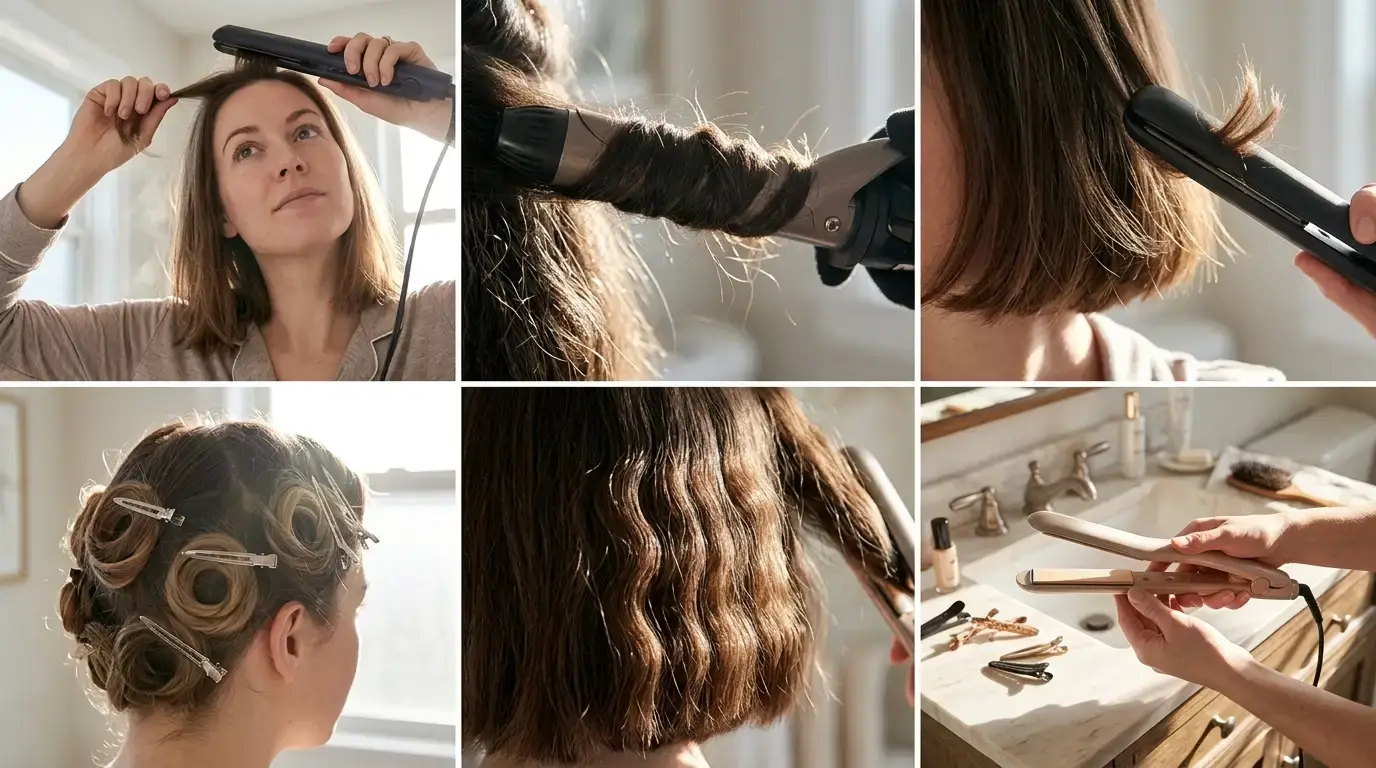
Set your flat iron to 340 degrees Fahrenheit. Hot tools running past 380 degrees scorch the cool toner right out of blonde strands and turn them brassy instantly.
Glide the iron down small one-inch sections from root to end in a single fluid pass. The smooth surface highlights the crisp separation between your light canopy and the peekaboo dark base beneath.
Adapt the placement for medium length blonde hair with dark underneath

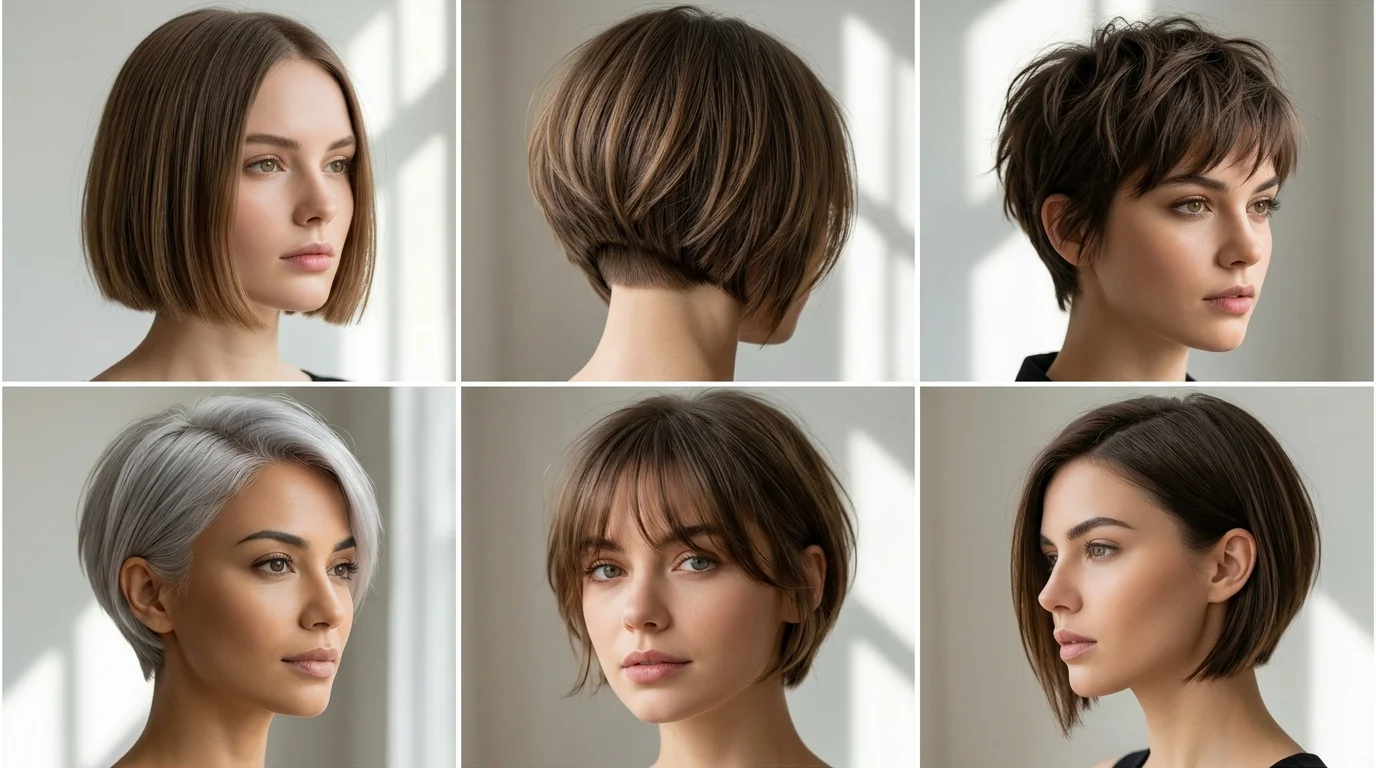
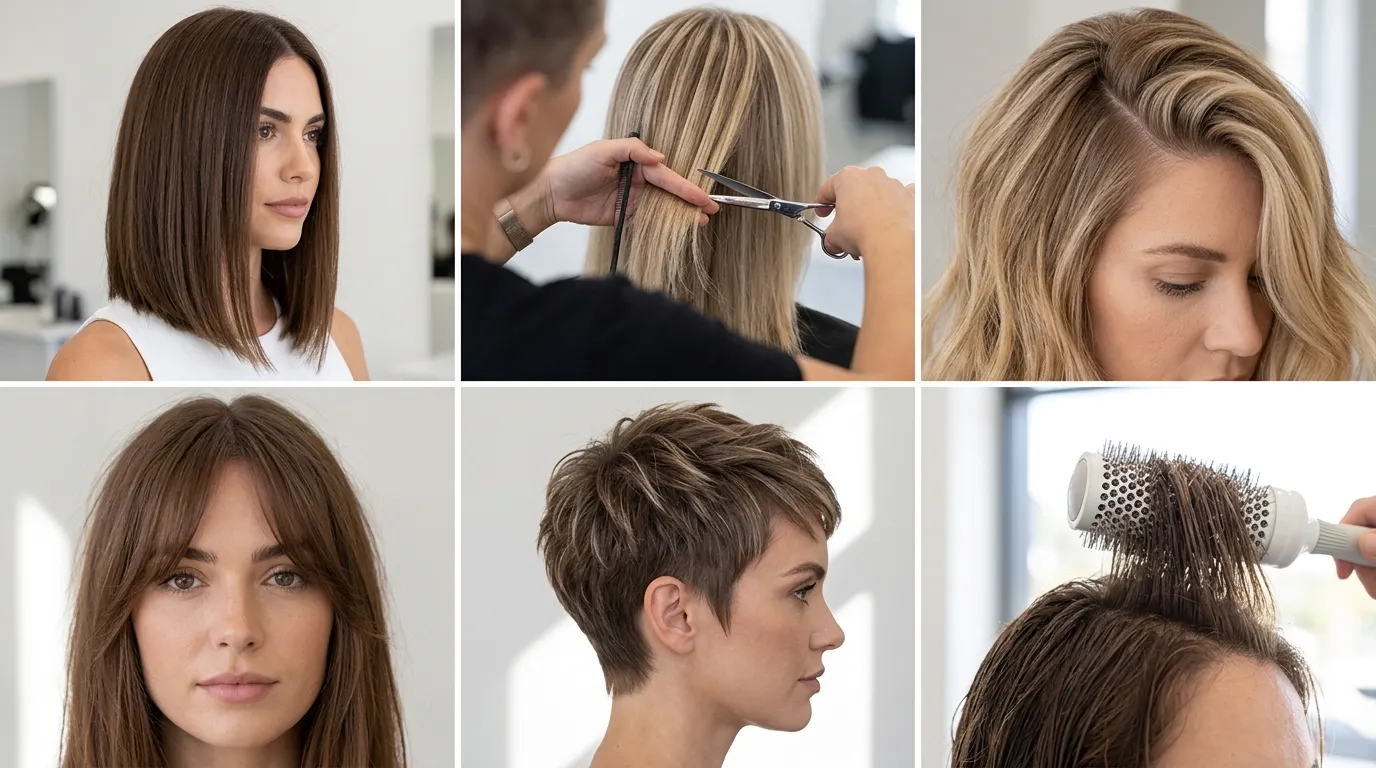
Shoulder-grazing hair demands a slightly lower color division so the dark layer stays hidden while standing still. Drop your horizontal horseshoe parting line down to earlobe level on a bob or lob cut.
This placement leaves roughly two-thirds of your hair volume in the blonde top section. When the hair sits naturally, only a subtle edge of darkness shows at the perimeter.
Curling the ends outward with a 1.25-inch curling iron exposes the hidden base dynamically. It gives medium cuts an illusion of greater hair density without thinning out the blunt perimeter line.
Manage blonde hair with dark underneath at home

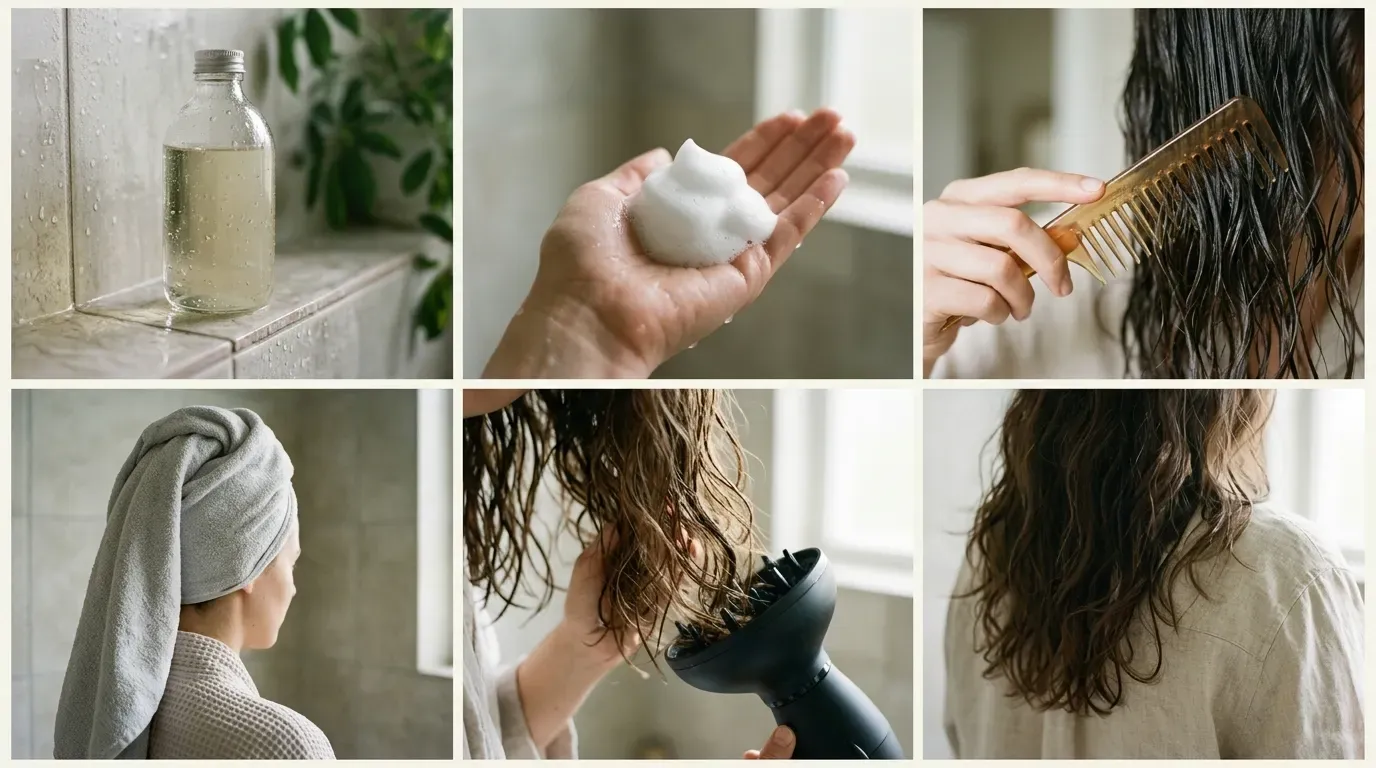
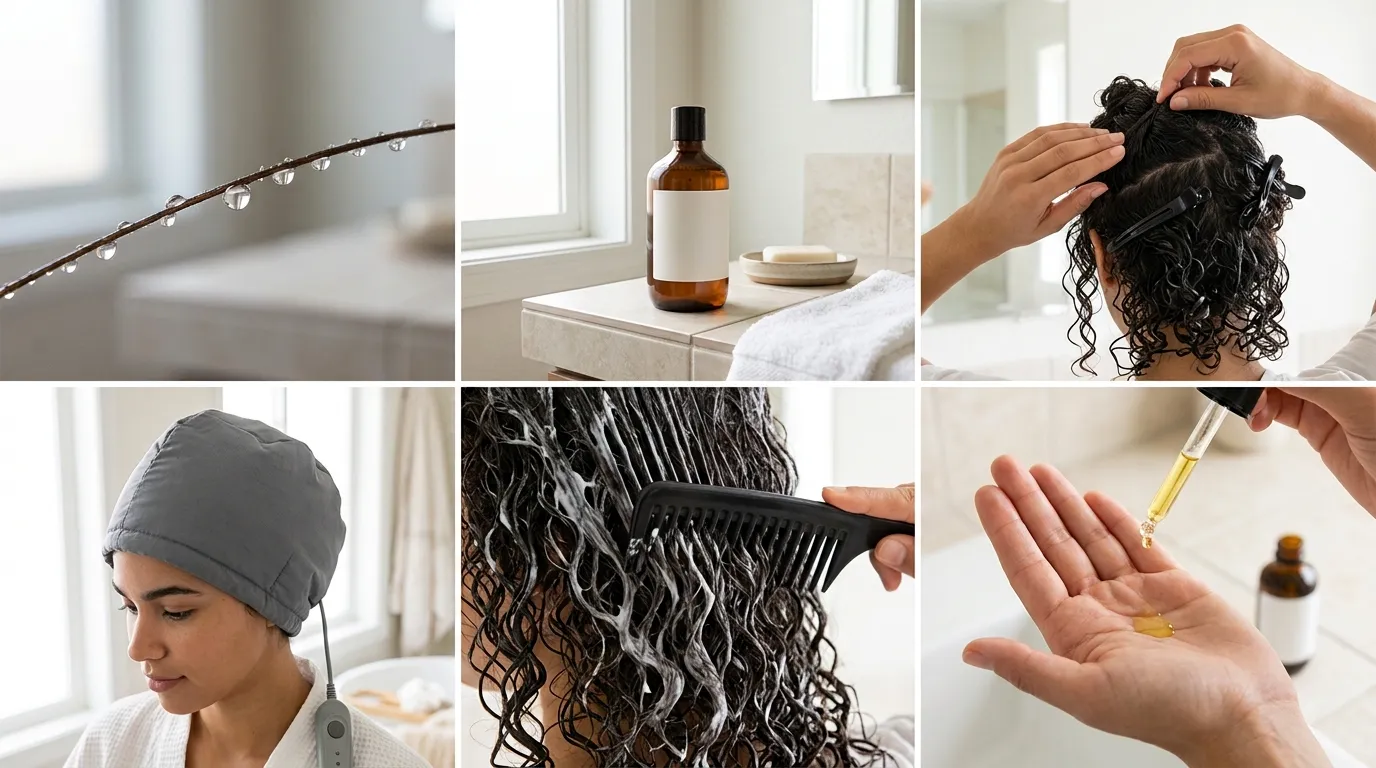
Preserving two-tier contrast requires a strict washing system in your bathroom. Wash your hair no more than twice a week using cool water to extend color life and prevent crossover bleeding.
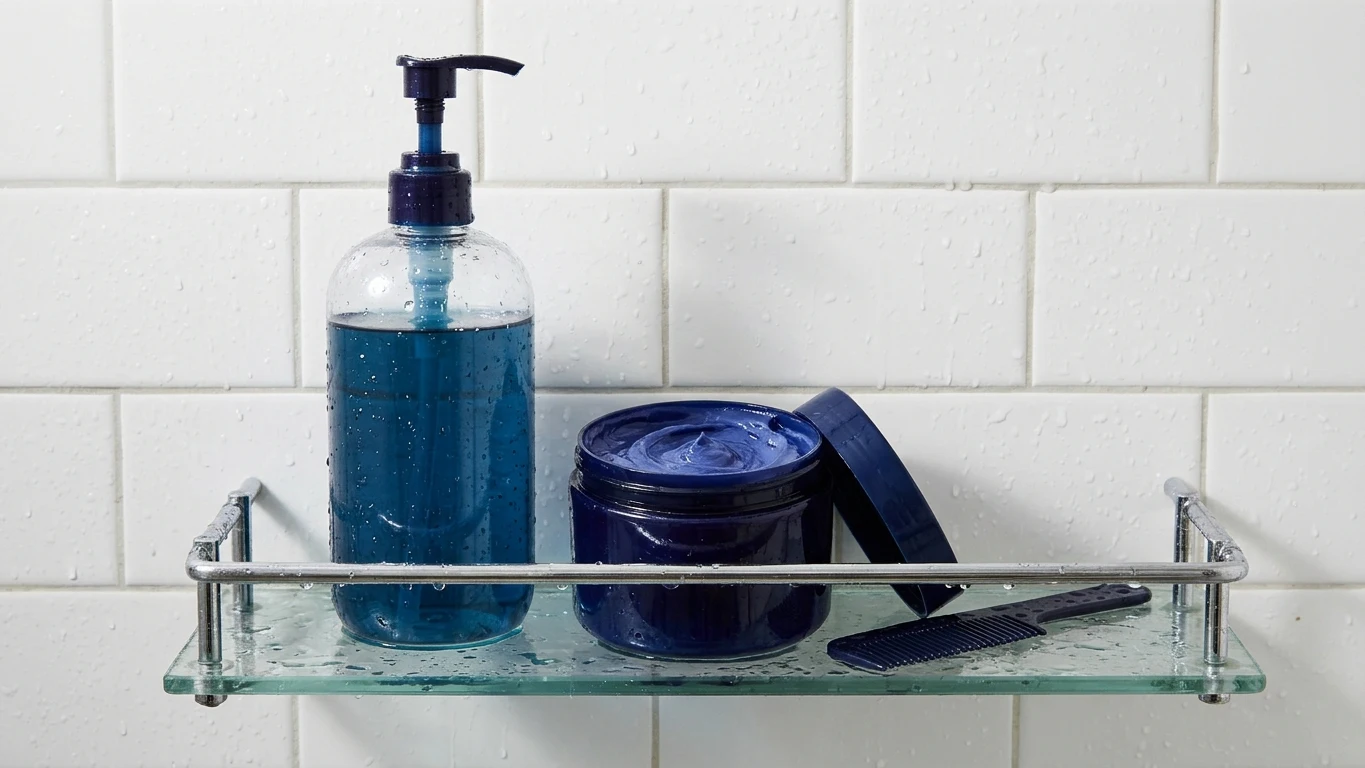
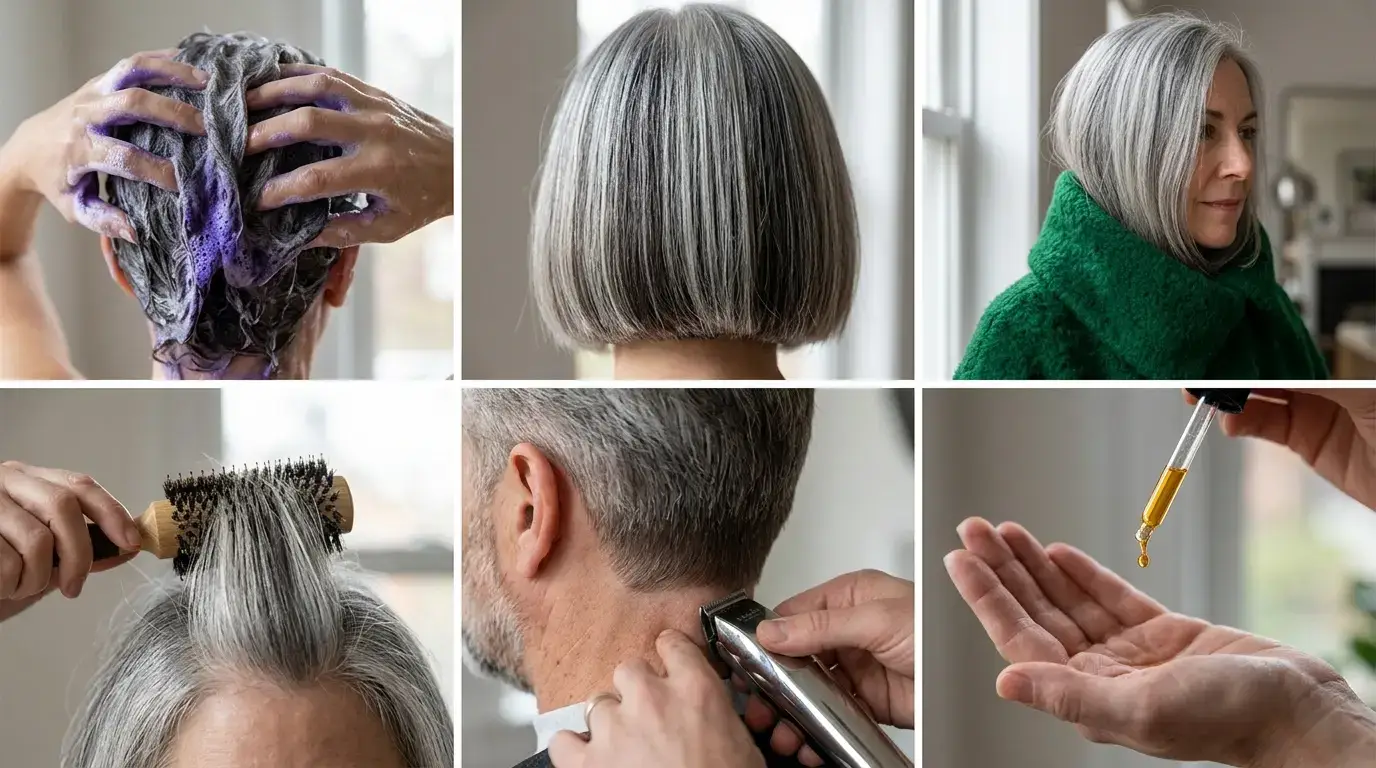
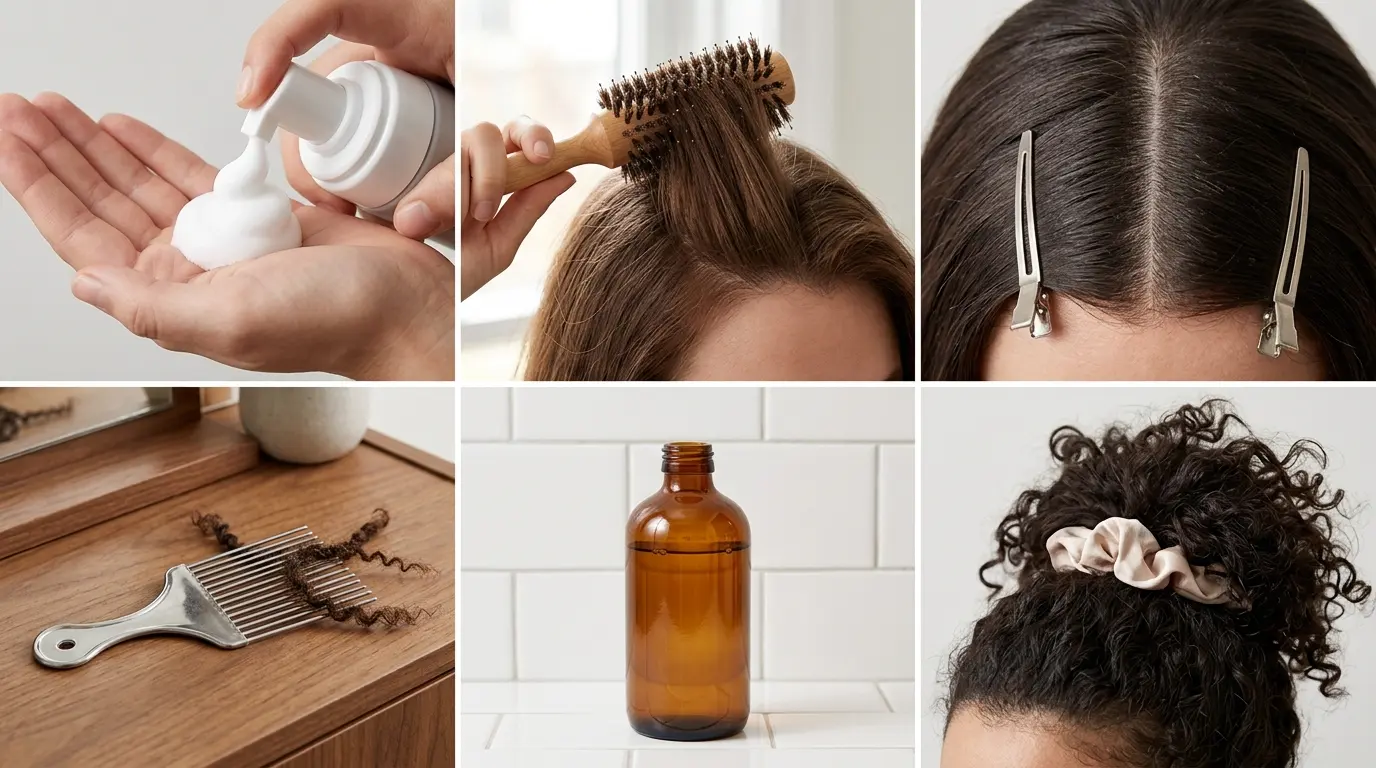
Use a targeted purple shampoo once every two weeks on the top canopy only. Lather the purple product through your hands and work it across the blonde surface without letting the suds soak into the nape.
Deep condition the blonde ends weekly with a bond-building mask containing amino acids. Bleached strands lose tensile strength quickly, while unprocessed or deposit-only dark hair stays relatively resilient.
What to do when dye bleeds and how to rescue it

Accidental dark dye transfer onto raw blonde strands happens when sections slip during rinsing. If you notice a dark stain on your blonde hair, act immediately while the cuticle remains open.
Apply a clarifying shampoo directly to the stained blonde spot on dry hair and scrub it gently with your fingertips for three full minutes. The concentrated surfactants will pull out the loose surface pigment.
If the dark stain persists, mix one scoop of gentle lightener powder with equal parts 10-volume developer and deep conditioner. Paint this mild mixture directly over the smudge for five minutes to erase the bleed without snapping the hair.
Common questions about two-tone color
How do you cover blonde hair with dark brown later on?
You cannot paint dark brown color directly over porous bleached hair without turning it muddy green. Fill the blonde strands first with a warm copper protein filler to replace missing red undertones, then deposit your dark brown dye over top.
Why does dark blonde hair turn brassy over time?
Sun exposure, tap water minerals, and daily heat styling strip the cool violet toner molecules out of the hair shaft. Once those cool pigments fade, the underlying warm orange and yellow pigments become visible again.
Can you wear blonde hair with dark blue underneath instead of brown?
Yes. Pre-lighten the nape area to a pale yellow stage just like the top canopy, then deposit a direct-dye navy or sapphire cream over the lower tier while toning the crown icy platinum.
Does blonde hair with darker underneath grow out easily?
The dark underlayer creates a built-in shadow that blends naturally with dark root regrowth. You only need to touch up the top blonde canopy every six to eight weeks, leaving the lower dark half virtually maintenance-free.
A disciplined approach to blonde hair with dark underneath
Crisp split-level color relies entirely on strict sectioning, protective wrapping, and cold rinses. Keep your horizontal parting level across the occipital bone. Lock your upper blonde layers under barrier cream while depositing dark pigment below. Finish with low heat styling and dedicated zone-washing at home to keep both tones rich, bright, and completely separate.